Artificial intelligence is rapidly transitioning from a speculative buzzword to an indispensable tool in the marketing arsenal, with leading brands demonstrating its tangible impact across diverse strategic pillars. Moving beyond the theoretical, companies like Unilever, Headspace, Wembley Stadium, Kraft, Reebok, and Popeyes UK are actively deploying AI-driven solutions to revolutionize content creation, hyper-personalize customer experiences, enhance social listening, streamline customer care, and optimize campaign performance, yielding significant gains in efficiency, engagement, and return on investment. This shift signifies a maturation of AI technologies within the marketing landscape, as organizations seek practical, scalable applications to meet evolving consumer demands and competitive pressures in 2026.

The Ascendance of AI in Modern Marketing
The proliferation of digital channels and the exponential growth of consumer data have created an environment where traditional marketing approaches struggle to keep pace. Consumers, accustomed to highly personalized digital experiences from platforms like Netflix and TikTok, now expect a similar level of relevance and responsiveness from brands. This expectation, coupled with the sheer volume of marketing tasks—from content generation and audience segmentation to real-time analytics and customer interaction—has made AI not just advantageous, but essential. Marketing teams are increasingly turning to AI to sift through vast datasets, identify nuanced patterns, automate repetitive tasks, and predict future trends, thereby freeing human marketers to focus on strategic thinking, creative direction, and empathetic engagement. Industry reports for 2026 indicate that a significant majority of marketers, approximately 80%, have integrated AI into their content creation processes alone, underscoring its rapid adoption as an accessible entry point due to its ease of trial and immediate utility in drafting and ideation.

Pivotal Applications of AI in Marketing
AI’s utility in marketing spans several critical functions, each offering distinct advantages:
- Content Creation: AI tools are adept at generating drafts, outlines, and variations of marketing copy, from social media captions and blog posts to email subject lines and website content. By providing a prompt, marketers can quickly receive a foundation to edit and refine, accelerating content pipelines. This capability allows teams to produce a higher volume of diverse content tailored for different platforms and audience segments, ensuring consistent brand presence without overwhelming internal resources.
- Personalization: In an era of hyper-individualized experiences, AI algorithms excel at analyzing user behavior, preferences, and demographics to deliver highly relevant messaging and product recommendations. This extends beyond basic segmentation to dynamic content delivery, adapting campaigns in real-time based on individual interactions. The goal is to create a one-to-one marketing experience at scale, enhancing customer satisfaction and conversion rates.
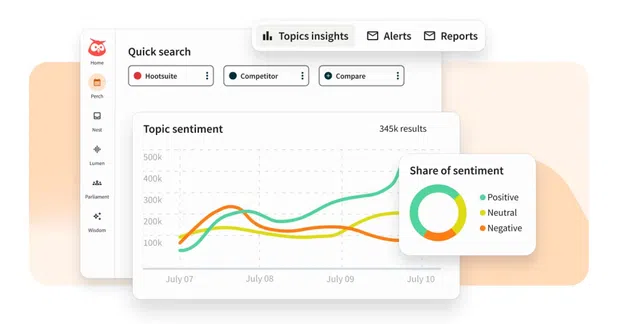
- Social Listening & Sentiment Analysis: The digital realm buzzes with billions of conversations daily. Manually tracking and understanding brand mentions, industry trends, and public sentiment is an impossible task for human teams. AI-powered social listening tools can monitor vast networks, identify emerging topics, track brand perception, and, crucially, analyze the emotional tone (sentiment) of conversations. This allows marketers to quickly identify potential crises, spot new opportunities, and refine messaging to resonate with public opinion.
- Customer Care: AI chatbots and virtual assistants are transforming customer support by providing instant, 24/7 responses to common inquiries. These systems can handle a high volume of routine questions, triage more complex issues to human agents, and even assist agents by providing relevant information or drafting responses. The benefits include improved response times, reduced operational costs, and enhanced customer satisfaction.
- Campaign Performance and Optimization: AI algorithms can analyze complex campaign data in real-time, identifying underperforming elements and suggesting adjustments to targeting, bidding strategies, and creative assets. This enables dynamic optimization, ensuring marketing spend is maximized and campaigns achieve their objectives more efficiently. Instead of post-campaign analysis, marketers can make agile, data-driven decisions while campaigns are still active.
Real-World Impact: Case Studies from Industry Leaders
Several prominent brands have moved beyond theoretical discussions to implement AI in ways that deliver quantifiable results, setting new benchmarks for efficiency and effectiveness.
Unilever (AXE and Degree): Scaling Content with Brand Fidelity
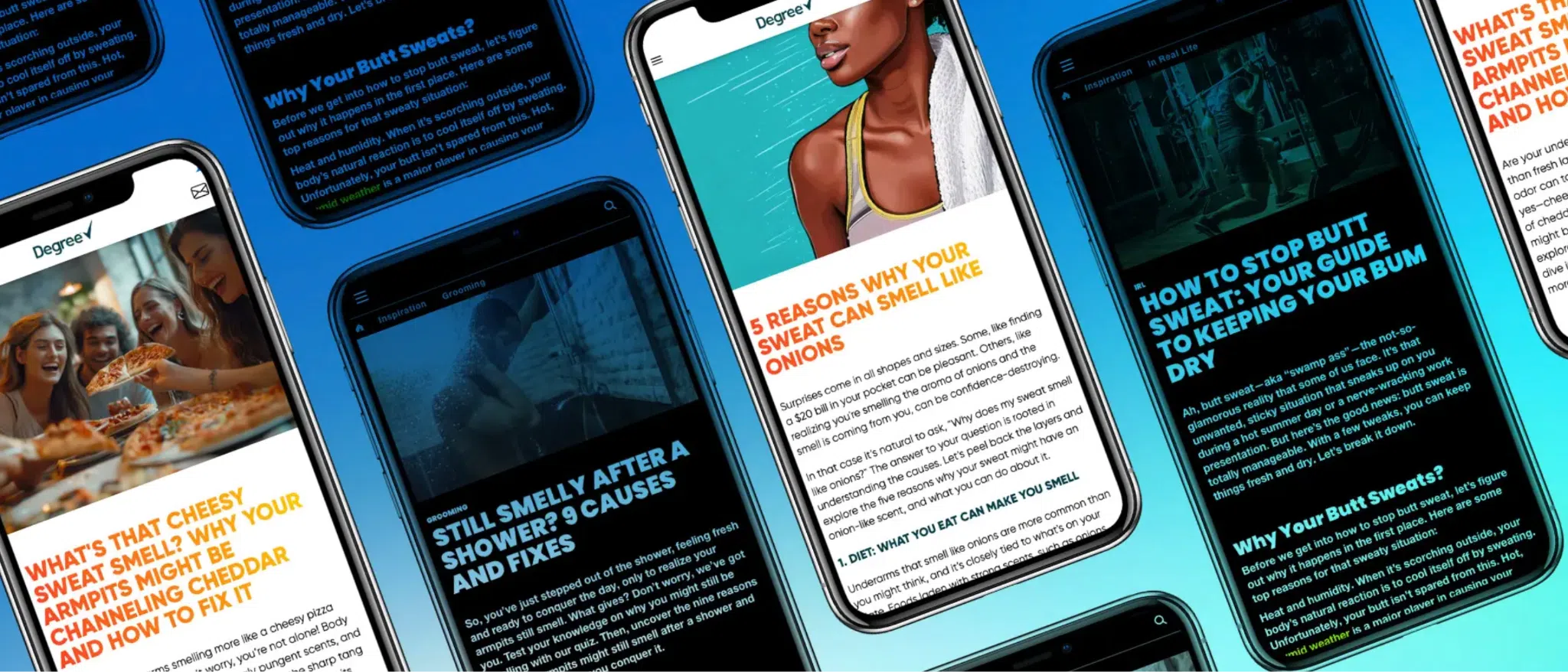
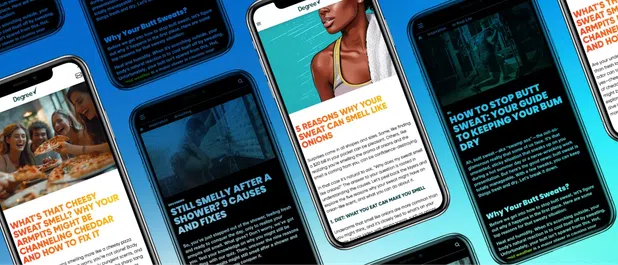
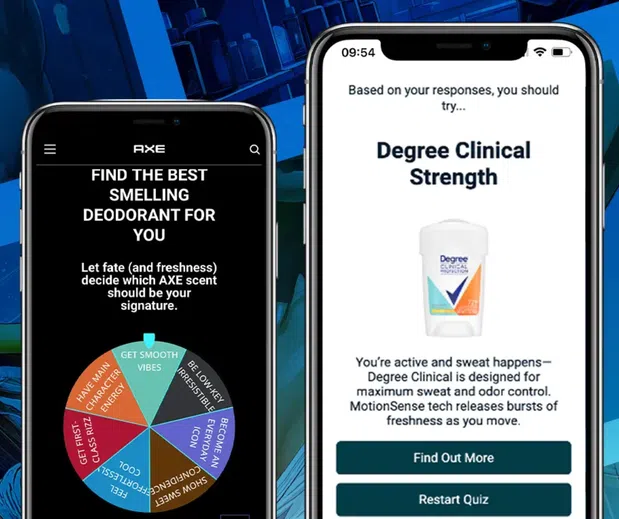
Unilever, a global consumer goods giant, faced the challenge of producing vast amounts of educational content for its deodorant brands, AXE and Degree, without diluting their distinct brand voices or overburdening creative teams. The solution involved developing a proprietary AI tool, meticulously trained on each brand’s unique tone and messaging guidelines. This enabled the rapid generation of 162 pages of diverse educational content, covering topics from scientific explanations of sweat to interactive quizzes, infographics, and video scripts. A spokesperson for Unilever’s marketing division commented, "Our AI initiative allowed us to scale content production three times faster, delivering a rich, informative experience to consumers while maintaining absolute brand consistency. For Degree, this strategic content push resulted in a commanding 37% share of voice in AI Overviews within the US deodorant category, a clear testament to AI’s power in content amplification." This case highlights how AI can accelerate content velocity while preserving crucial brand identity, a common concern for marketers exploring generative AI.
Headspace: Hyper-Personalization for Enhanced Engagement
The meditation and mindfulness app Headspace demonstrated AI’s prowess in delivering deeply personalized campaigns. Recognizing that "holiday stress" manifests differently for various individuals—from student exam anxiety to adult calendar overwhelm—Headspace utilized AI to create hundreds of distinct campaign assets. Leveraging Meta’s Advantage+ platform, these variations were then matched with specific audience segments most likely to resonate with the tailored messaging. This sophisticated approach allowed Headspace to produce an impressive 460 unique assets in under two weeks, a 67% reduction in production time compared to traditional methods. The result was a 13% increase in app sign-ups, underscoring the efficacy of AI-driven dynamic creative optimization in driving conversions. A Headspace marketing executive noted, "AI enabled us to move beyond broad segmentation, creating a truly personal connection with each potential user. This precision not only boosted engagement but significantly enhanced our campaign efficiency."
Wembley Stadium: Automating Customer Care at Scale
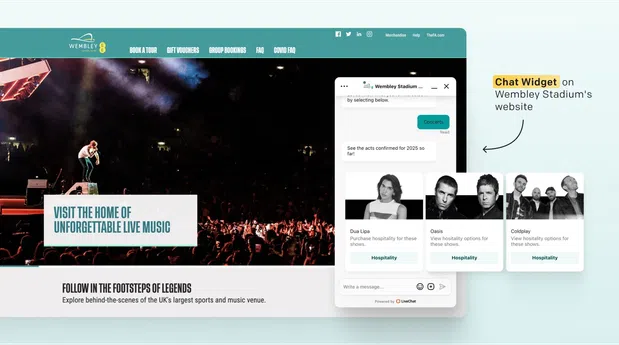
Iconic venues like Wembley Stadium frequently face immense volumes of customer inquiries, particularly around major events, sometimes reaching up to 8,000 questions daily. To manage this demand and alleviate pressure on its human support teams, Wembley implemented an AI chatbot on its website. This bot was meticulously trained on event-specific details, stadium policies, and common fan questions. It now efficiently handles approximately 12,000 chats per month, providing instant answers and reducing wait times for fans. Beyond immediate support, the chatbot also contributes to lead generation by qualifying individuals interested in premium memberships before seamlessly handing them over to sales representatives. A representative from Wembley Stadium remarked, "Our AI chatbot has been instrumental in transforming our customer service, ensuring fans receive prompt, accurate information around the clock. It allows our human agents to focus on more complex, empathetic interactions, ultimately enhancing the overall fan experience."
Kraft: Sharpening Influencer Selection with Data-Driven Insights
When Kraft launched its plant-based product line, it faced the dual challenge of appealing to both plant-based enthusiasts and consumers seeking familiar comfort foods. To navigate these distinct audience segments, Kraft leveraged AI-powered audience segmentation. This technology allowed the brand to precisely identify and differentiate between these groups, subsequently using AI-driven tools to find creators whose content and audience demographics perfectly aligned with each segment. This data-driven influencer marketing strategy resulted in a campaign featuring 15 creators across 26 pieces of content, generating over 2.4 million views. A Kraft marketing lead stated, "AI provided the clarity needed to connect with our diverse audiences through authentic voices. It moved our influencer strategy from guesswork to precision, significantly boosting campaign reach and relevance." This exemplifies how AI can refine traditional marketing tactics for greater impact.

Reebok: Unveiling Market Opportunities Through Social Listening
Reebok sought a deeper understanding of how its brand was perceived within the CrossFit community and how this compared to its competitors. Collaborating with digital marketing agency Novicell, Reebok deployed Lumen by Talkwalker, an AI-powered social listening platform. This tool monitored online conversations across social networks and other digital channels, analyzing over 14,000 conversations from nearly 5,000 unique users. The AI’s ability to process and interpret this vast dataset allowed Reebok to identify over 25 actionable opportunities for improvement. These insights ranged from refining brand positioning within the CrossFit niche to identifying untapped business avenues. "The granular insights provided by AI were invaluable," commented a Reebok brand strategist. "It transformed thousands of disparate conversations into clear, strategic directives, enabling us to sharpen our market approach."
Popeyes UK: Dynamic Campaign Optimization for Superior ROAS
Popeyes UK understood that effective advertising wasn’t just about creating compelling ads, but ensuring they reached the right audience at the right time. The brand utilized AI to dynamically manage its ad placements and bidding strategies. As the campaign progressed, the AI continuously analyzed real-time performance data, making adjustments to audience targeting and bid amounts based on what was actually delivering results, rather than adhering to a static pre-set plan. This continuous, data-driven optimization proved highly effective, culminating in 22 million impressions, 45,000 conversions, and a remarkable 678% increase in Return on Ad Spend (ROAS). A Popeyes UK marketing manager noted, "AI allowed us to be incredibly agile with our ad spend, optimizing in real-time to achieve unprecedented efficiency and ROI. It’s a game-changer for digital advertising."
Navigating the Ethical and Creative Landscape
While AI offers immense benefits, its deployment in marketing is not without challenges and risks. Industry experts, such as Maria LaMagna Morales, Founder of Press Publish Studio, highlight the importance of maintaining human oversight and preserving creative uniqueness.

- Losing the "Weirdness" and Human Touch: AI is inherently designed for predictability, generating responses based on probabilities and established patterns. This can lead to content that is polished but lacks the unexpected, attention-grabbing elements that often make marketing truly memorable. Morales emphasizes, "In social media, especially with platforms like TikTok and Reels, capturing immediate attention is paramount. AI, by its nature, isn’t designed to inject that random ‘weirdness’ or ‘surprise and delight’ factor that stops a scroll. There’s a risk of excessive polish, losing the ‘Wait, what was that?’ moment that sparks engagement."
- Flattening Brand Voice: Over-reliance on AI for content generation, especially with generic prompts like "make it more concise" or "make it professional," can inadvertently strip away a brand’s unique voice. The nuances of slang, specific terminology, or even intentional grammatical quirks that define a brand’s personality can be lost. Morales advises marketers to "write the way you actually speak" and prioritize sounding human over being perfectly streamlined.
- Over-Automating the Creative Process: The rapid advancement of generative AI in imagery and video, while impressive, can lead to a saturation of generic, AI-generated visuals. Morales points out, "Initially, AI imagery was exciting, but audiences are becoming more accustomed to it, and in many cases, they prefer real photography, authentic textures, human faces, and images reflecting day-to-day life." The value shifts from what AI can create to what feels genuinely human and unique, emphasizing the need for deliberate choices about when and where to deploy generative visuals. Marketers must remember that while AI can create impressive images in seconds, the truly valuable content often stems from genuine experiences and human connection.
The Future of Marketing: Human-AI Collaboration
The examples provided underscore that AI is not replacing marketers but rather augmenting their capabilities. The marketers achieving the most significant results are those who skillfully direct AI assistants, leveraging them for efficiency and insight while retaining strategic control and creative input. This collaboration between human ingenuity and artificial intelligence is reshaping marketing roles, requiring new skill sets focused on prompt engineering, data interpretation, ethical considerations, and maintaining brand authenticity.
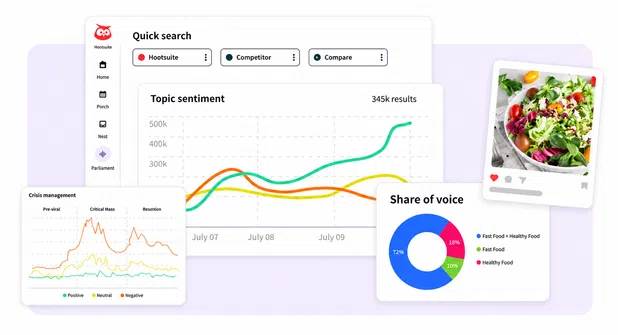
Platforms like Hootsuite are integrating AI directly into everyday marketing workflows to facilitate this collaboration. Wisdom, Hootsuite’s social-first AI agent, allows users to ask questions in plain language, extracting insights from social data and recommending next steps—from adjusting messaging to generating timely content ideas. Perch serves as the content creation hub, where teams can brainstorm, draft, edit, and schedule on-brand content with AI assistance, ensuring consistency across channels. Meanwhile, Lumen, Hootsuite’s listening layer, tracks brand mentions, sentiment, and emerging trends across over 150 million sources, enabling rapid identification of opportunities or potential crises. Together, these tools demonstrate a holistic approach to AI integration, moving teams from raw data to actionable insights and engaging content faster and more effectively.
In conclusion, AI has firmly established itself as a foundational technology in modern marketing. From scaling content and hyper-personalizing experiences to revolutionizing customer care and campaign optimization, its applications are vast and impactful. However, the true power of AI in marketing lies in its intelligent deployment under human guidance, ensuring that efficiency gains do not come at the expense of creativity, authenticity, and ethical responsibility. As AI continues to evolve, the most successful brands will be those that master the art of human-AI collaboration, leveraging technology to amplify human strategy and foster deeper connections with their audiences.