The digital marketing landscape continues its rapid transformation, with September 16, 2026, marking a day of significant announcements and updates from major search engines and advertising platforms. Google, in particular, unveiled a suite of enhancements across its search, advertising, and e-commerce ecosystems, signaling a future increasingly dominated by artificial intelligence, refined user experience metrics, and more direct merchant integrations. Meanwhile, Bing also introduced new filtering capabilities, underscoring a broader industry push towards more intuitive and personalized search experiences.
The AI Revolution in Search: Evolving Metrics and Real-time Intelligence
Perhaps the most impactful revelation of the day came from Google regarding its Search Console, a critical tool for webmasters and SEO professionals. The company stated that position reporting within Search Console is subject to change as Search, AI Mode, and AI Overviews continue to evolve. This declaration is not merely a technical note; it signifies a fundamental shift in how organic search performance will be measured and understood in an era increasingly shaped by generative AI.
Background Context: The Rise of Generative AI in Search
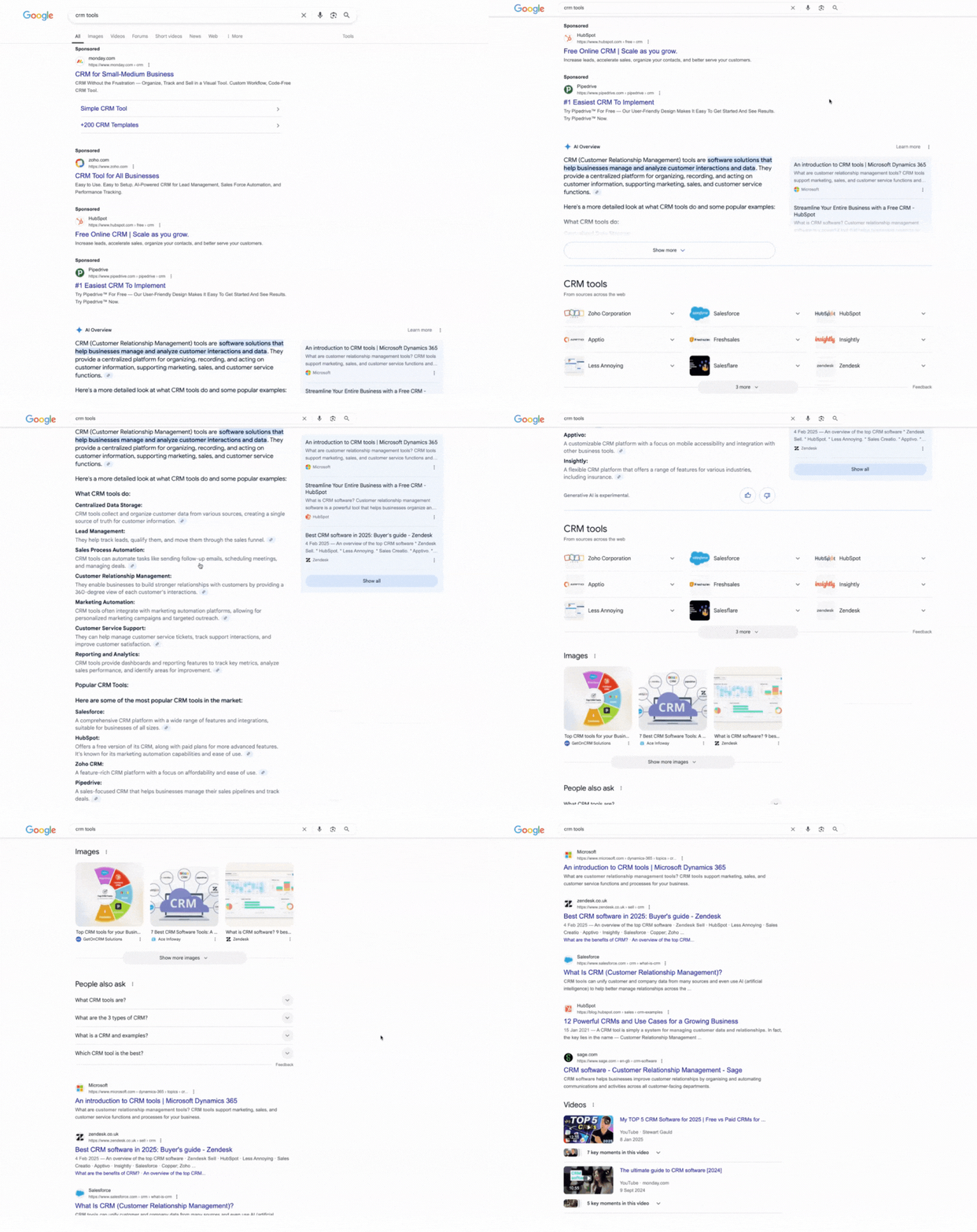
For years, the core metric of "position" on a search engine results page (SERP) has been the cornerstone of SEO strategy. A higher position, ideally position one, equated to greater visibility and click-through rates. However, with the advent of large language models (LLMs) and their integration into search, notably through Google’s AI Overviews (formerly Search Generative Experience, SGE) and dedicated AI Modes, the traditional ten blue links are often supplemented or even superseded by AI-generated summaries, conversational interfaces, and multi-source answers. These AI constructs often pull information from various sources, sometimes without direct links or a clear "position" in the conventional sense, thus challenging the very definition of ranking.
Implications for SEO Professionals and Webmasters
The impending changes to position reporting necessitate a re-evaluation of current SEO key performance indicators (KPIs). SEOs will likely need to shift their focus from purely numerical rankings to broader visibility metrics, such as share of voice in AI Overviews, inclusion in AI-generated summaries, direct traffic from AI-driven snippets, and overall brand mentions. Engagement metrics like time on page and interaction with AI-generated content that references their site may gain prominence. This evolution demands a deeper understanding of semantic SEO, entity-based optimization, and content designed not just for keywords but for comprehensive answers that AI models can readily synthesize. Industry analysts have long predicted this paradigm shift, suggesting that the value of being a source for AI-generated answers could eventually outweigh the traditional first-page ranking.
Gemini 3.8 Live Powers Google Search
Further emphasizing Google’s commitment to AI integration, the company confirmed that Gemini 3.8 Live is now powering Google Search Live. This update is a critical step in embedding Google’s most advanced conversational AI model directly into the core search experience, enabling more dynamic, real-time, and contextually aware interactions.
Chronology of Gemini’s Evolution
Gemini’s journey began with its predecessor, Bard, which was launched as an experimental conversational AI service. Subsequent iterations rapidly improved its capabilities, leading to the rebranding and successive version releases of Gemini. The "Live" designation for version 3.8 suggests enhanced capabilities in processing real-time information, understanding complex queries, and delivering up-to-the-minute results, potentially pulling from live news feeds, social media, and dynamic data sources. This evolution is aimed at making search more interactive, allowing users to delve deeper into topics with follow-up questions and receive more personalized responses.
Supporting Data: The Impact of AI on User Engagement
Early data from AI-powered search experiences has shown varied but often increased user engagement, particularly for complex or exploratory queries. Studies indicate that users appreciate the ability to get synthesized answers quickly, reducing the need to click through multiple links. This trend underscores the importance for content creators to structure their information clearly and authoritatively, making it easily digestible by AI models. The continuous refinement of Gemini and its direct integration into Search Live indicates Google’s strategic vision to make AI an indispensable co-pilot in the information discovery process.
Enhancing Transparency and Ad Metrics: Chrome User Experience Report Updates
In a move set to significantly impact publishers, advertisers, and web developers, the Google Chrome User Experience report (CrUX) has expanded its data collection to include several new ad-related metrics: Ad Count, Ad Density, Ad Weight (Network), and Ad Weight (CPU). These additions highlight Google’s ongoing commitment to user experience as a core ranking factor, now extending its scrutiny to the impact of advertising.
Background: CrUX and Core Web Vitals
CrUX has been instrumental in providing real-world user data for Google’s Core Web Vitals initiative, which measures key aspects of page experience: Largest Contentful Paint (LCP), First Input Delay (FID, now Interaction to Next Paint or INP), and Cumulative Layout Shift (CLS). These metrics have influenced search rankings and pressured webmasters to optimize for speed, responsiveness, and visual stability. The inclusion of ad-specific metrics signifies that the negative impact of poorly implemented advertising on user experience is now a direct concern for Google’s evaluation of web pages.
Analysis of New Ad Metrics
- Ad Count: Simply the number of advertisements displayed on a page. A high count could indicate an aggressive monetization strategy potentially detrimental to user focus.
- Ad Density: The proportion of screen real estate occupied by advertisements. High density, especially above the fold, is often associated with a cluttered and frustrating user experience.
- Ad Weight (Network): The data size of the ads, impacting page load times. Heavy ads consume more bandwidth, particularly affecting users on slower connections or mobile data.
- Ad Weight (CPU): The processing power required to render and run ad scripts. High CPU usage can slow down the page, making it less responsive and draining device battery.
Implications for Publishers and Advertisers
This update places direct pressure on publishers to optimize their ad strategies. Websites with excessive ad loads, slow-loading ads, or intrusive formats may see a negative impact on their CrUX scores, potentially affecting their search rankings. Advertisers, in turn, will need to collaborate with ad tech providers to develop lighter, more efficient ad formats that minimize network and CPU impact. This could spur innovation in programmatic advertising, pushing for greater efficiency and less intrusive ad delivery methods. The long-term implication is a cleaner, faster web experience for users, albeit potentially challenging for publishers heavily reliant on high-density ad revenue. Digital marketing strategists emphasize that a balance between monetization and user experience is now more critical than ever.
Streamlining E-commerce: Merchant Center & Image Search Innovations
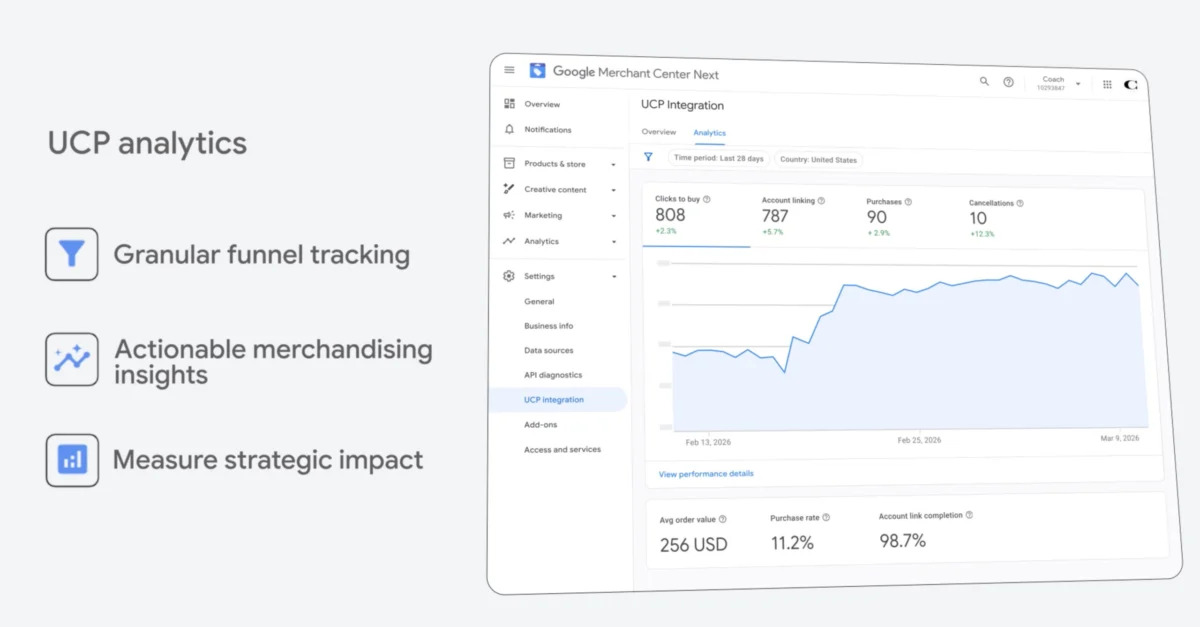
Google’s sustained push into the e-commerce sector continued with several announcements aimed at empowering merchants and enhancing the shopping experience. These updates include the general availability of AI performance insights in Google Merchant Center, simplified Universal Commerce Protocol (UCP) integration, and new AI-powered saving features in Google Image Search. Crucially, Google is also testing direct links from product and shopping results to merchant websites, a potential game-changer for online retailers.
AI Performance Insights in Google Merchant Center
The general availability of AI performance insights within Google Merchant Center is a significant boon for retailers. This feature leverages machine learning to analyze product data, pricing strategies, and campaign performance, offering actionable recommendations to optimize product listings, improve visibility, and ultimately drive sales. Insights might include suggestions for competitive pricing, popular product trends, inventory optimization, and identifying underperforming products.
Supporting Data: Growth of E-commerce and AI Adoption
The global e-commerce market continues its robust growth, projected to reach trillions of dollars in the coming years. In this competitive environment, AI-driven insights become indispensable for merchants to gain an edge. Reports indicate that businesses leveraging AI for marketing and sales optimization can see substantial improvements in conversion rates and return on ad spend. The simplified Universal Commerce Protocol (UCP) integration further supports this by reducing the technical hurdles for merchants to list their products and participate in Google’s shopping ecosystem, ensuring higher quality and more consistent product data across the platform.
Google Image Search: AI-Powered Collections and Folders
For consumers, Google Image Search is enhancing its utility by allowing users to save images to collections and folders using AI. This feature simplifies visual discovery and organization, particularly useful for shopping inspiration, home décor planning, or creative projects. AI can intelligently categorize images, suggest related items, and help users curate their visual preferences, making the image search experience more personalized and productive. This development aligns with trends in visual search, where users often begin their shopping journey with images rather than text.
Direct Merchant Links: A Pivotal Shift
Perhaps the most noteworthy e-commerce development is Google’s testing of linking product and shopping results within Google Search directly to the merchant or retailer website. Historically, Google has sometimes directed users through its own Google Shopping platform or an intermediary page. This shift, if widely implemented, could significantly alter the flow of traffic and revenue for online retailers.
Analysis of Implications for Retailers
This move could be interpreted as Google responding to calls from merchants for more direct access to their customers and greater control over the sales funnel. For retailers, it promises:
- Increased Direct Traffic: A potential surge in direct visitors to their e-commerce sites, bypassing intermediate steps.
- Enhanced Conversion Opportunities: Users are directly on the merchant’s site, reducing friction in the purchasing process.
- Richer Analytics: Merchants gain more direct data on user behavior, attribution, and conversion paths originating from Google Search.
- Brand Building: Direct engagement reinforces brand identity and customer loyalty.
This strategic pivot could intensify competition within the e-commerce sector, benefiting smaller and mid-sized businesses that rely on direct sales. It also underscores Google’s commitment to facilitating commerce while potentially re-evaluating its role as an intermediary versus a facilitator in the shopping journey.
Advertising Evolution & Measurement: Google Ads and Bing Updates
The advertising landscape also saw key updates aimed at improving competitive intelligence and user experience. Google Ads is rolling out an update to its Spend benchmarks report, providing advertisers with more granular competitive insights, while Bing is testing new product and shopping-related filters to enhance its search results.
Google Ads Spend Benchmarks Report Update
Google Ads is enhancing its Spend benchmarks report to show advertisers how their spending compares to businesses of similar size and industry. This update is crucial for strategic budget allocation and campaign optimization.
Background and Value of Competitive Benchmarking
In the highly competitive world of online advertising, understanding industry benchmarks is vital. Advertisers often struggle to gauge whether their ad spend is efficient, competitive, or falling short. The updated report provides anonymized aggregate data, allowing businesses to:
- Identify Gaps: Determine if they are under-spending or over-spending compared to peers.
- Optimize Budgets: Allocate resources more effectively to maximize return on investment (ROI).
- Strategic Planning: Inform long-term advertising strategies by understanding market norms.
Supporting Data: PPC Market Size and Trends
The global PPC market continues to grow, with billions of dollars spent annually across platforms like Google Ads. As competition intensifies, tools that offer competitive intelligence become increasingly valuable. Analysts suggest that access to such benchmarks can lead to more informed decision-making, potentially increasing campaign effectiveness by 10-15% for businesses that actively use them.
Bing’s Enhanced Shopping Filters
On the competitive front, Bing is testing the addition of product and shopping-related filters on the left sidebar of its search results. This user interface enhancement aims to provide a more refined and efficient shopping experience for users.
Bing’s Strategy and User Experience
While Google dominates the search market, Bing consistently innovates to attract users. Enhanced filtering capabilities for shopping queries – allowing users to filter by price, brand, reviews, availability, and more – directly address a common user need for greater control and specificity in product searches. This improves the overall user experience, making Bing a more attractive option for those actively engaged in product research and purchasing. This move aligns with broader trends in e-commerce search, where granular filtering is standard on retail websites.
Multi-Source Conversions (Beta) Document from Google
Google also published a new help document focusing on multi-source conversions (beta). This indicates a continued effort to provide advertisers with more sophisticated tools for tracking and attributing conversions across complex user journeys.
The Complexity of Conversion Attribution
In today’s fragmented digital landscape, users often interact with multiple touchpoints – search ads, display ads, social media, email, organic search, direct visits – before making a purchase or completing a desired action. Accurately attributing a conversion to a specific channel or ad interaction is a significant challenge. Google’s multi-source conversions initiative aims to provide a more holistic view, allowing advertisers to understand the combined impact of various channels and touchpoints. This is particularly relevant for businesses with long sales cycles or complex customer journeys, where a single "last click" attribution model often fails to capture the full picture.
Implications for Advertisers and Marketers
This beta program signifies Google’s recognition of the evolving nature of the customer journey. It offers advertisers the potential for:
- More Accurate ROI Calculation: Better understanding of which marketing efforts genuinely contribute to conversions.
- Optimized Budget Allocation: Shifting budgets to channels that demonstrate a higher combined impact.
- Holistic Strategy Development: Creating integrated marketing campaigns that consider the interplay between different channels.
- Advanced Analytics: Moving beyond simplistic attribution models to more sophisticated, data-driven approaches.
Broader Industry Trends and Future Outlook
The collective announcements from Google and Bing on September 16, 2026, paint a clear picture of the future direction of search and digital marketing. Artificial intelligence is no longer a peripheral feature but is deeply embedded in core search functionality, performance measurement, and advertising optimization. The user experience, particularly concerning page speed and ad intrusion, remains a paramount concern, directly impacting visibility and rankings. E-commerce integration is becoming more seamless, with efforts to empower merchants and provide richer shopping experiences.
Challenges and Opportunities
For businesses, these rapid advancements present both challenges and opportunities. The challenge lies in adapting to new metrics, retraining teams on AI-driven tools, and re-evaluating long-standing SEO and advertising strategies. The opportunity, however, is immense: leveraging AI for deeper insights, reaching customers more effectively through refined search experiences, and optimizing operations with smarter tools.
Conclusion
The digital ecosystem is in a continuous state of flux, driven by technological innovation and evolving user expectations. The updates highlighted on September 16, 2026, underscore a commitment to making search more intelligent, transparent, and user-centric, while simultaneously providing advertisers and merchants with more sophisticated tools to navigate this complex landscape. Staying abreast of these changes and proactively adapting strategies will be crucial for maintaining competitive advantage and fostering sustainable growth in the years to come.