Social media automation, encompassing the strategic deployment of specialized tools and software, has become an indispensable practice for businesses aiming to optimize their digital presence. Far exceeding simple post scheduling, this advanced approach handles a multitude of routine social media tasks, including sophisticated content distribution, real-time analytics reporting, proactive customer engagement, and comprehensive hashtag tracking. Its primary objective is to liberate marketing teams from repetitive manual operations, thereby enabling a sharper focus on overarching social media strategy and higher-value creative initiatives.
The distinction between mere scheduling and comprehensive social media automation is crucial for modern marketers. While scheduling tools address the ‘when’ of content publication, automation spans the entire workflow, from initial content drafting and approval routing to insightful performance analysis. This holistic approach fundamentally transforms operational efficiency, allowing businesses to navigate the increasingly complex digital landscape with greater agility and precision.
The Evolving Landscape of Digital Engagement
The rapid evolution of social media platforms has ushered in an era of unprecedented complexity for businesses. What began as a handful of dominant networks has expanded into a sprawling ecosystem, each with unique algorithms, content formats, and audience demographics. Marketing teams are now tasked with maintaining active, engaging presences across platforms like Instagram, Facebook, LinkedIn, TikTok, X (formerly Twitter), Pinterest, YouTube, and Threads, often simultaneously. This multi-platform demand, coupled with the imperative for 24/7 audience engagement and real-time responsiveness, has created significant operational bottlenecks for traditional manual approaches.

Industry data underscores this challenge: estimates suggest that marketers spend upwards of 15-20 hours per week on social media tasks, with a significant portion dedicated to routine, repeatable actions. This time investment, while necessary, often detracts from strategic planning, creative development, and genuine community building. Consequently, the adoption of automation has become less of a luxury and more of a strategic necessity for businesses striving to maintain competitive relevance and optimize resource allocation in the digital sphere. The increasing volume of data generated by social interactions further necessitates automated systems for efficient collection, analysis, and actionable insight generation, making manual data aggregation increasingly impractical.
Beyond Scheduling: The Comprehensive Scope of Modern Automation
While post scheduling remains a foundational component, contemporary social media automation extends across several critical marketing functions, streamlining operations and amplifying impact.
-
Content Creation and Curation: The advent of sophisticated AI tools has revolutionized content generation. These platforms can now draft compelling captions, suggest optimal hashtags, generate video scripts, and efficiently repurpose long-form content (such as blog posts or whitepapers) into multiple platform-specific formats. For example, a single blog article can be rapidly transformed into a LinkedIn carousel, a concise short-form video script for TikTok, and a series of distinct captions tailored for X or Instagram. Additionally, setting up RSS feeds allows for the automatic surfacing of relevant industry articles, facilitating seamless content curation and thought leadership. While AI handles the heavy lifting of production, human oversight remains vital for maintaining brand voice, ensuring accuracy, and providing strategic creative direction.
-
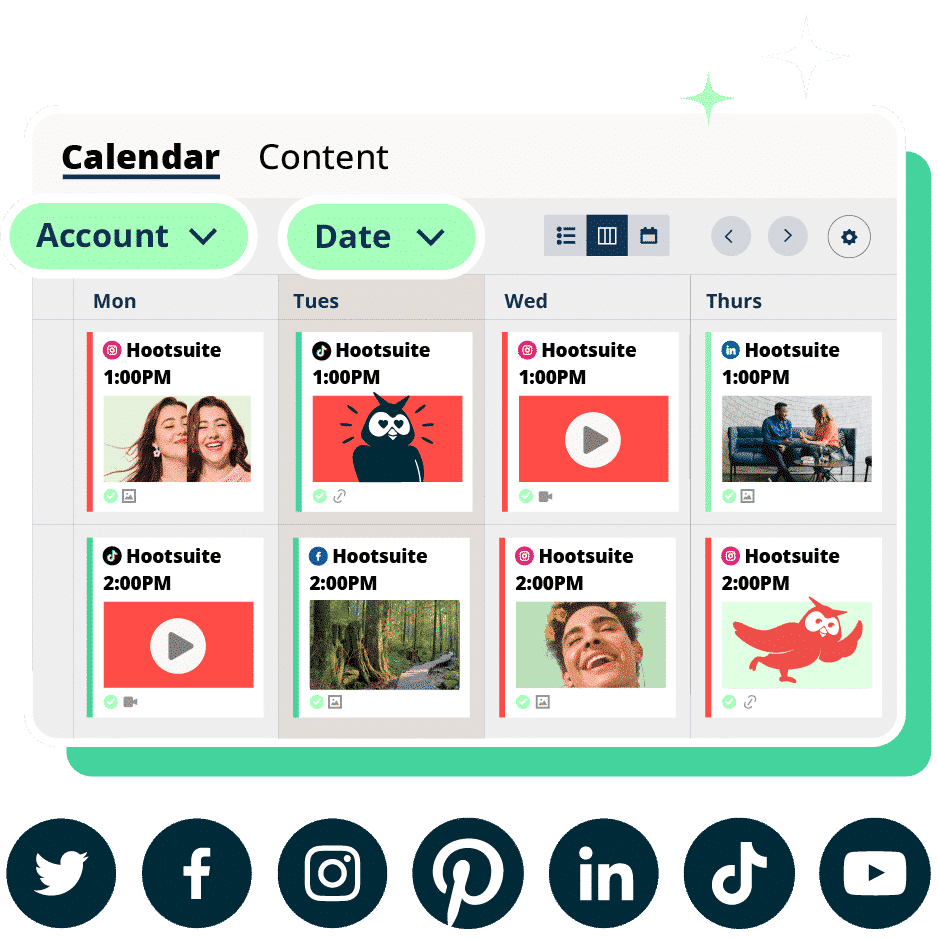
Workflow Management, Reporting, and Monitoring: This category represents the entry point for many organizations adopting automation. Tools enable the pre-queueing of posts across all connected platforms, the consolidation of real-time analytics into intuitive dashboards, and the configuration of alerts for critical brand mentions, trending keywords, or potential crisis indicators. Instead of juggling logins for numerous platforms daily, marketers can monitor performance, schedule content, and respond to vital notifications from a single, unified interface. This centralization dramatically reduces administrative overhead and enhances response times.
-
Customer Service and Engagement Automation: The capabilities in this domain have advanced significantly beyond simple keyword-triggered bots. Modern chatbots, direct message (DM) automation, and saved reply functionalities facilitate rapid responses to common inquiries, improving customer satisfaction and freeing human agents for complex issues. Gartner, a leading research and advisory company, predicts that by 2028, a staggering 60% of brands will leverage "agentic AI" to deliver streamlined, one-to-one interactions. Agentic AI can execute multi-step processes, such as checking order statuses or processing basic inquiries, before engaging a human agent for nuanced or sensitive conversations. These AI-powered systems can also analyze sentiment and urgency, intelligently routing high-priority messages to the appropriate human team members. Crucially, while automation handles routine interactions, the ultimate judgment calls, particularly in sensitive customer service scenarios, continue to reside with human teams.
-
Other Operational Efficiencies: Beyond these core areas, automation extends to numerous other tasks, including:
- Cross-platform publishing: Ensuring consistent content delivery across diverse channels.
- Content repurposing workflows: Systematizing the adaptation of existing content for new formats.
- Ad campaign optimization: Automating bid adjustments and audience targeting based on performance data.
- A/B testing: Streamlining the process of testing different content variations for optimal engagement.
- Audience segmentation: Automatically categorizing followers based on engagement patterns or demographics.
- Influencer identification: Using AI to discover and vet potential brand advocates.
- Competitor analysis: Monitoring competitor activities and performance metrics.
- Sentiment analysis: Automatically gauging public perception of a brand or topic.
The Strategic Imperative: Benefits for Businesses
The integration of social media automation yields multifaceted benefits that extend beyond mere time savings, impacting efficiency, performance, and governance.
-
Operational Efficiency and Consistency: Automation is a powerful engine for consistency. By streamlining repetitive tasks such as post scheduling, content approvals, and reporting, it drastically reduces manual effort and human error. This newfound efficiency allows marketing teams to reallocate valuable time to high-impact activities like strategic planning, creative content development, and fostering deeper community engagement. Moreover, automated scheduling ensures a consistent posting cadence, which is crucial for maintaining audience visibility and algorithm favorability across platforms. This predictability in content delivery reinforces brand presence and strengthens audience recall.

-
Enhanced Performance and Data-Driven Insights: Automation tools are instrumental in generating comprehensive, real-time analytics. These insights provide marketers with an unparalleled understanding of content performance, audience demographics, and engagement trends. By automating data collection and report generation, teams can swiftly identify successful strategies, pinpoint areas for improvement, and make data-backed decisions that optimize campaigns for maximum reach and impact. Features like "best time to post" recommendations, often powered by AI, ensure content is delivered when the target audience is most active, significantly boosting engagement rates and overall campaign ROI.
-
Strengthened Governance and Compliance: For larger organizations, particularly those in regulated industries, automation plays a critical role in ensuring brand safety and regulatory compliance. Tools equipped with robust approval workflows, role-based permissions, and audit trails provide granular control over content before publication. This ensures that all outgoing communications adhere to brand guidelines, legal requirements, and industry standards. Automated content libraries containing pre-approved assets further streamline the process, while integration with compliance management systems provides an added layer of security and accountability. This level of control is essential for mitigating risks, maintaining brand reputation, and navigating complex regulatory landscapes such as GDPR, HIPAA, or financial services regulations.
Navigating Implementation: A Phased Approach
Adopting social media automation doesn’t require an overhaul from day one. A strategic, phased approach allows teams to integrate tools effectively and scale their capabilities as comfort and proficiency grow.
-
Assessing Needs and Identifying Automation Opportunities: The initial step involves a thorough audit of current social media activities. Marketers should identify tasks that are most time-consuming, prone to error, or detract from strategic work. Common starting points include content scheduling, routine reporting, and basic monitoring. Understanding team size, budget constraints, the primary social platforms in use, and specific feature requirements (e.g., advanced analytics, team collaboration, compliance features) is crucial for defining the scope of automation.

-
Selecting the Right Technology Partner: Choosing the appropriate automation tool is paramount. Not all platforms are created equal, and the ideal choice depends heavily on organizational needs. Key criteria for evaluation include:
- Scalability: Can the tool grow with the business, from a small team to an enterprise?
- Platform Support: Does it integrate with all necessary social networks?
- Feature Set: Does it cover core needs like scheduling, analytics, and inbox management, along with desired advanced features?
- Ease of Use: Is the interface intuitive, minimizing the learning curve?
- Integrations: Can it connect with other marketing or business intelligence tools?
- Security and Compliance: Are data handling practices robust, and does it offer necessary governance features?
- Support and Training: What resources are available for onboarding and ongoing assistance?
- Pricing Structure: Is the cost model (per user, per channel, feature tiers) sustainable for the budget?
A solo creator’s needs for Instagram scheduling differ significantly from an enterprise managing dozens of accounts across multiple regions.
-
Phased Deployment and Continuous Optimization: Rather than attempting to automate everything simultaneously, a gradual rollout is advisable. Beginning with tasks that offer immediate and tangible time savings, such as scheduling and basic reporting, allows teams to acclimate to the new workflows. Once these initial automations are running smoothly, more advanced features like AI-powered content creation, sophisticated DM automation, or in-depth social listening can be layered in. Regular review of results is essential. Tracking key metrics like hours saved, improvements in response times, and changes in engagement levels provides clear data on return on investment, justifying further expansion and refinement of the automation strategy. This iterative process ensures that automation continually aligns with evolving business objectives.
A Look at Leading Automation Platforms in 2026
The market for social media automation tools is robust, with several platforms offering distinct advantages for different business needs.
-
1. Hootsuite: Positioned as a comprehensive social operating system, Hootsuite is ideal for medium-to-large teams and enterprises. It facilitates planning, posting, and tracking content across a wide array of social accounts from a single dashboard. Its strengths lie in cutting down repetitive tasks and providing actionable insights for strategic growth. Key automation features include AI content creation with ‘Wisdom,’ ‘best time to post’ recommendations, robust analytics, DM automation, ‘Lumen’ for advanced social listening (also available standalone via Talkwalker), and sophisticated approval workflows. Hootsuite supports Instagram, Facebook, LinkedIn, TikTok, X, Pinterest, YouTube, and Threads, with starting plans around $99/user/month.

-
2. Sprout Social: Favored by large teams requiring defensible analytics and executive-level reporting, Sprout Social offers strong publishing and inbox management tools. Its unified inbox consolidates messages, comments, and mentions, while its reporting suite provides in-depth performance analysis. Key automation features encompass scheduling, detailed reporting, a unified inbox, and a listening add-on. Sprout Social supports Instagram, Facebook, LinkedIn, TikTok, X, Pinterest, YouTube, and Threads, with standard plans starting at $199/seat/month (billed annually).
-
3. Buffer: Known for its simplicity and ease of use, Buffer is an excellent entry point for small teams and solo creators. It effectively covers basic scheduling, provides essential analytics, and includes a link-in-bio tool. Its AI assistant aids in drafting posts. Key automation features include scheduling, basic analytics, a link-in-bio tool, and an AI assistant. Buffer supports Instagram, Facebook, LinkedIn, TikTok, X, Pinterest, Threads, Bluesky, and YouTube, with pricing starting at $6/month per channel.
-
4. Agorapulse: Agorapulse distinguishes itself with a strong focus on unified inbox management, making it suitable for mid-market teams prioritizing customer engagement and community building. It pulls all comments, messages, and mentions into a single view for efficient response management. Key automation features include a unified social inbox, scheduling capabilities, reporting, and social listening. Agorapulse supports Instagram, Facebook, LinkedIn, TikTok, X, YouTube, and Google Business, with plans starting at $79/user/month (billed annually).
-
5. Later: Primarily designed for visual content creators, particularly those focused on Instagram and TikTok, Later excels in visual planning and aesthetic feed management. It offers a user-friendly visual content calendar, auto-publishing features, and hashtag suggestions. Key automation features include a visual content calendar, auto-publish functionality, and hashtag suggestions. Later supports Instagram, Facebook, LinkedIn, TikTok, Pinterest, and YouTube, with pricing starting at $25/month.
The Human Element: Balancing Automation with Authenticity
While the advantages of social media automation are clear, an over-reliance on technology without human oversight carries significant risks. The critical balance lies in leveraging automation for efficiency while preserving the authentic, human touch that fosters genuine audience connection.
-
Maintaining Authenticity: Brands must avoid allowing automation to lead to robotic, generic, or tone-deaf content. Audience engagement thrives on authenticity, personality, and relevance. Over-automating responses or content creation without human review can alienate followers and damage brand perception. Hootsuite’s internal research indicates that strategically scheduled posts perform as well as, or even better than, manually published content, provided that the content itself remains authentic and engaging, and is posted at optimal times when the audience is most active.
-
Irreplaceable Human Roles: Certain critical social media tasks should never be fully automated:
- Crisis Communication: Responding to brand crises or sensitive public relations issues demands nuanced judgment, empathy, and strategic thinking that only a human team can provide.
- Sensitive Customer Complaints: While automation can route complaints, the resolution of complex or emotionally charged customer service issues requires human intervention to demonstrate genuine care and understanding.
- Original Creative Strategy: The development of groundbreaking campaigns, unique brand narratives, and innovative content concepts remains firmly within the human domain. AI can assist, but cannot originate.
- Authentic Relationship Building: Fostering deep connections with key influencers, brand advocates, and loyal customers requires personalized interaction and genuine reciprocity that bots cannot replicate.
-
Ethical AI Use and Brand Voice: When utilizing AI for content creation, maintaining a consistent brand voice is paramount. This requires setting clear guidelines, developing custom prompts that reflect the brand’s tone and style, and, crucially, always reviewing and refining AI-generated content before publication. Tools like Hootsuite’s ‘Wisdom’ can learn from a brand’s style guide and live social data, but human editors are indispensable for ensuring the final output aligns perfectly with the brand’s unique identity. The goal is to use AI for first drafts and repetitive tasks, reserving creative control and final approval for human teams.
The Future Outlook: AI and Agentic Systems

The trajectory of social media automation points towards increasingly sophisticated AI and agentic systems. As AI capabilities evolve, these tools will become even more adept at understanding context, predicting trends, and executing complex, multi-step interactions. However, ethical considerations, data privacy, and the imperative to maintain a human-centric approach will remain at the forefront of development. The future of social media marketing will likely see a symbiotic relationship between advanced automation and human ingenuity, where technology empowers marketers to achieve unprecedented efficiency and insight, while human creativity and empathy continue to drive authentic connection and strategic advantage.
In conclusion, social media automation has transcended its initial role as a simple time-saving mechanism to become a pivotal strategic component for businesses in 2025. By intelligently automating routine tasks, providing deep analytical insights, and reinforcing governance, these tools enable marketing teams to operate with unparalleled efficiency and focus. The key to unlocking its full potential lies in a balanced approach, where technology augments human capabilities, allowing businesses to thrive in the dynamic and competitive digital landscape without sacrificing the authentic connections that define successful brand-audience relationships.