The landscape of digital visibility is undergoing a profound transformation, as Answer Engine Optimization (AEO) fundamentally reshapes the dynamics of search. What was once a relatively predictable discipline—focused on keywords, high-quality backlinks, and domain authority—has evolved into a complex new paradigm where the rules of engagement are being rewritten by artificial intelligence. This shift demands a new strategic approach for brands seeking to maintain and enhance their online presence.
The Paradigm Shift: From SEO to AEO
The emergence of sophisticated generative AI models and their integration into search experiences, exemplified by Google’s AI Overviews, ChatGPT, Gemini, and Perplexity, marks a pivotal moment. Traditional Search Engine Optimization (SEO) primarily rewarded content for its findability—ranking high in search results to attract clicks. AEO, conversely, prioritizes quotability. Brands are now tasked with crafting content that AI engines can confidently extract, attribute, and integrate into their generated answers, staking their own credibility on the accuracy and trustworthiness of the cited sources.
This evolution is not merely incremental; it represents a foundational change in how information is consumed and processed. As AJ Ghergich, VP of AI & Consulting Services at Botify, articulately states, "You don’t rank in AI. It’s stochastic." This underscores the reality that direct ranking in a generated answer is not achievable through traditional means. Instead, the goal is to become an indispensable, trusted source that AI engines instinctively turn to when formulating responses to user queries.
Recent comprehensive research, including HubSpot’s "State of AEO" report, which analyzed thousands of citation data points across multiple answer engines and surveyed over 4,000 global marketers, reveals consistent patterns among brands successfully earning citations at scale. These insights offer a clear roadmap for businesses grappling with this new frontier.
Key Pillars of AEO Success: Five Foundational Behaviors
High-citation brands consistently exhibit five core behaviors that differentiate them in the AI search environment:
-
Consistent Content Structure: The most salient trait of cited content is its inherent extractability. Unlike human readers, AI engines parse content systematically, chunking information to pinpoint precise answers. Disorganized content offers no clean segments for extraction. The HubSpot "State of AEO" report found a direct correlation between pages featuring more headings and greater heading depth (H3s and H4s, beyond just H2s) and higher citation rates. Optimal citation performance was observed on pages with 7 to 15 H2 headings. This suggests that clear, labeled, self-contained answer segments significantly ease an AI engine’s task. High-citation brands prioritize writing in scannable formats, employing clear H2s and H3s, front-loading definitions, using short paragraphs, bulleted lists, and distinct sections, thereby making content machine-readable and quotable.
-What-We-Learned-from-Analyzing-10+-Brands-With-High-AI-Search-Citations-1-20260826-304258.webp)
-
Strong E-E-A-T Signals: Google’s established E-E-A-T framework—Experience, Expertise, Authoritativeness, and Trustworthiness—has become even more critical in the AEO landscape. Answer engines heavily rely on these signals because their own reputation hinges on the reliability of the information they cite. Cited pages frequently feature visible trust markers, such as credible author bios with relevant credentials, robust outbound links to primary sources and data, original research, and a consistent brand presence across the web. The underlying question AI engines ask is, "Can I vouch for this information?" Brands excelling in AEO actively integrate E-E-A-T signals across their websites, blogs, and social channels, fostering entity authority that AI engines recognize and trust.
-
Multi-Format, Multi-Channel Presence: AI answer engines cast a wide net, extending beyond a brand’s owned website to scour the broader web, including social media and community forums. The "State of AEO" data indicates that text-heavy and long-form video platforms—namely LinkedIn and YouTube—are leading sources for social citations. As Krista Doyle, Founder at Fan Out, noted, "LinkedIn signals practitioner authority, and YouTube signals demonstrated expertise." These platforms provide external validation of a brand’s existence and subject matter mastery. Furthermore, niche, industry-specific communities also play an indirect but significant role. Mentions or discussions within a Slack community, or content published on specialized Substack newsletters, can carry substantial retrieval weight, particularly for B2B queries, often surpassing the impact of generic high-authority backlinks. High-citation brands strategically ensure their presence and validation extend across relevant channels.
-
A Regular Publish and Refresh Cadence: Freshness acts as a crucial trust signal for AI engines, indicating active maintenance and currency. This doesn’t necessitate daily posting but rather consistent upkeep. The "State of AEO" report highlights that including the year in H1s and meta titles correlates with increased citations, especially for Google AI Overviews and Copilot. Visible "last updated" dates are also beneficial. Leading brands treat their top-performing pages as living assets, regularly reviewing, updating with new data, and re-stamping with the current year. This signals to the engine, "This content is actively managed and up-to-date."
-
Schema Markup and Technical Hygiene: Structured data serves as a labeled map for AI engines, clearly defining the meaning of content rather than leaving it to inference. FAQ schema, in particular, demonstrated a strong correlation with higher citation rates in the analyzed data. Descriptive FAQ headings, when paired with FAQ schema, provide engines with pre-packaged question-and-answer pairs ideally suited for direct integration into AI responses. Implementing foundational schema types like article schema and author schema further reinforces the content’s context and authorship. High-citation brands meticulously maintain technical hygiene, ensuring that their content is not only well-written but also technically optimized for machine readability.
Content Strategies for Citation Magnetism
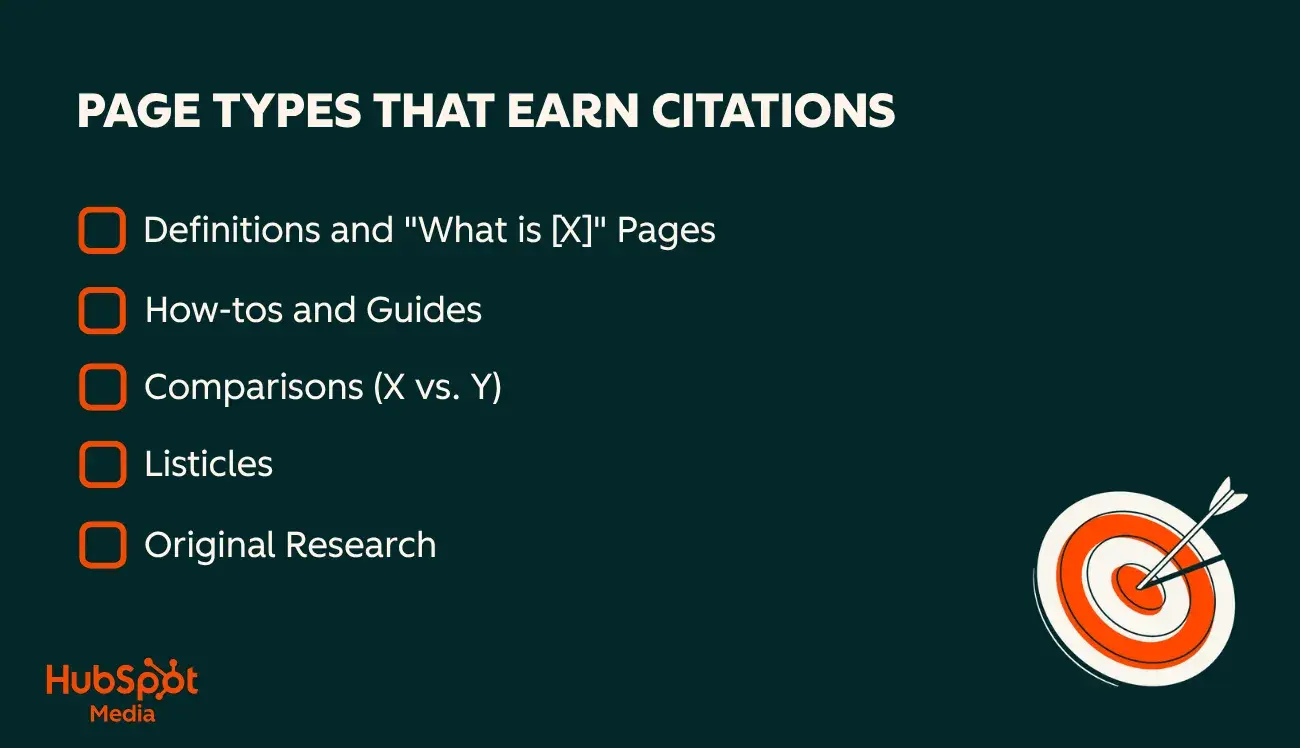
Not all content formats are equally effective in attracting citations. Analysis reveals specific content types that consistently perform as "citation magnets":
- Definitions and "What is [X]" Pages: Concise definitions are precisely what AI engines seek for definitional queries. Leading with a clear, succinct answer before expanding provides immediate value.
- How-tos and Guides: Step-by-step instructional content directly mirrors how AI engines construct procedural answers. Clearly numbered and labeled steps simplify the engine’s formatting task.
- Comparisons (X vs. Y): Comparison content is a powerful citation driver, particularly evident in ChatGPT, where comparison pages exhibited a striking citation rate. Buyers frequently use AI engines to compare options, making well-structured comparison tables highly valuable.
- Listicles: "Best [X]" lists and numbered listicles perform exceptionally well across various engines due to their inherent structure, scannability, and ease of item-by-item extraction.
- Original Research: Proprietary data represents the ultimate trust signal. Publishing original research establishes a brand as the authoritative source, positioning it as the entity that other content and AI engines will reference.
Beyond content types, title and heading patterns significantly influence citation rates. Different patterns resonate with different engines, emphasizing the need for targeted optimization. Keyword-rich H1s, substantial heading depth, and the 7-15 H2 sweet spot are broadly applicable, but specific engines may favor distinct formats (e.g., direct questions for some, descriptive statements for others).
Platform Divergence: Tailoring Strategy for Each Answer Engine
A critical understanding in AEO is that "AI search" is not a monolithic entity. Different answer engines possess distinct citation appetites, requiring a segmented approach:

- Google AI Overviews: This platform heavily favors structured, authoritative content and shows the strongest correlation with existing Google search rankings. Blog posts and informative articles were the most cited content types in the data. This directly implies that traditional SEO investments continue to yield significant returns here.
- Gemini: Leaning on Google’s trust signals, Gemini adopts a more conversational and multi-step interaction style. It cited a broad range of content types, including blog posts, product pages, and listicles, rewarding content that supports dynamic, follow-up-heavy interactions rather than single-shot answers.
- ChatGPT: This engine demonstrated a strong preference for comparison content, user reviews, PR materials, and clearly sourced information. It tends to cite well-known brands and original research. Brands with robust comparison pages and transparently sourced authoritative content will find particular success here.
- Perplexity: Known for surfacing recent, specific, and niche content, Perplexity is aggressive in linking out to sources, making its citations particularly valuable for driving referral traffic. Product pages and blog content are cited effectively, with freshness and specificity being key levers for visibility.
The practical takeaway is clear: generic "AI optimization" risks spreading resources too thinly. A targeted strategy, mapping priority content formats to the specific engines that reward them, is essential for maximizing citation success.
Understanding Query Intent in the AI Era
The nature of user queries profoundly influences which brands are cited. AEO strategies must therefore align with shifting query intents:
- Informational Queries: Users seeking definitions, explanations, or how-to guides. These often lead to citations of structured, authoritative content.
- Navigational Queries: Users looking for specific brands or products. Strong brand presence across multiple channels is crucial here.
- Transactional Queries: Users comparing products, seeking reviews, or making purchasing decisions. Comparison pages, product pages, and user-generated content are highly relevant.
This plays out differently across audiences. B2B audiences, for instance, often engage with informational and research-heavy queries, valuing deep expertise and original data. B2C audiences may lean more towards transactional queries, seeking reviews, comparisons, and best-of lists. Tailoring content to these specific intents is paramount.
A Strategic Roadmap: Implementing AEO in 90 Days
For brands aiming to enhance their AI visibility, a structured 90-day action plan can provide a clear path:
- Weeks 1-3: Audit & Baseline Establishment: Begin by establishing a clear baseline of current citation performance. Tools like HubSpot’s AI Search Grader can provide an "outside-in" snapshot of how answer engines currently represent a brand. This phase involves identifying existing AI visibility, analyzing competitor citation patterns, and pinpointing high-potential content gaps.
- Weeks 4-9: Build & Refresh Priority Pages: With a baseline in place, focus on creating or updating content designed to directly answer target queries. This includes structuring content for extractability (clear H2s/H3s, short paragraphs, lists), embedding strong E-E-A-T signals (author bios, cited sources, original data), and implementing relevant schema markup (FAQ, Article, Author). Prioritize refreshing existing high-authority pages, as they often gain citations faster than entirely new URLs.
- Weeks 10-12: Distribute & Reinforce: Citation visibility extends beyond a brand’s owned website. Actively distribute and reinforce optimized content across relevant channels. This involves sharing content on platforms like LinkedIn and YouTube, participating in niche industry forums (e.g., Reddit, Slack communities), and encouraging reviews and mentions that build off-page E-E-A-T signals. This active social presence significantly influences AI search visibility by corroborating answers and demonstrating expertise.
By the end of this 90-day cycle, a brand transitions from passive AI visibility to an actively managed strategy, equipped with a baseline, optimized content, and a distribution mechanism tailored to the preferences of answer engines.
The Evolving Landscape of AEO Measurement
Measurement has historically been a significant hurdle for AEO, often cited as the biggest blocker for marketers. Traditional dashboards, designed for the click-driven era, can be actively misleading. As AJ Ghergich explains, AI crawlers visit sites at a vastly different rate than they direct human traffic. This discrepancy inflates impressions while clicks remain flat, making traditional conversion rates appear skewed. The core issue is that answer engines often deliver the desired outcome—a qualified buyer choosing a brand—without requiring a click.
-What-We-Learned-from-Analyzing-10+-Brands-With-High-AI-Search-Citations-2-20260826-1137108.webp?width=700&height=403&name=(non-organic)-What-We-Learned-from-Analyzing-10+-Brands-With-High-AI-Search-Citations-2-20260826-1137108.webp)
To address this, marketers need AEO-specific metrics that reflect visibility within AI answers. HubSpot AEO, for instance, offers a suite of tools to measure:
- Brand Visibility Score and Share of Voice: Quantifying a brand’s presence in AI answers relative to competitors.
- Sentiment: Analyzing the tone and context of AI-generated mentions.
- Prompt Tracking: Understanding the specific user queries that trigger citations.
- Citation Analysis: Detailed breakdowns of where, how, and why content is cited.
- Pipeline and Assisted Conversions: Directly linking AEO efforts to business outcomes.
HubSpot’s internal success, growing leads from AI by 1,850% through these strategies, demonstrates the tangible impact of a focused AEO measurement approach. Reporting focuses on leading indicators like share of voice and citation growth, ultimately connecting them to revenue-qualified pipeline and assisted conversions—the language executives understand.
Ensuring Long-Term AEO Success: Governance and Quality Over Time
Winning a citation is merely the first step; retaining it requires continuous effort. AI engines constantly re-crawl and re-rank. Stale content or superior competitor structuring can lead to a loss of citation visibility. AEO, therefore, is an ongoing process of maintenance and evolution.
The "Loop Marketing" framework—Express, Tailor, Amplify, Evolve—is particularly effective:
- Express: Creating foundational, quotable content.
- Tailor: Adapting content and strategy to specific engine preferences and query intents.
- Amplify: Distributing content across relevant multi-channels to reinforce trust signals.
- Evolve: Continuously monitoring performance, refreshing content, and adapting strategies based on new data and AI advancements.
Beyond content, a critical, yet often overlooked, aspect is governance. The question of "who decides what AI says about you" is shifting from a purely IT problem of "block or allow" to a crucial brand and marketing concern. When product data, positioning, or facts are misrepresented in an AI answer, it immediately becomes a brand crisis. Effective governance requires collaboration between marketing, IT, and legal to define access policies, ensure data accuracy, and establish a proactive plan for managing brand representation in AI environments.
The Brands That Move Now Win the Answer
The era of Answer Engine Optimization signifies a fundamental shift in digital marketing. High-citation brands are not employing mystical tactics but rather leveraging a disciplined approach rooted in trust, content structure, and consistency, reinforced over time. While 58% of marketers are already experimenting with AEO, many are still in early stages. This presents a significant opportunity for brands that act decisively—establishing baselines, implementing strategic plans, and utilizing robust measurement systems—to capture high-intent traffic and secure citations while competitors remain in deliberation. The path to AEO success does not demand an exorbitant budget but rather a strategic focus on optimizing priority pages, distributing content intelligently, and meticulously measuring impact. The comprehensive data and actionable insights found in the "State of AEO" report serve as an invaluable resource for navigating this exciting new chapter in search visibility.