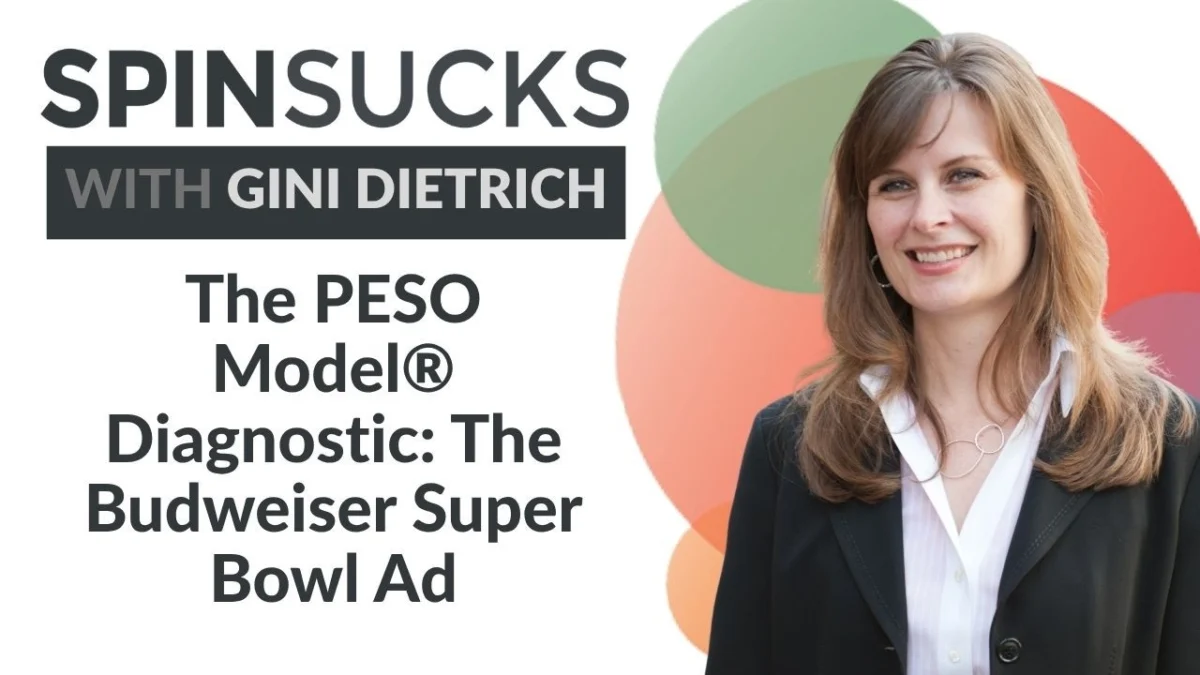
Following the conclusion of Super Bowl LX, Anheuser-Busch’s flagship brand, Budweiser, has once again claimed the top spot on USA Today’s Ad Meter. The winning commercial, titled "American Icons," served as the centerpiece for the brand’s ambitious "Made of America" program, a dual-anniversary initiative celebrating Budweiser’s 150th year and the United States’ semi-quincentennial. While the creative execution has been lauded as a masterpiece of traditional advertising, marketing analysts are now utilizing the campaign as a primary case study for the first installment of the PESO Diagnostic series. This analysis explores the distinction between a highly coordinated marketing effort and a fully integrated communications system, revealing that even the most successful Super Bowl campaigns often leave significant value on the table by failing to bridge the gap between silos.
The Creative Triumph of American Icons
The "American Icons" spot, directed by Oscar-nominated filmmaker Henry-Alex Rubin, leveraged Budweiser’s most enduring symbols to resonate with a national audience. The 60-second commercial featured a Clydesdale foal and a baby bald eagle, set to the soaring notes of Lynyrd Skynyrd’s "Free Bird." By capturing what many viewers described as the "golden hour" of American iconography, the ad successfully tapped into a sense of nostalgia and national pride.
The victory marks Budweiser’s 10th time atop the Ad Meter, a feat that reaffirms the brand’s dominance in the Super Bowl arena. However, the creative success of the 60-second spot is only one facet of a much larger strategic framework. The "Made of America" campaign was designed to be a multi-month endeavor, aligning the brand’s 150-year history with the 250th anniversary of the United States. This alignment provided Budweiser with a unique cultural platform to execute a series of high-profile activations throughout the 2026 calendar year.
Chronology of the Made of America Program
The "Made of America" initiative was not a singular event but a sequenced rollout designed to maintain brand momentum well beyond the Super Bowl’s final whistle. The timeline of the program’s key components includes:
- The Heritage Can Series: Launched in late 2025, these collectible cans served as a tangible narrative device, placing the brand’s 150-year history directly into the hands of consumers.
- The Super Bowl LX Anchor: The debut of "American Icons" during the February 2026 broadcast, serving as the high-visibility catalyst for the broader program.
- MLB Partnership Extension: Concurrent with the Super Bowl campaign, Budweiser announced an extension of its partnership with Major League Baseball through 2032, ensuring a consistent national stage for future activations.
- The 150 Club: The establishment of an exclusive fan loyalty program designed to offer scarcity-based experiences and rewards to the brand’s most dedicated advocates.
- Legacy Player Digital Content: A series of digital shorts featuring iconic figures from the brand’s history, intended to bridge the gap between traditional media and digital platforms.
Analyzing the Coordination vs. Integration Gap
Despite the impressive scale of these activations, communications experts argue that the campaign represents a "coordinated" effort rather than a "fully integrated" PESO Model® system. The PESO Model—which categorizes media into Paid, Earned, Shared, and Owned—requires a central nervous system to ensure that each element feeds into and amplifies the others.
In the case of Budweiser, while the various departments (merchandising, sports marketing, social media, and creative agencies) worked toward a common theme, they appeared to operate within independent silos. This lack of a unified editorial spine prevents the campaign from achieving a compounding effect where the total value exceeds the sum of its individual parts.
Owned Media: The Missing Hub
In a truly integrated system, owned media serves as the "source of truth." For Budweiser, this would ideally have been a comprehensive "Made of America" digital hub. While the brand utilized news releases to announce its various initiatives, critics point out that a newsroom is not a substitute for a content hub.
A durable owned media property would have featured deep-dive stories on the generational brewers in St. Louis, the distributor families that have carried the brand for decades, and the agricultural partners providing the barley for every bottle. Such content is not only valuable for consumers but also serves as a resource for search engines and AI systems, ensuring the brand’s story remains discoverable long after the Super Bowl ad has finished airing. Without this landing spot, the $8 million investment in the Super Bowl spot becomes a "flash" with nowhere for the audience’s interest to settle.
Earned Media: From Publicity to Credibility
The earned media results for "Made of America" were largely driven by announcements. Headlines focused on the unveiling of the Super Bowl ad, the launch of the Heritage Cans, and the MLB extension. While this generates significant reach, it falls under the category of publicity rather than true earned media.
An integrated approach would have leveraged the owned media hub to pitch heritage journalists and long-form features in publications like The Atlantic or the Smithsonian Magazine. These stories would explore the cultural significance of the brand and the evolution of the American lager over 150 years. This type of coverage provides a "credibility transfer" that simple product announcements cannot achieve.
Shared Media: Moving Beyond Transactions
The 150 Club and the collectible cans are effective merchandising and loyalty tools. However, in the PESO framework, shared media should function as a community engine. The "Made of America" campaign lacked a robust User-Generated Content (UGC) loop where everyday Americans could share their own stories of resilience or community.
By failing to integrate fan stories back into the owned media hub or the paid media strategy, the shared media component remained a transaction layer. A more integrated approach would have turned fans into a distribution engine, providing earned media reporters and influencers with new, human-interest threads to follow.
Paid Media: Precision vs. Reach
Budweiser’s paid media strategy focused on massive "anchor buys," such as the Super Bowl spot and the MLB partnership. These are essential for achieving reach and cultural presence. However, the PESO Diagnostic suggests a lack of a "precision layer."
In an integrated system, paid media is used to retarget visitors to the owned media hub, sequence prospects through a content journey, and amplify successful earned media coverage. Without this precision, the brand misses the opportunity to turn a one-time viewer into a long-term brand advocate through sequenced messaging.
Implications for Future Brand Strategy
The evaluation of Budweiser’s Super Bowl LX campaign offers a vital lesson for CMOs and communications directors: a campaign with multiple moving parts is not necessarily a system. The difference lies in sequencing, depth, and centralized governance.
To transition from a "parade" of activations to a compounding system, brands must establish a single narrative dashboard and an editorial lead who oversees all four quadrants of the PESO Model. This does not necessarily require a larger budget, but it does require a different species of work—one that prioritizes coordination of data and content over the mere execution of tactics.
Supporting Data and Market Reaction
Market analysts have noted that while Budweiser’s Ad Meter win provides a significant boost in brand sentiment, the long-term ROI of Super Bowl advertising is increasingly scrutinized. With the cost of a 60-second spot in 2026 estimated at approximately $8 million (exclusive of production costs), the need for an integrated system to capture and retain audience attention is paramount.
Internal sources suggest that Anheuser-Busch is closely monitoring the "150 Club" sign-up rates and Heritage Can sell-through as primary KPIs for the campaign’s success. However, the true test will be the brand’s ability to maintain its "Made of America" narrative through the July 4th semi-quincentennial celebrations and into the end of the 2026 fiscal year.
Conclusion: The Path Forward for Integrated Communications
As the first entry in the PESO Diagnostic series, the Budweiser "Made of America" campaign highlights the evolution of modern marketing. The transition from traditional multi-channel advertising to a fully integrated PESO operating system is the next frontier for global brands.
For Budweiser, the "American Icons" spot was a creative triumph that resonated with millions. By adding a more robust owned media foundation, a community-driven shared media strategy, and precision-targeted paid media, the brand could have transformed a momentary cultural win into a permanent digital asset. As other brands prepare for the remainder of America’s 250th anniversary year, the Budweiser case study serves as both a benchmark for creative excellence and a roadmap for the future of integrated communications.