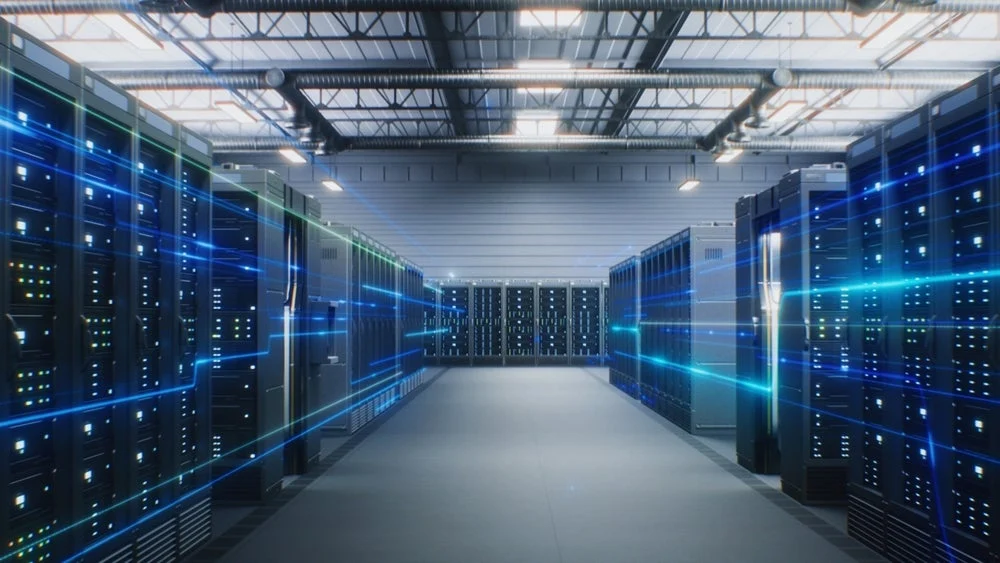
The landscape of American technological infrastructure is currently undergoing a seismic shift as public sentiment transitions from passive acceptance of "the cloud" to what industry analysts and major publications like the Wall Street Journal now characterize as an "American rebellion" against artificial intelligence and its physical requirements. For decades, data centers operated as the invisible backbone of the digital age, tucked away in nondescript industrial parks and rarely garnering headlines. However, the meteoric rise of generative AI has thrust these facilities into the spotlight, transforming them from mundane utility hubs into focal points of intense community scrutiny, environmental debate, and regulatory pushback. As projects are increasingly delayed, downsized, or canceled due to local opposition, the industry is discovering that traditional public relations strategies are no longer sufficient to secure a social license to operate.
The Chronology of Disruption: From Cloud to AI
The evolution of public concern regarding data centers can be traced through a clear timeline of technological and social shifts. In the early 2010s, the primary narrative surrounding data centers was one of economic growth and digital modernization. Municipalities often competed to attract "hyperscalers"—large-scale providers like Amazon Web Services (AWS), Google, and Microsoft—viewing them as clean, high-tax-yield neighbors that required few municipal services like schools or emergency response.
The turning point arrived in November 2022 with the public release of ChatGPT and the subsequent explosion of the generative AI market. Unlike traditional cloud computing, which involves storing data and running standard applications, AI training and inference require exponentially more processing power. This shift necessitated a new breed of data centers equipped with high-density racks and advanced cooling systems. By mid-2023, reports began to surface of local "rebellions" in traditional hubs like Northern Virginia’s "Data Center Alley," as well as in emerging markets in Arizona, Georgia, and Ohio. Residents who once ignored the windowless buildings began to organize against the humming of massive cooling fans, the perceived strain on local power grids, and the consumption of millions of gallons of water per day.
By 2024, the conflict reached a fever pitch. In Prince William County, Virginia, and parts of South Carolina, proposed developments faced unprecedented legal challenges and protests. The narrative had shifted: data centers were no longer seen as invisible utilities but as resource-intensive industrial neighbors that prioritized Silicon Valley’s AI ambitions over local environmental stability.
The Quantitative Reality: Power, Water, and Land
To understand the scale of the public’s concern, one must look at the data driving the expansion. According to a report by the Electric Power Research Institute (EPRI), data centers could consume up to 9% of the United States’ total electricity generation by 2030, more than double their current consumption. In some regions, such as Virginia, data centers already account for roughly 20% of the total electricity load served by Dominion Energy.
The environmental footprint extends beyond electricity. A standard 15-megawatt data center can use up to 360,000 gallons of water per day for cooling—enough to support the needs of a small town. For AI-specific facilities, which generate significantly more heat, these requirements can be even higher. Microsoft’s 2023 environmental report revealed that its global water consumption spiked 34% from 2022 to 2023, a surge largely attributed to its AI research and development. Similarly, Google reported a 17% increase in water consumption over the same period.
These figures have become ammunition for local activists. When a developer proposes a new facility, communities are no longer satisfied with vague promises of "sustainability." They are demanding granular data on peak load demands, the source of the water (potable vs. reclaimed), and the specific impact on local utility rates. The industry’s failure to provide these details proactively has fueled the perception that tech giants are "extracting" local resources for global corporate gain.
The Transparency Paradox and Confidentiality Challenges
A significant hurdle in data center communications is the tension between public transparency and corporate confidentiality. During industry forums such as the Earthlings 2.0 Data Center series at the Data Center Expo, developers and operators have expressed a persistent reluctance to share specific infrastructure details. In a highly competitive market, the choice of cooling technology, backup power systems, and facility design are often viewed as proprietary trade secrets that provide a competitive edge in deployment speed and operational efficiency.
However, this "black box" approach is increasingly untenable. When a company refuses to disclose how it will cool its servers or what kind of backup generators it will use, the community often assumes the worst-case scenario. This lack of information creates a vacuum filled by speculation and fear.
The emerging solution is a model of "educational transparency." This involves shifting the conversation from proprietary design specs to functional outcomes. Instead of revealing a specific, patented cooling configuration, companies can explain the category of technology being used—such as closed-loop liquid cooling—and explain how that choice minimizes water consumption compared to traditional evaporative methods. By educating the public on the trade-offs involved in infrastructure decisions, companies can build a foundation of trust without compromising their intellectual property.
Deconstructing the "Efficiency" Narrative
For years, the data center industry has used "efficiency" as a shield against environmental criticism. The primary metric for this has been Power Usage Effectiveness (PUE), a ratio of how much energy is used by the computing equipment versus the facility’s cooling and lighting. While PUE scores have improved dramatically across the industry, this metric often obscures the reality of total resource consumption.
In the context of AI, a facility can be highly efficient—doing more computational work per watt of energy—while still demanding a massive and growing total amount of power from the grid. This is a classic example of the Jevons Paradox, where technological progress that increases the efficiency with which a resource is used leads to an increase in the total consumption of that resource.
Communication strategies that rely solely on efficiency metrics are increasingly viewed as misleading by skeptical public stakeholders. A more credible approach requires distinguishing between "resource intensity" (how much power is used per unit of compute) and "total resource demand" (the total draw on the local grid). When developers imply that efficiency automatically equals a lower environmental impact, they risk losing credibility when the local utility announces the need for new high-voltage transmission lines or fossil-fuel-burning peaker plants to support the new demand.
The Move Toward Communications Readiness
The current climate demands that public relations and communications teams be integrated into the project lifecycle long before a shovel hits the ground. Traditionally, PR was brought in during the permitting phase to "manage the message." In the era of the AI rebellion, this reactive approach is a recipe for failure.
Communications readiness now requires PR teams to work alongside engineers, legal counsel, and environmental consultants during the site selection and design phases. This collaboration ensures that the project’s rationale is defensible and that the team is prepared to answer difficult questions about:
- Grid Reliability: How the project will affect the local power supply and whether the developer is investing in new renewable energy capacity to offset its load.
- Water Stewardship: The specific volume of water required and the impact on local aquifers or municipal supplies.
- Noise Mitigation: Concrete plans for acoustic dampening to address the persistent low-frequency hum that often plagues neighbors of large facilities.
- Tangible Local Benefits: Moving beyond vague "job creation" promises to specific workforce development programs, tax revenue allocations for local schools, or community infrastructure investments.
Broader Implications and the Path Forward
The "American rebellion" against AI data centers is not merely a series of localized "NIMBY" (Not In My Backyard) disputes; it is a fundamental debate about the role of big tech in the physical world. As AI becomes more integrated into daily life, the physical infrastructure required to support it will continue to expand. The industry’s ability to grow will depend less on its technological prowess and more on its ability to coexist with the communities it inhabits.
Official responses from industry groups like the Data Center Coalition emphasize a commitment to "responsible growth," but the burden of proof has shifted to the developers. Analysts suggest that the next phase of development will likely see a push toward "edge computing" and smaller, more distributed facilities, as well as a greater focus on redeveloping brownfield sites—former industrial areas that already have power and water infrastructure in place.
In conclusion, quelling the rebellion against AI data centers requires a departure from the "trust us" era of corporate communications. It demands a new standard of radical, educational transparency and a genuine acknowledgment of the trade-offs inherent in the AI revolution. Only by treating communities as informed partners rather than obstacles can the data center industry secure the stability it needs to power the next generation of human innovation.