Commerce has undergone several major shifts over the past few decades, evolving from localized physical stores to borderless, internet-driven e-commerce experiences. Now, with the rapid ascent of artificial intelligence, the retail world stands at the precipice of another profound transformation: agentic commerce. This emerging paradigm envisions a future where sophisticated AI agents actively assist consumers in discovering products, comparing options, and even completing purchases autonomously on their behalf. While the excitement surrounding this concept is palpable, it also raises critical questions about consumer trust, business return on investment, and whether this autonomous shopping experience truly solves problems or merely introduces new layers of complexity.
Despite these uncertainties, the underlying technology is advancing at an unprecedented pace. Imagine a shopping experience where consumers no longer laboriously jump between countless browser tabs, meticulously compare dozens of products across disparate websites, or manually research every potential purchase. Instead, intelligent AI agents, endowed with a deep understanding of user intent and preferences, evaluate myriad options, compare prices in real-time, and act within predefined rules to facilitate informed purchasing decisions. What once sounded like a distant futuristic fantasy is rapidly beginning to materialize. This article will delve into the essence of agentic commerce, explore its operational mechanisms, highlight the pivotal technological developments driving its progress, and examine the significant challenges that will inevitably shape its future adoption and societal integration.
Defining Agentic Commerce: A Paradigm Shift
In its simplest terms, agentic commerce refers to a commerce model where AI agents assume the role of active decision-makers on behalf of customers. Unlike traditional e-commerce, where the human user is solely responsible for manually searching, comparing, filtering, and executing purchases, agentic commerce empowers AI entities to handle these complex tasks. This delegation is based on the user’s articulated intent, stated preferences, budgetary constraints, and overarching buying goals.

To illustrate this practically, Alex Moss, a prominent voice in the domain, explained agentic commerce in the "SEO Unplugged: Agentic Commerce with Alex Moss" podcast: "So everything’s connected. I could literally say into the into a phone to my agent, go and buy me some new shoes with that jacket I bought last week, and that’s it. And it would go away. It would do the research. And of course, you can have a say in an approval in terms of part of the journey." This anecdote perfectly encapsulates the core principle: agentic commerce functions as a sophisticated digital shopping proxy. Humans define the desired outcome or goal, while AI agents orchestrate and execute the intricate process behind the scenes. Crucially, while the AI handles the heavy lifting, users typically retain control over the final decision-making process, often through approval mechanisms or predefined rules. This distinguishes it from earlier forms of AI-assisted shopping, which were primarily informational or recommendatory.
The Impetus for Agentic Transformation: Data and Expectations
The notion of agentic commerce might still seem nascent, yet the foundational shifts are already underway. Consumer behavior patterns, the widespread adoption of AI tools, and forward-looking industry forecasts all strongly indicate a future where AI agents become an integral, active participant in the buying journey.
Consumers Already Embrace AI in Their Buying Process: A significant indicator of this shift is the current consumer reliance on AI-powered tools for product discovery and purchase decisions. According to a comprehensive report by McKinsey & Company, over 70% of AI-powered search users are engaging with top-of-the-funnel queries concerning product categories, specific brands, or services. This suggests a proactive use of AI not just for finding specific items, but for broader exploration and understanding. The same report further reveals that nearly 50% of consumers are already utilizing AI-powered search experiences today. This growing integration of AI into the initial stages of product discovery suggests that traditional search-driven traffic models are poised for considerable disruption. In fact, the study posits that businesses could witness a substantial 20–50% of their web traffic migrating away from conventional search experiences over time. This underscores a pivotal evolution: consumers are moving beyond mere searching; they are increasingly asking AI systems to guide and even execute their purchasing decisions.
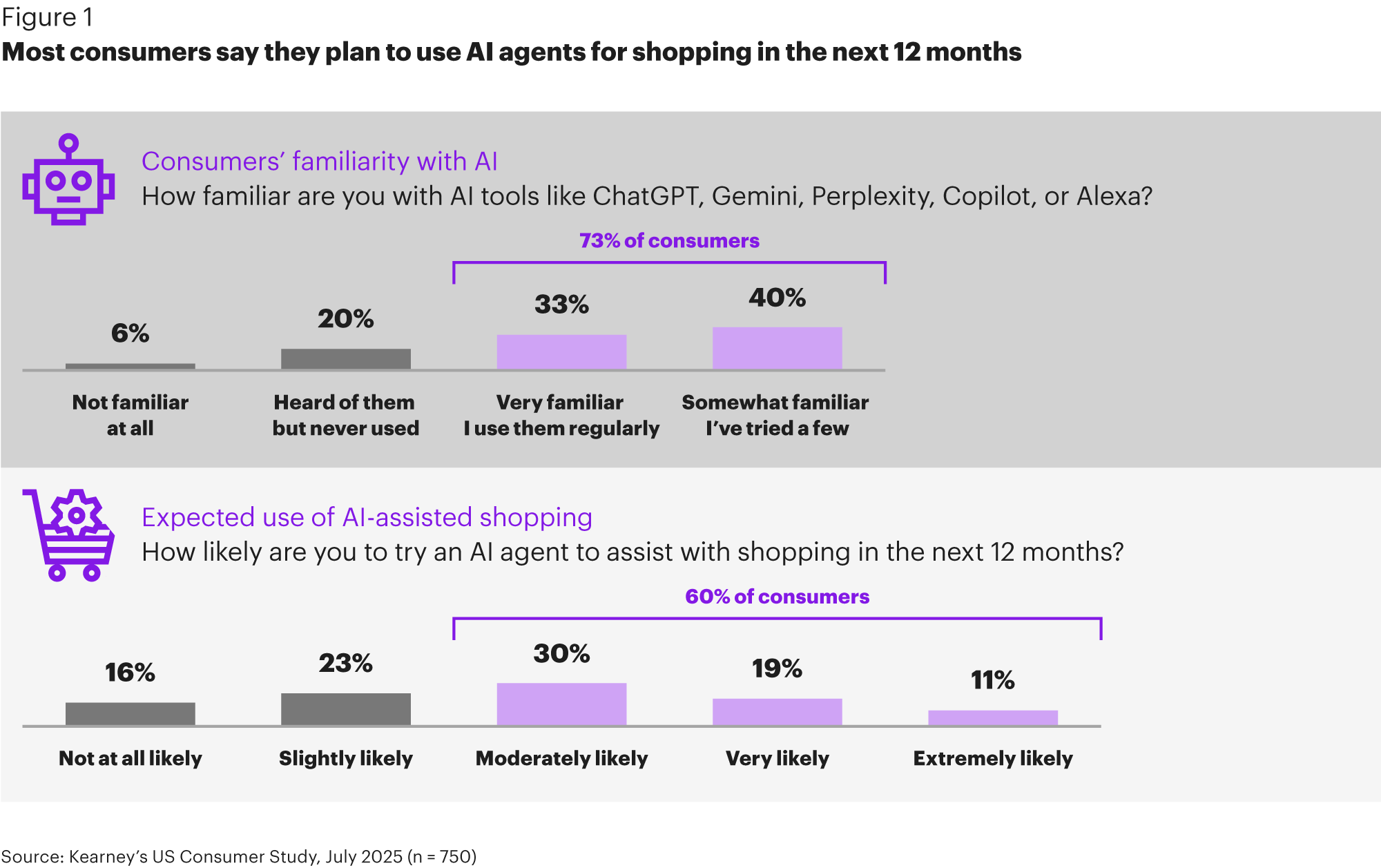
Rising Consumer Expectations for Agentic Commerce: Consumer interest in AI-assisted shopping is not merely a trend but a rapidly accelerating expectation. The 2025 Kearney report, titled “Agentic Commerce: From Brand Loyalty to Bot Logic,” meticulously explored shopper sentiments regarding AI agents within retail contexts. A striking finding was that over 60% of shoppers anticipate using agentic AI by 2026. The report also highlighted a significant behavioral realignment among consumers, who are increasingly prioritizing convenience, speed, competitive pricing, and trust above traditional platform or brand loyalty. This implies a future where shoppers may no longer exclusively browse individual retailer applications. Instead, they are likely to depend on AI agents capable of cross-referencing products across numerous platforms, synthesizing reviews, identifying optimal deals, and completing purchases with unparalleled efficiency. This dynamic fundamentally alters the competitive landscape, shifting it from a retailer-versus-retailer model to one dominated by sophisticated, AI-driven discovery ecosystems.

Analysts Project Explosive Growth: Industry analysts are unequivocally forecasting agentic commerce to become a monumental economic opportunity in the coming years. Another McKinsey report indicates that agentic commerce possesses the potential to fundamentally redefine the entire shopping experience. Based on the accelerating adoption of AI-powered discovery tools and increasing merchant readiness, the report estimates that by 2030, the U.S. B2C retail market alone could unlock an orchestrated revenue opportunity ranging from $900 billion to $1 trillion. On a global scale, this opportunity is projected to range from a staggering $3 trillion to $5 trillion. These figures underscore the immense economic weight and transformative power that agentic commerce is expected to wield across the global economy.
The Mechanism of Agentic Commerce: A Step-by-Step Flow
At its operational core, agentic commerce seamlessly integrates human intent with AI-driven execution. Instead of the laborious process of manually browsing websites, comparing products, and completing purchases, users can delegate a substantial portion of the shopping journey to AI agents. These agents are designed to comprehend complex goals, meticulously evaluate options, make informed decisions within predefined constraints, and even execute transactions on behalf of the user. The crucial distinction here from traditional AI assistants lies in the ability to act. While assistive AI tools primarily offer information or recommendations, agentic AI possesses the autonomy to execute tasks across the entire shopping journey.
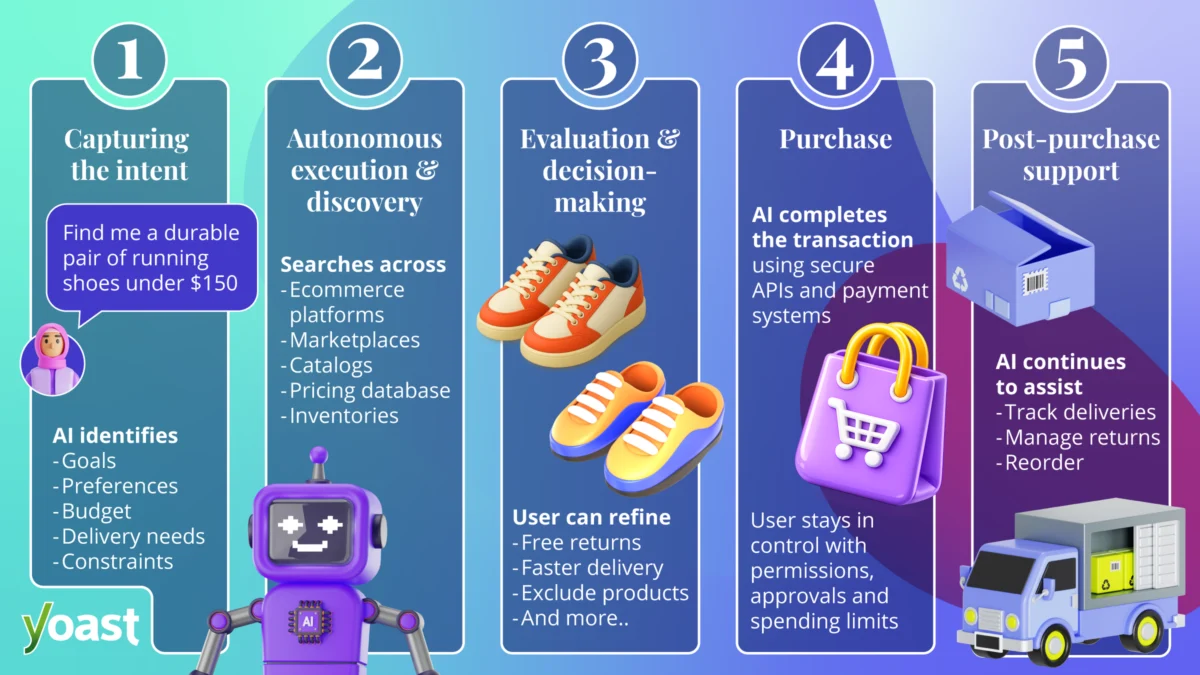
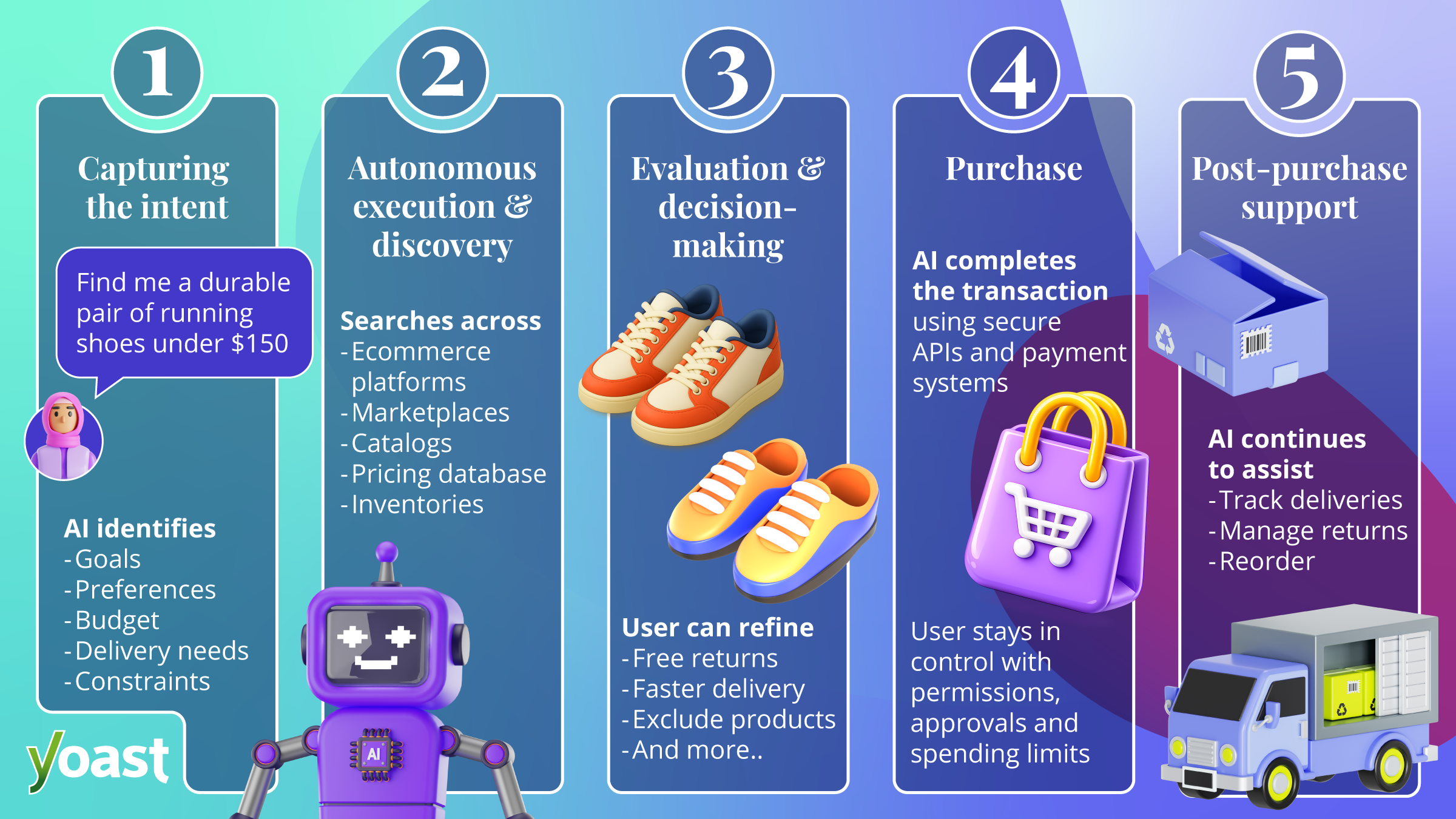
Here’s a detailed, step-by-step breakdown of how agentic commerce typically functions:
-
Capturing the Intent: Every agentic commerce interaction commences with the precise capture of user intent. Rather than inputting terse keywords into a conventional search bar, users engage with AI agents through natural, conversational language. For instance, a shopper might articulate: "Find me a sustainable, waterproof hiking jacket under $200 that can be delivered within three days," or "Order a gift for my niece’s 10th birthday – she loves science and art, budget around $50." At this foundational stage, the AI agent’s primary objective is to meticulously understand the user’s explicit and implicit goals, preferences, budgetary limits, delivery expectations, and any specific constraints. If the initial request appears too broad or ambiguous, the agent is programmed to ask clarifying follow-up questions to refine the intent before proceeding.
-
Autonomous Instruction Execution and Brand Discovery: Once the user’s intent is clearly established, the AI agent commences autonomous execution of the task. Instead of limiting its search to a single website, it simultaneously scans and cross-references an expansive array of e-commerce platforms, online marketplaces, extensive product catalogs, customer reviews, dynamic pricing databases, and real-time inventory systems. This is precisely where agentic commerce fundamentally alters traditional product discovery. Rather than presenting an overwhelming deluge of product pages, the agent intelligently narrows down the most pertinent options based on the shopper’s precise needs and criteria. Concurrently, brands that invest in better-structured product data, maintain accurate and real-time inventory information, offer transparent pricing, and publish machine-readable content are significantly more likely to be discovered and prioritized by these sophisticated AI agents.
-
Evaluation and Decision-Making: After aggregating a comprehensive set of potential options, the AI agent embarks on a rigorous process of evaluating products and comparing inherent trade-offs. It meticulously analyzes a multitude of factors, including: product specifications, aggregated customer reviews and ratings, pricing variations across different retailers, shipping costs and estimated delivery times, warranty and return policies, brand reputation, and the overall alignment with the user’s stated sustainability or ethical preferences. Rather than merely presenting a list of products, the agent engages in a reasoning process, explaining why certain products more effectively meet the shopper’s requirements than others. Users possess the capability to further refine this decision-making process by introducing additional conditions, such as: "Prioritize options with at least a 4.5-star rating," or "Find the same item but from a different brand," or "Only consider products made from recycled materials." This creates an iterative feedback loop, enabling the AI agent to continuously enhance its recommendations based on evolving user preferences and explicit directives.
-
Purchase: Upon the shopper’s approval of a selected product or the activation of predefined purchasing rules, the AI agent is authorized to proceed with the transaction. Leveraging advanced APIs, established commerce protocols, and secure payment systems, the agent can seamlessly add items to virtual carts, apply relevant discounts, authenticate payments through authorized channels, and ultimately complete the purchase. In certain scenarios, the transaction may occur almost instantaneously. In others, the AI agent might be configured to await specific conditions—such as a price drop, renewed stock availability, or the emergence of faster delivery options—before finalizing the transaction. Crucially, even as the AI manages the execution, users maintain ultimate control through granular permissions, explicit approval settings, and defined spending limits, ensuring a balance of autonomy and oversight.
-
Post-Purchase Support: The utility of AI agents extends well beyond the point of checkout. Agentic commerce seamlessly integrates into the post-purchase experience, offering continuous assistance to users. AI agents can proactively track shipment statuses and provide real-time updates, manage returns and exchanges according to defined policies, facilitate warranty claims and product registrations, monitor product recalls or important safety notices, and even assist with subscription renewals or cancellations. This comprehensive approach transforms shopping from a series of discrete, one-time transactions into an ongoing, intelligent, and highly personalized experience.
The Technological Backbone: Protocols and Platforms Driving Agentic Commerce
Agentic commerce is not solely a product of advanced AI models; it is underpinned by a burgeoning ecosystem of protocols, frameworks, APIs, and secure payment systems that enable AI agents to interact with diverse digital commerce platforms both securely and efficiently. A foundational concept in the broader agentic AI landscape is the Model Context Protocol (MCP). MCP allows AI models to connect with external systems, tools, databases, and applications via a standardized communication layer. This eliminates the need for bespoke integrations for every AI model and every software platform, creating a common operating language that fosters consistent interaction.
As agentic commerce emerges as a specialized application of agentic AI, similar commerce-focused protocols are being developed specifically for shopping ecosystems. These protocols are designed to help AI agents interpret product information, communicate effectively with merchants, compare inventory data across platforms, and securely execute transactions on behalf of users.
Agentic Commerce Protocol (ACP): One of the most significant advancements in this domain is the Agentic Commerce Protocol (ACP), an open standard spearheaded by Stripe in collaboration with OpenAI. ACP is specifically engineered to enable AI agents to interact more naturally and effectively with e-commerce systems. It provides a standardized framework encompassing product discovery, checkout processes, and payment execution. In essence, ACP lays the essential infrastructure for AI agents to transcend mere product recommendations and actually complete purchases securely within conversational interfaces.
While still in its nascent stages, ACP’s real-world implementations are already taking shape. For example, ChatGPT users in the United States can now directly purchase products from Etsy merchants within the chat interface, leveraging Stripe-powered checkout. Integrations with Shopify are also anticipated. This development signifies a pivotal shift from AI-assisted discovery to AI-enabled, in-conversation transactions. Executives from Stripe and OpenAI have emphasized that ACP aims to make the entire shopping journey more seamless and agent-friendly, moving away from redirects across multiple websites and fragmented checkout flows. The open-standard nature of ACP is also critical, positioning it as a framework that developers, merchants, and e-commerce platforms can widely adopt, fostering a more interconnected agentic commerce ecosystem rather than a closed, proprietary one. Looking ahead, protocols like ACP are poised to become foundational infrastructure for AI-driven shopping experiences, particularly as businesses increasingly optimize their product catalogs, payment systems, and checkout flows for interaction with AI agents, not just human users.
Universal Commerce Protocol (UCP): As the number of AI agents participating in the shopping journey multiplies, a new challenge arises: how can these agents effectively communicate with thousands of retailers, marketplaces, payment providers, and service platforms without requiring a custom integration for each interaction? This is precisely the complex problem that the Universal Commerce Protocol (UCP) aims to address. Introduced by Google, UCP is an open standard designed to establish a common language for the entirety of agentic commerce. Rather than necessitating a labyrinthine network of separate connections between every AI agent and every commerce platform, UCP offers a unified framework that facilitates more efficient communication across the entire shopping journey.

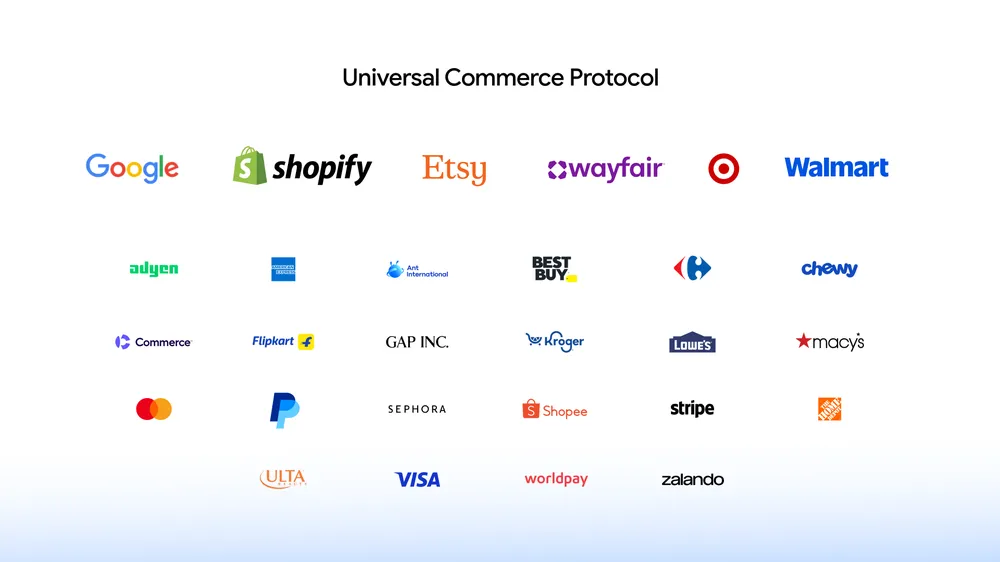
Consider the scale: if agentic commerce becomes mainstream, millions of AI agents could be simultaneously researching products, verifying inventory, comparing prices, placing orders, and managing returns daily. Without a standardized framework, retailers and AI platforms would face the daunting task of creating and maintaining an astronomical number of one-to-one integrations. UCP seeks to mitigate this complexity by providing a common set of rules for all participants to seamlessly exchange commercial information. What distinguishes UCP is its expansive scope. Unlike protocols focused primarily on the purchase moment, UCP is meticulously designed to support the entire commerce lifecycle, including product discovery, inventory management, order placement, fulfillment, shipping, returns, and customer service. Google has also strategically designed UCP to be interoperable with other emerging AI standards, such as Agent2Agent (A2A), Agent Payments Protocol (AP2), and the Model Context Protocol (MCP). This forward-thinking approach allows businesses to embrace agentic commerce without necessitating a complete overhaul of their existing systems. The initiative boasts significant industry backing, with Google co-developing UCP alongside major commerce entities like Shopify, Etsy, Wayfair, Target, and Walmart. It has also garnered support from leading financial institutions, including Mastercard, Visa, Stripe, and American Express. Executives from Google have underscored UCP’s role in creating a standardized, scalable ecosystem, moving towards a future where AI agents, merchants, and payment providers can operate within a unified environment rather than isolated platforms.
Mastercard Agent Pay: While protocols like ACP and UCP focus on communication and interoperability within the agentic commerce ecosystem, Mastercard Agent Pay zeroes in on one of the most critical challenges: establishing trust and ensuring secure payment execution. As AI agents gain the formidable ability to discover products, compare options, and make purchasing decisions, they simultaneously require a secure and authenticated mechanism to complete transactions on behalf of users. Mastercard Agent Pay was specifically introduced to provide the robust infrastructure for this very purpose. The platform is engineered to empower AI agents to execute payments while rigorously adhering to user-defined permissions, stringent authentication requirements, and explicit spending controls. Rather than granting AI systems unrestricted access to sensitive payment credentials, Agent Pay prioritizes the creation of verified, traceable, and fully authorized payment flows for agent-driven commerce.
A pivotal development for Mastercard Agent Pay has been its collaboration with PayPal, wherein the technology is being integrated into PayPal’s extensive wallet infrastructure. This integration allows AI agents to securely complete transactions on behalf of PayPal users, all while upholding the stringent security protocols and trust mechanisms that consumers have come to expect from digital payments. This partnership is particularly significant because it propels agentic commerce closer to widespread, real-world adoption. Instead of being confined to experimental AI environments, agent-driven payments can now potentially operate across a vastly larger ecosystem of merchants, consumers, and payment networks. Together, ACP, UCP, and Agent Pay are collectively laying the foundational groundwork for agentic commerce. ACP enables AI agents to interact with merchants and finalize purchases, UCP establishes a common language for agents, retailers, and platforms to operate together at scale, and Agent Pay adds the indispensable layer of trust by enabling secure, authorized payments, making AI-driven shopping an increasingly tangible reality.
Navigating the Future: Challenges and Opportunities
While the technological underpinnings of agentic commerce are advancing with remarkable speed, its widespread adoption is far from a foregone conclusion. Numerous challenges must be addressed for this paradigm to truly flourish.
Consumer Trust and Adoption: A primary hurdle is the psychological and practical discomfort many consumers may feel about entrusting AI agents with significant purchasing authority or granting them access to payment methods. Concerns around data privacy, the security of financial information, and the potential for errors or misuse by AI agents are paramount. Furthermore, some consumers may question whether autonomous shopping genuinely solves a pressing problem or merely facilitates easier, more frequent consumption. The human element of discovery and serendipity in shopping might also be diminished.
Business Model Adaptation: For businesses, supporting agentic commerce necessitates substantial investments in new protocols, the structuring of vast amounts of product data, seamless integrations with AI platforms, and the development of AI-ready commerce experiences. The measurable return on these significant investments remains uncertain, especially given the early stages of consumer adoption. Brands also face the challenge of maintaining direct customer relationships and fostering loyalty in an environment mediated by AI agents. How will brands differentiate themselves when an AI agent, not the customer, is doing the initial "browsing"?
Security, Fraud, and Bias: The emergence of agentic commerce introduces new vectors for security threats and fraud. Who bears responsibility if an AI agent makes an unauthorized or incorrect purchase? The potential for AI bias in recommendations—perpetuating existing inequalities or limiting consumer choice—also demands careful consideration and mitigation strategies.
Regulatory Frameworks: The rapid evolution of agentic commerce will inevitably outpace existing regulatory frameworks. New laws and guidelines will be required to address issues of accountability, consumer protection, data governance, and market fairness in an AI-driven retail landscape.
Despite these significant challenges, the opportunities presented by agentic commerce are transformative. It promises unprecedented efficiency for both consumers (saving time and effort) and businesses (automating processes and optimizing inventory). It enables hyper-personalization, delivering tailored shopping experiences at a scale previously unimaginable. It could unlock new market segments by simplifying complex purchasing decisions and reaching consumers who are overwhelmed by traditional shopping methods. Ultimately, agentic commerce represents an exciting new frontier for digital shopping. Its long-term success, however, will hinge on its ability to demonstrably create profound value for consumers, merchants, and the broader e-commerce ecosystem, extending far beyond the capabilities of the AI platforms powering it.