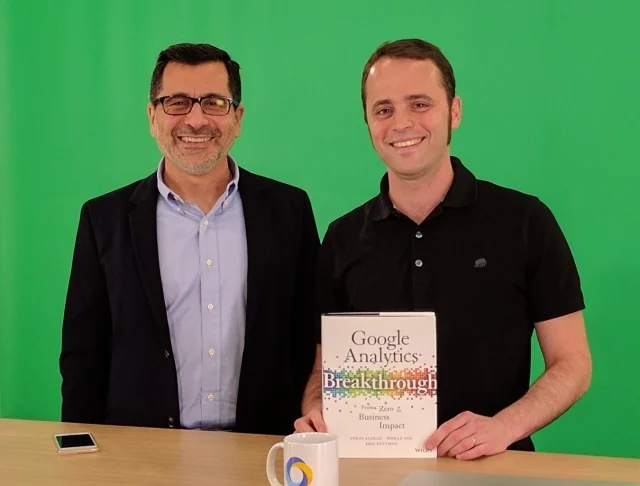
The digital marketing and business intelligence landscape has undergone a fundamental transformation, shifting from a technical exercise of tracking website page views to a sophisticated, multi-layered business process centered on strategic measurement and actionable insights. As enterprises grapple with an unprecedented volume of data generated across diverse touchpoints, the necessity for a structured approach to analytics has become a primary differentiator for market leaders. Feras Alhlou, Co-Founder and Principal Consultant at E-Nor and co-author of the seminal text Google Analytics Breakthrough, emphasizes that the efficacy of a digital strategy is no longer determined solely by the quantity of data collected, but by the maturity of the framework used to interpret and act upon that information.
The Foundation of Analytics as a Business Process
Modern analytics is increasingly recognized not as a static IT implementation but as a dynamic business process. This paradigm shift requires organizations to move beyond the "implementation-only" mindset, where the goal is simply to ensure tracking codes are firing correctly. Instead, the focus has shifted toward a holistic lifecycle that begins with business objectives and ends with measurable optimizations in user experience and revenue.
According to the methodology advocated by industry experts at E-Nor, a robust analytics strategy must begin with a comprehensive audit. This audit is two-fold, addressing both technical integrity and business relevance. The technical audit ensures that data collection is accurate, consistent, and compliant with privacy standards. Simultaneously, the business audit involves deep engagement with organizational stakeholders to define Key Performance Indicators (KPIs) that align with overarching corporate goals. This initial phase is critical for establishing a "source of truth" that stakeholders across departments—from marketing to finance—can trust.
The Multi-Stage Optimization Framework
To navigate the complexities of the modern consumer journey, organizations are encouraged to adopt a structured optimization framework. This framework typically consists of five distinct stages designed to move a company from basic data awareness to advanced personalization.
- Stakeholder Engagement and Measurement Strategy: Before a single line of code is written, business leaders must identify what matters most. This involves questioning the purpose of digital properties and defining what constitutes a successful conversion. By engaging stakeholders early, organizations ensure that the resulting data reports are relevant to the decision-makers who will use them.
- Data Implementation and Reporting: Once the strategy is defined, the technical layer is established. This involves the deployment of tools such as Google Analytics 4 (GA4) or BigQuery to capture relevant interactions. The reporting layer then translates this raw data into digestible formats, such as automated dashboards, which provide a snapshot of performance against the defined KPIs.
- Data Analysis and Actionable Insights: Reporting tells a business what happened; analysis explains why it happened. This stage requires skilled analysts to look for patterns, anomalies, and correlations within the data. The goal is to move beyond "vanity metrics" and identify specific areas where the business is underperforming or where opportunities for growth exist.
- Testing and Personalization: The final and most impactful stage of the framework is the application of insights through A/B testing and user experience personalization. By using data to inform changes in design, content, or product offerings, businesses can create a feedback loop where every insight leads to an experimental improvement, eventually resulting in a highly tailored customer experience.
Navigating the Complexity of the Modern Data Ecosystem
The current environment for marketers is significantly more complex than the single-device, few-channel era of the early 2010s. Today’s consumers interact with brands through a fragmented ecosystem of mobile applications, social media platforms, desktop browsers, and offline touchpoints. This proliferation of data sources has created "data silos," where information about a single customer is trapped in disparate systems.
Industry leaders argue that the primary challenge is no longer a lack of data, but a lack of context. To solve this, organizations must focus on data orchestration—the process of connecting web and mobile analytics with backend systems, such as Customer Relationship Management (CRM) platforms and Point of Sale (POS) data. Understanding the context around the data allows marketers to move from a session-based view of the world to a user-centric view, which is essential for understanding long-term customer lifetime value (CLV).
The Strategic Data Roadmap and Qualitative Integration
A common pitfall for many enterprises is attempting to achieve total data integration overnight. Experts recommend a phased "data roadmap" approach. This roadmap suggests starting with owned media—specifically web and mobile analytics—to build a solid foundation of behavioral data. Once this is stabilized, the next step is to augment these reports with social media data and basic qualitative inputs.
The integration of qualitative data represents a significant evolution in the field. While quantitative data (the "what") is provided by tools like Google Analytics, qualitative data (the "why") is often derived from the "Voice of the Customer." The introduction and refinement of tools like Google Surveys have democratized market research, allowing companies to gather direct feedback from users on their properties or through targeted market research. This "voice" provides the necessary color to quantitative findings, explaining user frustrations or motivations that numbers alone cannot capture.
Chronology of Analytics Evolution
The transition to this modern framework can be traced through several key milestones in the industry:
- 2005-2010: The era of basic web tracking. The acquisition of Urchin by Google (leading to Google Analytics) made web data accessible to the masses, though it was largely focused on page views and hits.
- 2011-2015: The rise of Universal Analytics. This period saw the introduction of cross-device tracking and the beginning of the "User-Centric" model. Companies like E-Nor began advocating for formal measurement strategies over simple code installation.
- 2016-2018: The era of the "Optimization Framework." As discussed by Alhlou and his contemporaries, this period marked the shift toward using analytics for personalization and high-level business strategy. The publication of Google Analytics Breakthrough provided a blueprint for enterprises to achieve maturity.
- 2020-Present: The privacy-centric and AI-driven era. With the sunsetting of Universal Analytics and the rise of GA4, the industry has moved toward machine learning-driven insights and a heightened focus on first-party data in a cookieless world.
Supporting Data and Market Analysis
The business case for adopting a structured analytics framework is supported by significant industry data. A study by McKinsey & Company found that organizations that leverage customer behavioral insights outperform peers by 85% in sales growth and more than 25% in gross margin. Furthermore, research from Gartner indicates that by 2023, organizations that promoted data sharing and integrated cross-functional data sources were 1.7 times more likely to report "effective" data and analytics outcomes.
The cost-efficiency of modern research tools has also shifted the landscape. Traditional market research that once cost tens of thousands of dollars and took weeks to complete can now be executed via digital survey platforms for a fraction of the cost, with results delivered in near real-time. This agility allows businesses to pivot strategies based on current market sentiment rather than outdated quarterly reports.
Official Responses and Industry Implications
The consensus among digital transformation consultants and analytics principals is that the "technical gap" is closing, while the "strategy gap" is widening. Companies that invest heavily in expensive software but fail to invest in the people and processes to run them are seeing diminishing returns.
"We believe analytics is a business process," Feras Alhlou has stated, reinforcing the idea that technology is merely the enabler of strategy. This sentiment is echoed by major technology providers like Google and Adobe, who have increasingly focused their product updates on "intelligence" features—automated insights that flag significant changes in data patterns without manual intervention.
The implications for the future of business are clear: the role of the "web analyst" is evolving into that of a "business strategist." Future success will depend on the ability to not only manage vast data pipelines but to translate those pipelines into a narrative that drives organizational change. As personalization becomes the standard expectation for consumers, the ability to execute the final stages of the optimization framework—testing and tailored experiences—will be the primary factor in determining brand loyalty and market share.
In conclusion, the path to analytics maturity requires a disciplined adherence to a structured framework, a commitment to breaking down data silos, and a shift in culture that views data as a core business asset. By following a strategic roadmap and integrating both quantitative and qualitative insights, enterprises can move beyond simple reporting to a state of continuous, data-driven optimization.