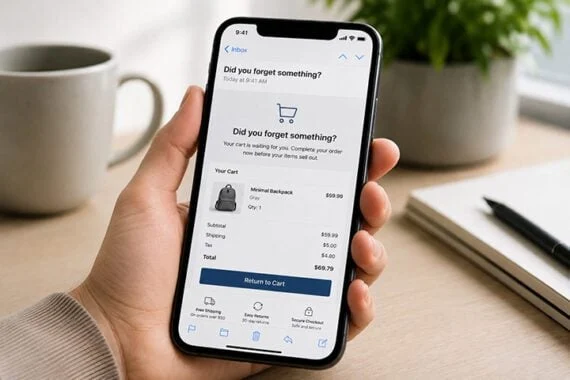
Effective cart abandonment emails and text messages do more than remind shoppers about items left behind. They use product details, reassurance, and incentives to address customer concerns and reopen a conversion path. This nuanced approach is becoming increasingly critical as e-commerce continues its relentless growth, with a significant portion of potential sales slipping through the digital cracks. For decades, online retailers have grappled with the phenomenon of abandoned shopping carts, a persistent challenge that underscores the complexity of the online consumer journey.
The ubiquitous image of a smartphone displaying an abandoned cart message serves as a potent visual reminder of this ongoing e-commerce hurdle. After over three decades of online shopping, the ability to recover these lost sales remains a cornerstone of successful digital retail strategies. Yet, the inherent limitations of many current recovery programs often hinder their true potential. The fundamental issue lies in the nature of the data captured: an abandoned cart records an outcome – the presence of unpurchased items – but rarely the underlying reason for that outcome. While an e-commerce platform can readily identify which products a shopper left behind, it typically lacks immediate insight into the specific concerns that led to the abandonment. This knowledge gap forces many recovery efforts to operate on a generalized, one-size-fits-all approach, rather than a targeted, problem-solving strategy.
Navigating the Obstacles to Conversion
The obstacles preventing a shopper from completing a purchase are multifaceted and can broadly be categorized into three primary groups:
-
Unforeseen Costs and Financial Hesitation: A significant driver of cart abandonment is the revelation of unexpected expenses during the checkout process. High shipping fees, taxes, or other surcharges that were not clearly communicated upfront can be a major deterrent. Shoppers may have budgeted for the product price but are unwilling or unable to absorb additional costs. This is particularly true for price-sensitive consumers or those comparing multiple options. Furthermore, concerns about payment security or a lack of preferred payment methods can also lead to hesitation.
-
Technical Glitches and User Experience Friction: A cumbersome or confusing checkout process is a guaranteed way to lose customers. Long, multi-step forms, mandatory account creation, slow loading times, or poorly designed mobile interfaces can frustrate even the most determined shopper. Technical errors, such as a non-functioning discount code field or a broken payment gateway, are also common culprits. A website that feels untrustworthy or difficult to navigate creates a barrier to conversion.
-
Information Gaps and Decision Paralysis: Shoppers often abandon carts because they are not entirely convinced about the product, its suitability, or the retailer’s credibility. This can stem from a lack of detailed product information, insufficient reviews, or unclear return policies. Uncertainty about sizing, compatibility, or expected performance can lead to a pause in the decision-making process. Moreover, the sheer volume of choices available online can sometimes lead to decision paralysis, where consumers delay their purchase to conduct further research or simply reconsider their options.
Tailoring Recovery Tactics to Address Specific Concerns
Given these diverse obstacles, effective cart recovery messages must employ corresponding tactics that go beyond a simple reminder. The goal is to address the likely reason for abandonment and provide a compelling reason to return and complete the purchase.
-
Incentivized Re-engagement: Offering a discount, free shipping, or a small gift with purchase can be a powerful motivator to overcome price sensitivity or the inertia of having left an item behind. This tactic directly addresses the "unforeseen costs" category by effectively reducing the final price or eliminating a significant added expense. For instance, a 10% discount or free express shipping can be the deciding factor for a shopper who was on the fence due to shipping costs.
-
Reassurance and Trust-Building: For shoppers who abandoned due to concerns about product suitability or retailer credibility, messages that offer reassurance can be highly effective. This might include highlighting positive customer reviews, showcasing secure payment badges, providing clear links to return policies, or offering customer support contact information. Emphasizing the benefits and quality of the product, perhaps with links to detailed product pages or user guides, can also alleviate information gaps.
-
Urgency and Scarcity: Creating a sense of urgency can prompt immediate action. This could involve mentioning limited stock availability for the abandoned item or highlighting that a special offer is about to expire. This tactic is most effective when genuine, as overuse of artificial scarcity can erode customer trust. It’s particularly useful for impulse purchases or items where competition is high.
-
Personalized Product Showcase: Simply listing the abandoned items can be insufficient. Instead, recovery messages can be enriched by showcasing the specific product images, names, and key features. This visual reminder helps the shopper reconnect with their desired item. Further personalization can involve suggesting complementary products or highlighting recently added features that might appeal to their interests.
Each of these tactics has the potential to recover a sale, but it’s crucial to recognize that no single option is a universal solution. The effectiveness of a recovery strategy hinges on its ability to intelligently match the tactic to the perceived obstacle.
The Vast Opportunity of Cart Recovery
The sheer scale of the abandoned cart problem underscores its significance in the e-commerce landscape. According to the Baymard Institute, a staggering 70% of online shopping carts never result in a completed purchase. This statistic, consistently reported over many years, translates to billions of dollars in unrealized revenue for online retailers globally. This enormous potential loss has naturally driven most e-commerce marketers to implement some form of cart recovery automation.
Abandoned cart email remains the foundational recovery channel for many businesses. Data from Ringly indicates that these emails achieve an average open rate of 50.5% and a conversion rate of 10.7%. While respectable, these figures highlight that there is significant room for improvement. Emerging channels, such as SMS and direct phone outreach, are demonstrating even greater potential for engagement and recovery. Reports suggest that these more direct communication methods can outperform email in both metrics, likely due to their immediacy and perceived intimacy.
The Limitations of Fixed, Predefined Sequences
A common approach to cart recovery involves implementing fixed sequences of automated messages. These programs are typically built on predefined triggers and branches, where merchants set specific delays between messages, craft the content, and establish conditions for applying offers. While this makes cart recovery manageable, it necessitates that merchants anticipate every possible customer concern and scenario.
The complexity arises with businesses that boast large product catalogs. Products can vary significantly in terms of profit margins, the typical consideration period for purchase, and the specific customer concerns they might evoke. A single, static sequence struggles to account for this diversity. For example, a luxury item might require a different recovery approach than a daily consumable.
Furthermore, fixed sequences often make broad, potentially inaccurate, assumptions about the customer’s intent. An automation might offer a discount to a shopper who had no intention of purchasing immediately but planned to return later. Conversely, it might focus on product features for a shopper whose primary obstacle was an unexpectedly high shipping cost. This lack of dynamic adjustment means that valuable opportunities to connect with the customer on their terms are often missed. The bottom line for marketers is that improving cart conversions and recovery typically boils down to two primary strategies: manual optimization of these fixed sequences or leveraging the power of artificial intelligence (AI) for more dynamic decisioning.
The Path to Optimization: A Manual Approach
For merchants opting for a manual optimization strategy, focus can be directed towards four key areas to enhance the effectiveness of their cart recovery efforts:
-
Segmentation and Personalization: Moving beyond a blanket approach, merchants can segment their audience based on factors like purchase history, customer value, or product category. This allows for more tailored messaging. For instance, a high-value customer might receive a more generous offer or a personal outreach from a sales representative, while a first-time abandoned cart might trigger a standard discount sequence. Personalization extends to dynamically populating emails with the specific products left in the cart, including images and key details.
-
A/B Testing and Iteration: Continuous testing is crucial for understanding what resonates with customers. Merchants should regularly A/B test different subject lines, email copy, call-to-action buttons, offer types, and sending times. This iterative process helps identify the most effective elements of a recovery sequence. For example, testing whether a 15% discount or free shipping performs better for a specific product category can yield significant improvements.
-
Timing and Frequency Optimization: The timing of recovery messages is critical. Sending too many messages too quickly can be perceived as spam, while waiting too long can lead to the customer losing interest or purchasing elsewhere. Manual optimization involves carefully analyzing data to determine the optimal intervals between messages and the ideal number of touchpoints. This might involve a sequence of emails over several days, with each subsequent message offering a slightly different incentive or angle.
-
Data-Driven Measurement and Analysis: Effective manual optimization relies on robust measurement. Key metrics such as revenue per recipient, conversion rates by sequence, and the rate at which shoppers who receive messages would have converted anyway (through control groups) are vital. Analyzing these data points provides a clear understanding of the ROI of cart recovery efforts and highlights areas for further refinement. Control groups are essential to ensure that the recovery program is generating incremental sales, rather than simply claiming credit for sales that would have happened organically.
The Promise of AI Decisioning in Cart Recovery
A more advanced and increasingly adopted recovery option is what customer engagement platforms refer to as "AI decisioning." This sophisticated approach leverages artificial intelligence to move beyond the limitations of fixed sequences and usher in a new era of personalized and responsive cart recovery.
An AI decision system operates by continuously evaluating a multitude of customer and cart signals. It then compares these signals against a library of approved recovery tactics, dynamically selecting the message, offer, and timing that are most likely to achieve the merchant’s predefined outcome. The merchant retains strategic control, defining the overall recovery strategy and creating various "treatments" – these could be simple reminders, detailed product reassurances, attractive free shipping offers, or enticing discounts. Crucially, merchants also establish critical parameters such as margin limits, acceptable message frequency, and eligibility for promotions.
The AI then takes over the granular decision-making for each individual shopper. It can consider a rich tapestry of data points, including the total cart value, the specific product types included, the shopper’s past purchase history, and their behavior leading up to the moment of abandonment. This allows for a highly nuanced and context-aware recovery attempt.
This represents a significant departure from conventional email automation. While fixed sequences execute a merchant’s predetermined instructions, AI decisioning actively evaluates those instructions in real-time for each shopper. It learns from the outcomes: which messages led to purchases, which were ignored, and which resulted in further abandonment. While an AI model may not definitively know the shopper’s precise reason for leaving, it can make an informed and highly probable attempt to address it based on which tactics have historically yielded the best results for similar shoppers under comparable circumstances. This predictive power allows for a more proactive and effective engagement strategy.
The Evolving Landscape of Cart Recovery
In conclusion, the imperative for effective cart recovery in e-commerce is undeniable. With a significant majority of online shopping carts remaining unpurchased, the opportunity to recapture this lost revenue is substantial. Whether marketers choose to meticulously optimize their existing sequences manually or embrace the intelligence of AI decisioning, the ultimate objective remains the same: to move beyond mere reminders and actively identify and neutralize the most likely obstacle preventing a sale. By understanding the diverse reasons behind cart abandonment and employing sophisticated, data-driven strategies, retailers can transform lost opportunities into loyal customers and robust revenue streams. The digital marketplace is dynamic, and the tools to navigate its challenges are continually evolving, with AI decisioning poised to become a cornerstone of future e-commerce success.