Two years ago, a three-person paid search team at a German agency focused on complex, explanation-heavy sectors like finance, insurance, and B2B lead generation managed three to four Google Ads accounts each. Today, that same team, without any new human hires, is overseeing six to seven accounts apiece. This dramatic increase in output, accompanied by enhanced client results and revenue growth, is attributed not to additional personnel, but to the strategic integration of artificial intelligence and a fundamental shift in how agencies must interact with dominant advertising platforms like Google. The core of this transformation lies in evolving from direct operators of campaigns to architects of the systems that now largely manage them.
The agency, specializing in industries where detailed product explanations are paramount rather than direct e-commerce transactions, has experienced a twofold increase in productivity. A key driver behind this surge is Claude, an AI assistant that has been meticulously integrated into the agency’s workflow over the past year, effectively serving as a "second brain." This AI is described as tireless, capable of independent decision-making, and possessing an almost instantaneous comprehension of client briefs, enabling it to generate superior initial drafts. However, this article delves beyond the narrative of AI assistants to address a more complex, and perhaps less welcome, non-human team member: Google itself.
Google, an entity that cannot be fired and dictates the evolving landscape of paid search advertising, has become a reluctant but essential partner. The relationship is characterized not as a partnership of choice, but akin to a roommate situation—a cohabitation that demands adaptation rather than confrontation. The agency has moved beyond the initial resistance, recognizing the necessity of managing this powerful, ever-changing entity. This necessitates an understanding of three simultaneous shifts that have rendered traditional paid search playbooks obsolete.
The Evolving Search Landscape
The first significant shift lies in the way people search. The era of querying with short, keyword-based phrases like "best ETF portfolio" is rapidly giving way to more complex, context-rich natural language queries. Today’s searchers articulate their needs more comprehensively, often speaking detailed scenarios into their devices. For instance, a query might be: "I’m 42, I have $50,000 in savings, I want to invest $1,000 a month at moderate risk and retire early. How should I allocate?" This evolution means that advertisers are no longer targeting discrete keywords but rather entire situations and the underlying intent they represent. This rich contextual information is now simultaneously processed by multiple AI-powered search engines, including Google, ChatGPT, and Perplexity, underscoring the need for sophisticated understanding of user intent.
The second seismic change affects where search answers appear. The advent of AI Overviews has fundamentally altered the search results page, extending beyond informational queries to encompass transactional ones. Searches such as "best ETF for retirement" or "compare business accounts" can now yield a direct AI-generated answer, often before a user even has the opportunity to click on a link. This means that when a click does occur, it represents a higher level of user intent and, consequently, is far more valuable. The responsibility then shifts dramatically to the advertiser’s landing page and content, which must now carry significantly more weight in converting this highly qualified traffic. Consequently, the traditional separation between paid and organic search disciplines is dissolving, merging into a unified conversation about an advertiser’s ability to earn and satisfy the user’s click.
The third, and perhaps most impactful, shift concerns who makes the decisions. Google’s algorithms now exert considerable influence over which queries are matched, which ads are displayed, and which combinations of placement, bid, and creative assets ultimately win. Product names like Performance Max, Broad Match, and AI Max all signal a clear trend: relinquishing direct control of campaign management to the algorithm. This ongoing trend means that with each passing quarter, advertisers find another lever disappearing, and another recommended setting becoming the default. The cumulative effect is an environment characterized by diminished control, increased uncertainty, and the persistent challenge of meeting ambitious performance targets.
Managing the Algorithmic Worker: A New Paradigm
In response to these shifts, the industry is transitioning from an operational mindset to a managerial one. The days of manually adjusting bids, meticulously crafting ad copy, and hand-picking keywords are receding. While these tasks were once the bedrock of paid search management, their scope is shrinking. The new imperative is to manage the "worker"—in this context, the sophisticated algorithms that now power search advertising.
Viewing Google as a direct report, albeit one that operates at an unprecedented speed and processes vast amounts of data, is a useful analogy. Like any employee, this algorithmic worker requires clear briefing, well-defined goals, regular performance reviews, and decisive oversight to prevent costly missteps. The skills honed in managing human teams are directly transferable to this new environment. Effective management hinges on three core competencies: providing clear and comprehensive briefs, diligently verifying the work performed, and pre-determining actions for both success and failure scenarios. The only significant difference is that the direct report is an algorithm.
Rule 1: Brief the Machine Effectively
A flawed brief delivered to an algorithm does not simply result in a suboptimal outcome; it leads to a confidently executed, fundamentally incorrect strategy. The algorithm, much like a human team member, is only as effective as the quality of the signals it receives. A common issue observed in account audits is a compromised foundation of conversion tracking. This includes conversions being counted for mere page visits, instances of double-counting conversions, lead forms firing indiscriminately with every scroll, and a conflation of soft and hard conversions without associated values.
To effectively brief the algorithm, three key pieces of information are essential:
- Accurate Conversion Tracking: This is the bedrock of algorithmic optimization. It requires meticulously defining and implementing tracking for all meaningful user actions that contribute to business objectives. This includes not only initial lead captures but also downstream revenue-generating events.
- Value-Based Optimization: Assigning monetary values to different conversion types is crucial. For instance, a high-value lead from a major enterprise client should be weighted differently than a low-value lead from a small business. This allows the algorithm to prioritize profitable conversions over simply abundant ones.
- Offline Conversion Data: For businesses with longer sales cycles, feeding back offline conversion data (e.g., closed deals, customer lifetime value) into Google Ads is paramount. This provides the algorithm with the ultimate measure of success, enabling it to learn what truly constitutes a valuable lead.
A practical example from the insurance sector illustrates this point. An insurance client typically has a 90-day sales cycle from the initial click to a closed deal. For years, the agency optimized campaigns based on lead form submissions, as these are easily tracked. While this approach yielded more leads, it did not necessarily translate into more closed deals. Google, lacking the crucial downstream data, focused on generating cheap form fills, many of which were unqualified. By integrating offline conversion data with accurate values representing closed deals, Google’s algorithm was finally able to understand the characteristics of a high-quality lead and began to identify and pursue them more effectively. The overarching lesson is clear: if Google doesn’t know who your best customer is, it will happily optimize for your cheapest one. Prioritizing accurate measurement of the desired outcome is more critical than manipulating bids or budgets when the underlying metric is flawed.

Rule 2: Structured and Strategic Testing
Performance Max campaigns, in particular, remain largely opaque. A common, albeit ineffective, response is to implement multiple changes simultaneously, leading to an inability to discern which modification yielded specific results. Each campaign launched should be treated as a hypothesis, requiring a structured approach to testing.
Before initiating any test, four fundamental questions must be addressed:
- What is the specific hypothesis? Clearly articulate what change is being made and the expected impact.
- What is the key performance indicator (KPI) for success? Define the metric that will definitively prove or disprove the hypothesis.
- What is the duration of the test? Establish a fixed timeframe for data collection.
- What is the predetermined action if the hypothesis fails? This is the most frequently overlooked, yet critical, element.
Failing to pre-commit to a failure condition can lead to subjective decision-making. A personal anecdote highlights this pitfall: a test of Broad Match on a high-performing campaign resulted in a 30% increase in Cost Per Acquisition (CPA) over six weeks. Instead of making the objective decision to cease the test, excuses such as market fluctuations or the algorithm needing more time were invoked. Pre-committing to a course of action, such as killing the campaign if a certain CPA threshold was breached, removes the bias of future-self and ensures objective evaluation.
Testing should focus on inputs, not just outputs. This includes variables like match types, audience signals, value rules, feed attributes, and the inclusion or exclusion of AI Max features. AI Max, for instance, should be viewed as a reach expansion tool rather than an efficiency driver. Expecting the same CPA at higher volumes will likely lead to premature termination. Therefore, the principle of "one test per campaign, one variable at a time" is paramount. Modifying two elements simultaneously renders the test results inconclusive.
Rule 3: Framework-Driven Decisions, Not Emotional Reactions
This principle represents an ongoing challenge for many in the field. The typical weekly cycle involves reacting to incoming data, analyzing trends, and making adjustments. While this reactive approach can be effective with clear targets and experienced teams, it often results in explaining data rather than acting decisively upon it.
Google’s algorithms now handle thousands of micro-decisions per second, leaving human managers to focus on a smaller number of critical strategic decisions: scaling, holding, or cutting campaigns. A simple framework for these decisions can be established:
- Scale: Define specific, quantifiable performance thresholds that trigger an increase in investment. For example, a campaign consistently delivering a CPA 15% below the target for two consecutive weeks might be a candidate for scaling.
- Hold: Identify campaigns that are performing within acceptable parameters but do not meet the criteria for scaling. These campaigns require ongoing monitoring but no immediate significant changes.
- Cut: Establish clear performance benchmarks that, if breached for a defined period, necessitate the termination of a campaign. For instance, a campaign consistently exceeding the target CPA by 20% for four consecutive weeks warrants a cut.
The common tendency is to over-tinker with "hold" campaigns and neglect the crucial task of cutting underperforming ones. The solution, while seemingly mundane, is highly effective: establish the decision-making rules before reviewing the data. On a Monday morning, before opening any dashboards, it is essential to define what conditions would lead to scaling, cutting, or deliberately doing nothing. Subsequently, upon reviewing the data, these pre-defined rules should be followed. Implementing this into a workflow ensures that the decision-making process precedes the data, removing the influence of bias and pressure. The objective is not rigid discipline for its own sake, but rather to prevent tired or pressured versions of oneself from making ill-considered calls.
The Architect’s Blueprint: Redefining the Paid Search Role
The role of the paid search professional is evolving from that of an operator to an architect. This shift demands the adoption of three distinct hats:
- Signal Architect: This role involves determining the quality and relevance of the data fed to the algorithms, ensuring they learn from the most impactful signals.
- Test Designer: This function requires crafting hypotheses and structuring tests to extract meaningful insights from the algorithm’s behavior, asking the questions that the dashboards cannot answer independently.
- Decision Maker: This capacity involves making the high-level strategic calls that the algorithm is not designed to undertake, such as resource allocation and long-term strategic direction.
The automation of tasks previously considered core to paid search—keyword expansion, bid adjustments, initial ad copy generation, and weekly reporting—is inevitable. Consequently, the focus must shift to the areas that algorithms cannot replicate and where true value is added. This includes a deeper understanding of what constitutes a genuinely valuable lead versus a cheap one, a more critical audit of landing pages in an era where clicks are more valuable, and the enhancement of the core offer and messaging itself.
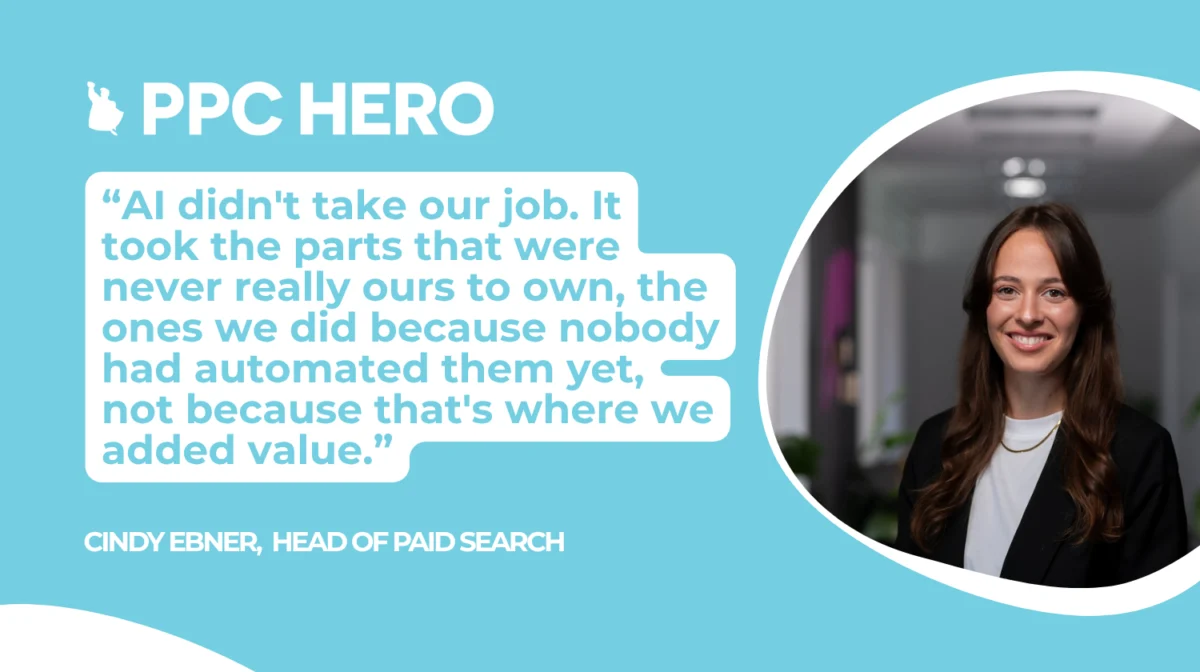
AI has not eliminated the need for paid search professionals; rather, it has liberated them from the routine, automatable aspects of the job. These were the tasks performed out of necessity, not because they represented the highest value addition. The future of paid search lies in strategic thinking, creative problem-solving, and a profound understanding of business objectives, rather than manual execution.
The call to action for professionals in this field is clear: on the coming Monday, fix one critical signal, launch one test with a pre-defined kill date, and document one new decision-making rule. The burgeoning roster of non-human team members, including sophisticated AI assistants and the ever-present Google algorithm, requires effective management. That management role, now more than ever, falls squarely on the shoulders of human architects.
The implications of this paradigm shift are far-reaching. Agencies that successfully adapt will likely see increased efficiency, improved client outcomes, and a stronger competitive position. Those that resist this evolution risk being left behind as the digital advertising landscape continues its rapid transformation. The era of hands-on operational control is over; the age of strategic architecture has begun.