The landscape of paid advertising has been irrevocably transformed by the pervasive integration of Artificial Intelligence (AI). While AI excels at processing vast datasets and identifying intricate user behavior patterns, leading to potentially superior campaign performance compared to manual efforts, a critical gap has emerged: the nuanced articulation of brand identity and market positioning. AI algorithms, adept at crafting compelling messages that resonate with consumer desires, have often struggled to ensure this messaging aligns seamlessly with a business’s unique brand voice and strategic market stance. Addressing this challenge, Google has introduced AI Brief, a groundbreaking feature designed to bridge the divide between AI-driven efficiency and advertiser-defined brand integrity.
Announced in May 2026, AI Brief represents a significant evolution in Google Ads, empowering advertisers to exert direct input and control over the messaging generated by AI systems. This innovative tool aims to harness the predictive power of AI while ensuring that the final ad copy not only achieves optimal results but also authentically represents the brand. The introduction of AI Brief signifies Google’s commitment to providing advertisers with more sophisticated tools that balance automated optimization with essential human oversight.
Understanding AI Brief in Google Ads
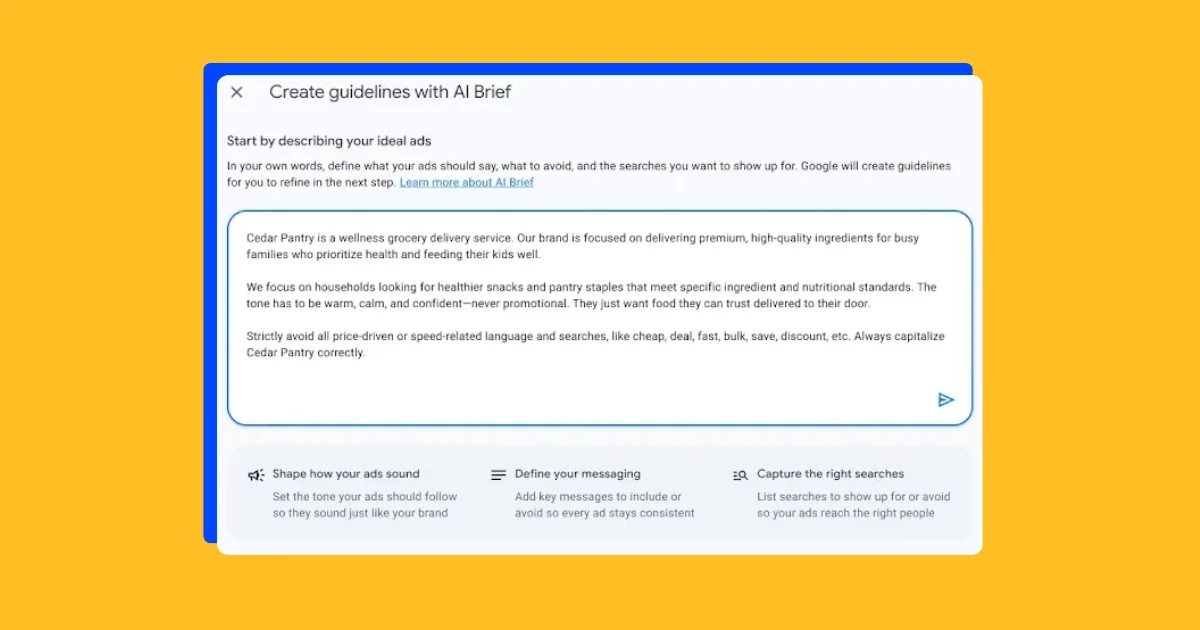
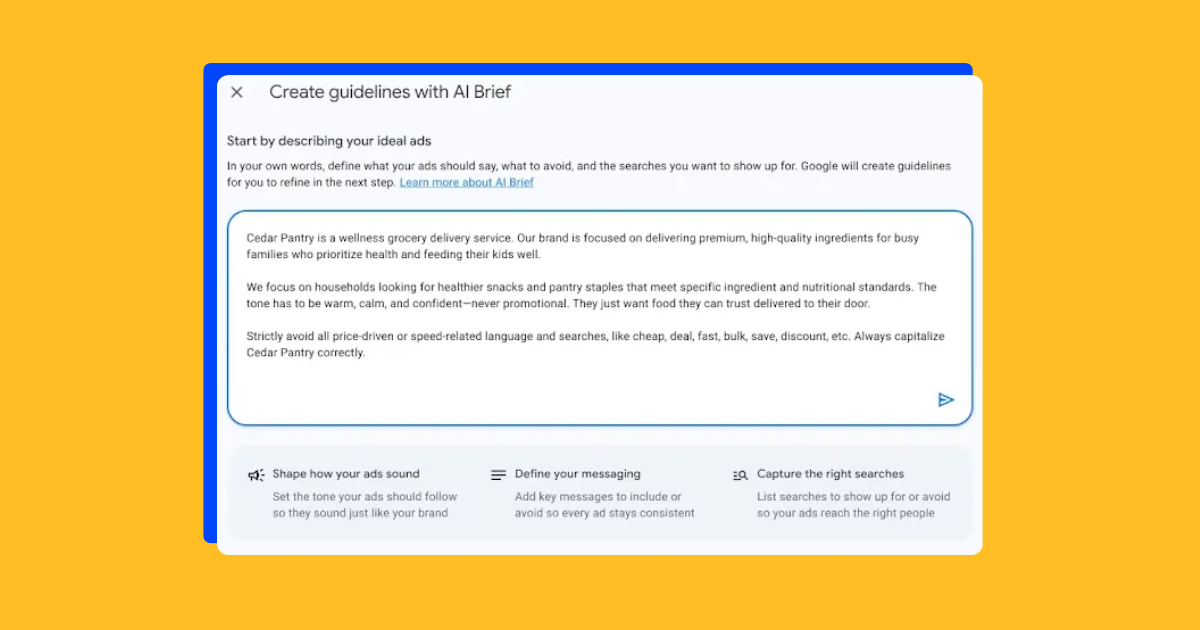
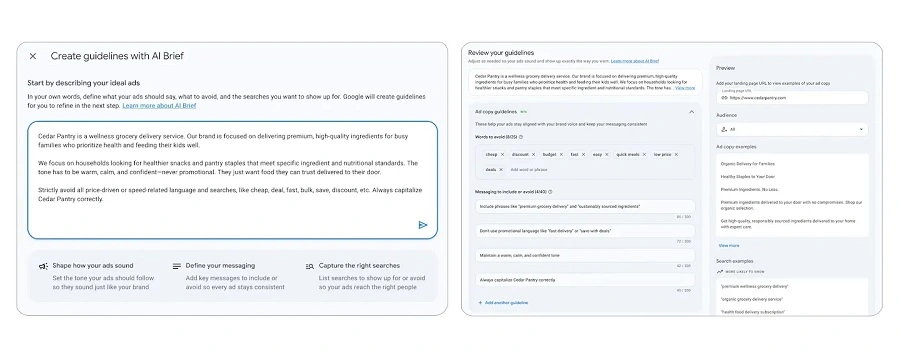
At its core, AI Brief is a new feature within Google Ads that allows advertisers to provide explicit context and direction to Google’s AI. This contextual input guides the AI in generating advertising messaging, identifying relevant search queries, and targeting appropriate audiences. The system is designed to be intuitive, beginning with a straightforward open text box where advertisers can define their ideal ad characteristics. This allows for the specification of desired tones, key selling points, and overall messaging objectives.
Beyond the primary messaging field, AI Brief offers additional granular controls. Advertisers can specify words or phrases to be explicitly avoided in ad copy, preventing any unintended or off-brand language from appearing. Conversely, there are provisions to include longer messaging elements or specific calls to action that the AI should prioritize. While not always immediately visible in every interface iteration, the system is intended to extend this directive capability to query matching and audience segmentation, providing a holistic framework for AI-driven campaigns.
The visual interface of AI Brief, as demonstrated in early previews, showcases a user-friendly approach to AI configuration. Advertisers are prompted to articulate their vision for ideal advertisements, laying a foundational layer of strategic intent. This is followed by opportunities to refine the AI’s creative output by specifying linguistic boundaries and thematic inclusions or exclusions. The overarching goal is to transform AI from a purely generative engine into a collaborative partner that understands and executes on specific brand mandates.
Campaign Integration: Where AI Brief Shines
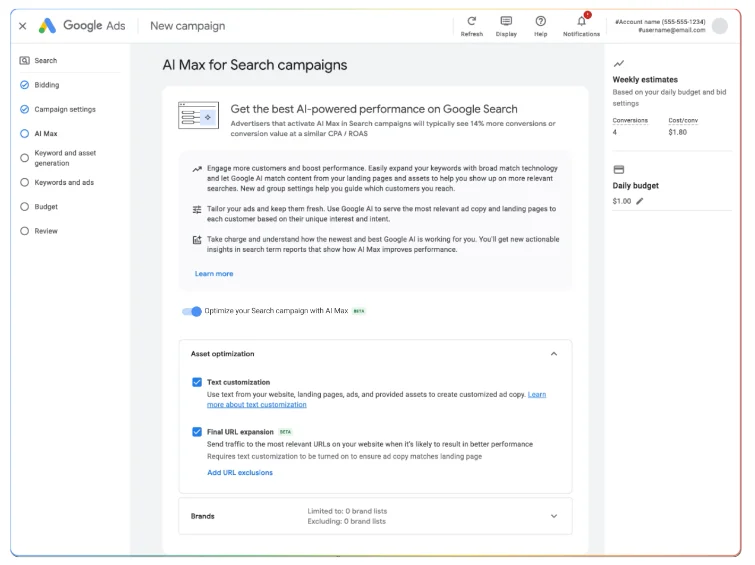
Initially launched for AI Max campaigns, AI Brief has since seen its scope expand. The feature is now integrated into AI Max for Shopping campaigns and is slated for a progressive rollout to Performance Max campaigns. This expansion reflects Google’s strategy to embed AI Brief functionality across its most advanced campaign types, particularly those that leverage "asset optimization." This feature allows Google’s AI to dynamically assemble and test various ad creatives based on provided assets, and AI Brief provides the crucial strategic input for this process.
The integration into campaign creation workflows means that AI Brief becomes a foundational element, allowing advertisers to set the strategic parameters from the outset. This is particularly evident in AI Max for Search campaigns, where the AI Brief option is presented during the campaign setup phase. The ability to influence AI-driven ad creation at the initial stage ensures that the AI’s subsequent optimization efforts are aligned with the advertiser’s core objectives.
The expansion of AI Brief to Performance Max campaigns is a significant development. Performance Max, known for its automated approach to campaign management across all of Google’s channels, will now benefit from this layer of advertiser control. This will enable businesses to maintain brand consistency while leveraging the broad reach and optimization capabilities of Performance Max.
Scope of Impact: What AI Brief Influences
Within AI Max search campaigns, AI Brief directly impacts three critical areas:
- Ad Creative Generation: This is the most prominent area of influence. Advertisers can guide the AI in crafting compelling headlines and descriptions that align with their brand voice, value proposition, and target audience’s needs. By providing specific keywords, phrases, or even full sentences, advertisers can steer the AI toward producing on-brand messaging.
- Messaging Variations: AI Brief allows for the creation of multiple messaging variations based on advertiser-defined parameters. This enables A/B testing of different on-brand messages, helping to identify which resonates most effectively with the target audience while maintaining brand integrity.
- Content Exclusion and Inclusion: Advertisers can use AI Brief to specify content that should be included or excluded from ad copy. This is invaluable for ensuring that sensitive topics are avoided or that specific product features or benefits are consistently highlighted.
Boundaries of AI Brief: What Remains Outside its Influence
It is crucial to understand that AI Brief is not intended to replace fundamental campaign management elements. While it offers direction on ad messaging, query matching, and audience engagement, it does not supersede other core components of Google Ads strategy. These include:
- Keyword Targeting: The fundamental selection of keywords that trigger ad impressions remains a distinct advertiser responsibility.
- Audience Signals: While AI Brief can guide the type of audience to engage with, the specific audience segments and signals used for targeting are set independently.
- Smart Bidding: The automated bidding strategies that optimize for conversions or other campaign goals operate separately from AI Brief’s messaging directives.
- Landing Pages: The destination URLs for ads, a critical component of the user journey, are managed independently.
AI Brief functions as an additional layer of signals that augment the AI’s decision-making process. It provides the AI with qualitative guidance that complements the quantitative data it processes, thereby helping to achieve campaign goals more effectively and in alignment with brand strategy.
Rollout Timeline and Availability
Google has outlined a phased rollout plan for AI Brief. The feature was initially made available for AI Max for Search campaigns, with an initial focus on English-language campaigns. Over the coming months, it is expected to expand to Performance Max and AI Max for Shopping campaigns. Existing text guidelines that advertisers may have previously established within their accounts will be automatically migrated into the AI Brief framework once the feature becomes active in their respective accounts. This migration ensures a seamless transition for advertisers already utilizing text-based guidance.
The phased rollout allows Google to gather user feedback, refine the functionality, and ensure a stable deployment across its vast advertising ecosystem. The subsequent expansion to Performance Max and AI Max for Shopping signifies Google’s intent to make AI Brief a ubiquitous tool for advertisers seeking to enhance the strategic direction of their AI-driven campaigns.
The Strategic Advantages of AI Brief
The evolution of search behavior over the past decade has been dramatic. Searches have become longer, more conversational, and increasingly intent-driven. Users no longer feel the need to condense their queries into a few keywords; instead, they articulate their needs more naturally, trusting search engines to understand their underlying intent. This shift has enabled Google to serve ads not just based on keywords but on the nuanced intent signals embedded within user queries.
Google’s sophisticated understanding of user intent allows it to present ads that are highly relevant to a user’s immediate needs. The introduction of automated messaging, now enhanced by AI Brief, empowers businesses to deliver compelling messages precisely at these high-intent moments. However, the challenge has always been ensuring that this powerful, contextually relevant messaging accurately reflects the business’s identity.
AI Brief addresses this by providing advertisers with a mechanism to communicate their brand’s essence directly to the AI. It is akin to briefing a creative agency or a copywriter, providing them with the essential information to craft messages that are both effective and on-brand. This direct input ensures that the AI’s optimization efforts are guided by strategic imperatives, not just performance metrics.
For instance, a luxury brand might use AI Brief to emphasize exclusivity, premium quality, and sophisticated language, while a budget-friendly retailer might focus on value, affordability, and direct calls to action. AI Brief allows for this level of strategic differentiation, ensuring that the AI’s generated content aligns with the brand’s market positioning and target demographic.
Potential Limitations and Considerations
While AI Brief offers significant advantages, it is essential for advertisers to approach its implementation with a clear understanding of its potential limitations and drawbacks. The allure of AI-driven optimization, coupled with the ability to exert direct control, can be a powerful combination, but it requires a strategic and informed approach.
One key consideration is the quality of the input. Like any AI prompt, the effectiveness of AI Brief is directly proportional to the clarity, specificity, and accuracy of the information provided by the advertiser. Vague or contradictory instructions will likely lead to suboptimal or misaligned ad copy. Advertisers must invest time in crafting well-defined briefs that clearly articulate their brand voice, target audience, and campaign objectives.
Another potential challenge lies in the AI’s interpretation. While AI Brief aims to bridge the gap between human intent and machine execution, there remains a degree of interpretation by the AI. Subtle nuances of brand voice or cultural context might be missed or misinterpreted by the algorithm, even with detailed instructions. Therefore, ongoing monitoring and iterative refinement of AI Brief inputs will be crucial.
Furthermore, over-reliance on AI Brief without sufficient human oversight could lead to a dilution of creativity or a missed opportunity for genuine innovation. While AI can generate effective messaging, human creatives often bring a spark of originality and emotional depth that can be difficult for algorithms to replicate. AI Brief should be viewed as a tool to enhance, not replace, human strategic input.
Finally, the evolving nature of AI means that its capabilities and limitations are constantly changing. Advertisers need to stay abreast of updates and best practices to maximize the benefits of AI Brief and mitigate potential risks. Treating AI Brief as a dynamic tool that requires continuous learning and adaptation is key to achieving sustained success.
Best Practices for Leveraging AI Brief
To maximize the effectiveness of AI Brief and ensure that it becomes an indispensable tool in your Google Ads strategy, consider the following best practices:
- Develop a Comprehensive Brand Style Guide: Before engaging with AI Brief, ensure you have a well-defined brand style guide that outlines your brand voice, tone, key messaging pillars, and target audience personas. This will serve as the foundation for your AI Brief inputs.
- Be Specific and Detailed: Avoid generic instructions. Instead, provide concrete examples of desired language, tone, and messaging. If there are specific phrases or concepts you want to emphasize, articulate them clearly.
- Define Your "Don’ts": Equally important is specifying what you don’t want. Clearly list words, phrases, or themes that are off-limits to prevent misinterpretations and ensure brand safety.
- Iterate and Refine: AI Brief is not a "set it and forget it" feature. Regularly review the AI-generated ad copy and adjust your AI Brief inputs based on performance data and observed outcomes. Treat it as a continuous feedback loop.
- Segment Your Briefs: If you manage multiple brands or campaigns with distinct target audiences and messaging strategies, create separate AI Briefs for each. This ensures that the AI receives tailored guidance for each specific context.
- Align with Overall Campaign Goals: Ensure that your AI Brief inputs are fully aligned with your broader campaign objectives, such as driving conversions, increasing brand awareness, or promoting specific products.
- Monitor Performance Metrics: Continuously track the performance of ads generated through AI Brief. Analyze metrics such as click-through rates, conversion rates, and cost per acquisition to gauge the effectiveness of your AI Brief strategy.
- Stay Informed: Keep up-to-date with Google’s announcements and best practices regarding AI Brief and other AI-driven features within Google Ads. This will help you leverage new capabilities and adapt to evolving trends.
The Future of Advertising: From Campaign Managers to Machine Managers
The introduction of AI Brief marks a significant step in the evolving role of advertisers. The industry is witnessing a gradual shift from managing campaigns to managing the machines that run them. AI is no longer a peripheral tool but an integral component of every system within the Google Ads platform. AI Brief stands out as a prime example of this transition, where advertisers provide strategic direction, and the machine executes with optimized efficiency.
While AI Brief is not a panacea for all advertising challenges, it represents a crucial first step toward a more collaborative and strategically guided AI-driven advertising future. For advertisers aiming to achieve superior results from AI Max campaigns and beyond, developing proficiency in crafting effective AI briefs will become an essential skill. This evolving paradigm demands a new skillset, one that blends strategic marketing acumen with an understanding of AI’s capabilities and how to best direct them. As AI continues to permeate the advertising ecosystem, the ability to effectively manage and guide these intelligent systems will be paramount for future success.
For those seeking to optimize their automated advertising campaigns on Google and across other platforms, exploring advanced solutions can provide a significant competitive edge. The ability to integrate intelligent automation with strategic human oversight is becoming the hallmark of successful digital marketing efforts in the modern era.