The proliferation of digital information has fundamentally reshaped the landscape of intelligence gathering, giving rise to Open Source Intelligence (OSINT) as an indispensable discipline for a diverse array of organizations. OSINT, defined as the collection and analysis of publicly available information for intelligence purposes, draws upon any data that can be legally accessed by anyone. This encompasses a vast ocean of digital footprints, from individual social media posts and traditional news articles to public records, academic papers, satellite imagery, and even website metadata.
Historically, OSINT originated within military and government intelligence circles. Early practitioners scoured newspapers, radio broadcasts, and other overt channels to glean insights into geopolitical shifts, adversary capabilities, and public sentiment. The advent of the internet and the subsequent explosion of online data sources, however, rapidly transformed OSINT from a specialized government function into a critical capability for the private sector. Today, cybersecurity teams leverage OSINT to proactively identify vulnerabilities, corporate brand protection units monitor public discourse for reputational risks, competitive intelligence analysts track market movements, and social media monitoring teams gauge public opinion and emerging trends. The core principle remains the same: transforming raw, publicly accessible data into actionable intelligence to inform faster, better-informed decisions.
A crucial concept in effective OSINT is the "OSINT framework." This refers to a structured methodology for organizing collection methods, identifying reliable sources, and selecting appropriate tools. Without such a framework, the sheer volume of available information can be overwhelming, leading to analysis paralysis rather than actionable insight. A robust framework guides practitioners in deciding what information to collect, where to look, how to prioritize sources, and ultimately, how to synthesize disparate data points into coherent, usable intelligence. It ensures that intelligence gathering remains focused, repeatable, and efficient.

The Vast Landscape of OSINT Sources
OSINT thrives on the collective digital footprint left by individuals, organizations, and governments across the internet. These footprints are often far more extensive than many realize. Common OSINT sources are incredibly diverse and include:
- Social Media Platforms: Public posts, profiles, comments, groups, and trends on networks like X (formerly Twitter), Facebook, LinkedIn, Instagram, TikTok, and Reddit. These offer real-time insights into public opinion, emerging events, and individual connections.
- News Media and Blogs: Articles, press releases, opinion pieces, and investigative reports from traditional news outlets and independent bloggers.
- Public Records: Government databases, court records, property records, business registrations, and electoral rolls. These often provide foundational biographical or organizational data.
- Academic and Scientific Publications: Research papers, journals, and conference proceedings that can reveal technological advancements, expert opinions, or specific methodologies.
- Geospatial Data: Satellite imagery, mapping services (e.g., Google Maps, OpenStreetMap), and geographic information systems (GIS) that provide physical context and location intelligence.
- Website Metadata and Domain Information: WHOIS records, IP addresses, server locations, and website archives (e.g., Wayback Machine) that can reveal ownership, infrastructure, and historical content.
- Forums and Discussion Boards: Niche communities where specific topics are discussed, often yielding specialized knowledge or early indicators of trends.
- Videos and Images: Content shared on platforms like YouTube, Flickr, and Instagram, which can offer visual intelligence, context, and verification.
- Dark Web and Deep Web: While more challenging to access and ethically complex, certain OSINT tools can monitor forums and marketplaces on the deep and dark web for leaked credentials, illicit activity, or early threat indicators, though this requires specialized capabilities and strict adherence to legal and ethical boundaries.
Leading OSINT Tools in the Current Landscape
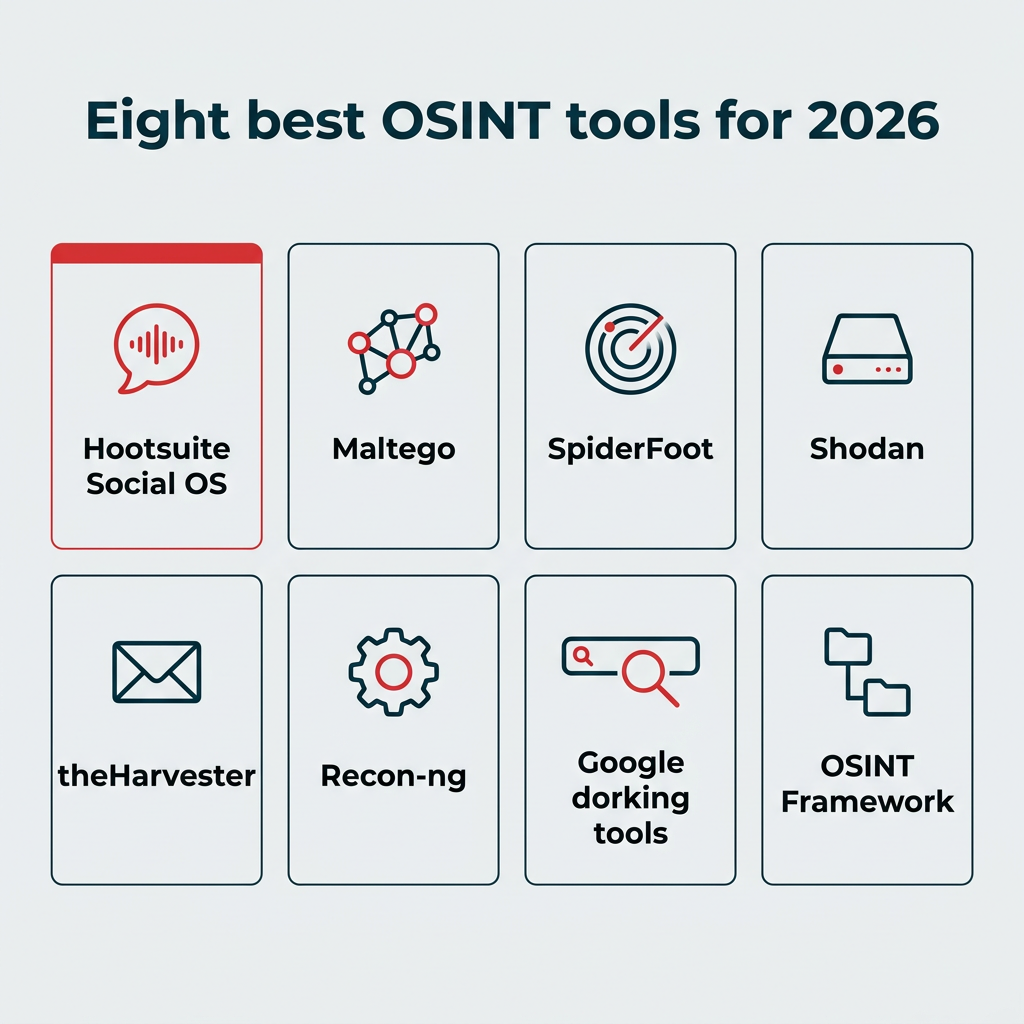
The selection of the right OSINT tools is highly dependent on specific objectives, the technical expertise of the user, and crucial compliance requirements. While some tools are free, command-line utilities favored by security researchers, others are enterprise-grade platforms designed to automate large-scale data collection and analysis for a broader user base. Here are eight of the best OSINT tools widely utilized today:

-
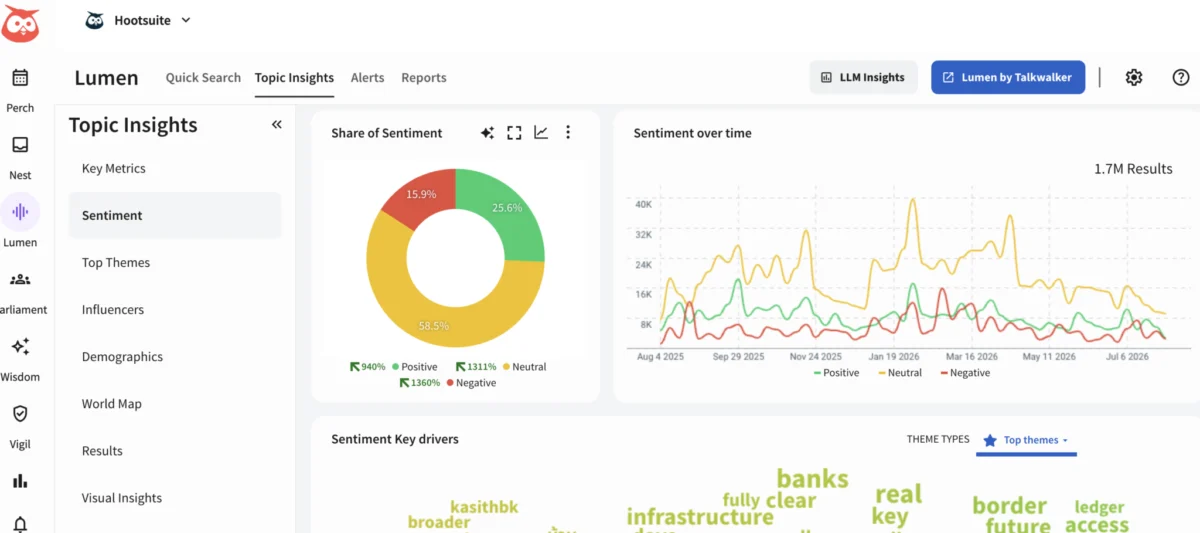
Hootsuite Social OS (Lumen): This platform stands out as a premier choice for social media OSINT and comprehensive social listening. Its integrated insights and listening application, Lumen, boasts an impressive crawling capability across over 150 million websites and 30+ social media networks, supporting 187 languages. This extensive source coverage surpasses many competitors, allowing it to gather intelligence not only from written text but also from images, logos, symbols, videos, and podcasts. Key capabilities include real-time trend identification, advanced sentiment analysis powered by AI, robust crisis management features, competitor benchmarking, and detailed audience insights. Hootsuite Social OS is particularly well-suited for enterprise and government teams requiring broad, compliant coverage and AI-powered analysis without needing deep cybersecurity expertise. It offers a user-friendly interface that distills complex data into actionable insights, making it accessible to non-technical users.
-
Maltego: A powerful link analysis and data visualization tool, Maltego excels at mapping complex relationships between various entities. Its intuitive graph-based interface allows users to visualize connections between individuals, organizations, domains, IP addresses, and social accounts, making hidden patterns and associations readily apparent. Available in a free Community Edition for individual use and paid tiers for more intensive applications, Maltego is a cornerstone tool within many OSINT frameworks, especially for investigators, fraud analysts, and cybersecurity professionals seeking to understand interconnected data points.
-
SpiderFoot: This automated OSINT reconnaissance tool is open-source and highly regarded for its ability to scan over 200 data sources to construct a comprehensive digital footprint of a target. By automating much of the data collection process, SpiderFoot significantly reduces manual effort, making it ideal for security teams engaged in large-scale footprint analysis, vulnerability assessments, and proactive threat intelligence gathering. Its modular architecture also allows for customization and integration into existing workflows.
-
Shodan: Often referred to as "the search engine for internet-connected devices," Shodan is invaluable for cybersecurity and IT security teams. It allows users to find exposed servers, webcams, industrial control systems, and IoT devices by searching for specific banners, ports, or protocols. This capability is critical for vulnerability assessment, understanding an organization’s attack surface, and identifying misconfigured systems before malicious actors can exploit them. A free tier is available, with paid plans offering deeper access and more advanced features.
-
theHarvester: A lightweight and fast open-source, command-line tool, theHarvester is a staple for penetration testers and security researchers. Its primary function is to gather email addresses, subdomains, and IP addresses associated with a target domain from various public sources like search engines (Google, Bing), PGP key servers, and social networks (LinkedIn). It provides a quick and efficient way to map an organization’s public exposure, laying the groundwork for further reconnaissance.
-
Recon-ng: As a modular, Python-based web reconnaissance framework, Recon-ng offers significant flexibility and control over the OSINT workflow. Its extensive module system allows users to build highly customized reconnaissance processes tailored to specific investigation needs. This tool is particularly favored by security professionals who require granular control over data collection and organization, enabling them to automate tasks and integrate various data sources seamlessly.
-
Google Dorking Tools: This technique, often one of the first steps in an OSINT investigation, leverages advanced search operators within Google (or other search engines) to uncover exposed data that standard searches might miss. By using specific keywords, file types, site restrictions, and other operators, practitioners can find unprotected files, login pages, sensitive documents, or misconfigured web servers. It is a free, powerful method for targeted information discovery, requiring only a web browser and a good understanding of search syntax.
-
OSINT Framework (osintframework.com): While not a tool in itself, osintframework.com is a free, invaluable curated directory that organizes thousands of OSINT tools and resources by category and data source. It serves as an essential guide for both beginners exploring the OSINT landscape and experienced practitioners seeking specialized tools for niche tasks. This framework helps users navigate the vast ecosystem of OSINT resources efficiently, ensuring they can quickly locate the most appropriate tool for any given intelligence objective.

Strategic Considerations: Free vs. Paid OSINT Tools
A common dilemma for organizations entering the OSINT space is whether free tools suffice or if an investment in paid platforms is necessary. The answer hinges on the specific use case, the technical proficiency of the team, and, critically, compliance requirements.
-
Free OSINT Tools: These offer flexibility and zero upfront cost. They are often open-source, community-driven, and highly customizable. However, they typically demand significant technical expertise for effective use, require manual integration of data from disparate sources, and frequently lack the robust compliance certifications (e.g., FedRAMP, SOC 2, GDPR) that regulated organizations absolutely require. Support is usually community-based, and scalability can be a challenge. They are best suited for individual researchers, ethical hackers, and smaller security teams with high technical aptitude.
-
Paid / Enterprise OSINT Tools: These platforms come with a subscription or custom pricing but offer substantial advantages. They provide automated data collection, often from millions of sources, significantly broader source coverage, and powerful AI-powered analysis capabilities that transform raw data into actionable insights with minimal manual effort. Crucially, enterprise tools typically possess critical compliance certifications, dedicated customer support, and user-friendly interfaces accessible to non-technical users. These features are non-negotiable for organizations where accuracy, legal compliance, scalability, and robust governance are paramount. They are ideal for large enterprises, government agencies, and any team requiring reliable, scalable, and compliant intelligence operations.
Diverse Applications of OSINT: Key Use Cases
OSINT tools serve a remarkably wide spectrum of organizations, from national intelligence agencies to marketing departments. While the underlying techniques are similar, the objectives and desired outcomes differ significantly across sectors.
1. Government and Public Sector Intelligence:
Government agencies utilize OSINT extensively to monitor public opinion, respond effectively to crises, and protect sensitive information. Key applications include:
- Public Sentiment Analysis: Understanding how citizens perceive government policies, initiatives, and leaders. This helps in gauging public acceptance, identifying areas of concern, and informing communication strategies. Shifts in public sentiment can also signal emerging risks or opportunities that require proactive attention.
- Crisis Management and Disaster Response: During natural disasters, public health emergencies, or law enforcement situations, OSINT tools provide real-time reconnaissance data from the ground. Monitoring conversation volume, sentiment, and specific keywords across a wide range of sources helps agencies prioritize responses, track events, and manage public information.
- Counter-Misinformation and Disinformation: OSINT is vital for detecting and tracking misinformation campaigns as they emerge. By setting up custom alerts for relevant keywords, topics, and sentiment shifts, agencies can identify false narratives early, understand their spread, and take steps to counteract them, thereby safeguarding public trust and safety.
- National Security and Threat Assessment: Intelligence agencies use OSINT to track extremist groups, monitor foreign actors, identify potential threats to national infrastructure, and understand geopolitical developments by analyzing publicly available information.
2. Cybersecurity and Threat Intelligence:
For any organization, OSINT tools are indispensable for enhancing cybersecurity posture, conducting threat intelligence, performing penetration testing, and continuous attack surface monitoring. IT teams and security researchers leverage them to proactively identify vulnerabilities within an organization’s:
- Digital Footprint: Discovering exposed assets, open ports, misconfigured servers, and unpatched systems that could be exploited by threat actors.
- Employee Information: Identifying publicly accessible employee data (email addresses, phone numbers, job titles on LinkedIn, social media profiles) that could be used for phishing, social engineering, or credential stuffing attacks.
- Brand and Executive Exposure: Monitoring mentions of the organization’s brand, key executives, or sensitive projects online to detect early signs of reputational damage, executive impersonation, or targeted attacks.
- Vulnerability Assessment: Finding leaked credentials, sensitive documents, or intellectual property on public forums, paste sites, or even the dark web.
- Threat Hunting: Spotting new threats, scams, malware campaigns, and cyberattack methodologies as they are discussed in online communities or security blogs. This proactive monitoring helps in developing defensive strategies.
3. Brand Monitoring and Competitive Intelligence:
Marketing, public relations, and communications teams increasingly rely on OSINT tools, particularly social listening platforms, to manage brand reputation, monitor competitor activities, and identify market trends.
- Reputation Management: Tracking brand mentions across social media and the broader web allows teams to identify potential reputation issues before they escalate into full-blown crises. Early detection enables swift, informed responses.
- Competitive Analysis: Monitoring competitor announcements, product launches, marketing campaigns, and customer feedback provides valuable insights into their strategies and market positioning. This intelligence informs an organization’s own strategic planning.
- Market Research and Trend Identification: By analyzing public conversations, teams can identify emerging consumer preferences, industry trends, and unmet market needs. This helps in product development, content strategy, and identifying new business opportunities.
- Influencer Identification: Discovering key opinion leaders and influencers within specific market segments to inform partnership strategies.
The social listening market, a key entry point for many into OSINT, is projected to reach $10.91 billion by 2026, underscoring its widespread adoption and perceived value, even among government organizations.
Implementing Social Listening for OSINT: A Practical Approach
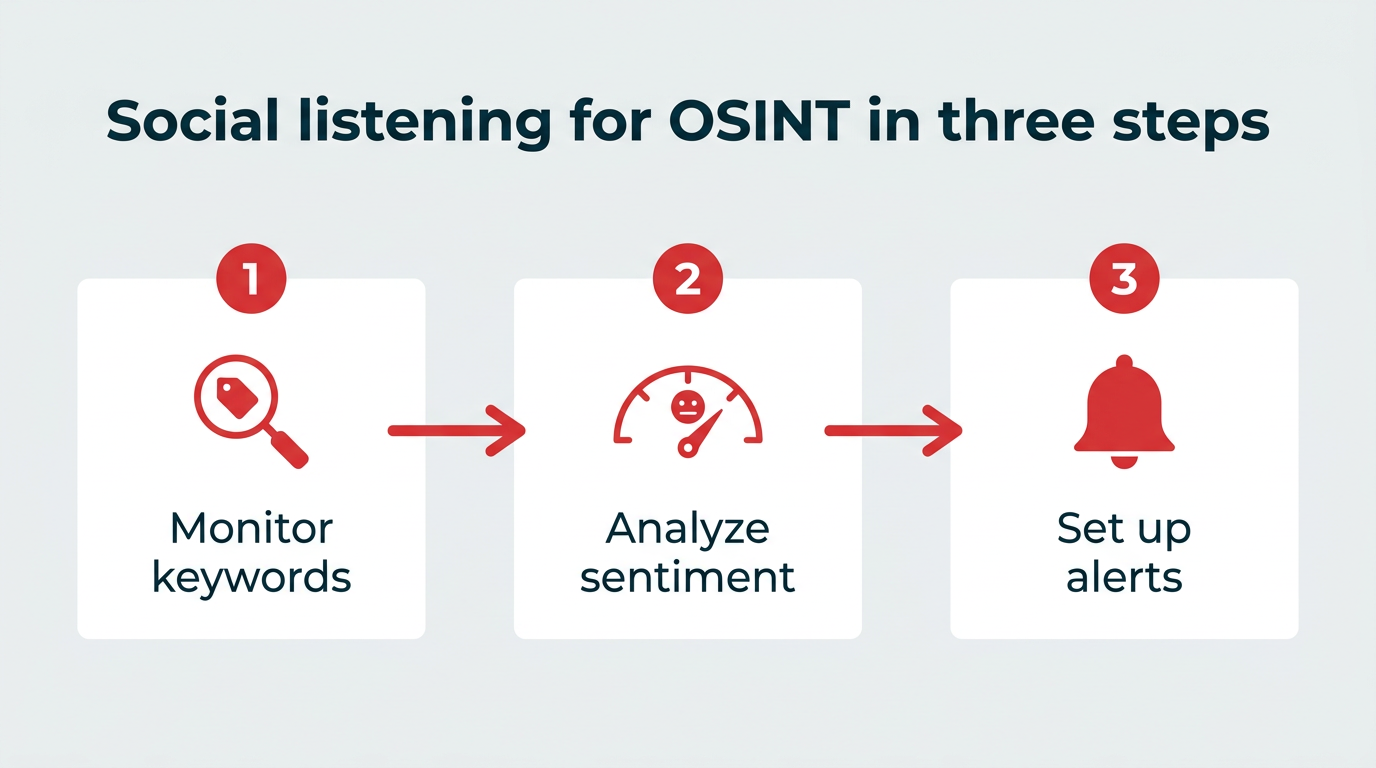
For non-technical teams, social listening offers one of the most accessible and immediately impactful OSINT methods. Platforms like Hootsuite Social OS with Lumen simplify this process into a structured workflow:
-
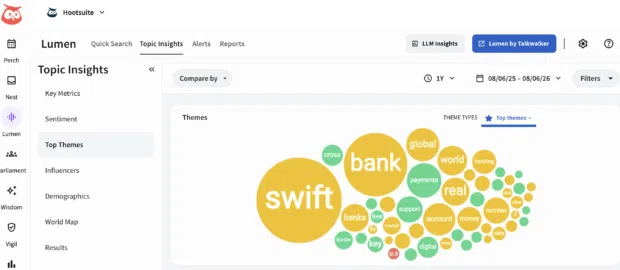
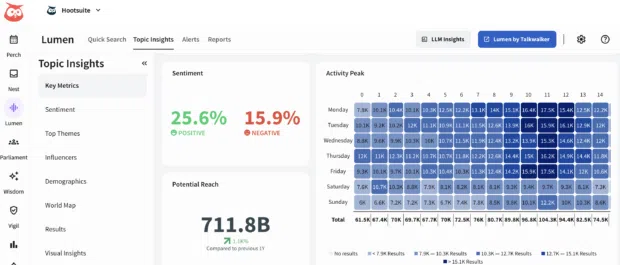
Monitor Relevant Keywords and Topics: The initial step involves identifying the core keywords and topics pertinent to your intelligence objectives. For government agencies, this might include department names, key leaders, specific policy initiatives, or areas of service provision. Starting with a focused list allows for initial data collection. As the social listening program evolves, the platform’s analytical capabilities, such as custom word clouds, reveal connections and related terms, enabling the expansion of the monitoring scope. This helps in understanding where conversations are happening online and identifying peaks and trends in activity over time. Crucially, tools with extensive source coverage, like Lumen, can capture a broader and more accurate picture by crawling a vast number of websites and social networks across multiple languages, including non-textual data.
-
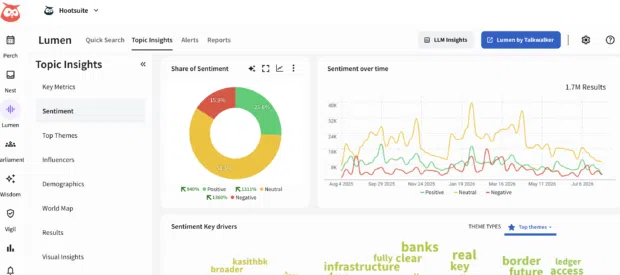
Analyze Sentiment: Collecting social sentiment data, often referred to as opinion mining, is a valuable form of OSINT, particularly for threat intelligence and public relations. Shifts in public opinion can signal emerging threats or significant opportunities. Advanced social listening tools provide key sentiment metrics, allowing users to answer critical questions such as: "How do people feel about our new policy?" "Is negative sentiment increasing around a specific topic?" or "What are the primary drivers of positive feedback?" Lumen’s enhanced sentiment analysis goes beyond simple positive/negative categorization, discerning nuances in tone and context to provide a deeper understanding of public emotions. This insight is crucial for proactive reputation management and early crisis detection.
-
Set Up Alerts and Predict Threats: Proactive intelligence gathering relies heavily on real-time alerts and predictive analysis. With platforms like Lumen, users can configure alerts for spikes in mentions, significant changes in sentiment, or the emergence of specific keywords. This serves as an early warning system, allowing organizations to spot potential crises or emerging threats before they escalate. Regular reports can also be scheduled to ensure continuous monitoring. Furthermore, advanced OSINT tools integrate machine learning and AI capabilities, such as Hootsuite’s Wisdom, to summarize complex information, detect subtle peaks in conversation, and predict future trends. This predictive capability enables organizations to anticipate events, plan informed responses, and take corrective actions in advance, transforming reactive management into proactive strategy.
Selecting the Right OSINT Tool: A Comprehensive Checklist
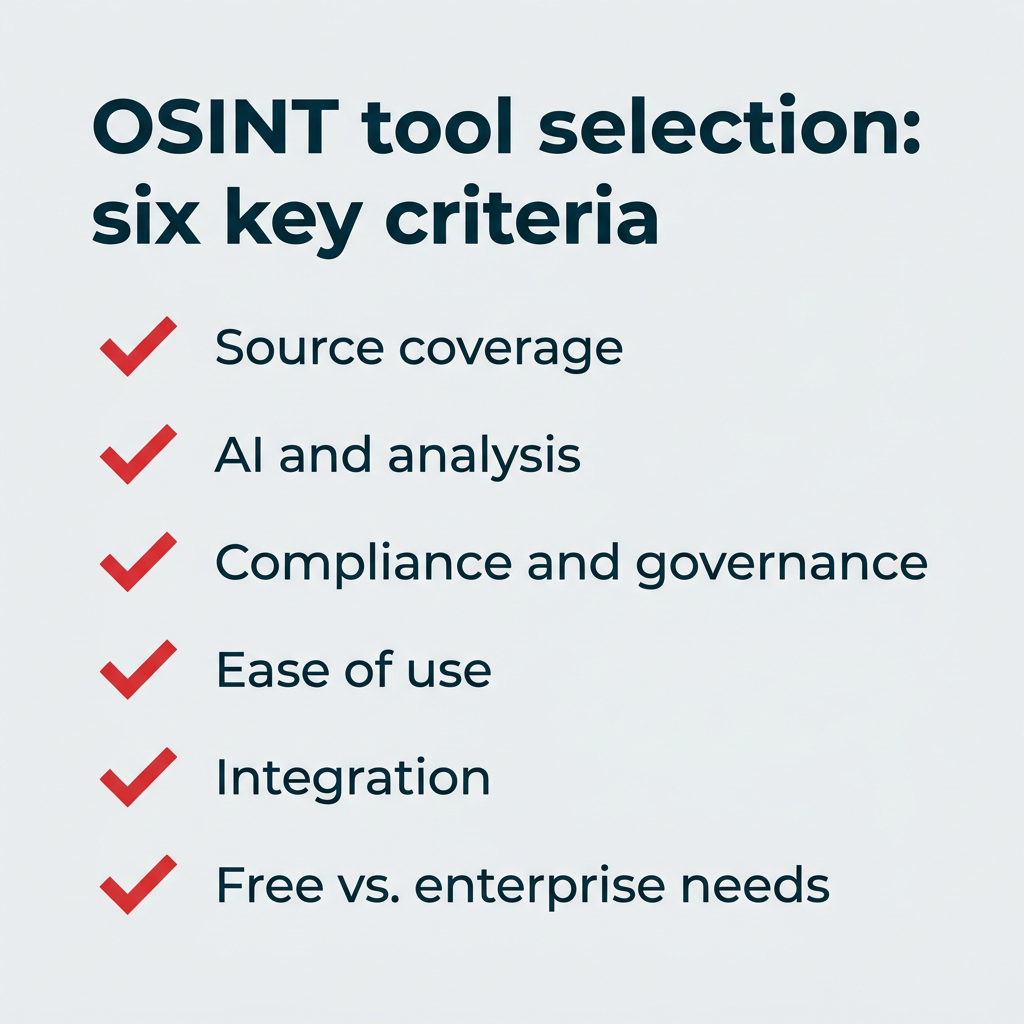
Choosing the optimal OSINT tool requires a careful alignment of the tool’s capabilities with specific organizational goals and constraints. What works for a solo security researcher may not be suitable for a large communications team needing compliant social monitoring. When evaluating OSINT tools, consider the following criteria:
- Intelligence Objectives: What specific questions are you trying to answer? (e.g., threat detection, market research, public opinion tracking).
- Target Data Sources: Where is the information you need likely to reside? (e.g., social media, dark web, public records, news).
- Technical Skill Level: Does your team have the expertise for command-line tools, or do you need a user-friendly GUI?
- Scalability and Volume: How much data do you need to process, and how frequently?
- Compliance and Governance: What regulatory standards (e.g., GDPR, FedRAMP, SOC 2) must the tool adhere to?
- Budget and Resources: Are you looking for free tools, or can you invest in an enterprise solution with dedicated support?
A clear OSINT framework, as discussed earlier, is invaluable here. Once the "what" and "why" of intelligence gathering are defined, the most suitable tool often becomes apparent. For teams requiring broad data coverage, AI-driven analysis, and enterprise-grade compliance within a single, accessible platform, solutions like Hootsuite Social OS meet all six criteria without demanding specialized technical expertise.
Ethical and Legal Imperatives: Best Practices for OSINT Collection
Effective OSINT practice extends beyond merely selecting the right tools; it encompasses adherence to ethical guidelines, legal compliance, and strategic foresight.
1. Understand and Follow Privacy Regulations: While OSINT deals with publicly available information, this does not grant carte blanche for its use. Organizations must rigorously comply with applicable privacy laws and regulations, such as GDPR, CCPA, and industry-specific mandates. Utilizing trusted OSINT tools that meet the stringent compliance standards of your sector is paramount. Free, uncertified tools, while offering flexibility, rarely provide the necessary governance and audit trails required by reputable organizations. Hootsuite, for example, is FedRAMP authorized and adheres to numerous regulatory requirements (FCA, IIROC, SEC, PCI, AMF, MiFID II), making it a trusted choice for over 2,000 government and public sector agencies. Its Vigil governance layer ensures compliant data collection and workflows, and all interactions with social networks occur via secure API calls, protecting data integrity and privacy.
2. Set Clear Goals and Review Them Regularly: The vastness of OSINT data can be overwhelming. To ensure effectiveness, intelligence gathering efforts must be guided by clear, actionable goals. For government agencies, this might involve establishing benchmarks for public sentiment and setting goals for improvement or maintaining sentiment within acceptable ranges. These goals may need adjustment based on external events or policy announcements, emphasizing the need for regular review and adaptation of the OSINT strategy. Without clear objectives, teams risk getting lost in the noise, collecting data without purpose.
3. Have a Response Plan and Action Your Insights: The ultimate value of OSINT lies in its ability to inform action. Identifying a potential crisis or threat is only the first step; having a pre-defined response plan is critical to acting before situations escalate. Organizations should integrate OSINT insights into existing crisis management protocols, making adaptations to incorporate real-time social listening data into disaster response or public communication strategies. This allows for immediate tracking of public reactions to messaging, enabling on-the-fly adjustments for maximum impact. Furthermore, OSINT tools that offer conversation clustering, quick search capabilities, and AI-powered summaries (like Lumen’s machine learning features) are essential for cutting through data overload. These features distill millions of conversations into curated, easy-to-understand reports with graphic visualizations and personalized dashboards, empowering stakeholders to make informed decisions and take swift action. This detailed analysis not only facilitates crisis prediction and response but also provides invaluable insights into public attitudes that can guide policy, legislative changes, and strategic planning.
In an increasingly interconnected and data-rich world, OSINT has transitioned from a niche intelligence discipline to a foundational capability for security, communication, and strategic decision-making across all sectors. By understanding its principles, leveraging appropriate tools, and adhering to best practices, organizations can transform the deluge of public information into a powerful asset for foresight and protection.