The burgeoning landscape of artificial intelligence is fundamentally reshaping digital marketing strategies, with Answer Engine Optimization (AEO) emerging as a critical discipline for businesses seeking high-quality, conversion-ready traffic. Defined as the strategic practice of crafting content specifically for AI models like ChatGPT, Claude, and Gemini to reference in their outputs, AEO is proving to be a powerful, albeit nascent, channel for lead generation and revenue growth. While still representing a fraction of overall web traffic, data from November 2025 by Microsoft Clarity indicates that AI-referred visitors convert at an astonishing rate, ranging from three to fifteen times higher than traffic from traditional search engines. This paradigm shift signals a pivotal moment for marketers, moving the focus from sheer volume to the profound quality of inbound leads.
The Evolution of Search: From Keywords to Conversational AI
The rise of sophisticated large language models (LLMs) marks a significant departure from the keyword-centric era of traditional search engine optimization (SEO). Historically, SEO focused on optimizing content to rank highly for specific keywords, driving users to a list of potential answers. AI answer engines, however, operate on a different principle. They synthesize information from various sources to provide a direct, comprehensive answer within the AI interface itself, often citing the original sources that contributed to the response. This evolution transforms the user’s research process, condensing multiple steps into a single, highly resolved interaction.
This shift has profound implications. For businesses, it means that the content referenced by an AI engine acts as a pre-qualification mechanism, filtering out casual browsers and delivering users who are further along their decision-making journey. Unlike a traditional search result that presents a user with ten blue links, an AI-generated answer, complete with citations, positions a specific piece of content as the authoritative response to a user’s deeply contextualized query.
Why AEO Visitors Exhibit Superior Intent
The heightened intent of AEO traffic is not accidental; it is a direct consequence of how answer engines process and deliver information. Several key factors contribute to this phenomenon:
Pre-Qualified Leads through Query Fan-out: A core mechanism driving higher intent is "query fan-out," a process where the AI engine anticipates and resolves multiple related sub-questions inherent in a user’s initial prompt. As documented by Google Developers, this process effectively condenses what would traditionally require several distinct searches into a single, synthesized answer. For instance, a buyer exploring software solutions might implicitly have questions about features, pricing, and integration. An answer engine addresses these concurrently, presenting a holistic view. By the time a user clicks through to a cited source, they have already received comprehensive answers to their foundational questions, making them significantly more informed and ready to engage with specific solutions. This eliminates much of the back-and-forth research that characterized earlier stages of the customer journey.
Advanced Stages of the Customer Journey: Because AI answer engines handle the initial, often definitional, stages of research within the chat interface, visitors who click through to a website are invariably further along the customer journey. They are no longer seeking basic information but rather validating specific details, exploring implementation, or comparing final options. Microsoft Advertising reported in April 2025 that Copilot ads targeting lower-funnel journeys demonstrated a 76% higher conversion rate compared to traditional search ads. This compelling statistic underscores the efficiency with which AI funnels users toward conversion, bypassing the broad mix of early-stage and navigational visitors typically associated with organic search. The implication for marketers is clear: AEO delivers users who are primed for action.
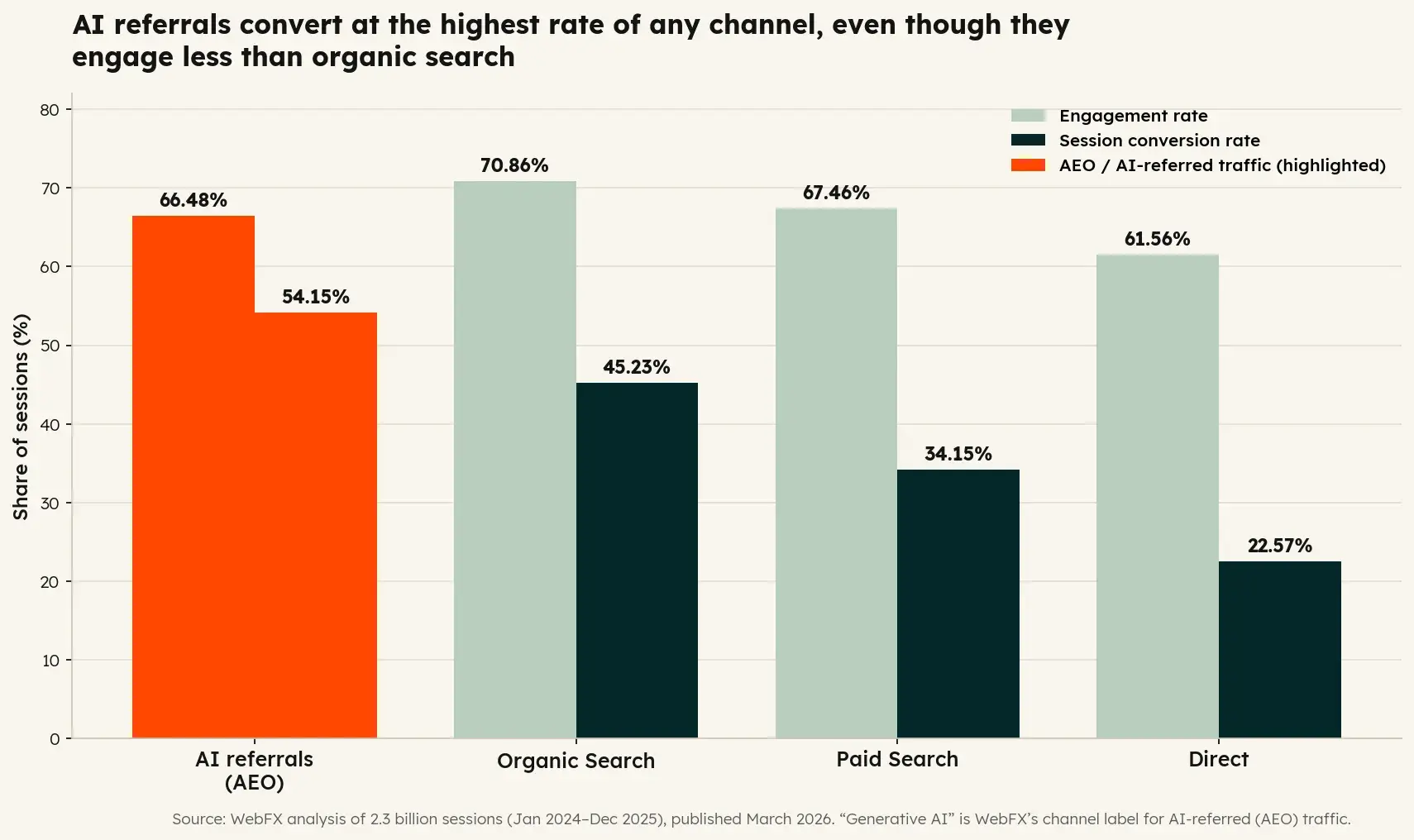
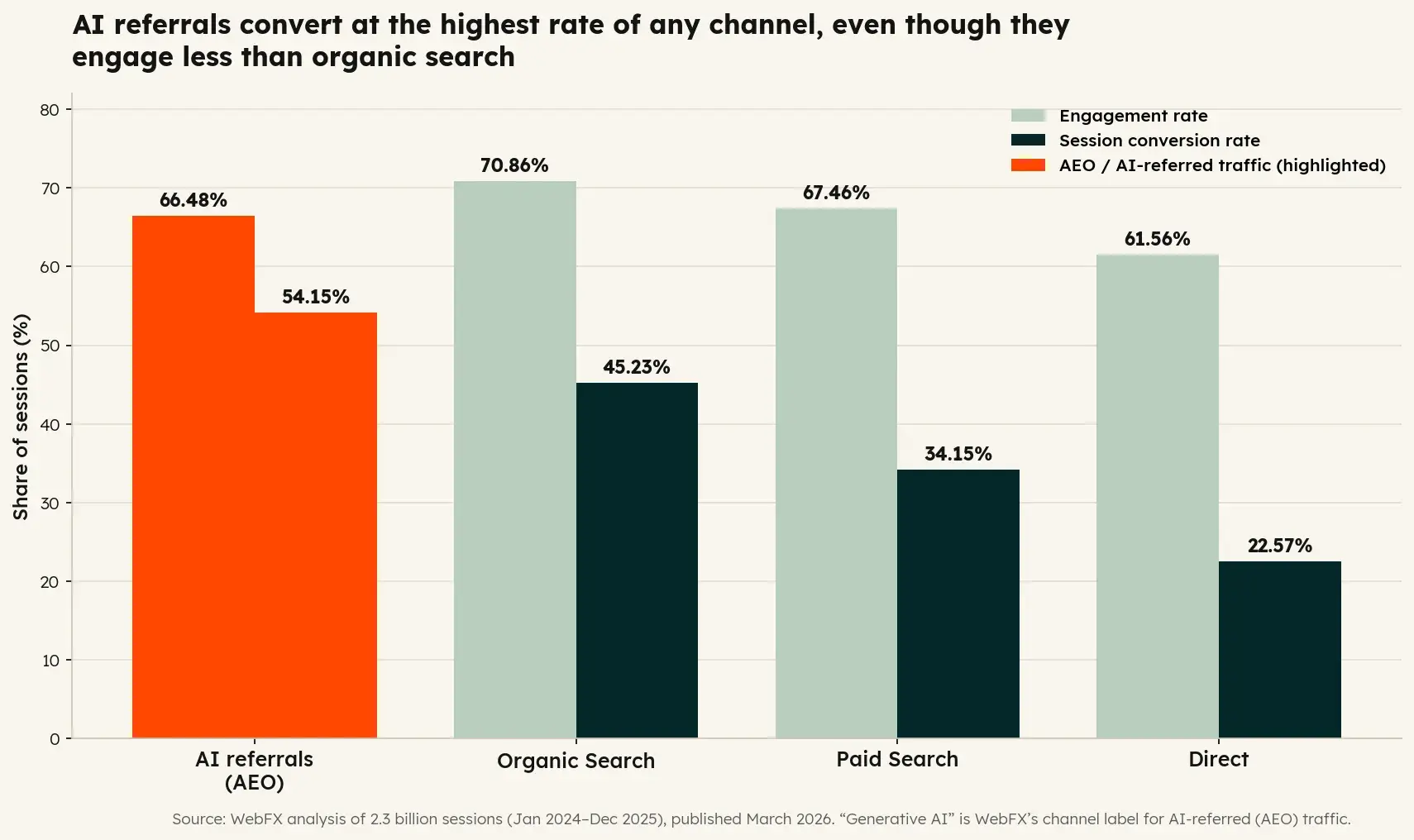
A Distinct User Experience Compared to Traditional Search: Research conducted by industry experts, such as Robert Carnes, who ran hundreds of queries across various answer engines, suggests that AI is not merely replacing search but rather merging with it. Answer engines increasingly resolve queries upfront, providing definitive answers and citing sources without always necessitating a click. This contrasts sharply with traditional search, which often scatters research across numerous sessions, each requiring multiple clicks. When a visitor does click from an AI answer, they arrive on the site with most of their preliminary questions already addressed. This compression of the buyer’s journey directly translates into superior analytics: AEO visitors convert at higher rates and move through the sales pipeline more rapidly than those from paid, organic, or social channels. A comprehensive analysis by WebFX in March 2026, spanning 2.3 billion sessions, found that AI visitors converted approximately 1.2 times higher than organic traffic and surpassed all other free channels in performance.
Identifying and Benchmarking AEO Traffic
To leverage the power of AEO, marketers must first accurately identify and measure its impact. This requires a systematic approach to analytics and CRM integration.
Key Intent Signals in GA4: Four primary signals within Google Analytics 4 (GA4) are crucial for distinguishing high-intent AEO traffic:
- Average Engagement Time: How long users spend actively interacting with the content.
- Engaged Sessions per Active User: The frequency and depth of user engagement.
- Views per Session: The number of pages a user visits within a single session.
- Key Event Completions: The successful completion of desired actions, such as downloads, form submissions, or video plays.
When considered together, alongside metrics like returning-user rate and scroll depth, these signals paint a clear picture of user purpose. AEO traffic consistently clusters at the higher end of these metrics, reflecting genuine evaluation rather than superficial browsing.
Tracking AEO in Google Analytics 4: Recognizing the growing significance of AI, Google introduced a new "AI Assistant" channel in GA4 in May 2026. This channel automatically assigns sessions originating from an AI assistant, simplifying initial tracking. However, early visibility may vary, and some AI-referred visits might still appear under "Referral," "Unassigned," or "Direct."
For more granular tracking, marketers can employ several methods:
- Spot-Check with Session Source / Medium: A quick diagnostic check using GA4’s "Session Source / Medium" report can reveal initial volumes from known AI sources like
chatgpt.com / referral. - Custom Channel Group: For more comprehensive and consistent tracking, creating a custom channel group in GA4 is a robust workaround. This allows marketers to define rules (e.g., using regular expressions for various AI domains) to consolidate AI-referred traffic, even before native channels are fully implemented or if they are incomplete.
- Native AI Assistant Channel: When fully deployed and accurate for a property, the native "AI Assistant" channel offers the lowest-maintenance solution for identifying AI traffic.
It is crucial to note that any method will likely undercount the true influence of answer engines. Factors like clicks from in-app browsers, copied links, or privacy-restricted environments may prevent referrer headers from being passed, leading to such traffic being misattributed to "Direct." Therefore, the "AI Assistant" channel should be viewed as a clean signal rather than a complete count of all AI-influenced traffic.
Integrating AEO Data with CRM for End-to-End Visibility:
While GA4 excels at acquisition and engagement metrics, connecting AEO traffic directly to B2B pipeline quality and closed-won revenue typically requires integration with a Customer Relationship Management (CRM) system. Platforms like HubSpot’s Smart CRM are designed to track a visitor’s activity even before they become a formal contact. When a visitor converts, the CRM associates their new contact record with their historical anonymous activity, ensuring that the "Original Traffic Source" accurately reflects their first interaction, regardless of the conversion point. Significantly, HubSpot automatically classifies AI Referrals as a distinct traffic source when users click cited links from platforms like ChatGPT, Claude, Perplexity, or Gemini, eliminating the need for custom configuration. This seamless integration allows businesses to trace an AI-referred visit all the way from the initial session to a closed-won deal, preserving critical attribution data.
Quantifying AEO Advantage with Intent Scoring

To move beyond raw conversion rates, which can be unstable with lower traffic volumes, intent scoring offers a more nuanced way to quantify AEO’s visitor advantage. This method assigns point values to specific behaviors indicative of serious evaluation: surpassing median engagement time, achieving a target scroll depth, viewing critical pages (e.g., pricing, comparison), and completing key events. Summing these points per session and then averaging the score by channel provides a standardized metric. An intent score captures pre-conversion intent, allowing marketers to evaluate a channel’s effectiveness even when volume is low. This standardized rubric transforms the assertion "AEO visitors are higher intent" into an auditable, data-backed claim.
Platforms like HubSpot AEO further enhance this by tracking how a brand appears across major answer engines, correlating this visibility with the quality of traffic generated. This pairing allows businesses to understand which cited pages attract their highest-scoring visitors, directly linking content strategy to lead quality.
Optimizing for AEO Quality, Not Just Volume
Given that AEO typically sends fewer visitors than established organic, paid, or social channels, the strategic imperative shifts to optimizing for quality rather than sheer volume.
- Anticipate Query Fan-out: Content creation for AEO must go beyond answering a single question. Marketers should research and address the full "fan" of related sub-queries a potential buyer might ask next. Comprehensive content that preemptively resolves these interconnected questions is more likely to be cited by AI engines as a definitive source.
- Write for Buyer Prompts, Not Generic Search Queries: The language used in AI prompts is often longer, more conversational, and highly decision-oriented. Instead of optimizing for "best CRM," marketers should target prompts like "best CRM for a 10-person sales team that already uses HubSpot." Tools like AEO in Marketing Hub can leverage CRM data to suggest relevant prompts tailored to specific industries, competitors, and customer segments, aligning content with actual buyer personas.
- Tie Every Cited Page Back to Revenue: Mere citation by an AI engine does not guarantee conversion. It is essential to track the entire journey of AEO-driven pages, from initial visit to closed-won deals. This allows for the identification and prioritization of content topics that not only attract AI traffic but also generate tangible pipeline and revenue. Ranking cited pages by average deal amount, rather than just traffic volume, ensures that content strategy is aligned with business outcomes.
Demonstrating AEO ROI Through Channel Comparison Reporting
To make a compelling case for AEO to stakeholders, data must be consolidated into clear, comparative reports. These reports should present AEO performance alongside Organic Search, Paid Search, and Organic Social, using consistent metrics and date ranges.
Headline Metrics for Leadership Audiences:
- Engagement Rate: A concise measure of user interaction.
- Session Conversion Rate: The percentage of sessions resulting in a desired action.
- Average Deal Amount: The financial value generated by leads from the channel.
Detailed GA4 Engagement Signals (Feeding Intent Score):
- Average engagement time
- Engaged sessions per active user
- Views per session
- Key event completions
Proof Beyond the Session (CRM Integration):
- Sessions to Contact: The average number of sessions required to generate a new contact.
- Contacts to Closed Deal: The conversion rate from contact to a finalized deal.
Reporting these metrics side-by-side provides an irrefutable argument for AEO’s unique value proposition.
Building a Robust Channel Comparison Framework
The integrity of AEO analysis hinges on a well-structured and consistently maintained framework.
- Assign Clear Ownership: Explicitly delineate responsibilities for each component:
- Marketing: Owns AEO content strategy and optimization.
- Analytics: Manages data capture, channel definitions, and reporting.
- Sales: Provides feedback on lead quality and conversion outcomes.
- Document Shared Definitions: A single, accessible document outlining definitions for "AEO traffic," tracking methodologies, and attribution logic ensures alignment across teams. Regular quarterly QA checks of the capture path are vital to confirm accuracy and adapt to new AI domains.
- Address Privacy and Data Retention: Compliance with privacy regulations (e.g., GDPR, CCPA) is paramount. Marketers must ensure that analytics settings concerning consent management and data retention are configured appropriately, always consulting legal counsel for specific jurisdictional requirements.
Proving AEO Visitor Quality Today
The transition to an AI-powered search landscape is ongoing, but the opportunity to capitalize on high-intent AEO traffic is immediate. Businesses can begin proving AEO visitor quality by following a structured five-step process:
- Conduct a Visibility Assessment: Use tools like AEO Grader to establish a baseline of brand presence within AI answer engines.
- Identify AEO Traffic: Implement one of the GA4 tracking methods (spot-check, custom channel, native AI Assistant channel).
- Benchmark Engagement: Compare AEO engagement signals against other channels.
- Connect to CRM: Link AEO traffic to contacts and deals within the CRM.
- Calculate Intent Scores: Develop and apply an intent scoring system.
This sequence provides data-driven proof of AEO’s efficacy, allowing organizations to strategically invest in a channel that promises not just traffic, but highly qualified, conversion-ready leads in the evolving digital ecosystem. While AEO volume may be lower than traditional channels, its unparalleled quality represents an underexploited asset for future-focused digital marketers.