Social media has transcended its role as a mere communication tool, becoming an indispensable pillar for higher education institutions globally. In an increasingly digital landscape, colleges and universities leverage platforms not just for outreach, but for cultivating vibrant communities, fostering engagement, and securing their future relevance. This strategic integration impacts everything from student enrollment and alumni relations to real-time crisis communication and the very fabric of campus life, reflecting a fundamental shift in how educational bodies connect with their diverse stakeholders.
Cultivating Connection: The Multifaceted Benefits of Social Media in Higher Education

For post-secondary institutions, the strategic deployment of social media yields a wealth of benefits, extending far beyond simple marketing. These advantages contribute significantly to institutional growth, reputation, and community cohesion.
Driving Student Recruitment and Enrollment
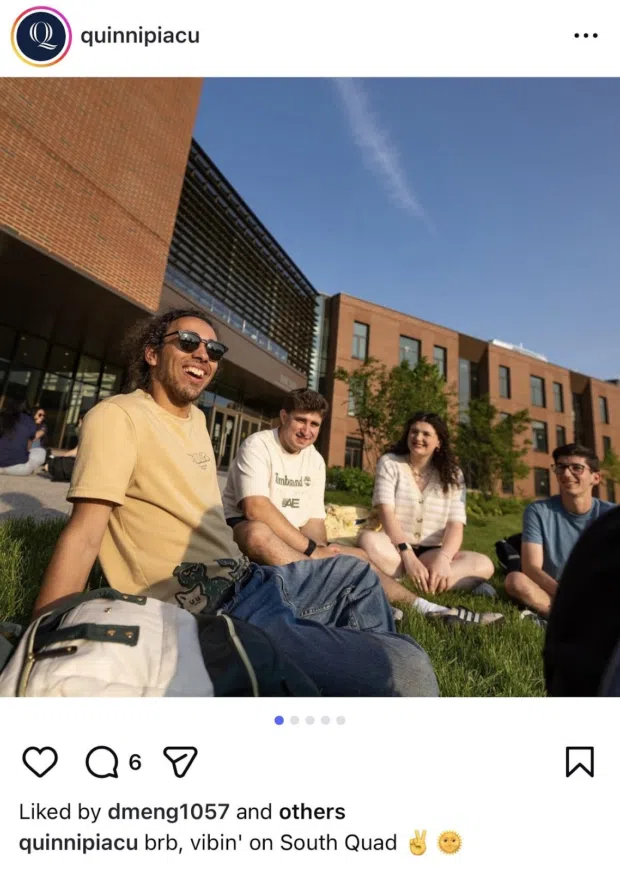
Social media platforms have emerged as critical touchpoints in the student recruitment journey. A recent RNL report highlights that 56% of students consider social media highly influential when initially exploring colleges, predating traditional steps like campus tours or application submissions. This positions social media as a powerful conduit for engaging prospective students during their formative discovery phase. An authentic and dynamic social presence signals institutional quality and fosters a sense of belonging even before physical interaction. Content featuring genuine student experiences, such as Quinnipiac University’s posts showcasing students enjoying campus life, offers future applicants a vivid preview of their potential university experience, making the institution feel familiar and inviting. This proactive engagement is crucial in a competitive landscape where initial impressions are often formed online.

Showcasing Institutional Values and Achievements
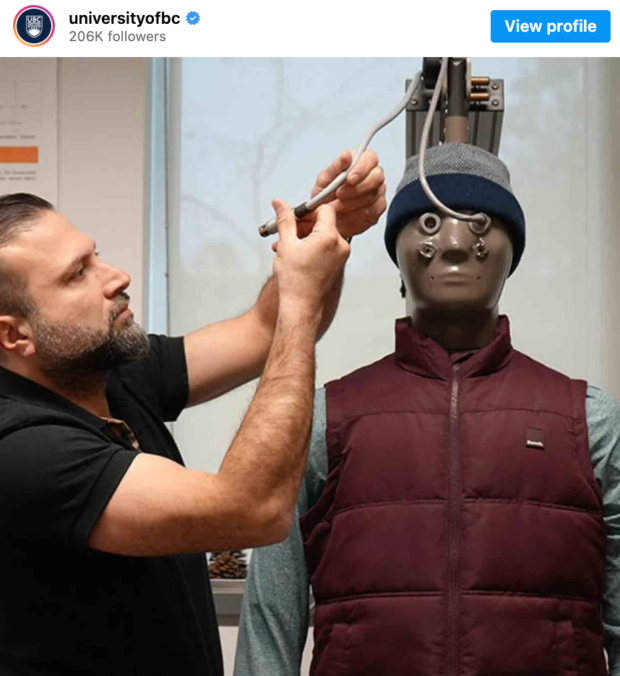
Beyond recruitment, social media offers a robust platform for communicating an institution’s core mission, values, and the culture it actively builds. In 2026, students increasingly align their choices with institutions whose values resonate with their own. By sharing content that exemplifies these principles, universities can demonstrate their commitment in tangible ways. Tufts University, for instance, utilized a video series featuring faculty voices to underscore its dedication to democratic principles. Similarly, promoting institutional achievements—from sustainability initiatives and community projects to research breakthroughs and athletic victories—serves to build brand reputation and inspire pride among current students and alumni. The University of British Columbia’s announcement of a partnership with Lululemon to highlight innovative fabric research exemplifies how such platforms can amplify significant collaborations and intellectual leadership.
Strengthening Alumni Ties and Boosting Fundraising
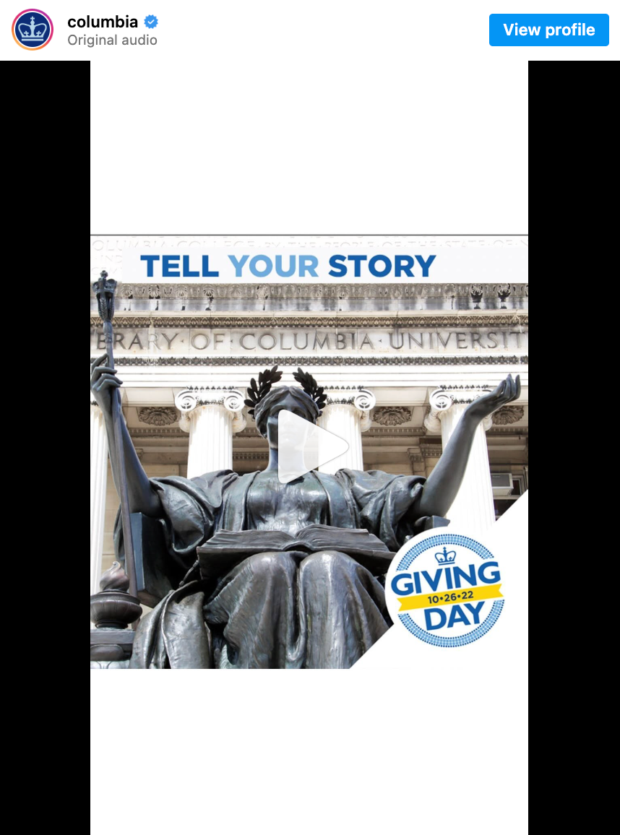
Alumni networks represent a vital source of support and funding for higher education. Social media simplifies the process of maintaining these crucial connections long after graduation. Many institutions establish dedicated alumni groups on platforms like Facebook, fostering geographic or interest-based communities. These channels are also instrumental in publicizing fundraising initiatives, as seen with Columbia University’s annual Giving Day campaign. Social fundraising campaigns transform alumni, students, and faculty into active advocates, expanding reach exponentially. Integrating these campaigns with CRM systems allows institutions to meticulously track donations and measure the precise return on investment (ROI) from their social media efforts, ensuring strategic allocation of resources.
Leveraging User-Generated Content (UGC) and Enhancing Learning
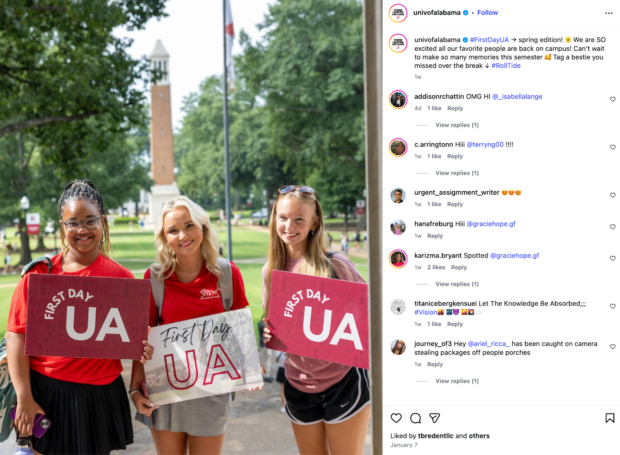
Today’s campuses are teeming with digital natives who are constantly creating content across various platforms. This rich vein of user-generated content (UGC) provides institutions with authentic, unsolicited testimonials about campus life. By encouraging the use of dedicated hashtags, such as the University of Alabama’s #FirstDayUA, universities can curate and repost the best student-created content, offering genuine insights into the student experience. Social media contests with university-branded prizes further incentivize sharing. While a secondary benefit, social media also presents innovative learning opportunities. Instructors can integrate platforms into coursework for discussions, research, and sharing assignments, while libraries, like the A. Holly Patterson Library, offer resources for developing information literacy skills, including critical evaluation of digital news. These applications help students develop essential real-world digital competencies.
The Evolving Digital Landscape: Student Expectations in 2026
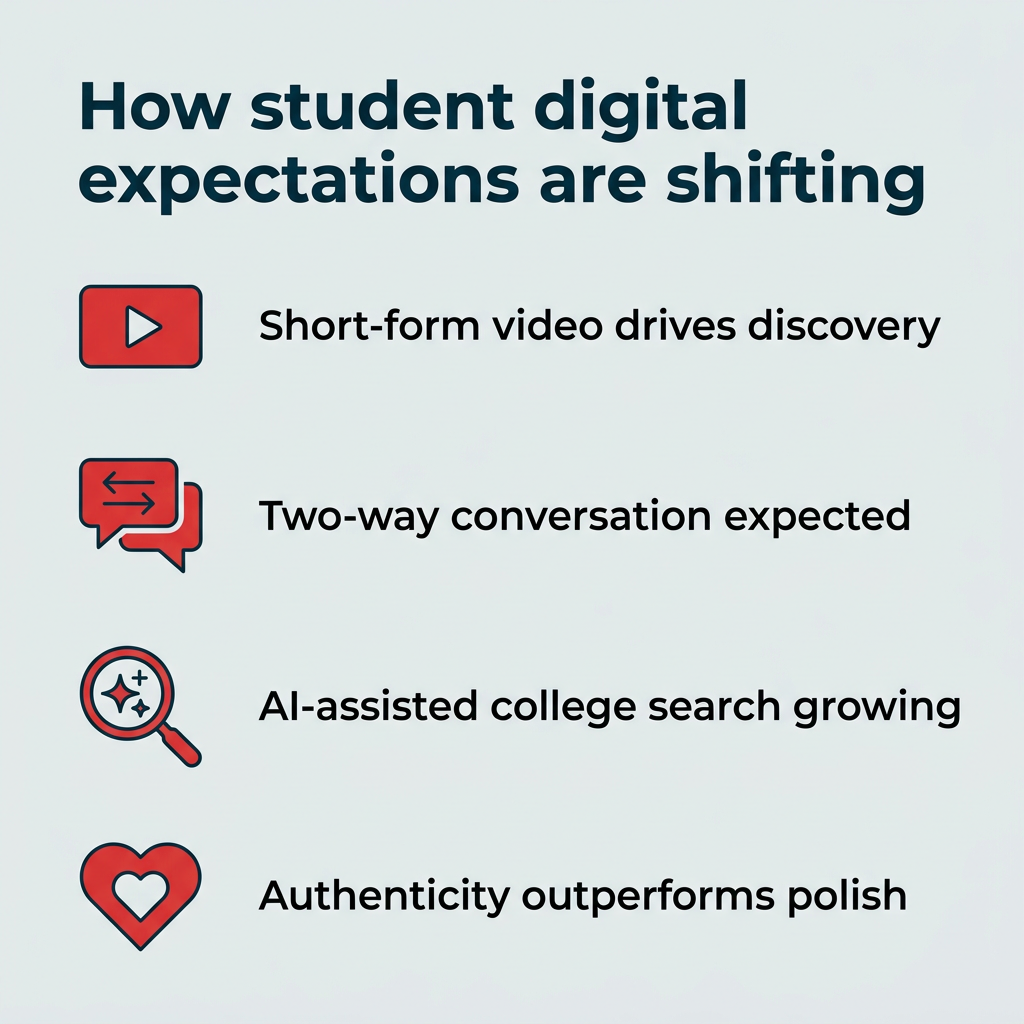
Student digital expectations are undergoing rapid transformation, largely driven by the social media habits of Gen Z and Gen Alpha. These cohorts prioritize short-form video for discovery and expect interactive conversations rather than passive broadcasting. Prospective students often turn to social platforms, and increasingly AI-powered search, as their initial points of contact, often bypassing official websites. Polished, top-down institutional content frequently falls flat, while authentic, student-led storytelling garners attention and trust. The implications for universities are profound: a failure to adapt risks alienating a crucial demographic that demands transparency, authenticity, and immediate engagement.
Strategic Platform Utilization: Tailoring Content to Audiences
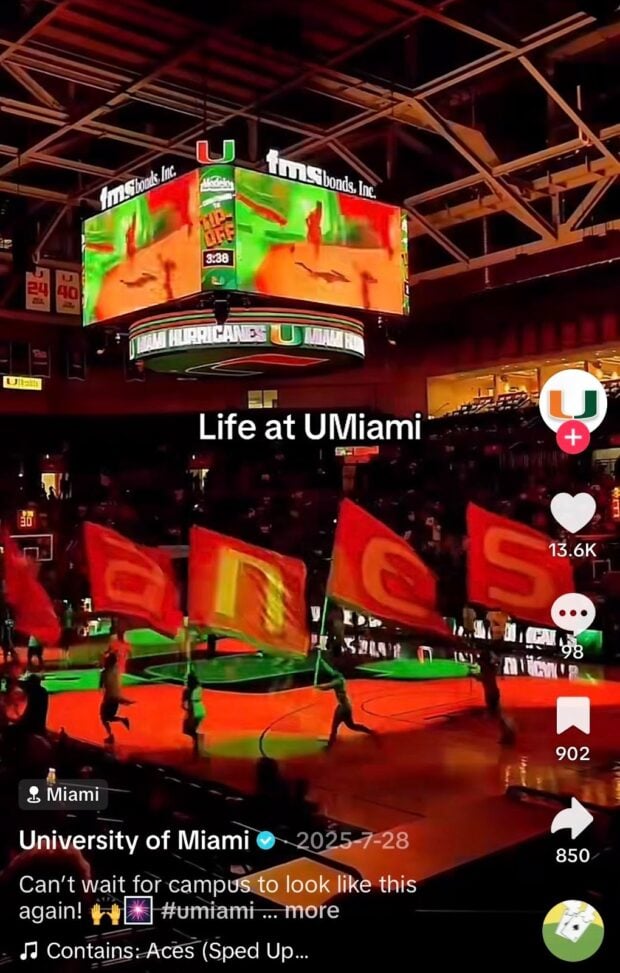
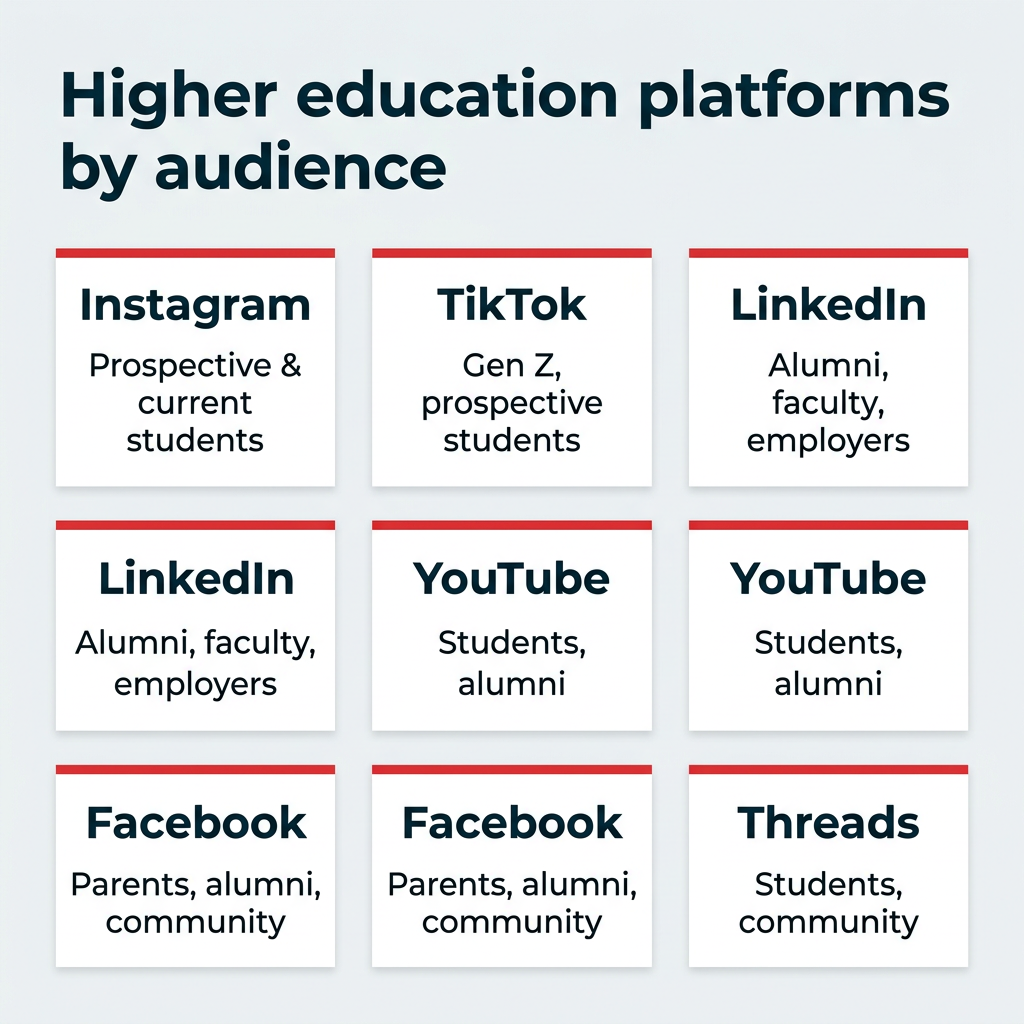
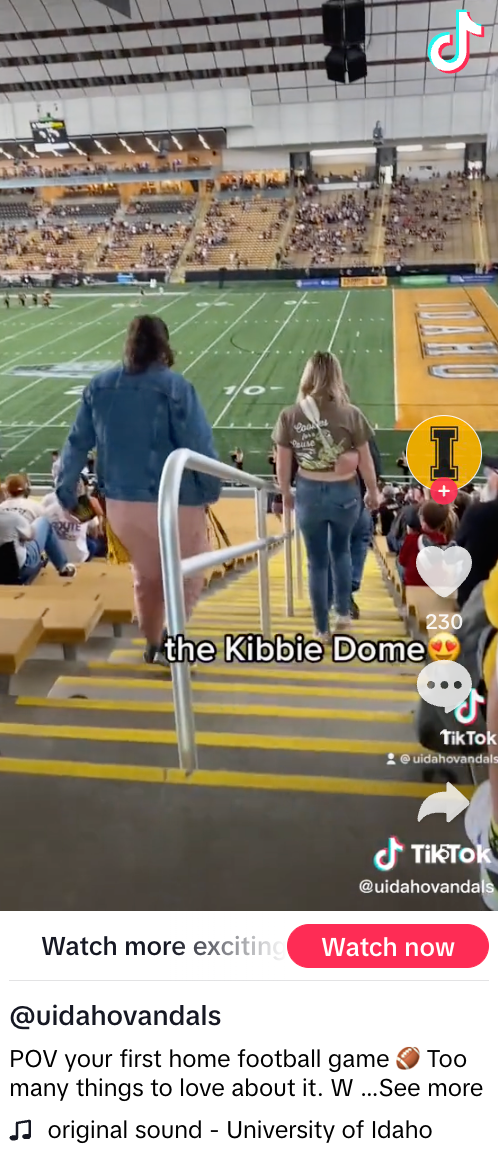
Effective social media engagement in higher education necessitates a nuanced understanding of each platform’s primary audience and optimal use cases. There is no one-size-fits-all solution; rather, institutions must strategically align platforms with specific segments and communication goals. Audiences extend beyond undergraduates to include adult learners, parents, faculty, staff, partners, and peer institutions. For instance, while TikTok might not be ideal for reaching parents (88–89% of Gen X and Boomers are primarily on Facebook), it is highly effective for engaging prospective students, as demonstrated by the University of Miami’s vibrant campus life content.
A breakdown of key platforms and their strategic applications reveals:
- Instagram: Primarily targets prospective and current students. Best for visual storytelling of campus life, events, and recruitment through Reels, Stories, and carousels.
- TikTok: Dominant among Gen Z and prospective students. Ideal for discovery, recruitment, and participating in trends through short-form video.
- LinkedIn: Connects with alumni, faculty, employers, and adult learners. Utilized for employer branding, research dissemination, and program promotion via articles, posts, and updates.
- YouTube: Reaches prospective students, parents, and alumni. Serves as a hub for virtual tours, lectures, commencement ceremonies, and other long-form video content and livestreams.
- Facebook: Engages parents, alumni, and the broader community. Effective for groups, event promotion, and community updates.
- Threads: Emerging platform for students and the wider community. Suited for real-time conversations and concise text updates.
Staying abreast of platform and demographic trends is paramount for identifying where communities are most active, allowing institutions to focus resources on channels that yield the greatest impact.
Developing a Comprehensive Social Media Strategy: Best Practices for Higher Education
To maximize the benefits of social media, institutions must implement a robust, integrated strategy that accounts for the complexity of a multi-channel organization.
Crafting an Integrated Strategy
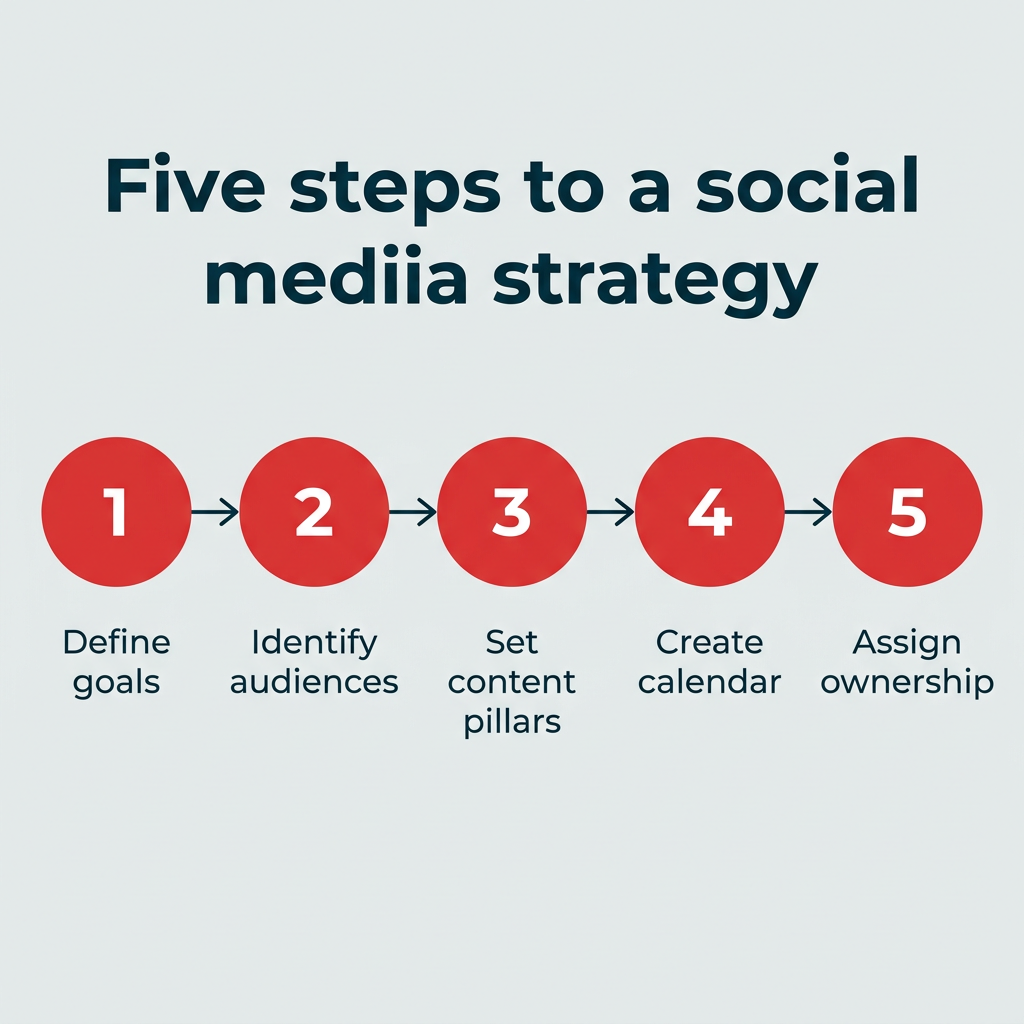
A successful social media presence begins with a clear, overarching marketing strategy for the entire institution. This involves defining objectives, identifying target audiences, conducting a competitive analysis, auditing existing content, and establishing measurable key performance indicators (KPIs). Each individual department or account must then align its specific strategy with these core university objectives, fostering a unified approach that creates a clear business case and optimizes resource allocation across campus.
Establishing Clear Governance and Policies
Given the multitude of individuals and departments often involved in social media management, clear guidelines are essential. A comprehensive set of social media guidelines should cover brand voice, crisis response protocols, compliance requirements, content approval processes, and distinctions between personal and institutional accounts. These guidelines, coupled with effective governance and approval workflows, empower social media teams, student workers, and faculty to participate authentically while ensuring brand consistency and mitigating risks.
Optimizing for Prospective Students
Direct communication with prospective students requires tailored content. Beyond the 84% of students who find virtual tours helpful, formats like "day-in-the-life" Reels, Q&A Live sessions, and student ambassador takeovers prove highly effective. Authentic content consistently outperforms overly polished productions. Messaging should immerse prospective students in the current student experience, highlighting clubs, communities, campus amenities, and cultural events. Timing posts to coincide with admissions milestones ensures relevant information reaches students at critical decision points.
The Power of Listening and Real-time Communication
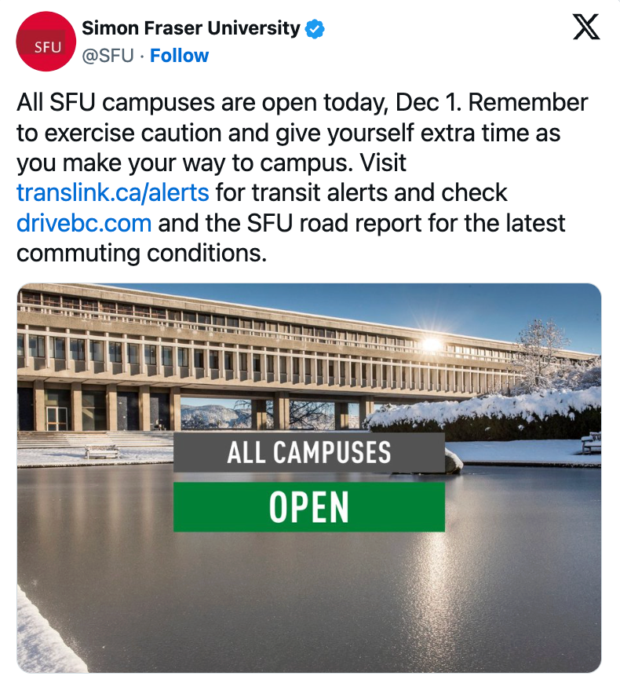
Social media is not just for broadcasting; it is an invaluable listening tool. By monitoring keywords, hashtags, and relevant accounts, institutions can gain real-time insights into campus sentiment, identify emerging issues, and understand community priorities. Social listening platforms can surface trends and sentiment, enabling universities to proactively address concerns, optimize content strategies, and demonstrate responsiveness. Furthermore, social media plays a critical role in crisis communications, serving as a primary channel for real-time updates during emergencies like severe weather or campus safety incidents. A well-defined crisis management plan ensures that communications teams can disseminate timely, accurate information across all channels efficiently.
Streamlining Operations with Technology
Managing numerous social media accounts across various departments—from admissions and athletics to individual schools and student-run pages—is a monumental task. Centralizing these operations through a social media management platform like Hootsuite Social OS allows a core team to oversee all channels from a single system. This consolidation simplifies publishing, scheduling, task assignment, and content coordination, while enterprise governance and approval workflows maintain brand consistency and operational efficiency. Such platforms are invaluable for busy social teams, especially during peak periods or crises.
Fostering Community and Advocacy
Beyond operational efficiency, social media is a powerful tool for community building and amplifying institutional messages through trusted voices.
Engaging Students On and Off Campus
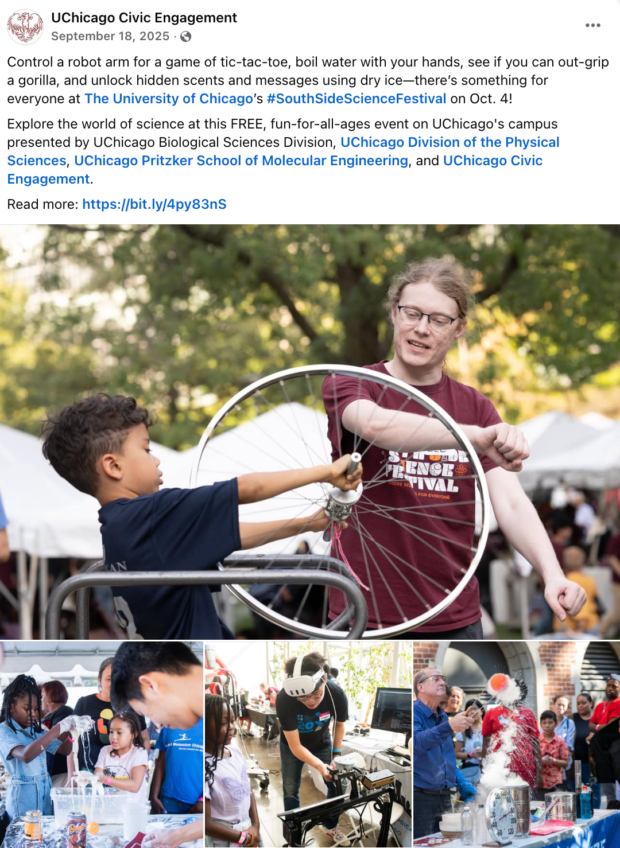
Social media facilitates connection for students regardless of their physical location, accommodating those at home, on different campuses, or participating in work-study programs. Creating dedicated social media groups allows universities to rally students around shared interests, experiences, and activities, fostering a sense of belonging. The University of Chicago’s Civic Engagement page, which connects students with community service opportunities, exemplifies this strategy.
Livestreaming Campus Events
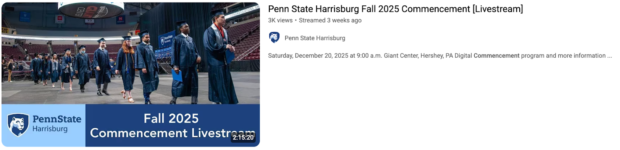
Live streaming has gained immense popularity as an authentic and engaging way to share campus events with broader audiences. From private student sessions to public commencement speeches, platforms enable institutions to broadcast key moments with ease. This capability extends the reach of campus events, allowing alumni, prospective students, and families worldwide to participate virtually.
Utilizing Social Media as a Community Hub
Instead of investing heavily in proprietary student portals, institutions can leverage existing social media platforms as dynamic community hubs for feedback, conversation, and information exchange. Ideas include dedicated groups for academic departments, student organizations, alumni chapters, or current events discussions, fostering organic interaction and engagement. Yale University’s G&P International club’s use of Instagram to promote events showcases how existing platforms can serve as effective digital gathering spaces.
Inviting Students and Staff to Create Content
Robust social communities thrive on participation. Institutions can actively invite students and faculty to contribute social content, offering a genuine, behind-the-scenes look at campus life that resonates deeply with audiences. The University of New Hampshire’s student takeover program, where students temporarily manage official social channels, provides authentic perspectives. This student-generated content is highly trusted and extends the institution’s reach significantly. Platforms that support employee and student advocacy programs, such as Hootsuite Parliament, enable the scaling of these initiatives while maintaining brand consistency.
Measuring Impact and Proving ROI
While qualitative feedback is valuable, social media analytics provide a data-driven picture of audience engagement and a crucial means to prove ROI to leadership.
Reviewing Analytics and Proving ROI
To effectively measure social media ROI in higher education, institutions must track metrics directly linked to institutional goals. These include application click-throughs, campus visit sign-ups for enrollment; comments, shares, and saved posts for engagement; event RSVPs and donation page visits for alumni relations; and reach and share of voice for brand awareness. Regular review of engagement, reach, and audience data, benchmarked against education sector standards, helps assess communication success and identify areas for improvement. Analytics dashboards can consolidate insights from various platforms into comprehensive reports, facilitating evidence-based decision-making.
Building Employee and Student Advocacy Programs
An employee and student advocacy program transforms the institutional community into its most powerful amplifier. Trusted voices—students, faculty, and staff—consistently achieve greater reach and engagement than official institutional accounts. Implementing such a program involves identifying willing advocates, providing them with approved, on-brand content, and simplifying the sharing process. Tracking the reach and engagement generated by these shares demonstrates the program’s impact, further extending the institution’s social share of voice. Tools designed for advocacy programs allow institutions to scale these initiatives, fostering a collaborative and far-reaching digital presence.

In conclusion, the strategic embrace of social media is no longer optional for higher education institutions. It is a fundamental component of their operational success, recruitment efforts, community building, and long-term relevance. By prioritizing authenticity, establishing clear governance, and meticulously measuring outcomes, universities can effectively navigate the dynamic digital landscape and secure their position as leaders in a connected world.