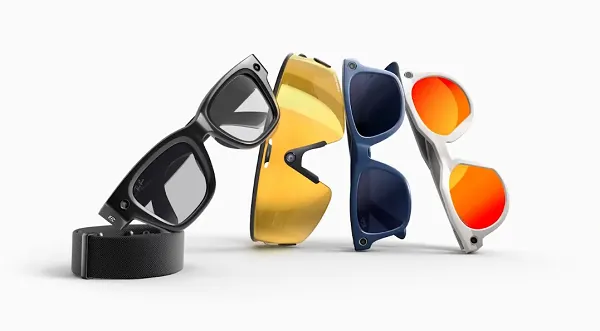
Meta’s Chief Technology Officer, Andrew Bosworth, has confirmed that the company is actively exploring the integration of facial identification capabilities into its Meta AI smart glasses. This revelation, made during a recent interview with journalist Nicholas Thompson, marks a significant moment for the tech giant, signaling a potential return to a technology that has previously embroiled the company in substantial privacy controversies. Bosworth articulated that the primary motivation behind this exploration is to empower visually impaired users and those with memory challenges, enabling them to better navigate social interactions and their environment.
The Targeted Application: Enhancing Accessibility and Social Engagement
During the interview, Bosworth emphasized that the proposed facial identification feature is not intended for widespread, indiscriminate identification of strangers. Instead, it is envisioned as a highly personalized tool designed to assist specific user groups. He cited feedback from the blind community as a key driver, highlighting their foremost request: "who’s in the room with me? Tell me who’s here." Bosworth clarified that these users are not seeking a global, centralized database of faces but rather a means to identify "people I know. What people that I know are here?"
Beyond the visually impaired, Bosworth also pointed to veterans’ groups dealing with traumatic brain injuries (TBIs). Individuals suffering from TBIs often grapple with memory loss and cognitive difficulties, making social recognition a significant hurdle. For them, the ability to instantly recall who they are speaking to, their past interactions, and the context of their relationship would be profoundly beneficial. As Bosworth explained, a top ask from this community is: "Hey, I just want to know who I’m talking to and how do I know them and what’s my history with this person?"
This targeted approach aims to solve what Bosworth termed "the cocktail party problem." This common social dilemma involves encountering someone familiar but being unable to recall their name, how you know them, or the last time you interacted. For journalists, professionals, or anyone attending large gatherings, this scenario is all too familiar. The Meta AI glasses, equipped with this feature, could provide instant, discreet prompts, alleviating social anxiety and fostering more meaningful connections.
How the Feature Would Function: Localized Digital Name Tags
Bosworth was meticulous in clarifying the proposed mechanics of this facial identification system. He stressed that the functionality would operate on a principle of localized, user-controlled "digital name tags," explicitly stating that the goal is not to construct a central database of faces. The device would identify individuals only if they have been "encrypted locally to your device." This means users would actively "teach" their glasses to recognize specific individuals, perhaps by meeting them in person while wearing the glasses, or by explicitly instructing the device, "okay, this is David, remember this person."
Crucially, this capability would only be active when the user is wearing the glasses, and the identification process would occur on-device, minimizing the transmission of sensitive biometric data to Meta’s servers. This design philosophy is a direct response to past criticisms and aims to place control firmly in the hands of the individual user, allowing them to curate their own network of recognized faces. The emphasis is on augmenting personal memory and social awareness, not on pervasive surveillance.
The Historical Context: Meta’s Turbulent Relationship with Facial Recognition
Meta’s cautious re-entry into the realm of facial identification is deeply rooted in its fraught history with the technology. For years, Meta (then Facebook) operated one of the world’s largest facial recognition systems, primarily through its "Tag Suggestions" feature. This system automatically detected faces in uploaded photos and suggested tagging individuals, often without explicit, informed consent. While convenient for many, it sparked widespread privacy concerns, regulatory scrutiny, and numerous lawsuits.
The Facebook Era: A Public Reckoning
The most significant backlash culminated in a class-action lawsuit under Illinois’s Biometric Information Privacy Act (BIPA), which ultimately cost Facebook hundreds of millions of dollars. The sheer scale of the system, which had accumulated over a billion "facial recognition templates" from users globally, raised alarms about data security, potential misuse, and the erosion of individual privacy. Critics argued that the company was building an unprecedented database of biometric information, which could be exploited or breached.
In a landmark move in November 2021, driven by mounting public pressure and regulatory threats, Meta announced the shutdown of its facial recognition system on Facebook. The company committed to deleting over a billion individual facial recognition templates, a decision heralded by privacy advocates as a significant victory. This pivot was part of a broader re-branding effort, with the company changing its name to Meta and shifting its strategic focus towards the metaverse, attempting to distance itself from past controversies and rebuild public trust. The experience underscored the immense sensitivity surrounding biometric data and the severe consequences of perceived privacy infringements.
The Smart Glasses Era: Mixed Signals and Strategic Denials
Despite the 2021 shutdown, whispers of Meta’s renewed interest in facial recognition for its smart glasses began circulating in early 2024. In February, reports surfaced suggesting that Meta intended to "sneak through an update" to its Meta AI glasses that would enable facial recognition. The implication was that Meta hoped to launch the feature with less public scrutiny, potentially leveraging broader political turmoil to deflect attention from privacy concerns.
These reports gained traction, leading to increased media scrutiny. A notable instance occurred in March when Wired published a report detailing how facial identification elements had been found within the back-end code of the Meta AI device driver. This report directly challenged Meta’s public stance and reignited the privacy debate.
Meta’s immediate response was aggressive denial. Andy Stone, a Meta spokesman, publicly attacked Wired‘s reporting, labeling it "shoddy" and "intellectually dishonest." Andrew Bosworth himself joined the chorus, dismissing Wired‘s report as "incredibly misleading." Following this intense pushback, Meta reportedly removed the facial ID elements from the driver code, appearing to walk back the controversial addition.
The current confirmation from Bosworth, however, stands in stark contrast to these earlier denials. It reveals a clear discrepancy between Meta’s public statements and its internal development efforts. This mixed messaging raises critical questions about transparency, corporate strategy, and Meta’s commitment to rebuilding user trust.
Analyzing the Mixed Messaging: A Strategy of Damage Control?
The aggressive denials followed by a measured confirmation suggest a deliberate strategy by Meta to navigate the treacherous waters of public perception regarding sensitive technologies. It’s plausible that the company, keenly aware of its past "privacy fiasco," aimed to quell early backlash and control the narrative. By strongly pushing back against initial reports, Meta might have hoped to dilute their impact, allowing them to quietly develop and eventually introduce the feature under a more controlled, carefully framed announcement.
The current framing emphasizes accessibility, user control, and localized functionality, differentiating it from the broader, more intrusive facial recognition systems of the past. This distinction between "recognition" (identifying any unknown face) and "identification" (identifying pre-approved, known contacts) is crucial to Meta’s current messaging. However, the initial outright denial, particularly from high-ranking executives like Bosworth, appears disingenuous in light of subsequent confirmations. This approach risks further eroding public trust, especially given Meta’s history. Critics might argue that such tactics demonstrate a continued willingness to obscure uncomfortable truths for strategic advantage.
Ethical Considerations and Broader Implications
The reintroduction of facial identification, even in a limited form, ignites a fresh wave of ethical and privacy debates.
- Scope Creep: While currently framed for specific accessibility needs, there’s always a concern that such features could expand in scope over time. What starts as identifying "people I know" could, through future updates or different applications, evolve into broader recognition capabilities.
- User Control and Consent: The emphasis on localized, opt-in functionality is vital. However, the complexity of AI systems and user agreements means that true informed consent can be challenging to achieve. Clear, unambiguous explanations of data handling, storage, and potential sharing (even if only for local processing) are paramount.
- Data Security: Even if data is processed locally, the existence of biometric templates on a device raises security questions. How are these templates protected from unauthorized access or breaches? What happens if the device is lost or stolen?
- Algorithmic Bias: Facial recognition technologies have historically struggled with bias, performing less accurately on individuals from diverse racial and ethnic backgrounds, women, and children. Ensuring equitable and accurate performance for all users, especially those relying on it for accessibility, is a significant technical and ethical challenge.
- Public Space and Social Norms: Even if identification is limited to known contacts, the act of a device "scanning" faces in public spaces can be perceived as intrusive. This could alter social dynamics, making people feel constantly monitored, even if the data isn’t being broadly shared.
- Regulatory Landscape: The legal frameworks surrounding biometric data are continually evolving. Regulations like GDPR in Europe, CCPA in California, and specific biometric privacy laws like Illinois’s BIPA set high standards for consent and data protection. Meta’s implementation will face intense scrutiny from regulators globally, who may view any form of facial identification with inherent suspicion given past abuses.
The Future of Wearable AI and Human Interaction
Meta’s decision to explore facial identification for its AI glasses signifies a crucial juncture for wearable technology. On one hand, the potential benefits for accessibility and cognitive assistance are profound. For millions of visually impaired individuals, or those struggling with memory, such a feature could genuinely enhance independence, social inclusion, and quality of life. It represents a tangible application of AI to solve real-world human challenges.
On the other hand, the deep-seated mistrust stemming from past privacy infringements presents an enormous hurdle. Meta must demonstrate an unwavering commitment to transparency, user control, and robust ethical safeguards. The success of this feature, and indeed the broader adoption of Meta’s AI glasses, will depend heavily on the company’s ability to earn and maintain user trust.
This move also places Meta squarely in the competitive landscape of other tech giants like Apple and Google, who are also investing heavily in augmented reality and wearable AI. How Meta addresses privacy concerns and differentiates its offerings will be critical. The ultimate impact of facial identification in smart glasses could reshape how we interact with technology, each other, and the world around us, blurring the lines between digital information and physical reality in unprecedented ways. The path forward for Meta and its AI glasses is one of immense potential, but also one fraught with significant ethical and public relations challenges, demanding an extraordinary level of responsibility and foresight.