The burgeoning landscape of Artificial Intelligence (AI) is fundamentally reshaping how businesses engage with online visibility, introducing new metrics and challenges for marketers. Tools like Profound and Peec AI offer insights into a business’s presence within AI-generated responses, monitoring specific prompts and assigning visibility scores based on appearance frequency. However, the effectiveness and reliability of these current metrics are increasingly being called into question, with experts urging a shift towards more consumer-centric and actionable data.
At the core of the current debate lies the methodology of AI visibility tracking. While tools meticulously log how often a business name is mentioned in response to a query, the very nature of these prompts can lead to inflated and misleading scores. As observed, if a prompt explicitly includes a business’s name, the AI is inherently likely to incorporate it into its response. This can result in a seemingly perfect 100% visibility score for that specific prompt, significantly skewing the overall average without truly reflecting genuine consumer interest or organic discovery. This manipulation, whether intentional or a byproduct of current measurement techniques, highlights a critical disconnect between what AI tools report and what truly drives consumer engagement.
The reliance on predefined prompts also overlooks the dynamic and often unpredictable nature of how real users interact with AI search engines. Consumers do not typically pre-program their queries with specific brand names to test AI visibility. Instead, they pose questions and express needs in a much more organic and varied manner. Therefore, metrics that aim to accurately gauge AI search visibility must evolve to mirror these authentic user behaviors, moving beyond the limitations of controlled, often manipulated, prompt-based assessments.
The Illusion of Citation-Based Strategies
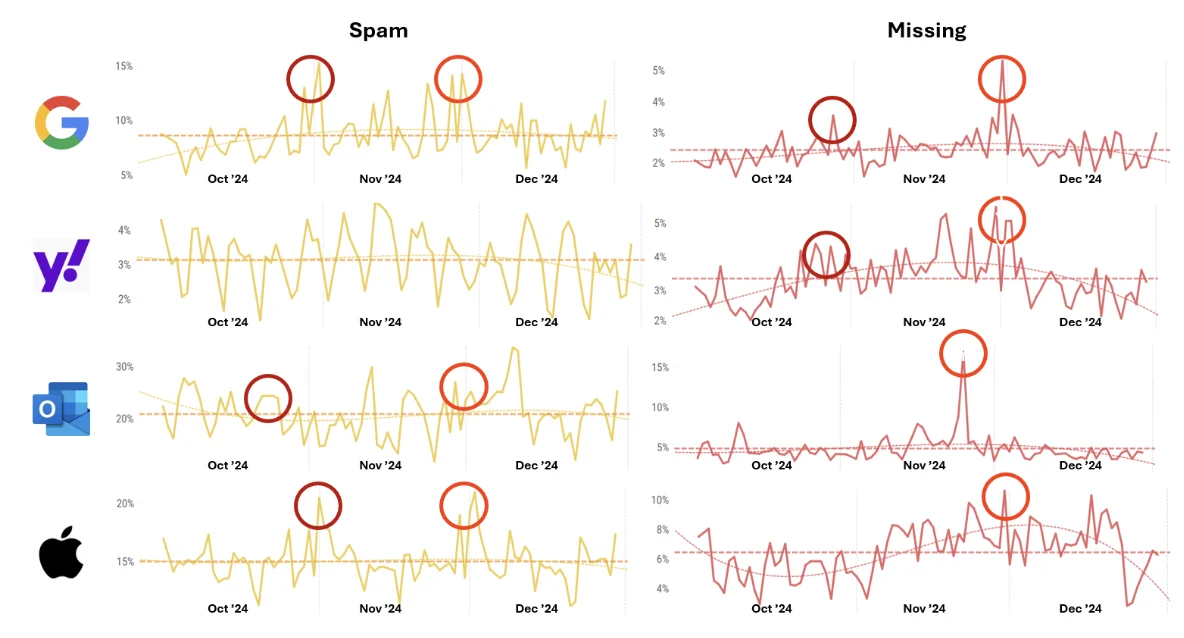
A significant area of concern within current AI visibility strategies is the overemphasis on "citations" – instances where an AI response references a specific domain or piece of content. Marketers, eager to establish a strong presence, are often building strategies around appearing in every possible response to relevant prompts. This approach, however, is fraught with instability. Citations within AI responses are not static; they can fluctuate dramatically even for the exact same prompt posed by the same user, making them an unreliable foundation for long-term visibility strategies.
The volatility of these citations stems from the complex algorithms that generative AI platforms employ. These algorithms are constantly learning and evolving, incorporating new data and adjusting their response generation processes. This means that a link or mention that appeared yesterday might be absent today, and vice versa, without any apparent change in the underlying search query or the content itself. This inherent dynamism makes it difficult for businesses to establish a consistent and predictable presence based solely on citation counts.

Towards More Meaningful Metrics: Analyzing Cross-Platform Citations
A more robust and actionable approach to AI search visibility, as suggested by industry experts, involves a shift in analytical focus. Instead of chasing ephemeral citation counts across individual AI platforms, the strategy should pivot towards analyzing a business’s presence across multiple generative AI platforms simultaneously. This broader perspective allows for a more comprehensive understanding of a brand’s overall digital footprint within the AI ecosystem.
This cross-platform analysis enables marketers to concentrate on several key areas that provide genuine strategic value:
-
Identifying Most Cited Domains: By aggregating data from various AI platforms, marketers can identify which of their domains are most frequently cited. This helps in understanding which content assets are resonating with AI models and, by extension, are likely to be deemed authoritative or relevant by users interacting with these models. This data can inform content creation and optimization efforts, directing resources towards areas that demonstrate proven AI recognition.
-
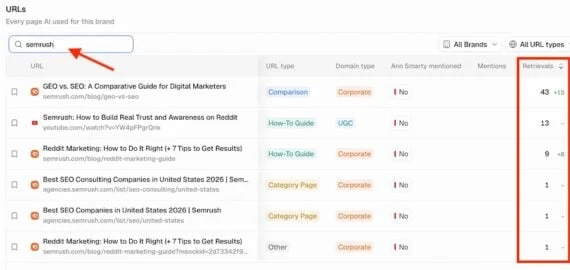
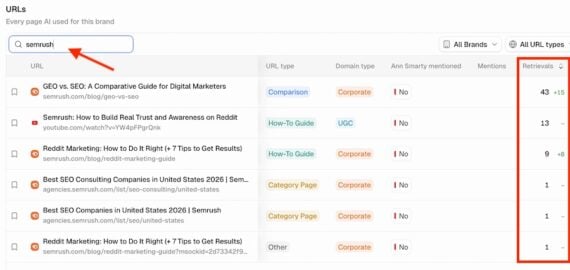
Understanding Competitor Citations and Content Gaps: AI tracking tools, when utilized effectively, can offer insights into competitive landscapes beyond traditional keyword analysis. If a business consistently fails to appear in AI responses to prompts addressing specific consumer concerns, it signals a potential content gap. By studying competitors who excel at providing comprehensive and informative content on their websites, businesses can then identify those competitor pages that are frequently cited by AI. This comparative analysis allows for the creation of a content strategy that directly addresses the needs and questions of the target audience, thereby increasing organic AI discoverability. The image provided from Peec AI, illustrating Semrush’s presence across various AI platforms, exemplifies this by showing specific pages that AI systems retrieved for the brand and their retrieval frequency. This granular data can inform which types of content (e.g., comparison guides, how-to articles) are most likely to be surfaced by AI.
-
Differentiating Between "Invisible" and "Visible" Citations: A crucial distinction emerging in AI search is between "invisible" and "visible" citations. Invisible citations occur when AI responses link to a page without explicitly naming the source business. Data suggests these types of links receive minimal click-through rates, indicating a lack of direct engagement and brand recognition. Conversely, "visible citations," where the business name is explicitly mentioned, have a demonstrably greater impact on driving purchasing decisions. The focus for AI optimization should therefore be on securing these visible mentions, as they contribute more directly to business objectives.
However, even invisible citations represent an opportunity. By identifying them, businesses can gain insights into how AI is referencing their content and use this information to improve their on-site content. The goal would be to create branded answers that AI can then present alongside these links, transforming an indirect reference into a direct brand interaction.
-
Leveraging Branded Prompts for Effective Information Dissemination: The most effective strategy for achieving AI visibility is to proactively provide generative AI platforms with accurate and comprehensive information about a business. This is where "branded prompts" become invaluable. By crafting and utilizing prompts that specifically inquire about a business, marketers can gauge how effectively their brand information is being disseminated and utilized by AI. The ideal scenario is to receive detailed, up-to-date, and accurate responses, indicating that the AI models have access to and understand the business’s information. This process not only tests existing visibility but also identifies areas where information might be outdated, incomplete, or misinterpreted by AI systems, guiding future content development and data management efforts.
The Evolving Landscape and Future Implications
The current phase of AI visibility tracking is akin to the early days of search engine optimization (SEO). Just as early SEO focused on superficial keyword stuffing and link building, current AI visibility strategies risk falling into similar traps of prioritizing easily manipulated metrics over genuine user value. The long-term implications of this evolving landscape are significant.
Businesses that adapt their AI visibility strategies to focus on authentic consumer needs, comprehensive content, and genuine brand mentions will likely gain a sustainable competitive advantage. Those that continue to rely on easily gamed metrics risk investing resources in strategies that yield diminishing returns as AI models and their evaluation methods mature. The ability to provide AI with rich, accurate, and branded information will become a critical component of a successful digital marketing strategy, blurring the lines between content marketing, SEO, and AI engagement.
The development of more sophisticated AI tracking tools that can accurately reflect user intent and provide insights into genuine consumer discovery will be crucial. Until then, a nuanced approach that combines cross-platform analysis, competitor benchmarking, and the strategic use of branded prompts will be essential for navigating the complex and rapidly changing world of AI search visibility. The ultimate goal remains consistent: to ensure that when consumers seek information, businesses are not only present but are also perceived as credible, authoritative, and valuable sources. This requires a fundamental shift from merely being seen by AI to being understood and valued by both AI and the end-user.