As the digital marketing calendar turns towards a new year, email marketers globally are intensifying their focus on crafting robust strategies to ensure 2026 marks their most impactful period yet. The transition from one year’s performance to the next year’s strategic blueprint is not a matter of guesswork but a meticulous, data-driven process. This critical approach was recently illuminated in a comprehensive Mailjet Email Academy webinar, where in-house experts Natalie Lynch, Principal Product Manager, and Julia Murljacic, Senior Email Marketing Manager, meticulously outlined a cyclical methodology for transforming 2025’s intricate performance data into a powerful, actionable email strategy for the coming year. Their guidance provides a step-by-step framework for email marketers and senders to rigorously analyze past performance and proactively plan for future triumphs in an increasingly competitive digital arena.
The Enduring Power of Email in a Dynamic Digital Ecosystem
In an era saturated with diverse communication channels, from ephemeral social media trends to sophisticated messaging apps, email marketing continues to assert its unparalleled relevance and effectiveness. Industry reports consistently demonstrate email’s superior return on investment (ROI) compared to other digital channels, with estimates often ranging from $36 to $42 for every dollar spent. This enduring power stems from its direct, personal nature and its capacity to foster deep customer relationships. However, success in this landscape is not static; it demands continuous adaptation, keen analytical insight, and a commitment to personalized, value-driven communication. The challenge for marketers is to move beyond mere broadcasting to truly understanding and responding to audience behaviors, preferences, and needs.
The Mailjet webinar serves as a timely beacon for this journey, emphasizing that a winning 2026 strategy does not materialize spontaneously. Instead, it is meticulously constructed upon a bedrock of comprehensive data and actionable insights gleaned from the preceding year. This systematic approach is more crucial than ever as consumers become increasingly discerning, expecting highly relevant and timely communications. Brands that fail to leverage their historical data risk falling behind, delivering generic messages that are easily overlooked in crowded inboxes.
A Four-Stage Framework for Strategic Planning
The experts at Mailjet distilled the strategic planning process into four interconnected stages, each building upon the insights derived from the last, forming a continuous improvement loop. This framework ensures that strategy is not a one-off event but an evolving process, adapting to changing market dynamics and audience behaviors.
Stage 1: The Comprehensive 2025 Year in Review – Unearthing Performance Realities
Before any forward-looking plans can be formulated, a deep and objective understanding of past performance is paramount. The initial, foundational step involves the exhaustive gathering and rigorous evaluation of 2025 campaign data. This is not merely about accumulating metrics but about approaching the data with a clear, analytical methodology to prevent being overwhelmed by a "sea of numbers."
The Imperative of "Apples to Apples" Comparison: A cornerstone of effective data analysis, as highlighted by Julia Murljacic, is the principle of comparing "apples to apples, not apples to oranges." This means dissecting performance data by distinct audience segments. Customers, blog subscribers, and sales prospects, for instance, exhibit fundamentally different engagement patterns and expectations. Blending their data points into an aggregated average can obscure critical nuances, leading to misinformed conclusions.
By segmenting audiences—for example, comparing the engagement of new subscribers acquired in Q1 2025 against new subscribers acquired in Q3 2025, or analyzing how long-term loyal customers interacted with promotional emails versus transactional ones—marketers can establish reliable, internal benchmarks. These segment-specific benchmarks are infinitely more valuable than generic industry averages, which may not reflect a brand’s unique audience demographics, product offerings, or market position. Understanding your audience’s specific behavior allows for tailored insights that directly inform future segmentation and content strategies.
Key Metrics for a Holistic View: A comprehensive review necessitates examining a broad spectrum of metrics provided by an Email Service Provider (ESP). Beyond the basic open and click-through rates, marketers must delve deeper into a full suite of performance indicators for each audience segment:
- Delivery Metrics:
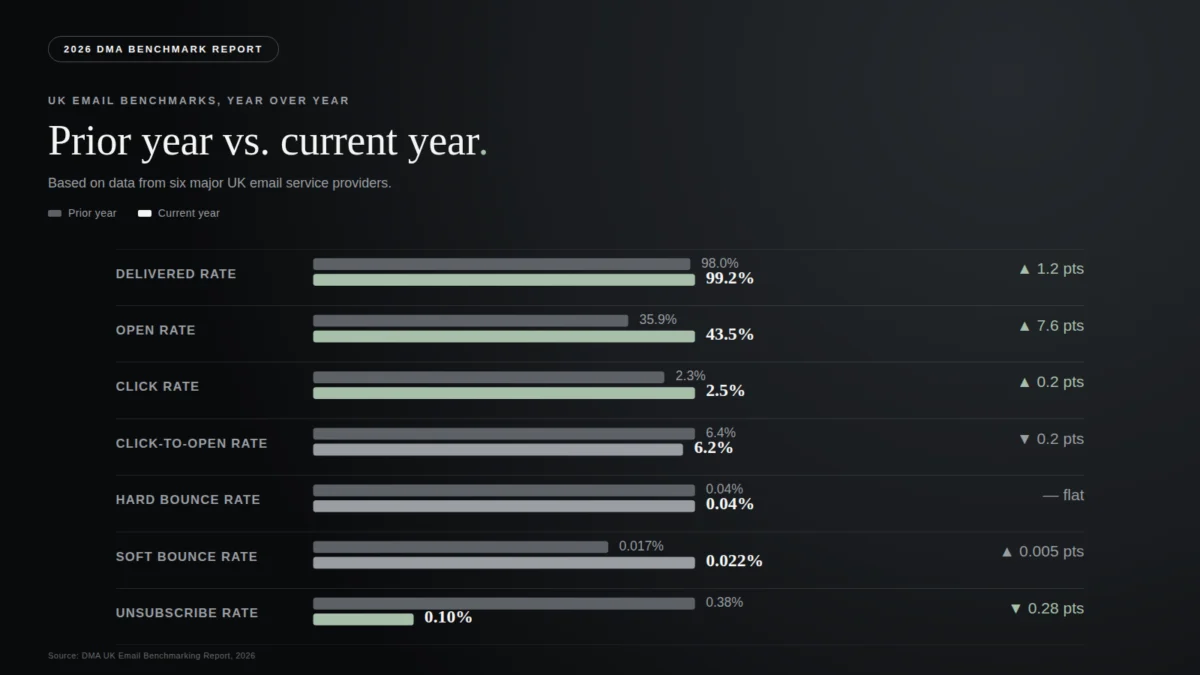
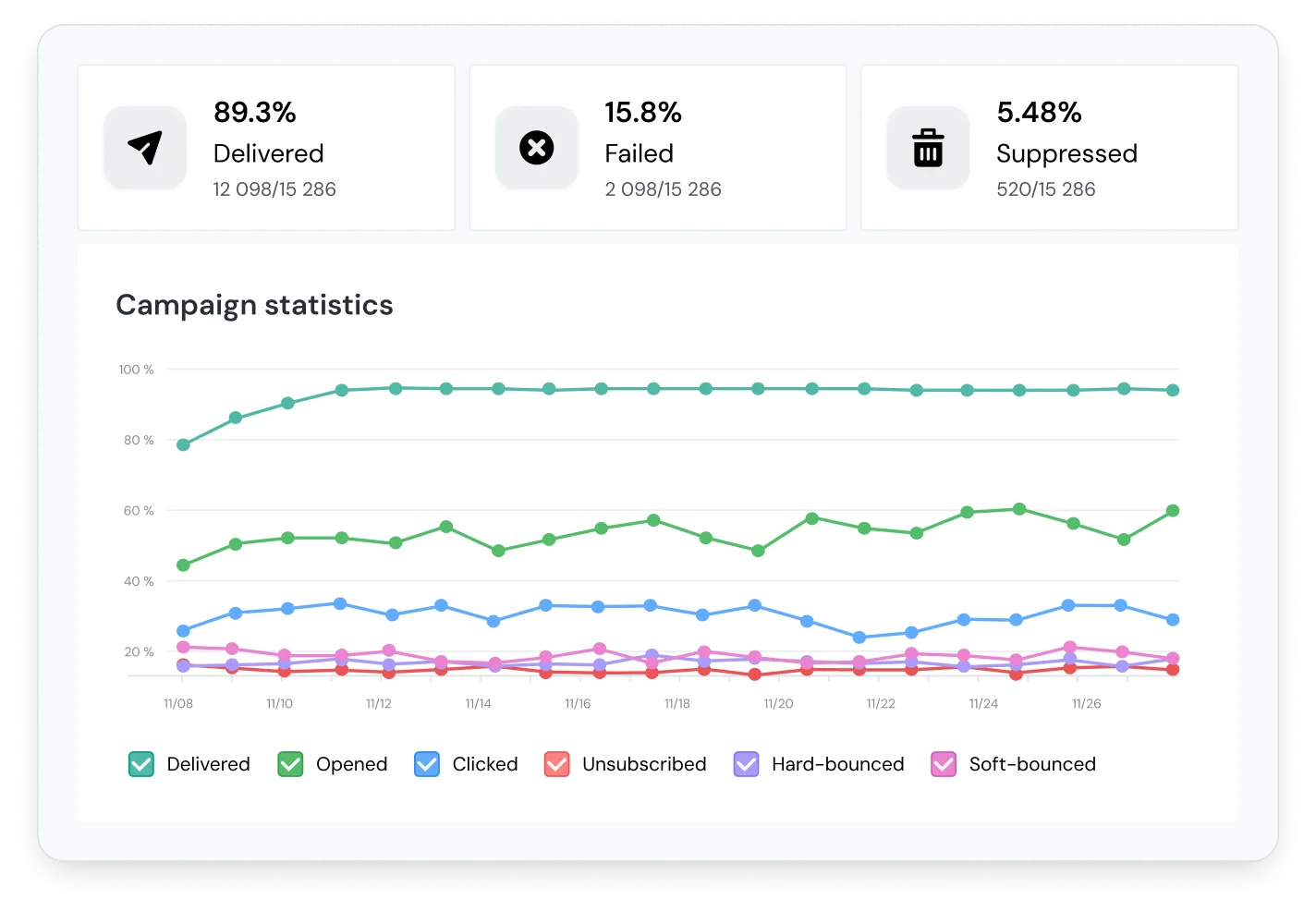
- Open Rate (OR): Percentage of recipients who opened an email. Track trends over time, by segment, and by subject line performance.
- Click-Through Rate (CTR): Percentage of recipients who clicked on a link within the email. This is a vital indicator of content relevance and call-to-action effectiveness.
- Conversion Rate (CR): Percentage of recipients who completed a desired action (e.g., purchase, download, sign-up) after clicking. This directly links email activity to business outcomes.
- Bounce Rate (Hard & Soft): Indicates delivery issues. Hard bounces signify permanent delivery failures (e.g., invalid email addresses), while soft bounces are temporary (e.g., full inbox). High bounce rates impact sender reputation.
- Unsubscribe Rate: Percentage of recipients who opted out. While some unsubscribes are natural, sudden spikes can signal content fatigue or irrelevance.
- Spam Complaint Rate: Percentage of recipients who marked an email as spam. A critical metric, as high rates severely damage sender reputation and deliverability.
- Engagement Metrics:
- Time Spent Reading: While harder to track precisely, proxies like scroll depth or multiple clicks can indicate deeper engagement.
- Forward Rate: Indicates content value and shareability.
- List Growth Rate: The net increase in subscribers over a period, balancing new sign-ups against unsubscribes and bounces.
- Churn Rate: The rate at which subscribers become inactive or leave the list.
- Revenue-Centric Metrics:
- Revenue Per Email (RPE): Total revenue generated by an email campaign divided by the number of emails sent.
- Average Order Value (AOV) from Email: The average value of purchases made through email campaigns.
- Customer Lifetime Value (CLTV) Influenced by Email: Understanding how email communication contributes to the long-term value of a customer.
Collecting and visualizing this data, perhaps through quarterly dashboards or monthly performance reports, allows marketers to identify trends, outliers, and areas of both strength and weakness.
Stage 2: Transforming Data into Actionable Insights – The Diagnostic Deep Dive
Once the raw data is collected and meticulously organized, the next crucial step is to decipher the narrative it presents. This stage moves beyond mere numbers to uncover the "story" behind the performance, identifying successes and, importantly, "not-so-successes." The Mailjet experts underscored that an underperforming campaign is not a failure but a valuable test, yielding critical insights for future optimization.
This diagnostic phase involves asking pointed, analytical questions:
- What specific campaigns or content types performed exceptionally well, and conversely, which underperformed? Analyze elements such as subject lines, calls-to-action (CTAs), visual design, email body copy length, personalization levels, and overall value proposition. Did specific product launches resonate more than others? Did educational content outperform purely promotional messages within certain segments?
- Were there particular audience segments that consistently overperformed or underperformed? Delve into the characteristics of these segments. What distinguishes the highly engaged from the disengaged? Is it their source of acquisition, their demographic profile, their purchase history, or their interaction frequency?
- Can any performance shifts be attributed to external factors? Consider seasonal trends (e.g., holiday shopping spikes, summer dips), economic conditions, competitor activities, industry news, or even broader global events that might have influenced recipient behavior. For instance, a dip in engagement might correlate with a major news event diverting audience attention, or a surge might align with a competitor’s misstep.
By dissecting the data through this lens, marketers can transition from raw statistics to concrete conclusions. Instead of just noting a low CTR, the insight might be "vague value propositions in subject lines consistently underperform for our prospect segment." Or, instead of seeing high engagement, the conclusion could be "our audience is most receptive to product updates sent on Tuesdays in late summer." This level of detailed understanding is the bridge between historical data and future strategic formulation. Techniques like cohort analysis can further illuminate how specific groups behave over time, while funnel analysis can pinpoint drop-off points in the customer journey attributed to email touchpoints.
Stage 3: Defining Your 2026 Goals – Strategic Alignment with OKRs and KPIs
The insights derived from the 2025 review form the bedrock upon which ambitious yet realistic 2026 goals are built. These goals must be inextricably linked to the company’s overarching business objectives, ensuring email marketing contributes directly to organizational success. The Mailjet webinar highlighted the utility of the Objectives and Key Results (OKRs) framework.
- Objectives: These are qualitative, aspirational statements of what you want to achieve. They should be clear, concise, and inspiring. For example: "Elevate customer loyalty and retention through personalized email experiences."
- Key Results (KRs): These are quantitative, measurable benchmarks that indicate progress toward achieving the objective. They must be challenging but achievable and time-bound. For the objective above, KRs could include: "Increase repeat purchase rate from email by 15%," or "Reduce customer churn rate for email-influenced customers by 10%," or "Achieve a 20% increase in positive sentiment scores in post-purchase email surveys."
When establishing these goals, the emphasis should be on simplicity, actionability, and realism. While ambition is encouraged, setting unachievable targets can lead to demotivation and misallocation of resources. A 100% click-through rate remains an impossibility, but a 4% increase in conversion rate for a specific product category, backed by solid data analysis, is an ambitious yet tangible target. These Key Results naturally evolve into the Key Performance Indicators (KPIs) that will be meticulously tracked throughout 2026 to measure ongoing progress and success. KPIs provide a continuous feedback loop, allowing for real-time adjustments to strategy.
Stage 4: Planning Your Strategy and Leveraging Your Tools – The Execution Blueprint
With clear goals in place, the final stage involves constructing the detailed strategy and leveraging available tools to achieve those objectives. This is where insights are translated into concrete campaigns, rigorous tests, and automated workflows.
Mastering Segmentation for Hyper-Personalization: Email segmentation remains one of the most potent tools in a marketer’s arsenal for delivering relevant, personalized content at scale. The Mailjet experts emphasized building specific, actionable segments for 2026:
- Engaged Subscribers: This segment comprises individuals who consistently open, click, and interact with emails. They represent the brand’s most loyal and interested audience. The strategy here should focus on nurturing this loyalty through exclusive content, early access to promotions, loyalty program updates, and community-building initiatives. The goal is to maximize their lifetime value and transform them into brand advocates.
- Unengaged/Lapsed Subscribers: These are subscribers who have shown little to no interaction over a defined period (e.g., 3-6 months). This segment requires targeted re-engagement campaigns, perhaps offering compelling incentives, showcasing new product benefits, or simply asking for updated preferences. The objective is to reactivate them before they become a drag on deliverability or are removed from the list.
- High-Value Customers: Defined by metrics like repeat purchases, high average order value, or significant overall spending, these customers are crucial. Strategies should include personalized recommendations, VIP offers, early access to sales, and dedicated customer service channels. The aim is to deepen their relationship with the brand and encourage continued patronage and advocacy.
- New Subscribers/Prospects: Individuals who have recently opted in but have not yet converted or fully onboarded. This segment is critical for conversion. They require well-structured welcome series, educational content about products/services, and clear calls-to-action designed to guide them through the initial stages of the customer journey.
Beyond these foundational segments, advanced segmentation can incorporate behavioral data (e.g., abandoned cart, specific page views), demographic information, psychographic profiles, and lifecycle stages to create even more granular and effective targeting.
The Power of Automation for Scalable Personalization: Once segments are meticulously defined, email automation becomes indispensable. Automation workflows enable the delivery of personalized journeys at scale, freeing up marketing teams to focus on strategic development rather than manual send processes. Examples include:
- Welcome Series: Automatically sent to new subscribers, introducing the brand and guiding them towards initial engagement or purchase.
- Abandoned Cart Reminders: Triggered when a user leaves items in their online cart, prompting them to complete the purchase.
- Post-Purchase Follow-ups: Sending relevant content, product care tips, or cross-sell/upsell opportunities after a purchase.
- Birthday/Anniversary Emails: Personalized greetings and offers to celebrate customer milestones.
- Re-engagement Campaigns: Automated sequences for inactive subscribers to encourage reactivation.
An effectively designed automation workflow acts as a "sidekick," continuously nurturing the audience, delivering timely messages, and driving engagement while marketers concentrate on refining strategy and developing high-impact campaigns.
Systematic A/B Testing for Continuous Optimization: The "Pro Tip" from the webinar emphasizes the critical role of A/B testing. This is not a sporadic activity but a systematic process used to answer the specific questions raised during the data analysis phase. If data suggests low click-throughs, marketers can test different CTA copy, button placement, or even entire email designs. The golden rule, however, is to test only one variable at a time to isolate the impact and draw reliable conclusions. Elements ripe for A/B testing include:
- Subject lines (length, emojis, personalization)
- Sender name
- Call-to-action (copy, button color, placement)
- Email body copy (tone, length, value proposition)
- Images and video integration
- Layout and responsiveness across devices
- Personalization tokens
- Send time and day
Content Strategy and Deliverability: Beyond segmentation and automation, a robust content calendar aligned with strategic goals is essential. This calendar should map out promotional, educational, transactional, and community-building content across segments and throughout the year. Finally, maintaining a healthy sender reputation and ensuring high deliverability are foundational to any email strategy. This involves diligent list hygiene, adhering to regulatory compliance (like GDPR, CCPA, and CAN-SPAM), and monitoring email authentication protocols.
Broader Impact and Implications for 2026 and Beyond
The systematic, data-driven approach advocated by Mailjet has far-reaching implications beyond individual campaign success. It fosters a culture of continuous learning and optimization within marketing teams, transforming email marketing from a tactical function into a strategic pillar of business growth. By rooting decisions in concrete data, organizations move from guesswork to a deliberate, informed marketing practice.
For 2026, this approach will enable companies to:
- Enhance Customer Lifetime Value: By understanding and responding to customer behaviors, email becomes a powerful tool for retention and upselling.
- Improve Brand Loyalty: Personalized and relevant communications build trust and foster deeper relationships.
- Optimize Marketing Spend: Data-driven decisions ensure resources are allocated to the most effective strategies and segments.
- Gain a Competitive Edge: Brands that master data analysis and personalized communication will stand out in crowded inboxes.
- Prepare for Future Trends: A data-centric mindset positions teams to integrate emerging technologies like AI for hyper-personalization, dynamic content, and predictive analytics, ensuring email marketing remains at the forefront of digital engagement.
The path from 2025’s performance data to a successful 2026 email strategy is a continuous, iterative loop. It demands rigorous analysis, insightful conclusion-drawing, ambitious yet realistic goal-setting, and a meticulously planned execution strategy. Marketers are urged to dedicate time this month to delve into their analytics, interpreting the silent language of their audience’s actions. By doing so, they can construct a 2026 plan that is not merely hopeful but strategically destined for success.
For those who were unable to attend the live session, the full webinar replay is available, offering an invaluable resource to guide marketers through this essential strategic planning process. This proactive engagement with data and strategic foresight will be the distinguishing factor for email marketing leaders in the year ahead.