The United Kingdom has emerged as one of the world’s highest-performing markets for text marketing, presenting a significant opportunity that many e-commerce brands continue to undervalue. While text messaging is often relegated to a secondary communication channel, empirical data paints a compellingly different picture, positioning SMS as a critical driver of revenue and customer engagement.
Recent analytics reveal that UK SMS click-to-conversion rates can soar as high as 5.1%, dramatically outperforming the global average, which hovers around a modest 0.97%. This stark contrast underscores the unique efficacy of SMS in the British market. Furthermore, the global SMS volume witnessed a robust 40% growth in 2025, a testament to the channel’s enduring relevance and expanding footprint in digital communication strategies worldwide. For businesses looking to tap into this lucrative revenue stream, a comprehensive understanding of the UK’s stringent regulatory environment surrounding SMS marketing is not merely advisable but absolutely essential. Text marketing in the UK operates under a dual legal framework: the Privacy and Electronic Communications Regulations (PECR) and the UK General Data Protection Regulation (UK GDPR). Navigating these overlapping regulations effectively requires meticulous attention to how subscriber data is acquired, managed, and utilized.
This article will delve into the intricacies of establishing an effective and legally compliant SMS marketing program in the UK. Readers will gain familiarity with specific UK regulations, learn compliant list-building methodologies, explore key campaign benchmarks, and identify optimal software solutions to automate and streamline their efforts.
Why the UK Excels in SMS Marketing: A Deep Dive into Performance Drivers
Before dissecting the regulatory landscape, it’s crucial to understand the fundamental reasons behind SMS marketing’s exceptional performance in the UK. The market’s unique characteristics foster an environment where text messaging thrives, making it an indispensable tool for brands aiming for direct and impactful consumer engagement.
Several key factors converge to drive this unparalleled success:
- High Mobile Penetration and Usage: The UK boasts one of the highest smartphone penetration rates globally, with a vast majority of the population owning and actively using mobile devices. This ubiquitous access ensures that SMS messages reach a broad and engaged audience directly.
- Immediacy and Directness: Unlike emails that can be lost in cluttered inboxes or social media posts that might be missed in endless feeds, SMS offers immediate delivery to the consumer’s primary personal device. This direct line of communication cuts through digital noise, ensuring messages are seen promptly.
- High Open Rates: SMS messages typically boast open rates significantly higher than email, often exceeding 90%. This high visibility translates directly into greater engagement and, ultimately, higher conversion potential.
- Consumer Trust and Preference for Direct Communication: UK consumers generally exhibit a high degree of trust in brands that communicate clearly and directly. When consent is properly obtained, SMS is often perceived as a convenient and efficient way to receive timely offers, updates, and personalized information.
- Lower Competition (Historically): While growing, SMS marketing has historically faced less saturation compared to email or social media, offering brands a relatively less crowded channel to capture consumer attention.
- Perceived Urgency: The concise nature and direct delivery of SMS often imbue messages with a sense of urgency, prompting quicker action from recipients, especially for time-sensitive promotions or alerts.
When these factors combine, they create a substantial opportunity gap for businesses. Recent industry reporting highlights that marketing agencies effectively integrating SMS into their strategies generate an impressive 202% more revenue compared to those that overlook this powerful channel. This compelling evidence underscores why businesses should prioritize SMS marketing; however, embarking on this journey without a thorough understanding of the legal regulations would be a critical misstep.
Navigating UK SMS Marketing Regulations: The Dual Legal Framework
SMS marketing in the UK is governed by two principal, overlapping legal frameworks that operate simultaneously. To safeguard business operations and reputation, a clear understanding of how these regulations impact marketing campaigns and messages is paramount.
PECR – The Primary SMS Marketing Law in the UK
The Privacy and Electronic Communications Regulations (PECR) represent the foundational legislation specifically addressing text message marketing in the UK. At its core, PECR mandates that brands must secure prior explicit consent before dispatching any promotional text messages to individuals.
The definition of “valid explicit consent” under PECR is rigorous: the choice must be freely given, specific, informed, and unequivocally unambiguous. This stringent requirement means that passive actions, such as pre-ticked checkboxes at the point of checkout, do not constitute valid consent, as they fail to demonstrate active intent or deliberate choice on the part of the consumer. PECR explicitly prohibits the acquisition of contact lists from third parties, the harvesting of phone numbers, or any assumption of consent. In essence, every individual on a brand’s SMS marketing list must have actively and clearly opted to receive text messages from that specific brand.
A narrow exception exists in the form of the “soft opt-in.” This provision permits businesses to send marketing texts to existing customers about similar products or services, even without fresh, explicit SMS consent. However, this exception is contingent on a crucial condition: the customer must have been afforded a clear opportunity to opt out of such communications at the time their contact information was originally collected. This exception strictly applies only to existing customer relationships and similar offerings, never to new contacts or general website visitors.
UK GDPR and SMS Marketing: The Broader Data Protection Mandate
It is a common misconception that businesses need only comply with one set of regulations. In reality, both UK GDPR and PECR apply concurrently. Any consent obtained under PECR must also fully satisfy the broader data protection standards stipulated by the UK GDPR.
The UK GDPR enforces several key principles relevant to SMS marketing:
- Lawfulness, Fairness, and Transparency: Processing personal data must be lawful, fair, and transparent to the data subject. This means being clear about why their number is being collected and how it will be used.
- Purpose Limitation: Data should be collected for specified, explicit, and legitimate purposes and not further processed in a manner that is incompatible with those purposes. For SMS, this means using phone numbers primarily for the marketing purpose for which consent was given.
- Data Minimisation: This principle dictates that only the specific data absolutely necessary to run campaigns should be collected. Typically, for SMS marketing, this is limited to the phone number itself and the associated consent records. Collecting extraneous personal data beyond this scope for the sole purpose of SMS marketing is non-compliant.
- Accuracy: Personal data must be accurate and, where necessary, kept up to date.
- Storage Limitation: Personal data should be kept for no longer than is necessary for the purposes for which it is processed.
- Integrity and Confidentiality: Personal data must be processed in a manner that ensures appropriate security of the personal data, including protection against unauthorized or unlawful processing and against accidental loss, destruction, or damage, using appropriate technical or organizational measures.
Crucially, UK GDPR also reinforces the subscriber’s “right to erasure” or the “right to be forgotten,” which means businesses must respect an individual’s right to remove themselves from marketing lists. Consequently, every marketing text message sent must incorporate clear and easily actionable opt-out instructions. The most common and widely accepted method is a simple “Reply STOP to unsubscribe.”
Finally, maintaining accurate and comprehensive record-keeping is not merely good practice but a mandatory requirement. Brands must be able to furnish unequivocal proof of consent for each subscriber, including the precise date of consent, the method of capture (e.g., website form, keyword opt-in), and the exact content of the consent statement or checkbox presented to the user at the time of signup. This record-keeping is vital for demonstrating compliance to regulatory bodies.
ICO Enforcement – The Consequences of Non-Compliance
The Information Commissioner’s Office (ICO) serves as the independent authority responsible for upholding information rights in the public interest and enforcing data protection laws, including PECR and UK GDPR. The ICO continuously monitors the market, investigates complaints, and actively enforces the aforementioned regulations. It is critical to understand that compliance is not a theoretical exercise; non-compliance can result in severe financial penalties. Businesses found to be in breach of these laws can face fines of up to £500,000 for illegal SMS marketing campaigns under PECR, and significantly higher fines under UK GDPR (up to £17.5 million or 4% of annual global turnover, whichever is greater, for serious infringements).
Some of the most common violations that typically trigger these substantial penalties include:
- Sending unsolicited marketing messages without explicit consent.
- Failing to provide clear and easy opt-out mechanisms.
- Using purchased or scraped contact lists.
- Lack of clear identification of the sender.
- Inadequate record-keeping of consent.
The ICO primarily initiates investigations based on consumer complaints. A single, poorly executed campaign that generates a high volume of spam reports can immediately flag a business for an official regulatory audit, leading to investigations and potential fines.
Building a Compliant and Engaged UK SMS Marketing List
Sustainable list growth in the UK, as in other regulated markets, hinges entirely on transparent, ethical, and legally compliant tactics. This section outlines five practical and compliant methods to cultivate an engaged and receptive audience for your SMS marketing efforts.
1. Website Popup Opt-ins
Website pop-ups are highly effective for capturing visitor interest, but their language for SMS opt-in must be unequivocally clear and explicit. The form must precisely state what the subscriber is consenting to receive. An exemplary statement might be: “Sign up to receive exclusive SMS marketing messages and offers from [Brand].” Pre-ticked checkboxes are not compliant in the UK, as PECR requires subscribers to demonstrate intentional action by actively checking the box themselves. The most robust and safest method, though not a strict legal requirement, is a double opt-in process, where a confirmation text is sent post-signup, requiring the user to respond to finalize their subscription. This adds an extra layer of consent verification. Brands like Vape Superstore have demonstrated that optimizing SMS opt-in forms in a compliant manner can significantly boost signup rates, achieving an increase from 18% to 32%.
2. Checkout Opt-in
The e-commerce checkout flow presents an ideal, low-friction opportunity to acquire new subscribers. Integrating an unticked checkbox at checkout, accompanied by unambiguous consent text, is both easy to implement and fully compliant. This method captures customers at a moment of high intent – during their purchase. However, precision in phrasing is critical. A generic statement such as “I agree to receive marketing emails” will not grant legal permission to send text messages. Under PECR, SMS consent and email consent must be collected distinctly and separately.
3. Keyword Opt-in (Text to Subscribe)
This strategy leverages the simplicity of mobile communication by inviting interested individuals to text a specific keyword (e.g., “DEALS,” “JOIN”) to a designated shortcode or a virtual mobile number (VMN). This initial message from the user serves as the explicit consent required for subscription. The automated reply message must then clearly detail the expected message frequency and provide explicit opt-out instructions. This method is particularly effective for physical retail stores, at offline events, or through packaging embeds, allowing for seamless real-world to digital conversion.
4. Loyalty Program Opt-in
Phone numbers can also be collected during loyalty program registrations. However, it is imperative that consent for SMS marketing remains entirely optional. SMS consent cannot be bundled as a mandatory term or condition for joining the loyalty program itself. If signing up for text messages is a prerequisite for participating in the rewards tier, the consent obtained will be deemed invalid under UK regulations.
5. The Soft Opt-in – Existing Customers
As previously mentioned, the soft opt-in is a narrowly defined exception applicable exclusively to individuals who have already made a purchase from your business. Under this provision, you may send marketing messages to these existing customers about products or services similar to their previous purchase, without requiring fresh, explicit SMS consent. However, this is only permissible if they were given a clear opportunity to opt out of such communications when they initially provided their phone number. It is crucial to reiterate that the soft opt-in strictly does not apply to new contacts or general website visitors; its scope is limited to existing customer relationships.
UK SMS Marketing Best Practices: Optimizing for Engagement and Conversion
To cultivate a highly successful UK SMS marketing program, adherence to established best practices around channel utilization is essential. These proven strategies consistently drive higher conversions and foster stronger customer relationships.
Timing and Frequency: The Art of Relevant Delivery
The timing of your messages is as crucial as their content. Disturbing your audience at inconvenient hours can quickly lead to unsubscribes and negative brand perception. The ICO provides clear guidance on this: avoid sending messages before 8 AM or after 9 PM. For promotional SMS campaigns, optimal performance is typically observed during UK lunch hours (between 12 PM and 2 PM) and early evenings (from 5 PM to 7 PM), when people are more likely to be disengaged from work or settled at home.
Maintaining a reasonable sending frequency is also vital:
- Campaigns: For general promotions, aim for 1-2 messages per week to avoid overwhelming subscribers.
- Automations: These can be more frequent due to their behavioral triggers, but ensure each message adds distinct value (e.g., abandoned cart reminders, order updates).
Sender ID and Message Formatting: Building Trust and Clarity
Always utilize an alphanumeric sender ID that clearly displays your brand name (e.g., “BRANDNAME” instead of a random string of numbers). This immediate identification fosters trust and ensures recipients know exactly who is contacting them. Furthermore, keep your messages concise and to the point. UK consumers respond far more favorably to clear, direct copy than to lengthy, convoluted promotional paragraphs.
To build trust and maintain compliance, messages must be formatted correctly:
- Clearly identify your brand at the beginning of the message.
- Include a call to action (CTA) and a clear link if applicable.
- Provide an unambiguous opt-out instruction, typically “Reply STOP to unsubscribe.”
Personalization and Segmentation: The Key to High Conversion
While a broad broadcast might seem efficient, UK text campaigns achieve peak performance when content is directly relevant to the recipient’s specific behavior or purchase history. The impressive 5.1% click-to-conversion rate for UK texts is largely attributable to highly personalized, behavior-triggered messages. Generic broadcasts, lacking specific relevance, will simply not yield comparable results.
Before sending any message, segment your audience meticulously based on:
- Demographics: Age, location (for local offers).
- Purchase History: Past purchases, frequency, value.
- Browsing Behavior: Viewed products, categories.
- Engagement Levels: Recent interactions, last purchase date.
- Lifecycle Stage: New subscriber, active customer, lapsed customer.
The impact of advanced customer segmentation on a business’s bottom line is profound. For example, BMO Media, a lifecycle agency, generated an additional $1.5 million in revenue through more sophisticated customer segmentation strategies, demonstrating its direct correlation with increased profitability.
UK SMS Marketing Benchmarks: A Unique Performance Landscape
Evaluating performance against generic global averages can be misleading, particularly given the unique dynamics of the UK market. It is far more insightful to measure campaigns against regional data. The table below illustrates how UK SMS marketing performance significantly surpasses global e-commerce trends:
| Metric | UK Benchmark | Global Average |
|---|---|---|
| Click-to-conversion rate | 5.1% | 0.97% |
| SMS click rate | Above global average (doubled YoY) | Varies |
| Automated SMS revenue per send | ~$0.74 | ~$0.74 |
| Campaign SMS revenue per send | ~$0.15 | ~$0.15 |
| Healthy opt-out rate | Below 0.3% | Below 0.3% |
Note: These benchmarks are averages and can fluctuate based on industry, audience quality, and specific message type.
Key Insight: Given that UK consumers convert at a rate more than five times higher than the global average, businesses operating in this market should not settle for average results. UK text messaging programs must be held to a significantly higher revenue-per-send standard than traditional global numbers might suggest, reflecting the market’s exceptional responsiveness.
UK SMS Marketing Strategy: Campaigns vs. Automations – Maximizing ROI
A clear understanding of the fundamental distinction between a broadcast campaign and a triggered automation is critical to unlocking the greatest performance potential in text marketing. This distinction reveals the largest gap in return on investment.
Campaigns are pre-scheduled broadcasts sent to a specific, static segment of your subscriber list. These are typically employed for broad announcements such as flash sales, seasonal promotions, new product launches, or general informational updates. While they naturally generate a lower revenue-per-send (approximately $0.15 according to recent e-commerce marketing reports), campaigns remain essential for achieving broad reach, generating immediate interest, and fostering general brand awareness.
Automations, in contrast, are highly targeted text messages dispatched automatically in response to specific user actions or predefined triggers. Because these messages are directly reactive to a user’s behavior, intent, or stage in the customer journey, SMS marketing automation consistently yields a significantly higher return, typically earning around $0.74 per send.
In the UK market, where the average click-to-conversion rate is an impressive 5.1%, the performance differential between campaigns and automations is even more pronounced. Behavior-triggered texts perform exponentially better here than standard global benchmarks suggest, capitalizing on high user intent.
To effectively capture this high-intent traffic, businesses should implement a robust core UK automation stack:
- Welcome Series: Sent immediately after a new subscriber opts in, welcoming them to the brand and potentially offering an initial discount. This builds rapport and encourages a first purchase.
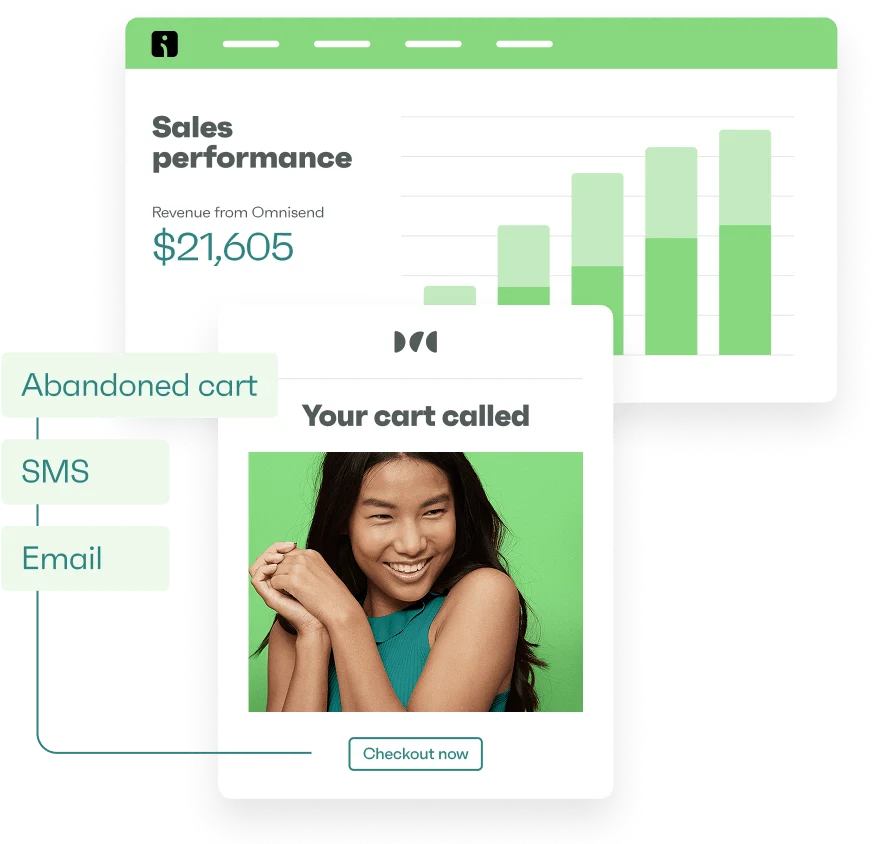
- Abandoned Cart Reminders: Automatically sent when a customer adds items to their cart but fails to complete the purchase. These messages can include a direct link back to the cart and a gentle nudge or incentive.
- Post-Purchase Follow-ups: Messages sent after a purchase to confirm orders, provide shipping updates, or solicit reviews. They reinforce positive experiences and encourage repeat business.
- Browse Abandonment Messages: Triggered when a customer views products but leaves the site without adding them to their cart. These remind the customer of their interest and can suggest similar items.
- Back-in-Stock Alerts: Automatically notify interested customers when a previously out-of-stock item becomes available again, capitalizing on expressed desire.
The impact of such a setup, though seemingly straightforward, is outstanding. For instance, Rachel Riley, a UK luxury children’s brand, leveraged Omnisend’s lifecycle automation and SMS features to achieve a remarkable 77.33% year-over-year revenue increase during the Black Friday Cyber Monday (BFCM) sales period.
Start Your UK SMS Marketing Program with Omnisend
The UK market presents a uniquely rewarding landscape for investment in text messaging. With a formidable 5.1% click-to-conversion rate and compelling data indicating that brands utilizing SMS generate 202% more revenue, the financial upside is undeniable.
To effectively capture this revenue while adhering to stringent regulatory demands, businesses require robust infrastructure that seamlessly integrates with their operations. Omnisend provides a comprehensive solution, meticulously handling strict UK compliance requirements, ensuring reliable carrier delivery for maximum reach, and facilitating advanced e-commerce automations – all within a unified platform.
Designed for powerful functionality without a steep learning curve, Omnisend empowers businesses to concentrate on growth. Furthermore, should any challenges arise, Omnisend’s award-winning 24/7 customer support is readily available to all users, whether on a paid plan or the free tier, ensuring continuous operational fluidity and peace of mind.
UK SMS Marketing FAQs
What is SMS marketing in the UK?
SMS marketing in the UK involves brands sending promotional and transactional text messages directly to consumers’ mobile phones. E-commerce merchants leverage this channel to communicate flash sales, announce product launches, send automated alerts (e.g., abandoned cart reminders, shipping updates), and more, all with the aim of driving revenue and enhancing customer engagement.
Is SMS marketing legal in the UK?
Yes, SMS marketing is entirely legal in the UK, provided that businesses rigorously comply with the regional privacy regulations, specifically PECR and UK GDPR. This entails adhering to specific legal criteria, such as obtaining explicit consent from recipients, which prohibits practices like purchasing contact lists from third parties or sending unsolicited messages to consumers who have not explicitly opted in.
What are the rules for SMS marketing in the UK?
The primary rules for SMS marketing in the UK revolve around obtaining prior explicit consent under both the PECR and UK GDPR frameworks. Additionally, messages must clearly identify the sending brand via an alphanumeric sender ID and include a straightforward, easy-to-use opt-out mechanism, such as the widely accepted “Reply STOP to unsubscribe” instruction. Data minimization and accurate record-keeping of consent are also mandatory.
How do I build an SMS marketing list in the UK?
You can build a legal and engaged SMS subscriber list in the UK through several transparent and compliant methods. These include utilizing website pop-ups with clear and specific consent phrasing, leveraging text-to-subscribe keywords promoted at offline events or in physical retail, and incorporating unticked consent checkboxes within your e-commerce checkout page. Additionally, a “soft opt-in” exception allows you to message existing customers about similar products or services, provided they were given an opt-out opportunity when their number was first collected.
What is a good SMS click rate in the UK?
Given the UK market’s exceptionally high engagement, SMS click rates are generally significantly higher than global benchmarks. A well-executed UK SMS campaign should aim for a click-to-conversion rate of 5% or higher. Furthermore, it is crucial to maintain a healthy opt-out rate, which should ideally remain below 0.3%, indicating high relevance and customer satisfaction with your messaging.