In an era defined by data and digital transformation, Customer Relationship Management (CRM) platforms have become the central nervous system for businesses striving to understand and serve their clientele. Yet, despite significant financial and technological investments in these sophisticated systems, many organizations find their CRMs collecting “digital dust” rather than actively driving revenue. The critical differentiator, often overlooked, is not the software itself or the budget allocated, but the quality and strategic foresight of its administration. Effective CRM administration is the operational discipline that ensures the platform accurately reflects current business processes, fostering clean data, efficient workflows, and trustworthy insights that directly impact an organization’s bottom line.
The Evolving Landscape of CRM and the Rise of Strategic Administration
The journey of CRM has evolved significantly from its origins as a basic contact management system. Today, a CRM is the nexus of marketing, sales, and service operations, designed to provide a unified 360-degree view of every customer interaction. This increased complexity, coupled with a growing reliance on data for strategic decision-making, has elevated CRM administration from a purely technical function to a strategic imperative. Businesses now operate in highly competitive environments where customer experience and sales velocity are paramount, making a well-oiled CRM indispensable.
Industry analysts consistently highlight the tangible costs associated with poor data quality, a direct consequence of inadequate administration. Gartner estimates that poor data quality costs organizations an average of $12.9 million annually. This financial drain stems from inaccurate forecasts, misguided marketing campaigns, inefficient sales processes, and ultimately, a diminished customer experience. A CRM that is not properly administered leads to fragmented information, duplicate records, broken automation, and a general lack of confidence among users, eroding its potential value and hindering adoption. The strategic shift towards Revenue Operations (RevOps) further underscores the importance of robust CRM administration, as the CRM forms the foundational technology layer upon which integrated revenue strategies are built.
Pillars of Effective CRM Administration: A Comprehensive Overview
Effective CRM administration encompasses a broad range of responsibilities that demand both technical acumen and a deep understanding of business processes. These capabilities are crucial for transforming a CRM from a mere data repository into a dynamic, revenue-generating asset.
1. Data Model and Governance:
The foundation of any high-performing CRM is a meticulously structured data model. This involves defining objects (e.g., contacts, companies, deals, tickets), properties (fields for data storage), and associations between them. A robust data model ensures that records accurately reflect real-world buyer relationships and business interactions. Data governance, therefore, becomes paramount, establishing naming conventions, validation rules, merge policies, and lifecycle standards. Without these, even a well-configured CRM will inevitably succumb to inconsistency. Organizations often face the challenge of property sprawl, where hundreds of properties exist, most unused or redundant, leading to confusion and poor data completeness. A critical tool here is the CRM data dictionary, a foundational document specifying every active property, its definition, data type, owner, and intended use. Best practices include standardizing property names, minimizing free-text fields, and using property groups to enhance user experience and data completeness.
Deduplication and validation rules are integral to data hygiene. Duplicate records inflate metrics, fragment customer histories, and undermine personalization efforts. Proactive measures, such as enforcing email uniqueness in forms and imports, are essential. Automated duplicate management tools, when configured carefully, can significantly reduce data inconsistencies. However, any bulk merge or deduplication operation requires rigorous testing in a sandbox environment and a backup plan to prevent accidental data loss or corruption, as a single misconfigured rule can collapse distinct records into erroneous single entries.
2. Permissions, Roles, and Security:
Data security and integrity are non-negotiable. CRM permission models must adhere to the principle of “least privilege,” granting each user access only to what is necessary for their job function. Over-permissioning poses significant data security risks, including unauthorized data access or accidental modifications. A scalable permission model begins with defining roles (e.g., Sales Rep, Marketing Manager, CRM Admin) and assigning users to these roles, rather than configuring individual permissions. This approach streamlines user management, especially in growing organizations. Features like HubSpot’s team-based record visibility allow for precise control over what records users can see and edit, aligning with organizational structure and ensuring data confidentiality and relevance for each team. Regulatory compliance standards like GDPR and CCPA further emphasize the importance of granular permission controls to protect sensitive customer data.
3. Workflow Automation and Lifecycle Management:
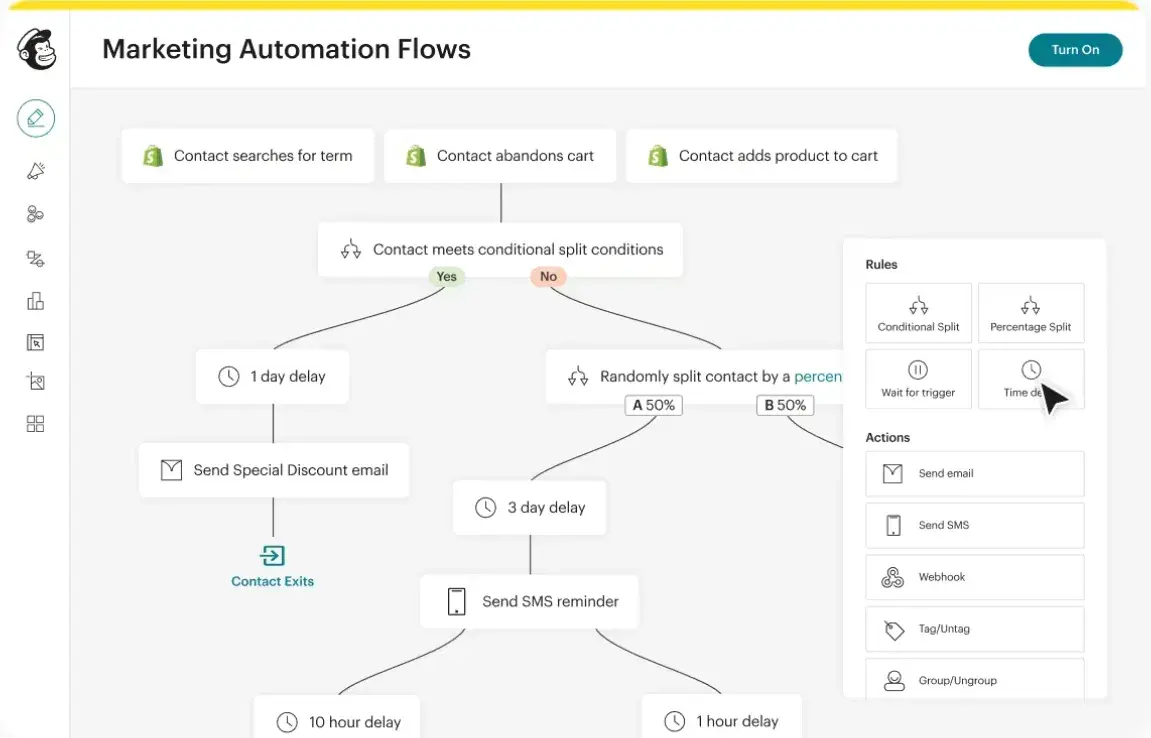
CRM automation is designed to ensure consistent process execution without manual effort, accelerating operations and reducing human error. However, poorly managed automation can lead to silent failures and broken processes. Effective workflow administration demands careful design, including a clear, named purpose for each workflow, robust suppress lists (e.g., for customers or competitors), dedicated test contacts for validation, and continuous error monitoring. Consistent naming conventions for workflows are also crucial for manageability, especially as the number of automated processes grows.
A prime example of critical workflow governance is the management of lifecycle stages. This defines how contacts progress through the customer journey (Subscriber, Lead, MQL, SQL, Opportunity, Customer, Evangelist) and ensures seamless handoffs between marketing, sales, and service. A common failure point arises when definitions are unclear or manual overrides are permitted without strict governance. For instance, if marketing assigns contacts to MQLs based on form submission, but sales manually reverts them to ‘Lead’ without clear criteria, the result is a breakdown in alignment, inaccurate reporting, and internal blame games. The solution involves writing down precise definitions for each stage, automating transitions based on agreed criteria, and limiting manual overrides to defined processes. This ensures funnel conversion data remains accurate and provides a single source of truth for all teams.
4. Reporting, Dashboards, and Data-Driven Decision Making:
The ultimate goal of a CRM is to provide actionable insights that drive business decisions. Reliable dashboards and reports depend entirely on standardized definitions, clean data fields, and documented filters. For any CRM report to be trustworthy, several conditions must be met: the underlying data must be clean and complete, the definitions of key metrics must be universally understood, the report logic (filters, properties, calculations) must be transparent and documented, and the data must be updated regularly. If any of these conditions are compromised, the report’s credibility collapses, leading to distrust and a reliance on “shadow systems” for data analysis.
CRM administrators are responsible for building and governing a core set of dashboards tailored to different audiences (e.g., Revenue Performance for executives, Marketing Funnel for CMOs, Sales Activity for sales managers, CRM Health for RevOps). Tools within CRM platforms, such as customizable report libraries, shared dashboards, and detailed activity logs, empower administrators to create and maintain these critical reporting assets, ensuring that leaders across the organization have access to accurate, timely information for strategic planning and operational adjustments.
5. Integrations and Tech Stack Harmony:
Modern businesses operate with a diverse tech stack, and the CRM often serves as the central hub. Managing integrations effectively is crucial for maintaining a unified customer view and avoiding data silos. This involves configuring connected applications, defining field mappings, establishing sync rules, and regularly monitoring error logs. The CRM administrator ensures that data flows seamlessly between systems, providing a holistic view of the customer across all touchpoints. Without diligent integration management, disparate systems can create conflicting data, leading to operational inefficiencies and a disjointed customer experience.
-1.png)
6. Change Control, Sandboxes, and Documentation:
Uncontrolled changes are a primary cause of CRM instability. A robust change control process is essential, encompassing intake (request submission), review (conflict assessment, dependency analysis), approval (especially for high-risk changes), scheduling, testing, rollout, and post-launch monitoring. User Acceptance Testing (UAT) is a critical step often overlooked, where changes are validated by end-users in a controlled environment before deployment to production.
Sandbox environments, offered by platforms like HubSpot (in Professional and Enterprise tiers), are purpose-built for this. They allow administrators to copy production data, implement changes, conduct thorough UAT, and then replicate those changes to the live environment with confidence. This significantly mitigates the risk of production incidents that can disrupt operations and erode user trust. Finally, comprehensive, yet concise and searchable documentation (data dictionaries, change logs, training materials, runbooks) ensures institutional knowledge is preserved, facilitating onboarding, troubleshooting, and continuous improvement.
Cross-Team Alignment: The Administrator as a Strategic Partner
Effective CRM administration transcends a single department; it necessitates strong cross-team alignment. A clear RACI (Responsible, Accountable, Consulted, Informed) matrix defines decision rights across CRM administration, RevOps, Marketing Ops, Sales Ops, Service Ops, and IT. This clarity prevents bottlenecks and conflicts, ensuring that CRM decisions are made efficiently and collaboratively. For example, while the CRM Admin might be Responsible for new property creation, RevOps is Accountable, with Marketing, Sales, and Service Ops being Consulted.
Furthermore, defining Service Level Agreements (SLAs) for data entry, lifecycle qualification, and handoffs is crucial for operational efficiency and accountability. An MQL follow-up SLA, for instance, might dictate that SDRs must contact an MQL within four business hours, with automated escalations if the SLA is breached. These agreements ensure that the shared CRM is utilized consistently and effectively by all teams, fostering a culture of accountability and shared ownership over the customer journey.
The Impact of Artificial Intelligence on CRM Administration
The advent of artificial intelligence (AI) is ushering in a new era for CRM administration, promising to automate repetitive tasks and enhance data quality. Tools like HubSpot’s Breeze offer capabilities such as:
- Data Enrichment: Automatically populating company and contact properties from extensive databases, reducing manual data entry and improving record completeness.
- Copilot Functionality: Natural language interfaces that assist administrators in building workflows, creating reports, and drafting CRM documentation, significantly reducing the time spent on common tasks.
- Intelligence Features: AI-powered scoring, contact prioritization, and intent signals integrated directly into CRM records, enabling more accurate lead routing and lifecycle stage transitions.
- Autonomous Agents: AI agents that can prospect, create content, or provide customer service, generating records, tasks, and activities directly within the CRM.
However, this powerful augmentation introduces a new layer of governance challenges. AI-generated data, while efficient, requires the same rigor and validation as human-entered data. Administrators must establish clear governance protocols for AI-written data, including validation rules, audit workflows, transparency regarding data sources, and mechanisms for manual override. This ensures that AI-driven enhancements do not inadvertently compromise data accuracy or overwrite manually verified information. AI is positioned not as a replacement, but as a force multiplier for skilled CRM administrators, freeing them to focus on more strategic initiatives and complex problem-solving.
Cultivating the Strategic CRM Administrator: Skills and Career Path
CRM administration has solidified its position as a vital and strategic career path within modern organizations. The most successful CRM administrators are those who can translate technical configurations into tangible business outcomes. Key skills include:
- Data Modeling: Designing robust object relationships and property schemas.
- Governance and Documentation: Creating clear data dictionaries, change logs, and runbooks.
- Admin UX Design: Optimizing record views and property groups for user efficiency.
- Automation and Workflow Logic: Building reliable, documented, and observable automated processes.
- Change Management: Effectively communicating changes, running adoption programs, and training users.
- QA and Testing: Implementing structured UAT and leveraging sandbox environments.
- Stakeholder Alignment: Facilitating cross-team governance and translating business needs into CRM solutions.
- Reporting and Analytics: Building governed dashboards and diagnosing report accuracy issues.
For those looking to enter or advance in this field, certifications from platforms like HubSpot Academy offer practical, scenario-based training. A recommended path typically starts with CRM Certification and Data Hub Certification, followed by specialized certifications in Marketing Software or Sales Software, culminating in a Revenue Operations Certification for a strategic, holistic understanding. This progression equips administrators with the technical skills and strategic mindset to evolve from operational implementers to true RevOps partners.
Conclusion: CRM Administration as a Competitive Advantage
In the final analysis, CRM administration is unequivocally a revenue function. Every lead lost due to a broken workflow, every forecast undermined by dirty data, and every sales representative disengaging from a slow or unreliable system represents a direct administrative failure with significant financial repercussions. Organizations that excel with their CRM platforms understand that investing in robust administration is not an overhead, but a strategic investment in their revenue engine.
This investment manifests through formal ownership, clear governance frameworks, a commitment to continuous improvement, and the administrator’s seat at the GTM (Go-To-Market) strategy table. Whether navigating the complexities of a large enterprise or the agile demands of a startup, the principles of documenting existing processes, building governance incrementally, and continuous auditing remain paramount. A well-administered CRM is more than a technological achievement; it is a meticulously managed asset that provides a distinct competitive advantage, enabling businesses to grow better and smarter.