The landscape of digital visibility is undergoing a profound transformation, with content marketers globally grappling with a critical question: Do semantic keywords retain their significance in SEO by 2026, especially as artificial intelligence engines increasingly dictate search traffic and influence buying decisions? This article delves into the indispensable role of semantic keywords, dissecting their importance, distinguishing them from outdated tactics, and outlining a robust, repeatable methodology for their discovery and application in an era defined by AI-powered search.
The Evolution of Search: From Keywords to Concepts
For decades, the bedrock of search engine optimization rested on the meticulous placement of exact-match keywords. Early SEO practices often revolved around keyword density, leading to content that felt unnatural and prioritized machines over human readers. However, Google’s continuous evolution, marked by a series of transformative algorithm updates, irrevocably shifted this paradigm.
The journey began in 2013 with Hummingbird, an update that allowed Google to move beyond individual keywords and understand the context and intent behind entire search queries. This was a monumental leap towards semantic understanding, enabling the engine to interpret phrases and natural language more effectively. Two years later, in 2015, RankBrain introduced machine learning into Google’s core algorithm, particularly for ambiguous or novel queries. RankBrain learned to associate specific search queries with the most relevant results, further deepening Google’s ability to interpret meaning without explicit keyword matches.
The introduction of BERT (Bidirectional Encoder Representations from Transformers) in 2019 marked another significant milestone. BERT, a neural network-based technique for natural language processing (NLP) pre-training, allowed Google to understand the nuances of language, the context of words within sentences, and the relationships between them in a more human-like manner. This meant prepositions and conjunctions, previously overlooked, could drastically alter the interpretation of a query. The shift away from simple word matching was so pronounced that in 2019, Google’s John Mueller publicly clarified that Google does not use Latent Semantic Indexing (LSI), an older, less sophisticated method often confused with semantic search. This statement underscored the advanced nature of Google’s modern NLP capabilities.
Further cementing this evolution, the MUM (Multitask Unified Model) update in 2021 brought multimodal understanding and an ability to process complex queries across different languages and formats. MUM signified Google’s ambition to provide comprehensive answers to highly complex questions, moving closer to the capabilities of human understanding.
Parallel to Google’s internal advancements, the rise of powerful generative AI models like OpenAI’s ChatGPT, Perplexity AI, and Google’s own Gemini has ushered in the era of “answer engines.” These platforms don’t just list websites; they synthesize information, provide direct answers, and influence buying decisions by summarizing content and citing sources. Google’s integration of “AI Overviews” directly into its search results further blurs the lines between traditional search and AI-driven answers, making topical authority and semantic depth paramount. In this rapidly converging environment, the ability of content to demonstrate a deep, nuanced understanding of a subject is no longer merely an advantage but a fundamental requirement for visibility.
Defining Semantic Keywords in the Modern Landscape
Semantic keywords are not simply synonyms or variations of a primary keyword. They encompass the broader set of terms, phrases, and concepts that are contextually and conceptually related to a page’s core topic and its intended user search intent. They act as signals, allowing search engines and AI models to infer the true subject matter of content beyond surface-level keyword mentions.
Consider a primary keyword such as “email marketing software.” Semantic keywords for this topic would naturally include terms like “automated drip campaigns,” “subscriber list segmentation,” “CRM integration,” “lead nurturing workflows,” “deliverability rates,” “A/B testing tools,” “email analytics,” and “marketing automation platforms.” These terms represent the ecosystem of concepts a user exploring “email marketing software” would expect to encounter in a comprehensive resource. They often include modifiers, related questions, and underlying problems that a thorough piece of content would address.
The importance of these high-intent keywords extends across two critical dimensions, as highlighted by industry experts. Kelvin Ćobanaj, CEO of ZeroRank, notes, “With traditional SEO, semantic keywords are mostly variations of the same search so that a page can rank for more queries.” This multi-query ranking capability is crucial for maximizing organic reach. More significantly, Ćobanaj adds, “With AI search, I focus more on covering the full topic and common questions, not just keyword variants. That gives AI enough context to include the brand in its answer.” This shift emphasizes content’s ability to demonstrate holistic topical authority, providing AI engines with the necessary context to confidently extract, synthesize, and cite information from a brand’s content.
Dispelling Myths: Semantic Keywords vs. LSI, Entities, and Topics
To truly grasp the power of semantic keywords, it’s essential to differentiate them from related, but distinct, concepts.
LSI Keywords: An Outdated Terminology
The term “LSI keywords” (Latent Semantic Indexing) has long been a source of confusion in SEO. LSI refers to a mathematical technique developed in 1988 for analyzing word co-occurrence patterns. While the technique itself is real, its application to modern Google algorithms is not. As mentioned, Google’s John Mueller unequivocally stated in 2019 that LSI is not used by the search engine. Modern search engines employ far more sophisticated natural language processing (NLP) models, such as BERT and MUM, which understand contextual meaning, syntax, and intent in ways LSI never could. When marketers refer to “LSI keywords,” they are almost invariably thinking of semantically related keywords – terms that genuinely contribute to the contextual understanding of a topic. The distinction is crucial: focus on building meaning, not on a statistically derived, outdated concept.
Entities: Anchoring Specificity
Entities are uniquely identifiable “things” that search engines recognize as distinct objects in the real world. This includes specific people (e.g., “Elon Musk”), brands (e.g., “Apple Inc.”), tools (e.g., “Salesforce CRM”), places (e.g., “Paris, France”), or abstract concepts (e.g., “quantum physics”). Entities provide specificity and disambiguation. For instance, Google’s Knowledge Graph understands that “Apple Inc.” is distinct from “apple (fruit).”

While semantic keywords are the broader set of related terms that deepen a topic, entities are the specific, named elements within that semantic field. An article on “project management software” would use semantic keywords like “task tracking,” “team collaboration,” and “workflow automation” to build context. Within that same piece, entities would be specific software solutions like “Asana,” “Monday.com,” or “Jira,” and methodologies like “Gantt chart” or “Agile.” A strong piece of content leverages semantic keywords to establish comprehensive context and strategically references entities to anchor specificity and demonstrate detailed knowledge.
Topics: The Overarching Container
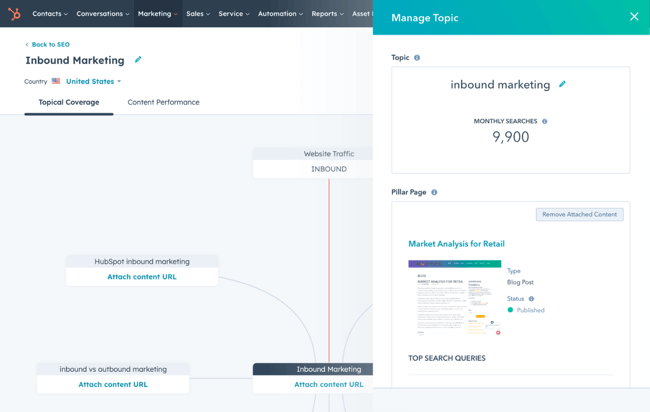
A topic is the broad subject area your content aims to address. Semantic keywords, on the other hand, are the specific terms and phrases that imbue that topic with substance, detail, and depth. If the topic is the container, semantic keywords are the essential ingredients that give the content its flavor and nutritional value. A robust content strategy begins with topic selection, often organized into pillar pages and content clusters. Semantic keyword research then meticulously fills in the details for each page within that structure. Without this granular semantic input, a topic-based approach risks remaining superficial. With it, content clearly signals the expertise, authority, and trustworthiness (E-E-A-T) that both human readers and sophisticated AI systems demand.
The Dual Imperative: Semantic Keywords for SEO and AEO
The convergence of traditional SEO and Answer Engine Optimization (AEO) means that semantic keywords serve a dual purpose in 2026. Traditional SEO continues to reward pages that demonstrate comprehensive topical relevance through the intelligent use of related terms, directly impacting organic search rankings and click-through rates. However, AEO introduces a new layer of complexity and opportunity.
AEO focuses on structuring content in a way that allows AI answer engines – whether it’s Google’s AI Overviews, ChatGPT, Perplexity, or Gemini – to efficiently extract, synthesize, and cite the information in their direct responses. This involves explicit definitions, clear relationships between concepts, and often, structured data.
Here’s how the role of semantic keywords subtly shifts and overlaps across these two approaches:
| Feature | Traditional SEO | Answer Engine Optimization (AEO) |
|---|---|---|
| Primary Goal | Rank higher in SERPs, drive organic traffic. | Earn citations in AI-generated answers, establish brand authority in AI. |
| Keyword Focus | Broad semantic clusters, long-tail queries. | Explicit entities, specific questions, clear definitions, relationships between concepts. |
| Content Structure | Readability, logical flow, satisfying user intent. | Highly structured, answer-first, passage-level extractability, clear headings and subheadings. |
| Impact of Semantic Keywords | Signals topical relevance, increases ranking potential, captures diverse query variations. | Provides AI with clear context, enables accurate synthesis, increases likelihood of being cited as an authoritative source. |
As Bernard Huang, founder of Clearscope, succinctly puts it, “I see a lot of teams treating AEO and SEO like two totally separate things, and honestly, it’s the biggest resource waste out there right now. Both come down to the same goal: creating content that genuinely covers a topic well. When you do good semantic keyword research and map out the concepts and relationships around a topic, you’re building content that works for traditional search and AI engines at the same time.”
The takeaway is clear: semantic keyword research is not a bifurcated process for SEO and AEO. The same rigorous research strengthens both. The critical difference lies in the execution and presentation of the content. AEO mandates a greater emphasis on unambiguous language, explicit entity references, and content meticulously structured for efficient passage-level extraction by AI models. Marketers must ensure their content is not just discoverable but also answerable. Tools like HubSpot’s AEO Grader offer a valuable starting point, allowing brands to audit their current AI visibility and understand how answer engines perceive them based on their training data, providing a crucial baseline before embarking on optimization efforts.
A Strategic Framework: Finding Semantic Keywords in 2026
Effective semantic keyword research transcends simple tool usage; it’s a strategic workflow that begins with a deep understanding of the target audience and their information needs. Here’s a step-by-step process for identifying and leveraging semantic keywords in the modern search landscape:
Step 1: Map Your Personas to Their “Money Prompts”
Before diving into any keyword tool, marketers must identify the actual questions their ideal buyers pose to AI engines or Google when actively evaluating solutions. These are not general curiosity questions but high-intent “money prompts” that indicate a readiness to purchase or solve a specific problem. As Kelvin Ćobanaj advises, “Teams often focus only on keyword tools, but analyzing real questions, comparisons, and prompts gives you a much better picture of what content needs to cover.” Lindsay Boyajian-Hagan, VP of Marketing at Conductor, further emphasizes this, stating on the “Found in AI” podcast that valuable content starts by mapping personas to prompts, especially when revenue is at stake.
For each persona, document:
- Specific Challenges: What problems are they trying to solve that your product/service addresses?
- Solution Evaluation Criteria: What factors are most important to them when comparing options?
- Decision-Making Prompts: What exact phrases would they type into an AI engine to get assistance with a purchasing decision or business case?
For example, a VP of Engineering at a mid-market SaaS company evaluating project management software might use prompts like: “Compare Jira vs. Asana for agile teams,” “How to integrate project management software with Slack and GitHub,” or “Best project management software for scaling engineering teams with 50+ members.” These prompts reveal explicit entities, comparison points, and functional requirements, forming the foundation of semantic research.
Pro tip: Don’t guess. Extract these prompts from sales call recordings, demo request forms, G2 reviews, customer support tickets, and relevant Reddit or Quora threads. The authentic language of your buyers is invaluable.
Step 2: Map Your Primary Keywords to These Prompts and Queries
Once persona prompts are established, connect your chosen primary keywords to these high-intent queries. A single primary keyword, such as “email marketing software,” can be associated with vastly different semantic profiles depending on the persona. A CMO at an early-stage startup might search for “most cost-effective email marketing platform for a team of two,” while an enterprise email marketing manager might query “best email marketing software with advanced segmentation and Salesforce integration.” This mapping ensures content addresses specific buyer intent rather than generic search volume. Document this relationship in a structured table to guide subsequent research, preventing a single page from trying to serve too many disparate audiences.
Step 3: Analyze the SERP for Your Primary Keyword (and Beyond)
Perform a thorough analysis of the Search Engine Results Page (SERP) for your primary keywords. Google’s People Also Ask (PAA) box is a rich, easily accessible source of semantically related questions. Click through multiple PAA results to expand the list, observing dynamically generated related queries. Additionally, examine the “Related Searches” at the bottom of the SERP. Pay close attention to:
- Recurring Subtopics: What common themes emerge across the top-ranking pages?
- Question Formats: How are users phrasing their questions?
- Entities Mentioned: Which specific brands, tools, or concepts are consistently referenced?
- SERP Features: How do featured snippets, video carousels, or AI Overviews present information?
Daniel Horowitz, Enterprise SEO at Salesforce, emphasizes the need for comprehensive analysis: “I always want to see how the topic is actually being framed across rankings, AI answers, People Also Ask, forums, documentation, and competitor pages. That’s where you start to see which entities recur, which subquestions matter, where you can add value with an FAQ section, and which phrasing keeps showing up.” Cross-reference these findings with your persona-to-prompt mapping to identify alignment or gaps.
Step 4: Utilize Dedicated Semantic Keyword Tools
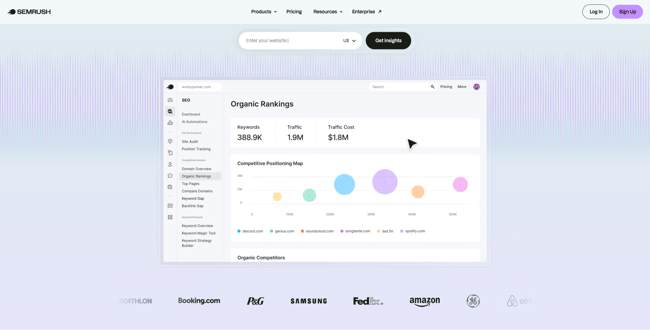
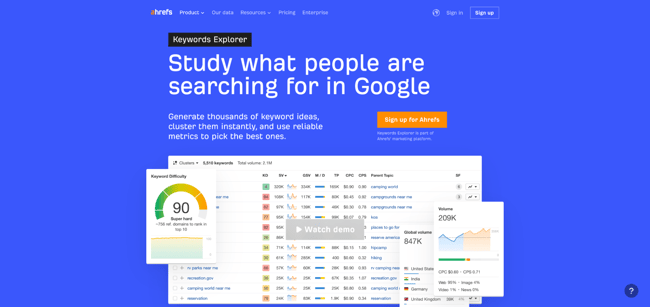
While SERP analysis provides excellent qualitative insights, dedicated tools are essential for quantitative data and broader discovery. Platforms like Semrush’s Keyword Magic Tool, Ahrefs’ Keywords Explorer, and specialized tools like KeywordsPeopleUse can uncover related terms that manual SERP scanning might miss. Look for:
- Keyword Clusters: Tools that group related terms by subtopic.
- Question-Based Keywords: Queries phrased as questions.
- Synonyms and Modifiers: Variations that expand the semantic field.
- Intent-Based Groupings: Keywords categorized by informational, navigational, commercial, or transactional intent.
Step 5: Prompt AI Engines Directly
AI answer engines offer unique insights into semantic relationships. Input your “money prompts” from Step 1 into platforms like ChatGPT, Perplexity, or Gemini. Observe:
- Summarized Concepts: How does the AI synthesize the topic?
- Follow-Up Questions: What related questions does the AI suggest?
- Entities and Relationships: Which specific entities does the AI highlight, and how does it connect them?
Perplexity, with its source citations, is particularly useful for identifying authoritative content. However, Daniel Horowitz cautions: “Personalization and output variability mean you have to be careful. What you see in ChatGPT or Perplexity is useful as a signal, but not reliable enough to treat as a source of truth. I still trust the SERP, first-party data, and actual performance much more.”
Step 6: Pull Insights from Voice-of-Customer Data
Authentic customer language is a goldmine for semantic keywords. Review:
- Sales Call Recordings and Transcripts: What specific problems do customers articulate? What language do they use to describe desired solutions?
- Customer Support Tickets and FAQs: What are common pain points and questions after purchase?
- Product Reviews (G2, Capterra): How do users describe benefits, drawbacks, and comparisons with competitors?
- Industry Forums (Reddit, Quora): What unaddressed questions or discussions are happening around your product category?
These sources often reveal long-tail keywords and natural language prompts that users employ in AI engines, providing a direct link to buyer intent.
Step 7: Map Your Semantic Keywords to an Entity Map
Once a comprehensive list of semantic keywords is compiled, organize it into a structured entity map. Group terms into logical clusters, such as:
- Core Synonyms and Variations: Primary ways to refer to the main topic.
- Related Concepts and Subtopics: Broader ideas that naturally stem from the core topic.
- User Questions and Pain Points: Queries reflecting specific problems or information needs.
- Named Entities: Specific brands, products, features, or methodologies.
This entity map serves as a blueprint for content creation, guiding writers on which sections to include, which entities to reference, and where to delve deeper to provide comprehensive coverage. For teams using platforms like HubSpot’s Content Hub, this mapping process can be integrated into templates and content briefs, facilitating scalable production of answer-ready content.
Step 8: Run a Quick Audit with AEO Grader (or Similar AI Visibility Tool)
Before content creation, perform an AI visibility check using a tool like HubSpot’s AEO Grader. This audit provides a baseline understanding of your brand’s current representation in AI answer engines, revealing existing gaps and identifying where competitors are being cited instead. This insight transforms content planning into a strategic exercise, ensuring new content is designed not just for ranking but for earning valuable citations and increasing share of voice in AI-generated answers.
Strategic Integration: Using Semantic Keywords on Your Page
Finding semantic keywords is only half the battle; their strategic and natural integration into content is equally vital. The goal is to demonstrate comprehensive topical understanding without resorting to keyword stuffing, which harms readability and search performance.
Where to Place Semantic Keywords:
- Introduction (First 100-150 words): Establish the topic comprehensively from the outset.
- H2 and H3 Headings: Use semantic terms to structure content and signal subtopics.
- Opening Sentence of Each Major Section: Clearly define the focus of each content block.
- FAQ Sections: Directly address common questions using natural language.
- Image Alt Text and Captions: Provide descriptive context for visual elements.
- Internal Link Anchor Text: Use descriptive, semantically rich anchor text to connect related pages.
- Throughout the Body Content: Naturally weave in terms where they add context and value.
Consider this before-and-after example for an article on email marketing software:
Before (primary keyword only, lacking semantic depth):
“Email marketing software helps you send emails. The best email marketing software has features for sending emails and managing your email list. If you need email marketing software, look for one that fits your email marketing needs.”
This example is repetitive and provides minimal value or context.
After (with semantic keywords integrated):
“Email marketing software gives B2B teams the tools to build automated drip campaigns, segment subscriber lists by behavior or lifecycle stage, and track engagement metrics like open rate and click-through rate. The strongest platforms in 2026 also integrate with your CRM for lead scoring and support A/B testing across subject lines, send times, and content blocks. If you’re evaluating options, prioritize workflow automation, deliverability tracking, and native analytics.”
The second version naturally incorporates a rich array of semantic keywords like “automated drip campaigns,” “segment subscriber lists,” “CRM integration,” “A/B testing,” “workflow automation,” “deliverability tracking,” and “native analytics.” This not only enhances readability and user experience but also signals deep topical understanding to both search engines and AI models. Resist the urge to include every single semantic keyword on a single page; prioritize relevance and natural integration. A focused page with 10-20 well-placed semantic terms will almost always outperform a page that attempts to force in 50.
Essential Tools for Semantic Keyword Research
While strategic thinking precedes tool usage, the right software can significantly streamline and enhance semantic keyword research. Not all keyword tools are created equal; some still operate on outdated exact-match logic. Here are five tools particularly effective for surfacing genuine semantic relationships:
-
HubSpot SEO Marketing Software:
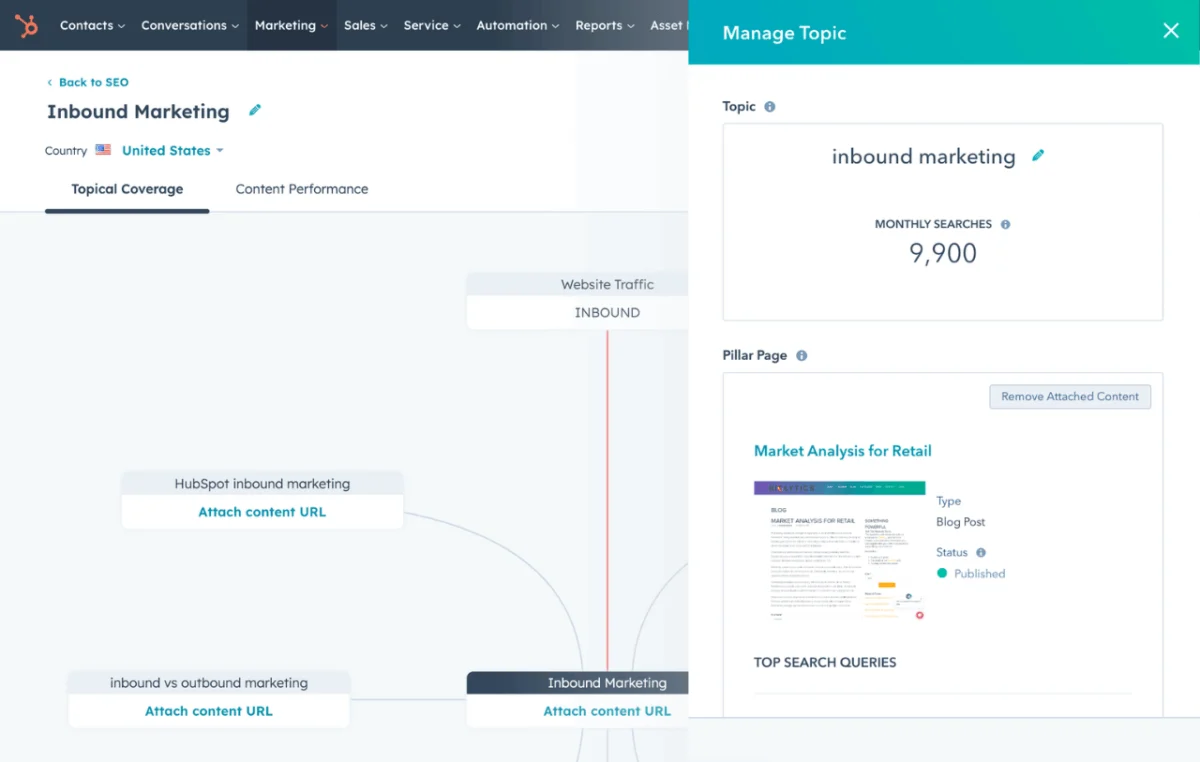
- Key Features: Integrated suite within Marketing Hub, pillar page mapping, topic cluster visualization, Google Search Console integration for performance data, on-page SEO recommendations in the editor, and access to AEO Grader and HubSpot AEO tools.
- Best for: Marketing teams already using or considering HubSpot who want semantic keyword optimization embedded directly into their content creation and analytics workflow.
- Strengths: Uniquely connects SEO recommendations to the content creation platform itself, providing real-time optimization guidance. Excellent for visualizing content architecture and topic clusters.
- Limitations: Not a standalone deep-dive research tool; best paired with a dedicated research platform for initial comprehensive discovery.
-
Semrush:
- Key Features: Vast keyword database, Keyword Magic Tool for comprehensive keyword grouping and intent analysis, Topic Research tool for identifying content gaps and related subtopics, competitive analysis features.
- Best for: Teams requiring a robust, all-in-one SEO and AEO platform capable of generating a complete semantic map.
- Strengths: The Keyword Magic Tool automatically groups related terms by subtopic, saving significant manual effort. Its Topic Research tool is excellent for uncovering questions and entities covered by top-ranking content.
- Limitations: Can be costly for smaller teams, and the sheer volume of data may be overwhelming without a clear research framework.
-
Ahrefs Keywords Explorer:
- Key Features: Comprehensive keyword research, “Parent Topic” feature to identify if multiple keywords should target the same page, traffic potential estimations, Content Gap tool for competitive semantic analysis.
- Best for: SEO teams looking to integrate semantic research with competitive analysis and content architecture planning.
- Strengths: The “Parent Topic” feature is invaluable for preventing content cannibalization by guiding content consolidation. Traffic potential provides a more realistic estimate of organic visits than raw search volume.
- Limitations: While powerful, it can be less intuitive for pure semantic discovery than Semrush, requiring more manual clustering.
-
Surfer SEO:
- Key Features: Content Editor that analyzes top-ranking pages and provides real-time optimization recommendations, including semantic terms, word count, and heading suggestions. Integration with Google Docs.
- Best for: Content writers and optimizers who need actionable, real-time guidance during the drafting and editing phases of content creation.
- Strengths: Exceptional for semantic keyword implementation. It acts as a “semantic checklist” within the writing process, ensuring content covers the concepts and entities found in high-performing competitors.
- Limitations: Primarily an optimization tool, not a standalone research platform. It relies on initial keyword research from other tools.
-
KeywordsPeopleUse:
- Key Features: Focuses on surfacing questions, entities, and semantic maps from diverse sources like Google Autocomplete, PAA, Reddit, and Quora. Entity extraction.
- Best for: Solo marketers and small teams seeking a budget-friendly, highly focused tool for direct semantic and entity discovery.
- Strengths: Highly specialized for understanding how people phrase questions and the semantic relationships Google associates with topics. The entity extraction feature is particularly useful for AEO.
- Limitations: Does not provide search volume, keyword difficulty, or competitive analysis metrics, necessitating pairing with a traditional keyword tool.
Frequently Asked Questions About Semantic Keywords
Are LSI keywords real?
The technique of Latent Semantic Indexing is a real, albeit older, method for analyzing word co-occurrence. However, Google confirmed in 2019 that it does not use