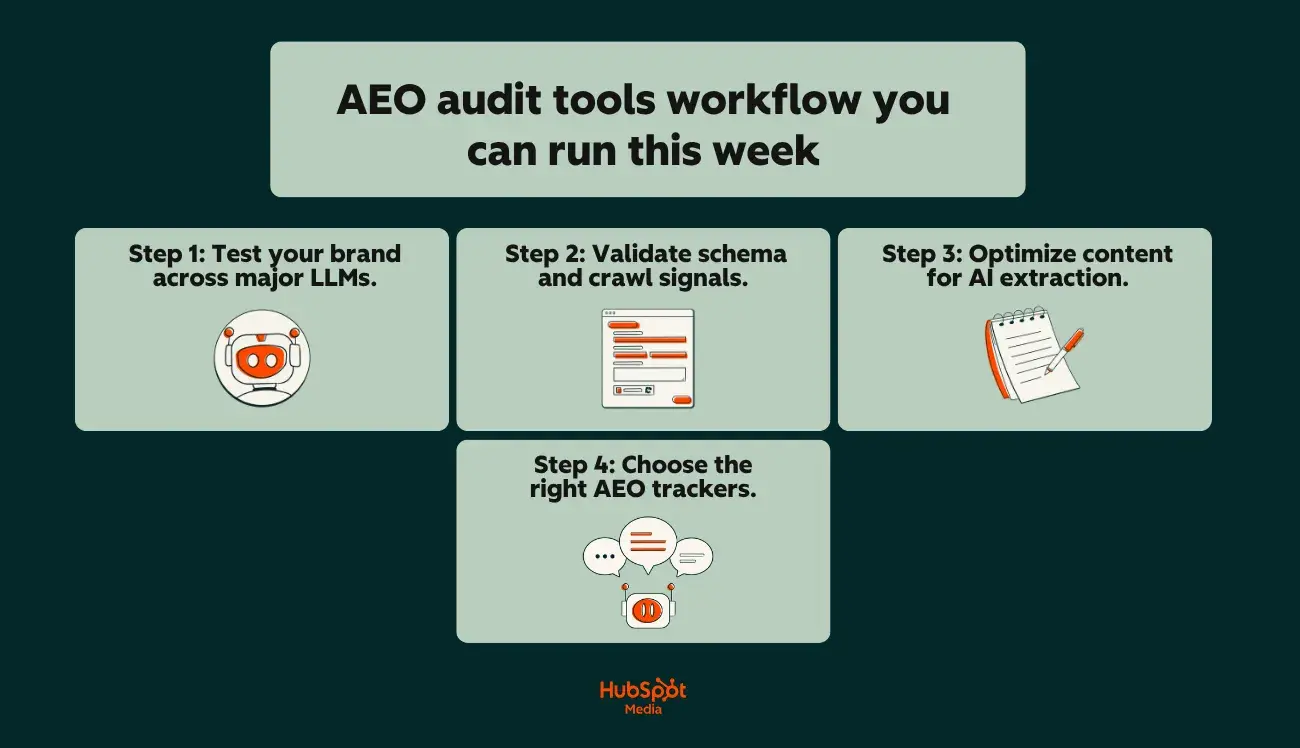
AI search optimization, often referred to as Answer Engine Optimization (AEO), Generative Engine Optimization (GEO), AI SEO, or LLM optimization (LLMO), represents a fundamental shift in how brands approach digital visibility. This practice focuses on enhancing a brand’s likelihood of being cited and mentioned by sophisticated AI answer engines such as ChatGPT, Gemini, Perplexity, and Google’s AI Overviews. While the traffic directly referred by these AI tools may appear modest in volume compared to traditional search, its quality is exceptionally high-intent. A pivotal study by Microsoft Clarity, encompassing over 1,200 publisher and news sites, revealed that visitors directed by AI tools converted at approximately 11 times the rate of those from conventional search engines. This compelling statistic underscores the transformative potential of AEO, establishing it as an indispensable strategy for contemporary digital marketing.
The Strategic Imperative: Why AEO Matters for Brands in a Changing Landscape
The emergence of large language models (LLMs) and their integration into search experiences has ushered in a new era of information retrieval. Users are increasingly turning to AI for direct answers, summaries, comparisons, and even product recommendations, often bypassing traditional search result pages entirely. This behavioral shift mandates that brands optimize their digital presence not just for algorithms that rank web pages, but for AI systems that synthesize information to generate concise, authoritative responses.
AEO is critical because it empowers brands to control the narrative that AI answer engines present. In a world where AI influences purchase decisions and brand perception without necessarily generating a direct click, securing accurate and positive mentions becomes paramount. The “conversion without click” phenomenon highlights the nuanced impact of AEO. While direct referral traffic from AI tools remains relatively small – Semrush data from 2025 indicated AI traffic grew by 66.02% (surpassing all channels except paid search) but accounted for only 0.14% of visits, and Ahrefs in May 2026 showed it was still less than 1% of total share – this figure does not capture the full scope of AI’s influence. Users often receive AI-generated information that shapes their opinions and leads to offline actions or direct website visits without ever registering as an AI referral. Thus, being favorably cited by an AI engine can significantly impact a brand’s consideration set and ultimately, its bottom line.
Understanding AI Search Mechanics: How Content is Discovered and Presented
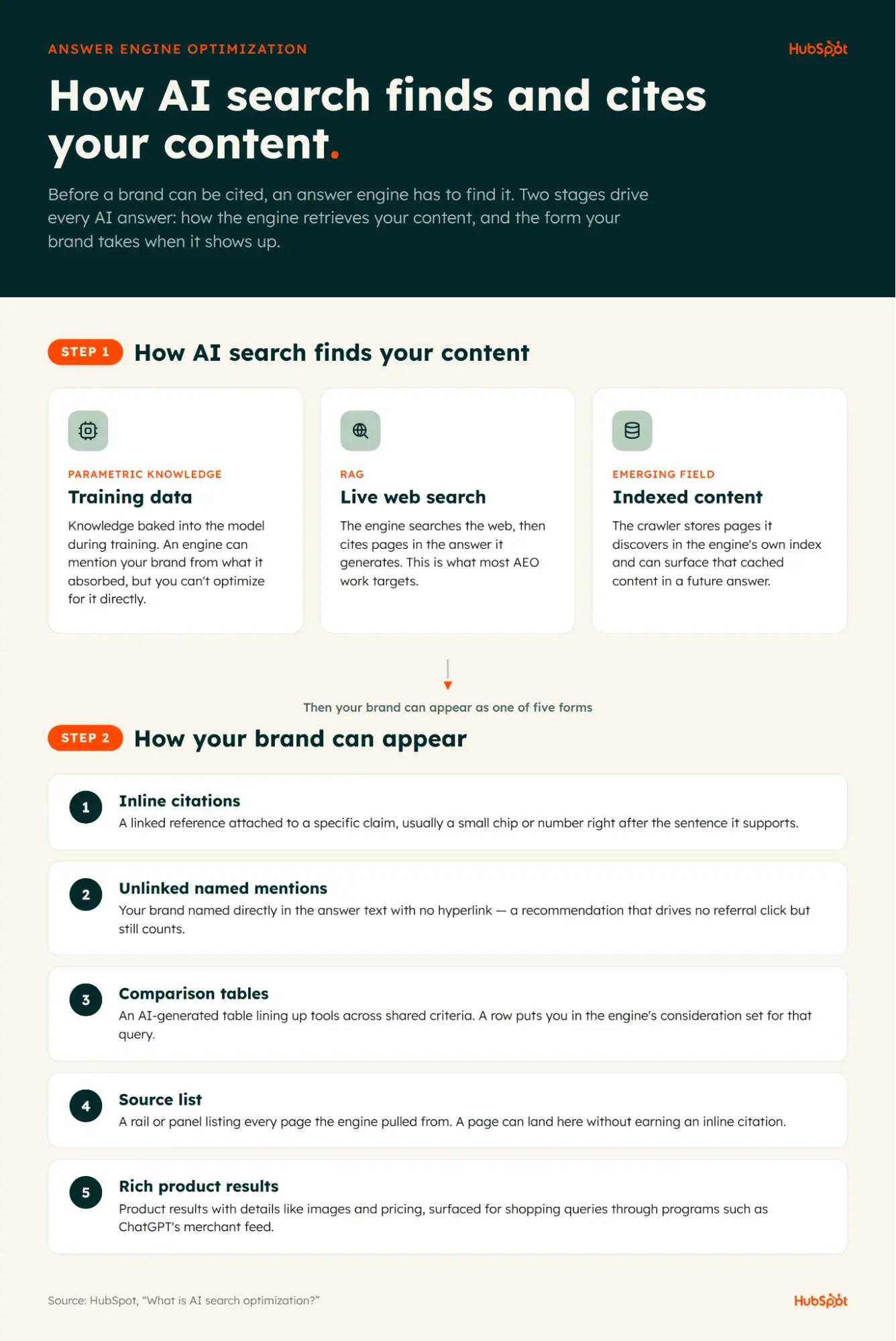
At the core of AI search optimization lies a comprehension of how these intelligent systems process and present information. AI answer engines are powered by LLMs, advanced artificial intelligence capable of understanding, interpreting, and generating human-like language. These models are trained on colossal datasets, enabling them to respond to complex queries in seemingly novel and highly contextual ways. When an AI answer engine surfaces content, it typically does so through three primary mechanisms:
- Parametric Knowledge: This refers to the information that has been directly encoded into the LLM during its initial training phase. It forms the foundational knowledge base of the AI.
- Retrieval-Augmented Generation (RAG): A more dynamic process, RAG involves the AI actively retrieving relevant information from external, real-time indexed sources to supplement its parametric knowledge and generate a more current and contextually precise answer.
- Indexed Content: Similar to traditional search engines, AI crawlers continuously index vast swathes of the internet, making this content available for retrieval and synthesis by LLMs.
Diverse Content Types for Citation
AI answer engines are not limited to citing just blog posts or standard web pages. They can draw information from a wide array of digital assets, whether owned by the brand or hosted on third-party platforms. Content types frequently cited include:
- Owned Properties: Web pages, blog posts, news articles, product pages, landing pages, FAQs, case studies, whitepapers, and knowledge base articles.
- Third-Party Platforms: Review sites (e.g., G2, Capterra), social media platforms (e.g., Reddit, YouTube, LinkedIn), industry forums, and press releases.
- Structured Data: Product feeds, local business listings, and other forms of structured data are increasingly valuable for AI.
Ways Brands Appear in AI Answers

Beyond simply being “cited,” a brand can manifest in an AI answer in several distinct forms, each with unique implications for visibility and impact:
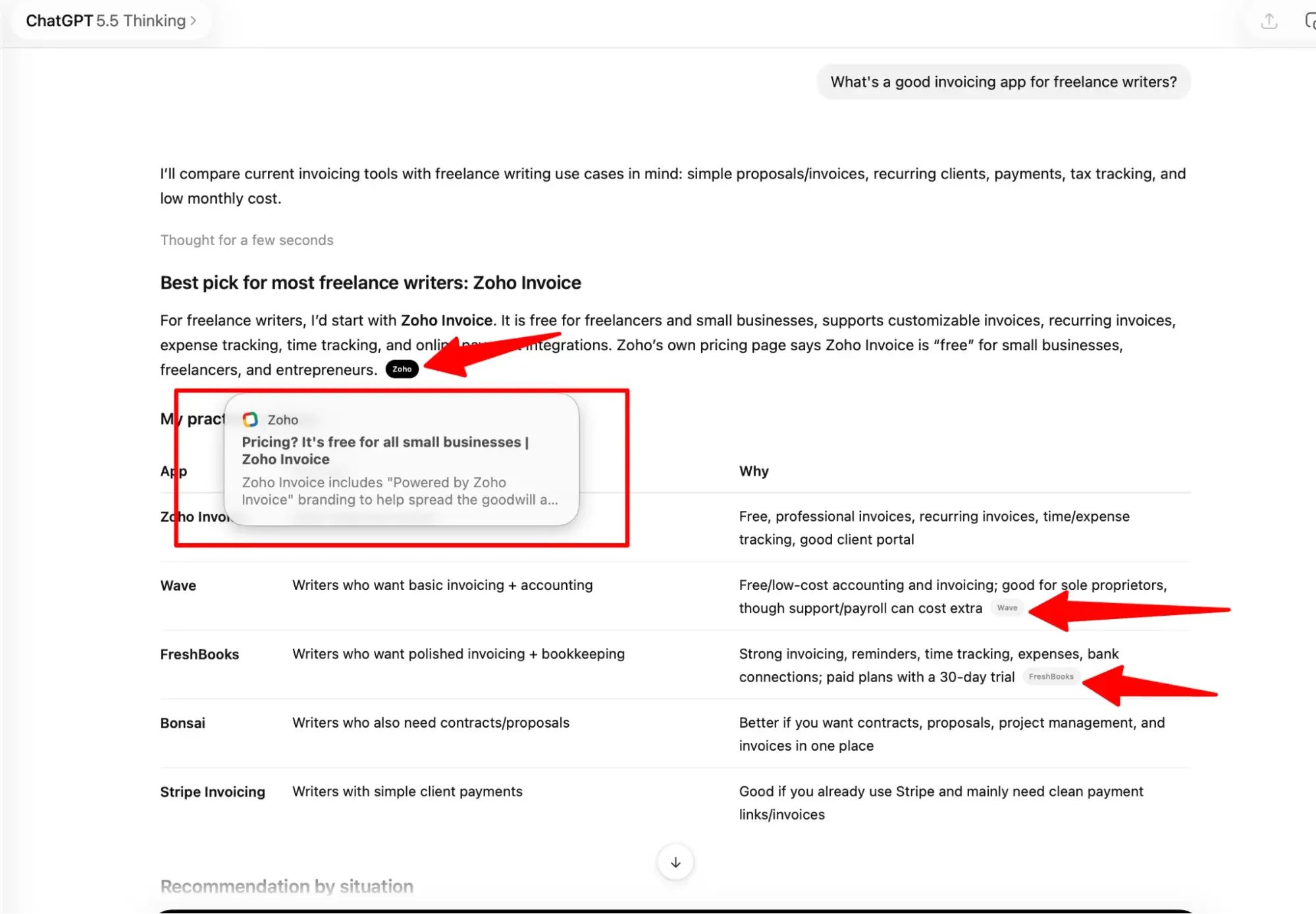
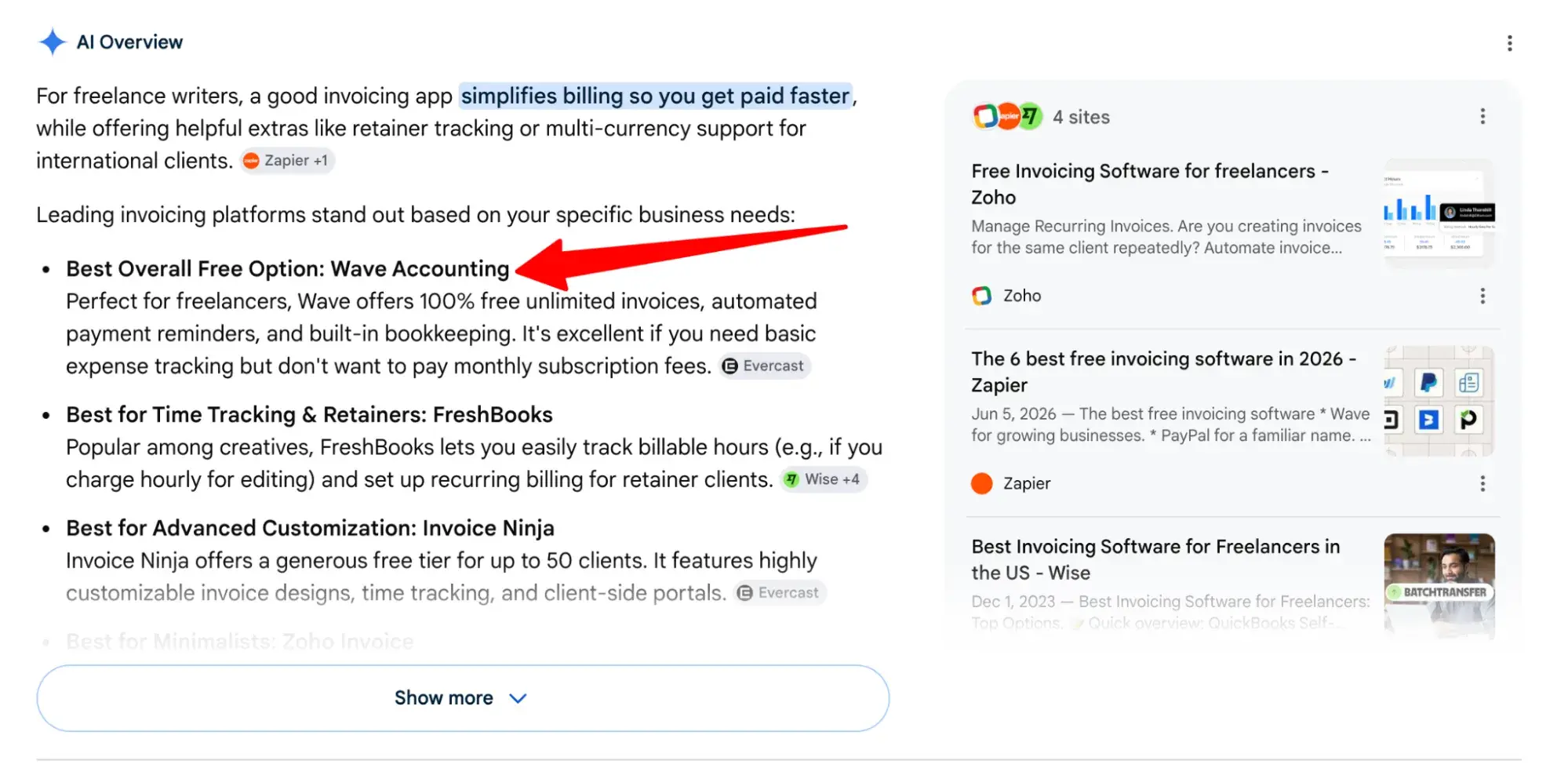
- Inline Citations: This is a direct, linked reference attached to a specific claim within the AI’s answer. Typically appearing as a small chip or number, it precisely indicates the source of a particular statement, allowing users to click through to the original page. This is the most direct form of referral traffic.
- Unlinked Named Mentions: Here, a brand is directly named within the AI’s answer text, but without an accompanying hyperlink. While this doesn’t generate referral traffic, it is invaluable for brand awareness, reputation management, and influencing user perception, as the AI is actively recommending or discussing the brand.
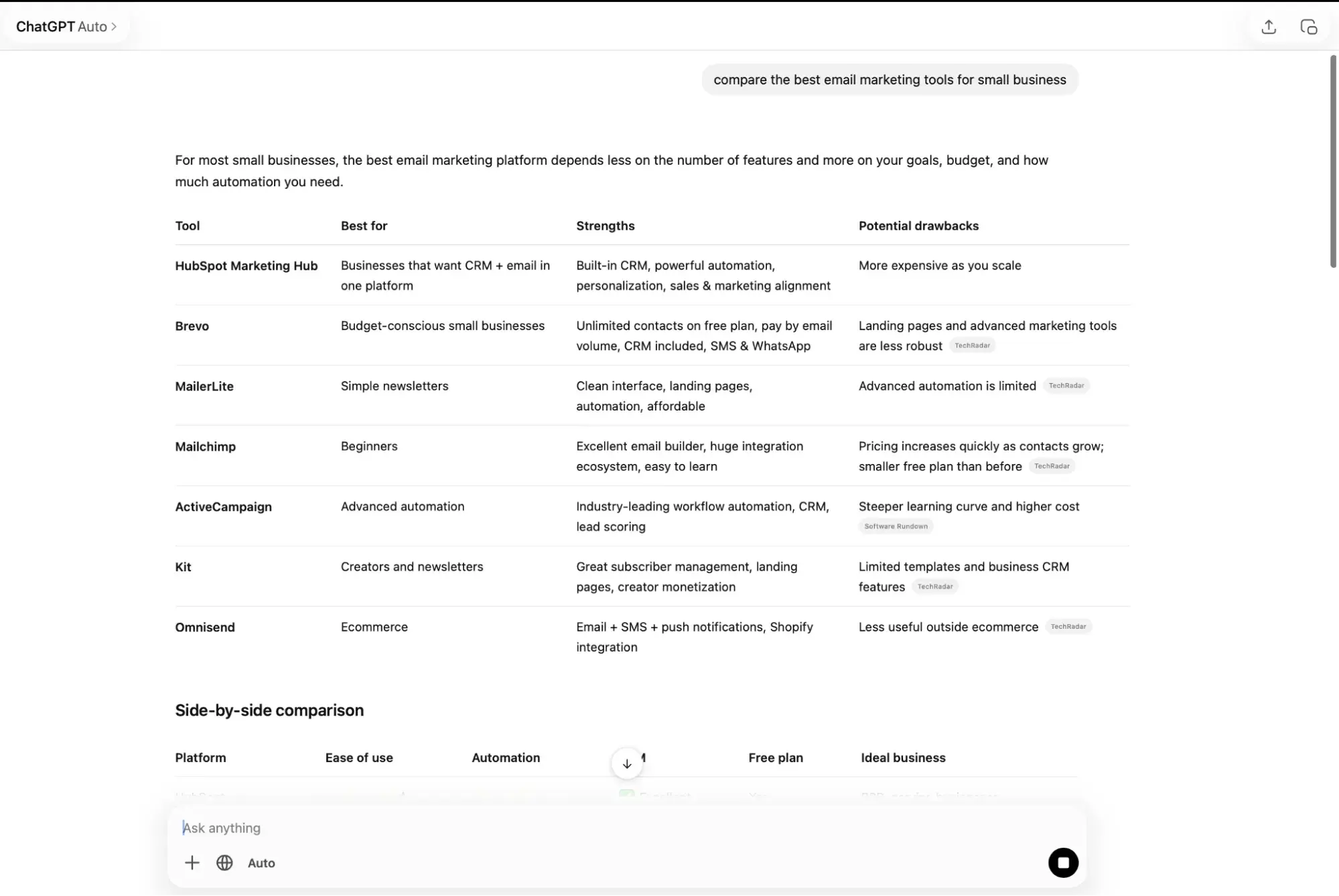
- Comparison Tables: AI engines frequently generate tables that compare multiple tools or brands across predefined criteria such as use case, features, strengths, and drawbacks. Inclusion in such a table places a brand squarely within the AI’s consideration set for a given query, and the summarized details become the AI’s authoritative (and sometimes challenging to correct) description of the brand relative to competitors.
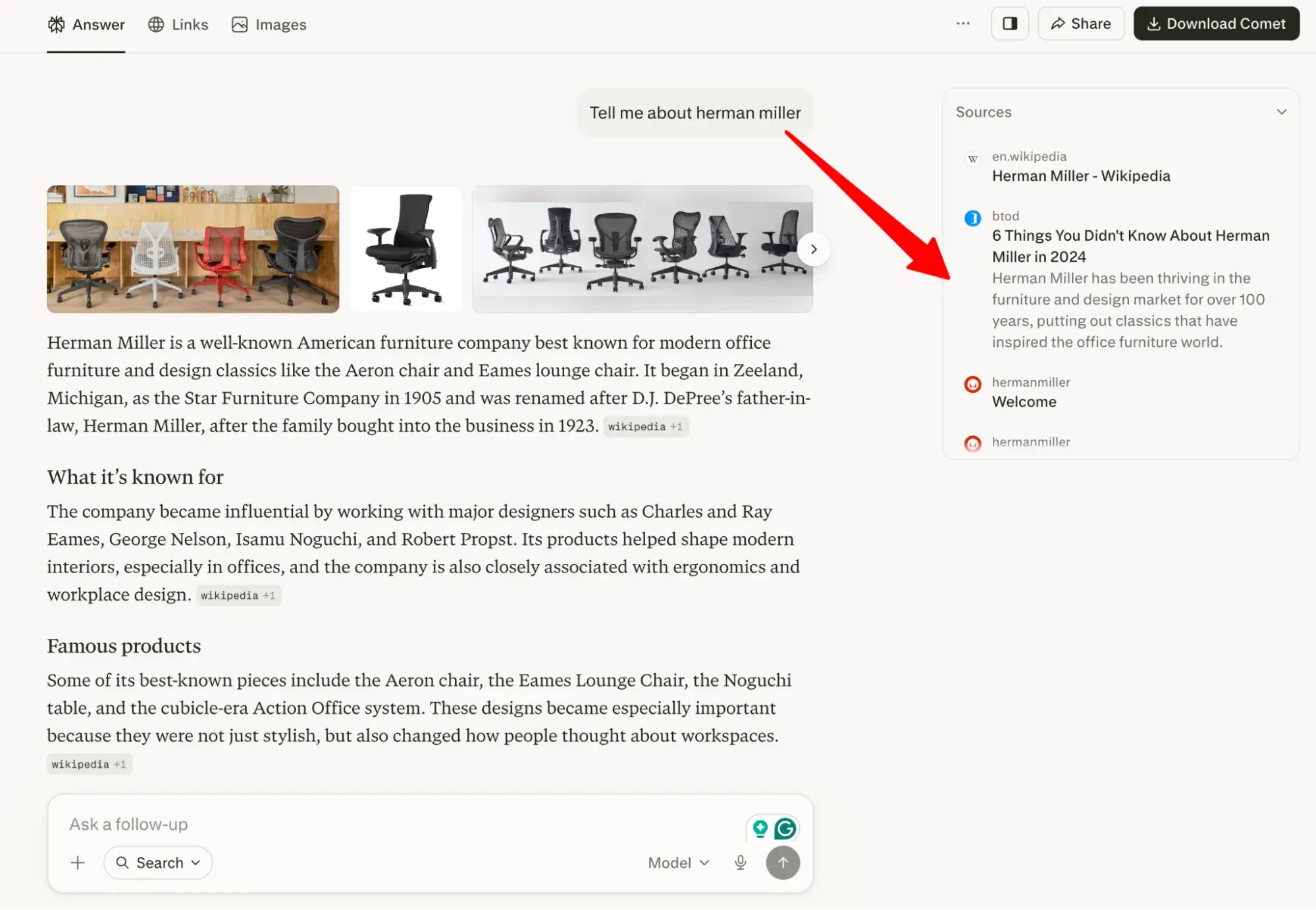
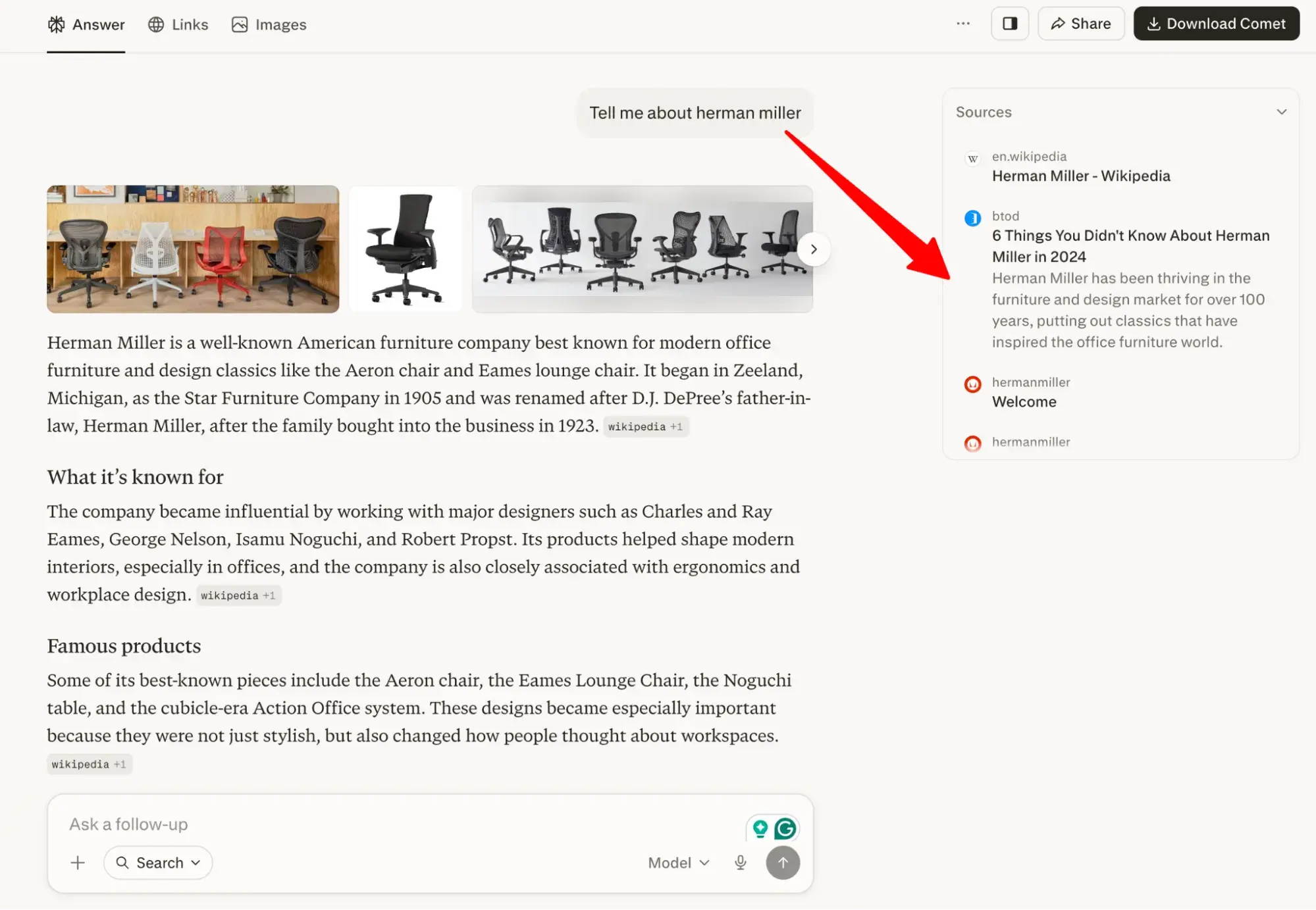
- Source Lists: Many AI answer engines display a rail or panel listing all the web pages from which the answer was compiled. A brand’s page can appear in this source list even if it isn’t directly tied to a specific inline citation, offering passive visibility and reinforcing authority.
- Rich Product Results: For shopping-oriented queries, some AI engines, like ChatGPT through its merchant program, can surface rich product results, complete with images, pricing, ratings, and detailed descriptions. This is a powerful form of direct product promotion within the AI interface.
AEO vs. SEO: Complementary, Not Conflicting Strategies
The advent of AEO has sparked debate within the digital marketing community regarding its relationship with traditional SEO. It is crucial to understand that AEO is not a replacement for SEO but rather an evolution and expansion of it. The two are distinct yet highly complementary practices:
- Primary Objective: Traditional SEO aims to improve a website’s visibility in organic search results, primarily driving clicks and traffic to web pages. AEO, conversely, seeks to increase the likelihood of a brand or its content being cited, mentioned, or recommended directly within AI-generated answers, influencing users before they even click.
- Target Audience: SEO optimizes for search engine algorithms (like Google’s ranking factors) and human users reading SERPs. AEO optimizes specifically for the interpretive capabilities of Large Language Models (LLMs) and their ability to extract, synthesize, and present information.
- Content Strategy: While both require high-quality content, SEO often focuses on comprehensive articles, keyword integration, and topical authority. AEO emphasizes an “answer-first” approach, direct semantic triples (subject-predicate-object format), and structuring content for easy AI extraction, often anticipating specific prompts and follow-up questions.
- Measurement Metrics: SEO relies on metrics like organic traffic, keyword rankings, bounce rate, and conversion rates from direct clicks. AEO introduces new metrics such as citation count, sentiment of mentions, share of voice within AI answers, and conversion rates specifically from AI-referred visitors.
- Technical Focus: SEO involves ensuring crawlability, indexability, site speed, mobile-friendliness, and semantic HTML for general search engines. AEO adds a specific emphasis on structured data (schema markup) to define entity relationships clearly, and often necessitates server-side rendering (SSR) or static site generation (SSG) to ensure AI crawlers (which may not execute JavaScript) can fully read and understand page content.
The evolution of search has been a continuous journey, from early keyword stuffing to link building, the rise of content marketing, mobile-first indexing, and now, the intelligent synthesis of information by AI. AEO is the next logical step in this progression, acknowledging that the way users find and consume information is fundamentally changing.
Mastering AEO: Practical Optimization Strategies for the AI Era
Effective AEO requires a multi-faceted approach, encompassing content creation, technical implementation, and strategic off-page signals.
1. Content Optimization for AI Extraction:
- The “Answer-First” Principle: This is perhaps the most critical content strategy for AEO. Instead of building up to an answer with extensive preamble, begin by directly answering the implied question. Structure your content using a subject-predicate-object format (semantic triple) whenever possible, followed by supporting details. For instance, instead of “Many studies show the benefits of cart abandonment emails, and Omnisend reports a 69% increase in orders from a three-email series,” rephrase it as: “Buyers who receive cart abandonment emails are more likely to complete their purchase. A series of three shopping cart abandonment emails leads to 69% more orders, according to Omnisend.” This directness makes it easier for AI to extract and cite concise facts.
- Prompt Research: Analogous to keyword research in SEO, prompt research identifies the specific questions and follow-up queries users pose to AI answer engines. This informs content structure, ensuring answers directly address these prompts. Methods include:
- Direct Interaction: Experimenting with various AI tools to understand how they respond to questions related to your niche.
- Analysis of AI Overviews: Observing which sources Google’s AI Overviews and other answer engines cite for specific queries.
- Leveraging Structured Data (Schema Markup): While Google states no special schema is strictly required for AI features, schema markup, which provides specialized code to label content types for crawlers, can significantly aid AI in understanding context and entity relationships. HubSpot’s State of AEO 2026 indicates that FAQ sections paired with schema markup correlate with higher citations in Gemini, Google AI Mode, and Perplexity. It remains a best practice for overall SEO and eligibility for rich results. Tools like Schema.org validator and Google’s Rich Results Test are essential for proper implementation.
2. Claim and Author Signals for Credibility:
AI engines prioritize credible, authoritative information. Establishing and reinforcing trust signals is vital.
- On-Page Author Bios: An on-page author bio, detailing years of experience, areas of expertise, and relevant credentials, carries more citation weight than a byline alone. This aligns with the E-E-A-T (Experience, Expertise, Authoritativeness, and Trustworthiness) principles that many AI models are designed to recognize. Consistency of author identity across various trusted platforms (your site, LinkedIn, Crunchbase) strengthens this signal.
- Original Data and External Research: Pages that back up assertions with verifiable data are favored. Publishing first-party research, survey results, or proprietary benchmarks positions your content as a unique, authoritative source. When citing external information, attribute it clearly to a credible source and include a working outbound link. This enhances verifiability, especially for AI Overviews and ChatGPT.
3. Technical Structure Optimization for AI Readability:
Beyond content, the technical foundation of your website significantly impacts AI visibility.
- Schema Markup and Semantic HTML: These elements provide crucial structural cues for AI engines. Semantic HTML, using tags like
<article>,<section>, and<aside>appropriately, helps screen readers and AI parse your content’s hierarchy. As noted, specific schema types, particularly for FAQs, can boost citations. Google itself advises using semantic markup where possible. - Server-Side Rendering (SSR) or Static Site Generation (SSG): Many AI crawlers, unlike Googlebot, struggle to execute JavaScript. If your content relies on client-side JavaScript to render, it might be invisible to these crawlers. SSR or SSG ensures that fully populated HTML is delivered in the initial server response, making all content immediately accessible to AI bots. This is particularly important for non-Google AI platforms.
4. Off-Page Signals for Authority and Visibility:
References to your brand on sites you don’t own play a significant role in strengthening AI visibility.
- Public Relations (PR) and Bylines: Earned media, where experts from your brand are quoted or publish articles on high-authority outlets, is a direct route to AI citations. Fan Out’s analysis of over 33,000 AI citations found ChatGPT leans heavily on publisher-controlled sources (78%), with news and media sites making up 9.5% of all ChatGPT citations (Semrush). This strategy builds entity recognition and strengthens authoritativeness.
- Local and E-commerce Optimization:
- E-commerce: For shopping queries, conversational engines like ChatGPT (86% of queries) and Perplexity (84%) are key. Optimize product listings with rich, detailed information, clear product feeds, and structured data for products. Similarweb’s 3rd Annual Global Ecommerce Report showed ChatGPT-referred ecommerce visits converting at 11.4% versus 5.3% for organic search, highlighting the value of this channel. Ensure any AI-generated product data complies with Google Merchant Center policy.
- Local Search: While AI Overviews show up for a lower percentage of local searches (7.9%, Ahrefs), optimizing for local AI visibility is still important. Complete and maintain your Google Business Profile, ensure consistent Name, Address, and Phone (NAP) across all directories, and add LocalBusiness schema to location pages. SOCi’s 2026 Local Visibility Index noted that multi-location brands were recommended by ChatGPT only 1.2% of the time, compared to 35.9% in Google’s local 3-pack, indicating a gap that needs to be addressed through meticulous data consistency.
Avoiding Common AEO Missteps
Just as important as knowing what to do is understanding what tactics are ineffective or even detrimental to AI search optimization.
- Avoid Creating Special Files for AI: There is no need for
llms.txtfiles, separate Markdown versions of pages, or any other bot-only content. Google explicitly states its AI features do not use these and that maintaining them offers no visibility benefit. Furthermore, serving different content to crawlers versus users can be interpreted as cloaking, a violation of Google’s spam policies. - Do Not Over-Chunk Content as a Gimmick: While logical structure and clear headings are beneficial for AI extraction, artificially fragmenting content into one-sentence paragraphs or excessive FAQ snippets solely to game AI models is counterproductive. Google’s Danny Sullivan has advised against this, as it prioritizes perceived ranking signals over human readability, ultimately harming user experience.
- Steer Clear of Commodity or Mass-Produced Content: AI models are designed to identify and prioritize unique, valuable information. Recycling existing content or using AI to generate high volumes of unoriginal pages for ranking manipulation is classified as “scaled content abuse” and violates Google’s spam policies. The content that earns citations is original, expert-driven, and offers unique insights or first-hand perspectives.
The guiding principle for AEO should always be: if a tactic is only designed for a bot and not for a human reader, it is likely a red flag and a poor long-term strategy.
Measuring Success and Future-Proofing for AI Agents
Measuring the impact of AEO requires moving beyond traditional click-based metrics to encompass how AI engines represent your brand.
1. Assessing AI Visibility:
- Beyond Clicks: Track mentions, the sentiment of those mentions, accuracy of information, and your brand’s share of voice within AI answers.
- AEO Graders: Tools like HubSpot’s AEO Grader offer a diagnostic assessment of how AI engines (ChatGPT, Perplexity, Gemini) currently describe your brand, providing a composite score across sentiment, presence quality, brand recognition, and market competition. These tools can also be used for competitor analysis.
2. Connecting Visibility to Business Outcomes:
The high-intent nature of AI-referred traffic translates into impressive conversion rates. Microsoft Clarity data shows AI-referred visitors converting at roughly three times the rate of other traffic sources. HubSpot’s own AEO efforts resulted in a 1,850% growth in qualified leads from AI, converting at three times the rate of leads from other sources. To leverage this, integrate AI visibility data with your demand generation metrics to correlate citations with form fills, sales, and other key performance indicators.
3. Preparing for AI Agents and What Comes Next:
The next frontier for AI is the evolution from answer engines to autonomous AI agents capable of completing tasks on a user’s behalf. Agents like OpenAI’s ChatGPT agent and Perplexity’s Comet can navigate websites, fill forms, and even execute purchases through protocols like Agentic Commerce Protocol.
Preparing for AI agents is largely an extension of good AEO practices:
- Accessibility: Ensure your website adheres to web accessibility standards (e.g., WAI-ARIA), making interactive elements machine-interpretable.
- Structured Data and Clean HTML: Agents rely on clean, well-structured pages with accurate schema markup to understand context and identify actionable elements.
- Clearly Exposed Actions: Buttons, forms, and other calls to action must be clearly labeled and easily parsable by an agent to facilitate task completion.
Most organizations will not require a complete tech stack overhaul. Enhancing rendering, improving structured data, bolstering accessibility, and optimizing product feeds will largely suffice. Agents interact with pages they can already read, building upon the foundational principles of AEO.
Frequently Asked Questions About AI Search Optimization
- How long does it take to see results from AI search optimization? The timeline varies. Technical fixes, such as server-side rendering, can yield results within days or weeks as engines recrawl pages. Authority signals, like earned media and consistent entity details, compound over months. Consistent monitoring is key.
- Who should own AI search optimization across marketing and SEO? AEO is best approached as a shared responsibility. The SEO or content team typically leads due to overlaps with their existing work, but it requires collaboration with PR, brand, and web development teams, given its reliance on earned media, consistent brand profiles, and product data. Assigning a coordinator is advisable.
- Do I need to rebuild my site or change CMS to optimize for AI search? No. Google confirms that its AI features do not require special structured data, content chunking, or specific
llms.txtfiles. The most critical fixes involve crawlability and rendering, ensuring your existing content is accessible and understandable to AI bots. - How does AI search optimization impact paid search and social? The impact differs. For paid search, there’s minimal overlap; AI Overviews (AIO SERPs) rarely show PPC ads (Semrush found only 5% overlap). For social, answer engines heavily leverage community and video platforms, with Reddit and YouTube driving more AI citations than all other off-site sources combined, according to Fan Out’s research. This highlights the importance of social media engagement for AEO.
In conclusion, Answer Engine Optimization is not a fleeting trend but a fundamental adaptation to the evolving digital landscape. By strategically optimizing content, technical infrastructure, and off-page signals, brands can not only secure valuable AI citations but also harness a powerful new channel for high-intent engagement and conversion. The future of search is conversational and intelligent, and AEO is the roadmap to thriving within it.