In the rapidly evolving landscape of e-commerce, the long-standing debate of SMS marketing versus email marketing is increasingly being settled not by choosing one over the other, but by strategically leveraging both channels in a complementary fashion to maximize customer engagement and return on investment (ROI). Recent data from Omnisend unequivocally demonstrates that brands employing a unified, multichannel approach for both promotional campaigns and automated customer flows achieve significantly higher revenue and conversion rates compared to those relying on a single communication method. This paradigm shift underscores a critical understanding: each channel possesses unique strengths that, when combined, create a more robust, contextual, and effective customer journey, moving beyond a simple comparison to embrace a powerful synergy.
Understanding the Core Differences: Urgency vs. Depth
At its fundamental level, the distinction between SMS and email marketing lies in their primary utility: SMS excels in delivering urgent, immediate messages to a single, highly personal device, while email provides ample space for depth, rich media content, and storytelling, accessible across a multitude of applications and devices. This inherent difference dictates their optimal application within an e-commerce strategy.
SMS, with its concise character limit (typically around 160 characters) and direct delivery to a mobile phone, bypasses the often crowded email inbox, ensuring a high likelihood of immediate attention. Its personal nature makes it ideal for time-sensitive notifications, flash sales, or critical updates. However, its brevity restricts the amount of information that can be conveyed, making it less suitable for elaborate product showcases or detailed brand narratives. The lack of an “open rate” metric for SMS means performance is primarily tracked through click-through and conversion rates, which are often remarkably high due to the channel’s immediacy.
Email, conversely, offers unparalleled flexibility. It supports unlimited content length, allowing for rich media integration such as high-resolution images, videos, and interactive elements. This makes it the preferred channel for comprehensive newsletters, detailed product launches, educational content, and brand storytelling. Its accessibility across various devices and platforms (desktops, tablets, smartphones) provides a broader reach. While email open rates are tracked (Omnisend reported an average of 30.7% in 2025, up from 26.6%), the sheer volume of emails received by consumers means it can face higher “fatigue” thresholds than SMS, requiring careful segmentation and personalization to maintain engagement.
Comparative Metrics: A Deeper Dive
An analysis of key performance indicators highlights these strategic distinctions:
| Feature | SMS | |
|---|---|---|
| Open Rate | Not tracked (no open signal) | 30.7% (2025, up from 26.6%) |
| Best At | Immediacy, urgency, direct alerts | Depth, storytelling, comprehensive campaigns, scale |
| Automation Value | $0.74 per send vs $0.15 for campaigns (5x) | $2.87 per send vs $0.18 for campaigns (16x); 2% of sends generated 30% of revenue |
| Click-to-Conversion | 0.97% global (5.1% UK) | 9% (up 53% YoY) |
| Cost Structure | Per message (credit-based) | Flat fee or by list size |
| Content & Length | ~160 characters, plain text | Unlimited, rich media, interactive elements |
| Consent | Explicit opt-in (TCPA, GDPR, CASL) | Explicit opt-in (GDPR, CASL, CAN-SPAM) |
This data underscores that both channels are powerful, but their strengths lie in different areas. SMS commands attention for immediate calls to action, while email builds relationships and provides detailed information. Critically, both channels require explicit customer consent (opt-in) for promotional messages, adhering to regulations like TCPA, GDPR, CASL, and CAN-SPAM, emphasizing the importance of permission-based marketing.
The Game Changer: Automation Outperforms Campaigns
A standout finding from Omnisend’s data is the dramatic uplift in ROI generated by automated messages compared to manual, one-off campaigns across both channels. In 2025, automated email earned an impressive $2.87 per send versus $0.18 for campaigns—a staggering 16-fold increase. Similarly, automated SMS yielded $0.74 per send compared to $0.15 for campaigns, a 5-fold improvement. This illustrates that timely, triggered messages, such as abandoned cart reminders, welcome series, or post-purchase follow-ups, resonate far more effectively with customers than generic broadcast messages. Automations leverage behavioral data to deliver highly relevant content precisely when a customer is most receptive, driving significantly higher engagement and conversions. For email, it’s notable that just 2% of automated sends generated 30% of total revenue, highlighting the disproportionate impact of intelligent automation.
Strategic Application: When to Deploy Each Channel
Given their distinct characteristics, the art of successful e-commerce marketing lies in knowing when and how to deploy SMS, email, or both.
When to Prioritize SMS Marketing:
SMS marketing thrives on urgency and immediacy. It is exceptionally effective for:
- Time-Sensitive Offers: Flash sales, limited-time discounts, or “today only” promotions.
- Transactional Alerts: Shipping confirmations, delivery updates, order status notifications (reducing customer service inquiries).
- Urgent Reminders: Abandoned cart reminders with a time-limited incentive, low-stock alerts for popular items, or back-in-stock notifications.
- Critical Updates: Account security alerts, service interruptions, or urgent policy changes.
Divatress, for example, achieved an 8% SMS click-through rate versus 3% for email, generating $123,000 in its first year from text campaigns alone, largely by leveraging this immediacy.
When to Prioritize Email Marketing:
Email marketing serves as the backbone of a comprehensive customer journey, offering depth, detail, and broad reach. It is the default channel for:
- Brand Storytelling & Nurturing: Welcome series, educational content, sharing brand values, and building long-term relationships.
- Comprehensive Promotions: Newsletters, holiday campaigns, seasonal sales, new product launches with detailed descriptions and imagery.
- Customer Relationship Management: Soliciting reviews, birthday offers, loyalty program updates, and personalized recommendations.
- Informational Content: Blog updates, how-to guides, FAQs, and extensive product information.
To’ak Chocolate dramatically increased its email revenue by 460% by making it a central pillar of its strategy, demonstrating email’s power in nurturing and informing customers over time.
The Unbeatable Combination: Using Both for Omnichannel Excellence
The most potent strategy, however, is not a choice between SMS or email, but their intelligent integration into a cohesive omnichannel experience. This approach acknowledges that customers interact with brands across multiple touchpoints and prefer different communication methods at different stages of their journey or for different types of messages.
Examples of Synergistic Flows:
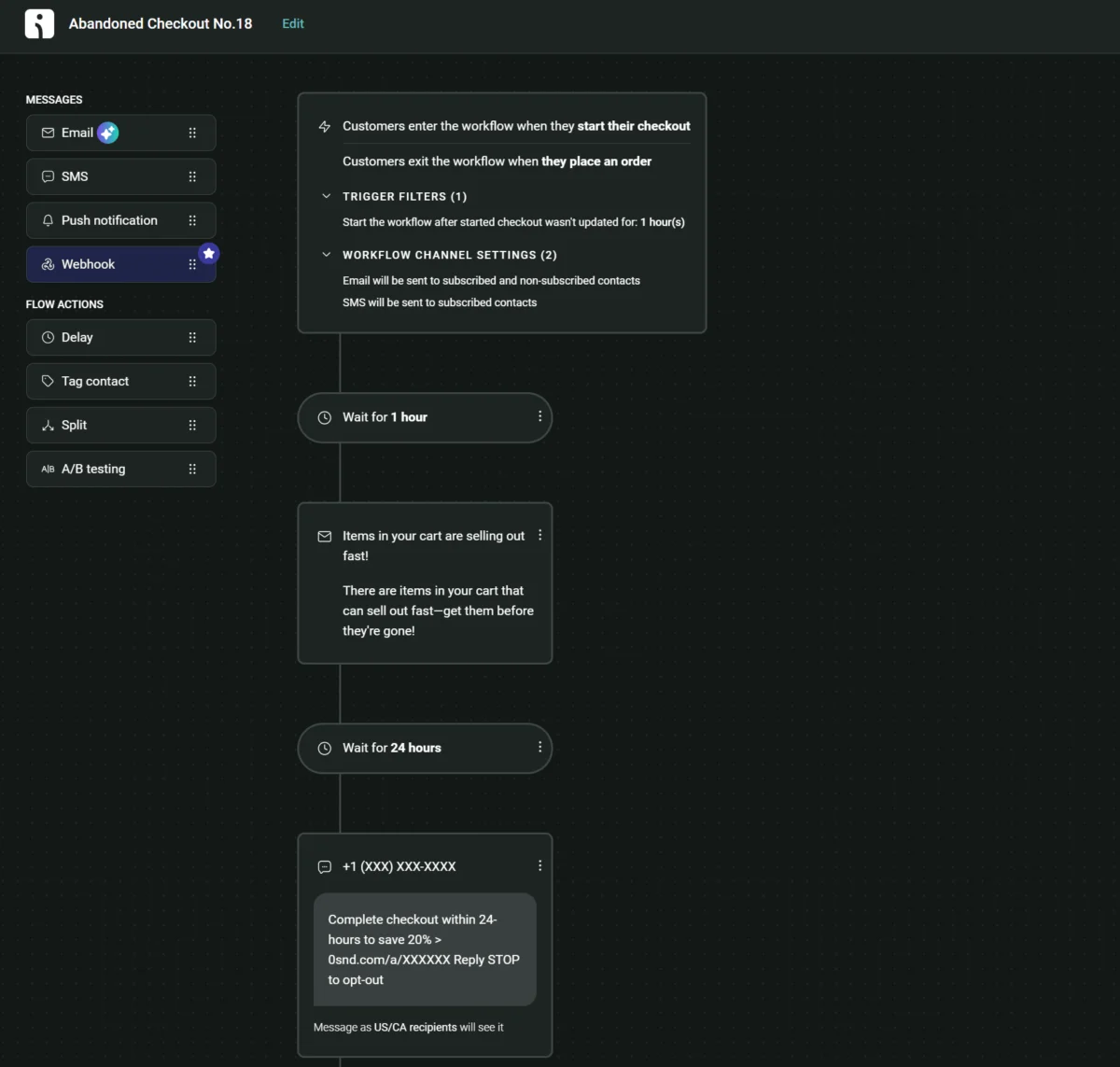
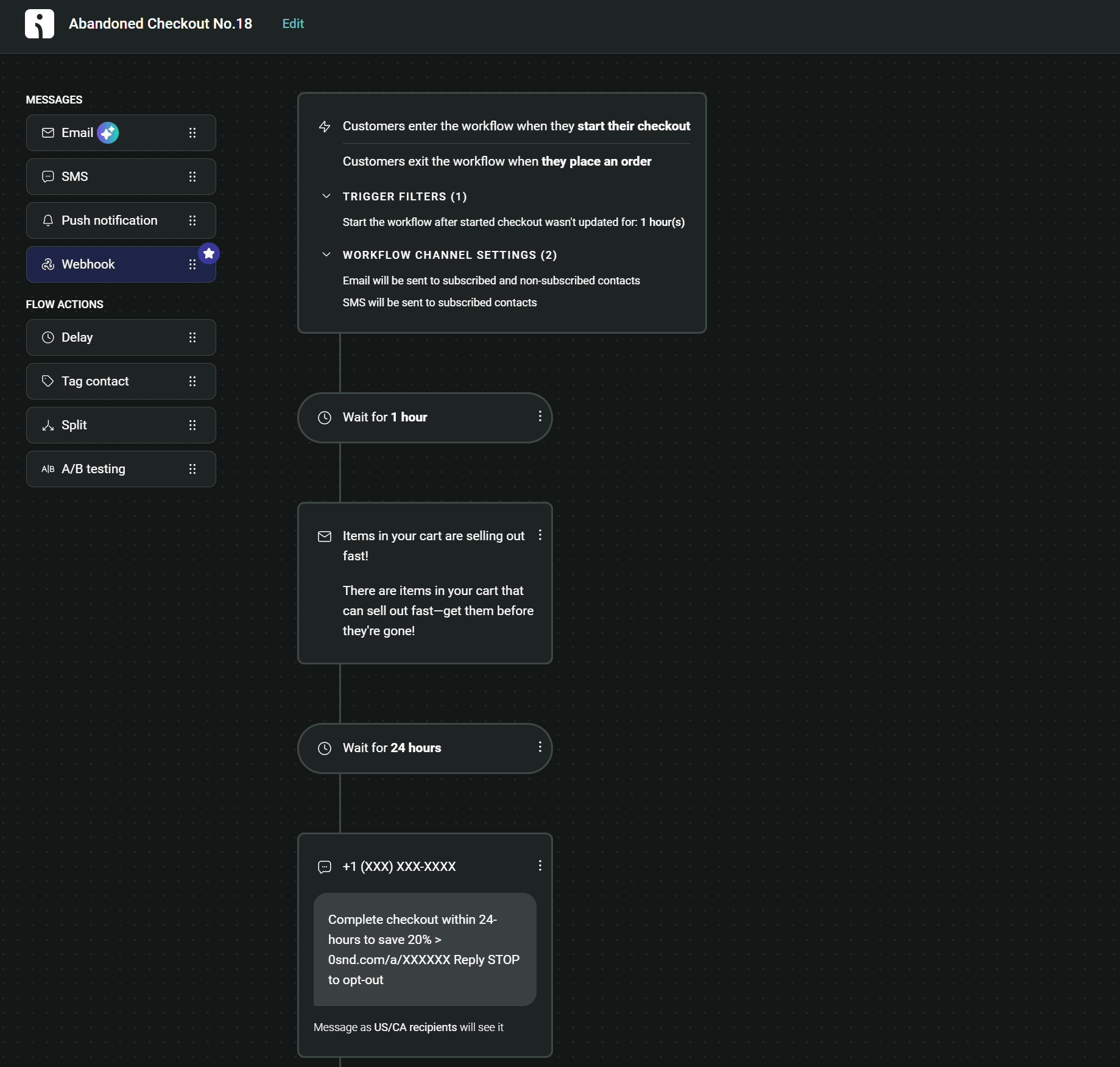
- Abandoned Cart Recovery: An initial email (rich with product images and reviews) sent an hour after abandonment, followed by an SMS reminder with a small, time-limited discount code a few hours later if no action is taken. This combines the detail of email with the urgency of SMS.
- New Subscriber Welcome: A welcome email with the brand’s story and a general offer, followed by an SMS with a special discount code if the customer hasn’t engaged with the email within 24-48 hours.
- Post-Purchase Journey: An email confirming the order and suggesting complementary products, followed by an SMS for shipping updates, and then an email requesting a review after delivery.
- Flash Sale: An initial email broadcast announcing the sale with full details, complemented by a concise SMS reminder a few hours before the sale ends to drive immediate action.
- Re-engagement: An email with a personalized offer for inactive customers, followed by an SMS with a stronger, time-bound incentive if the email remains unengaged.
The ability to orchestrate these sequences within a single platform, where customer data is unified, allows brands to create truly contextual and personalized experiences. This not only maximizes conversion opportunities but also enhances customer satisfaction by delivering messages through their preferred channels at the most opportune moments.
Real-World Success Stories
Several e-commerce brands have achieved remarkable results by embracing this dual-channel strategy:
- INGLOT Canada: This beauty brand saw an astounding 2,130% lift in revenue per message by pairing SMS with email. Their multichannel abandoned cart series, which also incorporated web push notifications, converted 117% better than email-only sends, showcasing the exponential power of an integrated approach.
- Divatress: By creating both scheduled campaigns and automated flows using email and SMS, Divatress saw its abandoned cart flow convert at 29%, capturing 28% of total revenue from just 5% of sends. Overall, multichannel marketing accounted for 20% of their total revenue.
- Kate Backdrop: This company achieved an impressive 1:300 ROI by combining email, SMS, and web push notifications. Their flash sales, leveraging SMS and push for immediate action alongside an email with an 87% open rate, exemplify the effectiveness of a concerted omnichannel effort.
- B-Wear Sportswear: Demonstrating a practical application, B-Wear Sportswear extends the reach of each promotion by sending an email in the morning and a follow-up SMS in the evening. This ensures customers who might have missed the email are still caught before a sale ends. Omnisend’s platform, facilitating this integrated strategy, now drives a significant 40% of the company’s total sales.
These case studies underscore a crucial insight: successful e-commerce brands do not pit email marketing against SMS marketing. Instead, they strategically deploy both to construct high-quality customer experiences that simultaneously maximize revenue and foster long-term customer retention. As Karolina Petraškienė, Marketing Projects Lead at Omnisend, aptly summarizes, “Ecommerce brands that know their customers don’t pitch email marketing vs. SMS marketing against one another. Instead, they send texts and emails strategically to build high-quality customer experiences that maximize revenue and retention.”
The Technological Imperative: Integrated Platforms
Achieving this level of sophisticated, integrated marketing requires a robust technological infrastructure. Platforms like Omnisend offer native integrations with leading e-commerce platforms such as Shopify, WooCommerce, and BigCommerce. These integrations synchronize customer data, enabling brands to build automated email and SMS workflows based on customer behavior, activity, and preferences within a single, unified dashboard. This simplifies campaign management, ensures data consistency, and facilitates the creation of complex, yet seamless, customer journeys.
For businesses looking to implement a multichannel SMS strategy, platforms often offer tiered pricing models. For instance, Omnisend’s Pro plan, priced at $59/month, includes unlimited emails and adds SMS capabilities, with volume-based pricing starting around $10/month for 1,111 U.S. SMS credits (equating to approximately $0.009 per message). This cost structure positions SMS as an accessible, high-ROI addition to existing email strategies.
Conclusion: The Future is Omnichannel
The debate between SMS and email marketing is effectively over. The data overwhelmingly supports an integrated, omnichannel approach as the most effective strategy for e-commerce brands aiming to thrive in a competitive digital marketplace. By understanding the unique strengths of each channel—SMS for urgency and directness, email for depth and storytelling—and strategically combining them, especially within automated flows, businesses can craft highly personalized, timely, and impactful customer experiences. This synergy not only drives superior conversion rates and revenue growth but also cultivates stronger customer relationships and fosters brand loyalty. The future of e-commerce marketing is not about choosing a single channel, but about intelligently orchestrating a symphony of communication touchpoints that cater to the modern customer’s diverse preferences and journey.