For many marketers, a high email delivery rate serves as a comforting assurance that their campaigns are reaching their intended audience. The logic seems straightforward: if emails aren’t bouncing, they must be landing in subscribers’ mailboxes, right? This common misconception, however, is a significant deliverability myth, leading countless organizations to celebrate a metric that reveals only half the story. The true measure of email campaign effectiveness lies not merely in delivery to a mailbox provider, but in successful inbox placement—the critical step where a message actually lands in the primary inbox, visible and accessible to the recipient. Without this distinction, even the most meticulously crafted email campaigns risk becoming invisible, rendering marketing efforts and budgets ineffective.
Understanding the Nuance: Delivery Rate vs. Inbox Placement
The terms “delivery rate” and “inbox placement rate” are often conflated, yet they represent fundamentally different stages of the email journey. Delivery rate precisely quantifies whether an email has been accepted by the recipient’s mailbox provider (MBP) server. If an email fails this initial hurdle, it results in a bounce. Bounces are categorized into two main types: a “hard bounce” indicates a permanent failure, typically due to a non-existent email address, while a “soft bounce” signifies a temporary issue, such as a full inbox or a server being temporarily unavailable. A consistently high delivery rate is indeed a positive indicator, suggesting a relatively healthy and accurate email list, free from widespread invalid addresses.
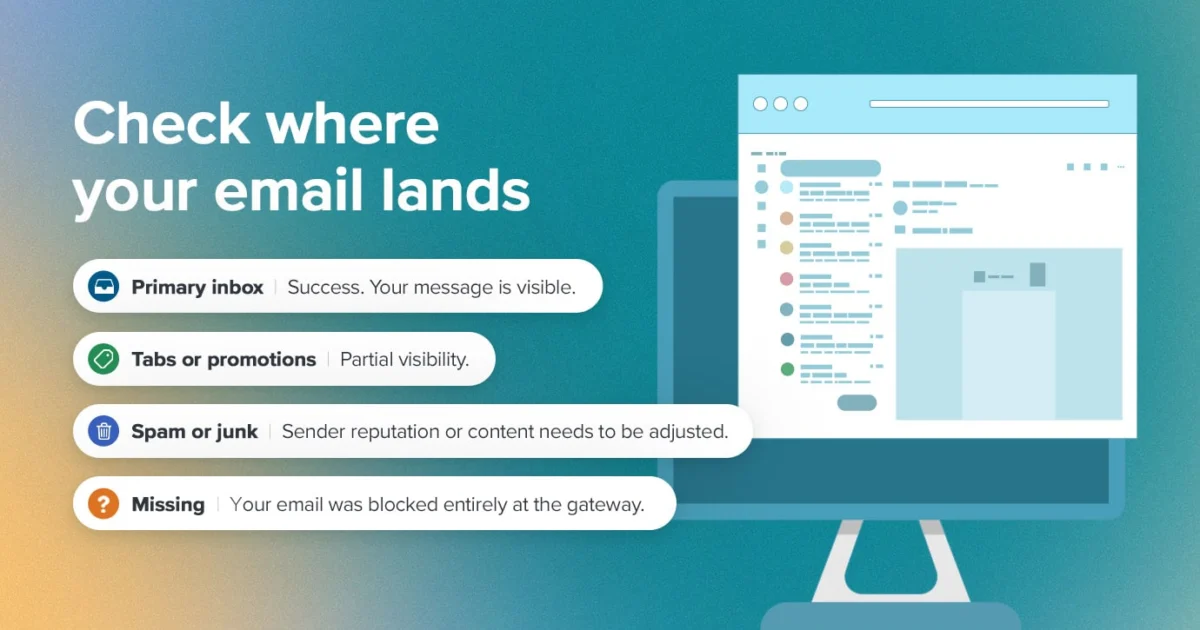
However, simply reaching the MBP server is only the first checkpoint. Inbox placement, on the other hand, measures whether that accepted email successfully navigates the MBP’s sophisticated filtering systems and lands in the user’s primary inbox—or, conversely, is shunted to a promotions folder, a spam folder, or blocked entirely. This crucial distinction highlights that an email can be “delivered” to the server but still fail to achieve its ultimate goal of reaching the recipient’s conscious attention. Inbox placement is heavily influenced by a complex interplay of factors including the sender’s reputation, the content of the email, and, critically, the recipient’s historical engagement with messages from that sender. Mailbox providers like Gmail, Outlook, and Yahoo employ advanced algorithms that continuously assess these elements to determine a sender’s trustworthiness and, consequently, where their emails should be placed.
The key difference, therefore, is profound: delivery rate confirms server acceptance, while inbox placement confirms visibility. This distinction directly impacts the potential for marketing success. Emails that consistently achieve primary inbox placement are significantly more likely to be opened, clicked, and engaged with, directly increasing engagement rates and driving conversions. Conversely, emails trapped in spam folders or relegated to less visible tabs are effectively lost, negating the effort and investment behind their creation.
A Shifting Landscape: The Evolution of Email Deliverability
The journey of email deliverability has been a dynamic one, shaped by the relentless battle against unsolicited commercial email, commonly known as spam. In the early days of email, spam was rampant, overwhelming inboxes and eroding user trust. In response, mailbox providers developed increasingly sophisticated spam filters, initially relying on keyword analysis and basic blacklists. Over time, these systems evolved dramatically, incorporating machine learning and artificial intelligence to analyze sender behavior, content characteristics, and, most importantly, recipient engagement patterns.
A pivotal moment in this evolution occurred in early 2024, when industry giants Google and Yahoo implemented stringent new authentication requirements for bulk senders. These mandates, requiring robust SPF, DKIM, and DMARC authentication, alongside low spam complaint rates and easy unsubscribe options, signaled a decisive shift towards prioritizing user experience and combating email fraud at scale. This move wasn’t merely a technical update; it represented a consolidation of best practices into mandatory compliance, fundamentally reshaping the landscape for email marketers worldwide. Failure to meet these new standards now directly results in emails being routed to spam or even rejected outright, underscoring the critical need for senders to adapt and maintain pristine sender reputations. This chronology of escalating requirements underscores the continuous arms race between senders and filters, where only those committed to best practices can consistently reach their audience.
The Economic Imperative: Why Visibility Drives Revenue
In the competitive digital marketplace, visibility is synonymous with revenue. Emails that consistently land in the primary inbox are exponentially more likely to be opened, clicked, and acted upon. This direct correlation translates immediately into tangible business outcomes: increased sales, higher sign-up rates, greater website traffic, or whatever the ultimate goal of a campaign might be. Conversely, even the most compelling offer, the most critical update, or the most engaging content becomes invisible if it fails to reach the inbox. This invisibility directly leads to wasted marketing spend and missed opportunities, rendering an otherwise brilliant marketing strategy utterly ineffective.
Consider the financial implications: a typical marketing budget allocates significant resources to email campaign creation, list acquisition, and platform fees. If a substantial percentage of these emails never reach the inbox, the return on investment (ROI) plummets. Industry data suggests that even a small improvement in inbox placement can lead to significant gains. For example, some studies indicate that average inbox placement rates hover around 80-85% for many senders, meaning 15-20% of “delivered” emails are still being lost to spam or promotions folders. For a large enterprise sending millions of emails annually, this percentage represents a staggering volume of lost impressions and potential revenue. Tracking inbox placement provides an early signal of sender reputation issues, allowing marketing teams to proactively adjust their strategy, safeguard their brand, and ensure a trusted, high-performing email program that delivers measurable business value.
The Engine of Trust: Mailbox Providers and User Engagement
At the heart of modern email deliverability lies the symbiotic relationship between senders, recipients, and mailbox providers. ESPs like Gmail and Outlook are fundamentally concerned with protecting their users from unwanted mail and providing a positive, secure experience. To achieve this, their filtering algorithms heavily weigh user behavior. Messages that are consistently opened, read, replied to, forwarded, or moved to the primary inbox signal high relevance and value. These positive interactions reinforce a sender’s reputation, making it significantly more likely that future emails from that sender will also land in the primary inbox.
Conversely, negative user signals are detrimental. Emails that are habitually ignored, deleted without being opened, or, most critically, marked as spam, tell ESPs that the content is irrelevant, unwelcome, or even malicious. These negative signals degrade a sender’s reputation over time, creating a continuous feedback loop where poor engagement leads to worse placement, and worse placement further reduces engagement. This cycle can be incredibly difficult to reverse once a sender’s reputation is significantly damaged. Experts frequently emphasize that maintaining a healthy sender score is not a one-time task but an ongoing commitment to delivering value and respecting subscriber preferences.
Precision Measurement: Unveiling True Inbox Performance
Relying solely on an email service provider’s (ESP) “Delivered” metric is a critical blind spot for marketers. This metric, as established, only confirms server acceptance, not actual inbox visibility. To gain a true, unbiased understanding of where emails are landing from the recipient’s perspective, a dedicated testing strategy is indispensable.
Deploying Seed List Tests: The industry standard for measuring true deliverability is a seed list test. This involves sending the actual campaign content to a carefully curated collection of test email addresses (a “seed list”) distributed across all major mailbox providers, including Gmail, Yahoo, Outlook, and various enterprise domains. The key is to replicate the live campaign send as accurately as possible, ensuring the seed list receives the identical content, subject line, and sending parameters as real subscribers.
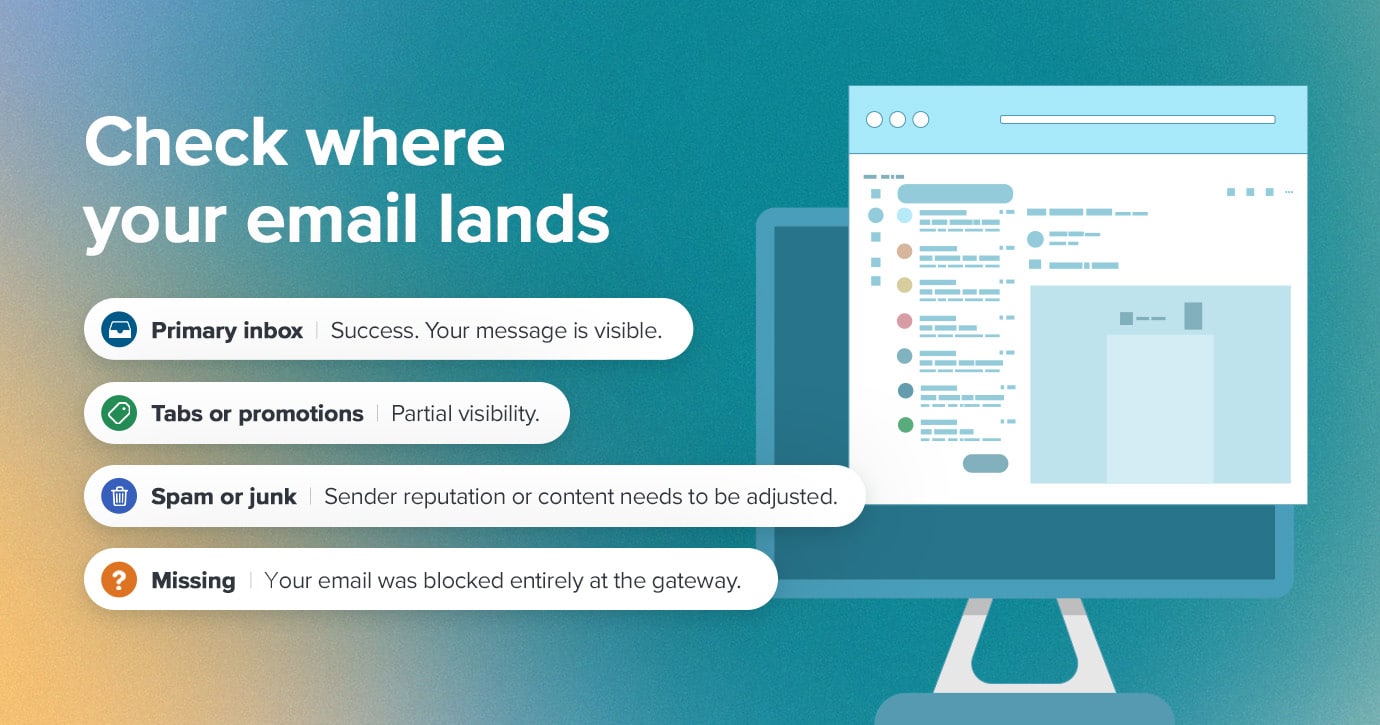
Analyzing Folder Placement: Once the seed list email is sent, specialized diagnostic tools are used to analyze the folder placement within each test mailbox. Did the email successfully land in the primary inbox? Was it routed to the “Promotions” tab (for Gmail users)? Or, critically, was it filtered directly to the spam folder? Because these test inboxes are controlled, they provide an objective, real-time view of how mailbox providers are treating the sender’s messages. This analysis offers invaluable insights into the specific challenges a campaign might be facing, such as content triggers for spam filters or reputation issues with particular MBPs.
Calculating Inbox Placement Rate (IPR): Based on the results from the seed list test and folder placement analysis, marketers can calculate their Inbox Placement Rate (IPR). This metric—the percentage of emails that successfully reach the primary inbox—should be the definitive “true north” for evaluating email campaign performance. Unlike the often-misleading delivery rate, IPR directly quantifies the reach and potential impact of a campaign, providing actionable data to refine strategy and boost effectiveness.
Strategic Pillars for Enhanced Inbox Placement
Achieving and maintaining high inbox placement requires a multi-faceted approach, grounded in technical best practices and a deep understanding of subscriber behavior.
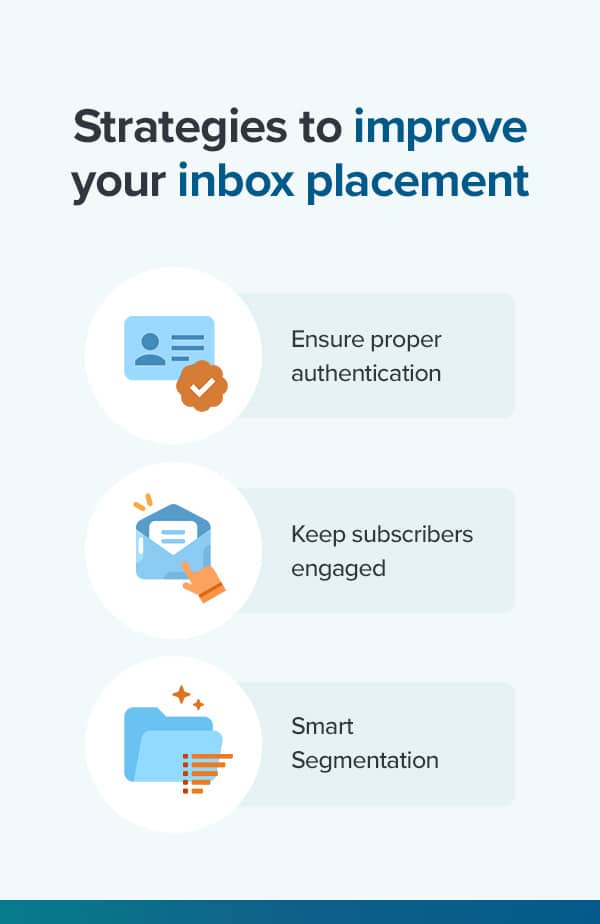
Robust Email Authentication: The Foundation of Trust.
Authentication acts as a digital ID, verifying the sender’s identity to mailbox providers. Without proper authentication, an email is treated with suspicion, making it highly susceptible to being flagged as spam. The three critical authentication protocols are:
- Sender Policy Framework (SPF): Specifies which mail servers are authorized to send email for a domain.
- DomainKeys Identified Mail (DKIM): Provides a cryptographic signature that verifies the sender and ensures the email content hasn’t been tampered with in transit.
- Domain-based Message Authentication, Reporting, and Conformance (DMARC): Builds upon SPF and DKIM, allowing domain owners to instruct MBPs on how to handle emails that fail authentication (e.g., quarantine or reject them) and receive reports on authentication failures.
As of 2024, Google and Yahoo explicitly require these three authentication steps for bulk senders. Non-compliance is no longer an option; it guarantees emails will be sent to spam or outright rejected, causing significant disruptions to marketing efforts and severely damaging sender reputation. Proper authentication is the fundamental first step in establishing trust with mailbox providers.
Cultivating Subscriber Engagement: The Lifeline of Deliverability.
Recipient engagement is perhaps the most powerful signal to mailbox providers regarding a sender’s trustworthiness and relevance. Subscribers who have not opened emails in over a year, for instance, are not only disengaged but can also become dangerous “spam traps.” These are old, abandoned email addresses repurposed by MBPs to identify senders who are not actively managing their lists. Hitting a spam trap immediately signals poor list hygiene and can severely harm a sender’s reputation, pushing even legitimate emails to active subscribers into the spam folder.
To mitigate this, regular list hygiene is paramount. Marketers should implement re-engagement campaigns for dormant subscribers, using messages like “Do you still want to hear from us?” as a final attempt to reignite interest. Those who do not respond should be promptly removed from the email list. Furthermore, employing email verification tools at the point of signup can prevent invalid or misspelled email addresses from entering the database, protecting sender reputation from the outset and ensuring emails only reach engaged recipients. A clean, responsive list demonstrates high engagement to mailbox providers, reinforcing a positive sender score.
Intelligent Segmentation and Personalization: Delivering Relevance.
In today’s crowded inboxes, a one-size-fits-all approach to email marketing is increasingly ineffective. Personalization and relevance are crucial for driving engagement. Messages that resonate with a subscriber’s actual interests and past behavior are far more likely to be opened and interacted with. Audience segmentation allows marketers to send specific content only to those most likely to find it valuable. For example, instead of broadcasting a product update to 50,000 general subscribers, sending it exclusively to the 10,000 active users of that specific feature dramatically increases the chances of opens and clicks. This targeted approach not only enhances the user experience but also provides positive engagement signals to mailbox providers, boosting the sender’s reputation. Higher engagement, fueled by personalization, directly translates to higher inbox placement across the board, as providers reward senders who consistently deliver content their audience actively desires.
Advanced Strategies for Enterprise-Level Deliverability
For organizations with high sending volumes, complex global footprints, or particularly competitive industries, achieving pristine inbox placement demands more advanced, sophisticated strategies. These approaches are designed to solidify sender reputation and enable dynamic adjustments to ever-changing mailbox provider filtering rules, ensuring consistent reach and elevating brand visibility.
Sender Certification: A Mark of Elite Trust.
Sender certification programs, such as Validity Sender Certified, represent a whitelist for vetted senders. Participants undergo a rigorous testing process to confirm adherence to best practices, earning them “special treatment” from participating mailbox providers. The benefits of certification are substantial:
- Bypassing Filters: Certified senders often bypass many standard spam filters, leading to higher inbox placement rates.
- Enhanced Visibility: Increased likelihood of landing in the primary inbox, even during peak sending times.
- Competitive Advantage: Distinguishing a brand as highly reputable in a crowded email ecosystem.
- Improved Trust: Building a stronger foundation of trust with mailbox providers and recipients alike.
Statistical evidence highlights the impact: certified senders can see millions more emails reach the inbox annually compared to their non-certified counterparts, demonstrating the significant boost in reach and effectiveness that certification can provide.
Brand Indicators for Message Identification (BIMI): Visual Trust and Recognition.
BIMI is an email standard that allows a sender’s verified brand logo to appear next to the subject line in the recipient’s inbox. This visual confirmation of brand identity serves multiple critical functions:
- Instant Brand Recognition: Helps emails stand out in a cluttered inbox, drawing user attention.
- Enhanced Trust and Authenticity: Visually assures recipients of the email’s legitimacy before opening, crucial in an era of increasing email fraud and phishing attempts.
- Increased Open Rates: The presence of a recognizable logo instills confidence, encouraging recipients to open the message.
To implement BIMI, a sender must have DMARC enforced at a “quarantine” or “reject” policy, underscoring that only brands with robust email authentication policies can leverage this powerful trust signal. This requirement further strengthens the integrity of the email ecosystem.
Real-time Feedback Loops (FBLs): Actionable Insights from User Complaints.
Feedback Loops (FBLs), offered by major providers like Google Postmaster Tools and Microsoft SNDs, are invaluable tools for understanding how subscribers perceive emails. FBLs provide real-time data when a user marks an email as spam, allowing senders to pinpoint the specific email addresses generating complaints. This information is critical for:
- Improving List Hygiene: Immediately identifying and removing users who do not wish to receive emails, preventing future complaints.
- Refining Content Strategy: Analyzing patterns in complaints to understand what types of content or sending frequencies might be triggering negative reactions.
- Protecting Sender Reputation: Proactively addressing high complaint rates, which are a major red flag for mailbox providers and can severely impact deliverability for the entire list.
By leveraging FBLs, marketers can maintain a healthier sender reputation and ensure deliverability for the majority of their recipients, fostering a more sustainable email program.
Conclusion: Mastering the Inbox for Sustainable Growth
The era of simply measuring email “delivery” is long past. For modern marketers, the strategic imperative has unequivocally shifted to mastering inbox placement. Knowing precisely where emails land—whether in the primary inbox, a promotions tab, or the dreaded spam folder—is the fundamental difference between sending messages into a void and establishing a direct, impactful connection with an audience. This deeper understanding empowers organizations to optimize their email strategies, enhance sender reputation, and ultimately drive meaningful engagement and revenue.
In a constantly evolving digital landscape where mailbox providers continually refine their filtering algorithms, a proactive and data-driven approach to email deliverability is not merely advantageous; it is essential for business survival and growth. By embracing robust authentication, meticulously managing subscriber engagement, leveraging intelligent segmentation, and exploring advanced strategies like sender certification and BIMI, businesses can transform their email programs. These insights and tools empower marketing teams to confidently refine their strategies, boost campaign impact, and ensure that their carefully crafted messages consistently reach their intended destination: the primary inbox, where they can be seen, valued, and acted upon, driving sustainable success and maximizing ROI.