The air in the email marketing world feels distinctly different in 2026, marking a significant transition from the initial tumult of generative AI’s advent and the urgent scramble to comply with burgeoning privacy regulations. The industry has moved beyond the reactive phase, now firmly entrenched in an era of meticulous refinement where strategic integration of advanced technologies and a renewed focus on authentic human connection are paramount. Today’s digital consumers are savvier and more discerning than ever, adept at recognizing overtly AI-generated content, fostering a heightened skepticism that demands a delicate balance between cutting-edge automation and an irreplaceable human touch. This article delves into the critical tactical shifts necessary to thrive in this evolving landscape, from sophisticated lifecycle strategies to the emergence of “intelligent gatekeepers,” ensuring that email marketing remains a brand’s most potent engine for growth.
The Rise of AI Gatekeepers: A New Frontier in Deliverability
One of the most profound shifts defining email marketing in 2026 is the pervasive influence of AI “gatekeepers.” Subscribers are no longer the sole arbiters of email content; sophisticated AI tools are now integral to the inbox experience. Technologies like Apple Intelligence, introduced in mid-2024, and Google’s advanced Gemini integration within Gmail, which began rolling out more broadly in late 2024 and early 2025, actively summarize email content for users even before a message is opened. This innovation, while designed to enhance user experience and efficiency, has fundamentally altered how marketers must approach content creation and deliverability.
The direct implication of these AI summaries is a dramatic decline in the reliability of traditional open rates as a primary performance metric. Previously, an open signified a user’s initial engagement with an email’s subject line and preview text. Now, users can glean the core message and value proposition from an AI-generated summary, potentially deciding to engage further (or not) without ever technically “opening” the email. Industry reports from Q1 2026 indicate a global average decrease of 15-20% in reported open rates compared to pre-AI summary baselines, prompting marketers to shift their focus to more definitive engagement metrics like click-through rates, conversion rates, and time spent interacting with content post-click. The central question for email marketers has thus evolved from “Did my email land and look great?” to “Did the AI accurately surface the right topics and value proposition in its summary?” This demands a strategic approach akin to search engine optimization (SEO), where clarity, keyword prominence, and structural integrity are prioritized.

Crafting Content for Machine and Human: A Dual Imperative
In this new paradigm, email design and content strategy must cater to both human readability and machine interpretability. The shift towards minimalist and structured design is not merely an aesthetic preference but a functional necessity. Gone are the days of sprawling, text-heavy emails. Modern aesthetics favor leaner builds that load faster – a critical factor for mobile users, who constitute over 60% of email opens according to 2025 analytics – and are significantly easier for AI tools to parse and summarize accurately. This trend is reinforced by the persistent, albeit mythologized, notion of diminishing human attention spans. While the comparison to a goldfish’s memory might be scientifically debunked, the principle that users seek the quickest possible value remains steadfast.
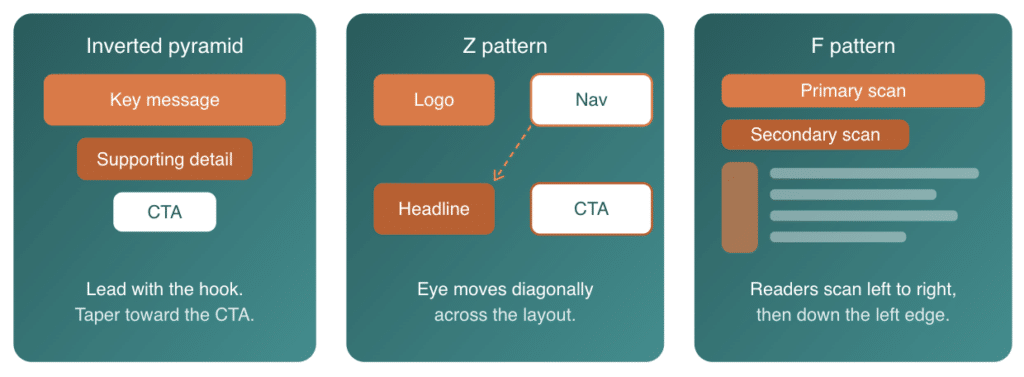
To facilitate both human and AI comprehension, marketers are increasingly leveraging known content hierarchy structures such as the Inverted Pyramid, Z-pattern, and F-pattern. These visual layouts guide the eye and signal importance, ensuring key messages are absorbed efficiently. Crucially, proper use of heading tags (H1 for section titles, H2/H3 for sub-sections) is no longer just about visual organization but serves as explicit metadata for AI, directing it to the most pertinent information. Furthermore, every image must include thorough and descriptive alt text, providing context for visually impaired users and vital information for AI summarizing tools that cannot “see” images. Tools offering AI summary previews are becoming indispensable, allowing marketers to refine their content to ensure the gatekeepers interpret and present their messages precisely as intended. As one industry analyst remarked, “In 2026, it’s not the most creative writer who wins, but the marketer who designs their content with the machines in mind.”
Leveraging Annotation Schema: Deeper AI Integration
Further enhancing machine interpretability is the strategic adoption of annotation schema, or structured data, within emails. Years ago, Gmail pioneered support for structured data via JSON-LD or Microdata snippets, enabling mailbox providers to render enriched UI elements directly within the inbox. This includes dynamic features like image carousels, prominently displayed discount codes with expiration dates, and interactive booking confirmations – features that significantly elevate the user experience, particularly within the Gmail Promotions tab.
While there is no explicit confirmation from providers that structured data directly fuels AI summarization processes, its presence within the message body means it is parsed by AI engines. At a minimum, structured data provides AI with meaningful, highly organized signals about an email’s content, making it easier for algorithms to identify key entities, actions, and value propositions. Despite its proven benefits, a significant portion of senders have yet to fully integrate structured data into their email programs. This presents a straightforward, yet powerful, competitive advantage for early adopters, allowing them to stand out in increasingly crowded inboxes and potentially influence AI summaries more favorably.
The Orchestrator’s Baton: Redefining the Email Marketer’s Role
The evolving landscape of 2026 has fundamentally reshaped the role of the email marketer. The days of being primarily a “builder” are giving way to the era of the “orchestrator.” With AI now capable of handling the heavy lifting – from drafting subject lines and body copy, coding complex HTML tables, segmenting audiences, to interpreting initial campaign results – the human marketer’s value proposition shifts dramatically. The core competency becomes the ability to manage, direct, and refine AI output, ensuring alignment with brand voice, strategic objectives, and ethical guidelines.
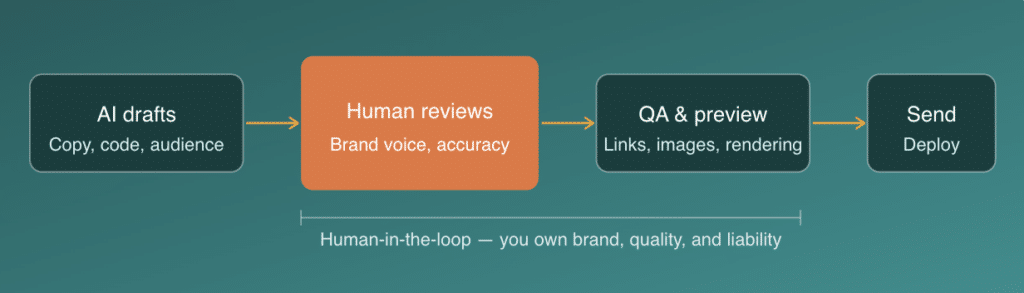
“We’ve been playing checkers for too long and not enough chess,” stated Drew Price, Co-Founder at JRNY PPL, in a recent industry interview. “Looking at things more holistically and diversifying our investments with automation will go a long way. There’s just a bit of a mindset shift that we need to do.” This sentiment underscores the strategic pivot required. The primary job of the orchestrator is quality assurance. This involves vigilantly guarding against AI “hallucinations” – instances where AI generates incorrect, nonsensical, or off-brand content – and ensuring strict adherence to brand guidelines. A “human-in-the-loop” approach, where AI-generated content undergoes thorough human review and editing, has been shown to yield up to 40% higher quality output compared to purely autonomous generation. This process involves meticulous review in email rendering previews, flagging necessary adjustments for stakeholders, and, critically, double-checking all links and images. The mantra for 2026 email marketing is clear: “Delegate labor, never liability.”
Enhancing Customer Experience with Intelligent AI Application
The novelty of raw AI-generated copy has worn off, and subscribers are increasingly sensitive to content that lacks genuine human insight or brand authenticity. In 2026, the strategic goal is to leverage AI not for mere content generation, but to profoundly enhance the customer experience in ways that feel personalized and human, not robotic. This means moving beyond generic AI text to sophisticated applications that anticipate needs and provide relevant value.
Examples of successful AI enhancement include dynamic content blocks that adjust based on a subscriber’s real-time browsing behavior, AI-powered product recommendations that learn from past purchases and explicit preferences, and automated follow-up sequences that adapt their messaging and timing based on engagement signals. AI can also facilitate the rapid generation of diverse content variants for A/B testing, allowing marketers to quickly identify what resonates most effectively with different audience segments. The key remains a human oversight to edit AI outputs, ensuring they retain a distinctive brand voice and emotional resonance. The future is about making AI invisible in its operation but palpable in its positive impact on the customer journey.
Data as the Driving Force: Intelligent Automation and Management
The demands of sophisticated personalization and AI-driven campaigns necessitate a robust infrastructure of specialized design and email automation tools, coupled with impeccable data management. Email marketing has matured into its own specialized medium, and with its consistently high return on investment (often cited between $38-$42 for every $1 spent), investment in dedicated expertise and technology is non-negotiable. This includes having dedicated email designers, ideally equipped with advanced tools for rapid prototyping and deployment.
Beyond personnel, marketing teams must critically evaluate and enhance their automation tools. To accelerate design and development cycles, reliance on email building tools that offer pre-built templates, reusable HTML modules, and AI design capabilities for generating layout and style variants is essential. For addressing lifecycle gaps, leaning heavily on automation ensures consistent engagement; a single well-crafted automated email sequence can outperform numerous one-off sends.

Data management, however, remains a persistent and growing obstacle. As personalization demands escalate, the quality and accessibility of customer data become paramount. Cynthia Price, SVP of Marketing at Validity, highlighted this challenge: “Data collection and management is not a ‘set it and forget it’ proposition. You’d be surprised how much information subscribers will offer once you prove you’re asking questions to make their lives easier.” Tools like BriteVerify from Validity are crucial for validating email addresses at the point of entry, safeguarding sender reputation from damaging soft bounces. Marketers must then strategically segment their audience and tailor campaigns based on precise data:
- Customers purchasing across multiple categories: Ideal for gift guides or store visit invitations, requiring purchase history data.
- Customers with one product, not a second: Perfect for product recommendations, needing individual purchase data and product affinities.
- Superfans (3+ purchases): Engage with review requests or social media shoutouts, leveraging deep purchase history.
- Prospects browsing in the last 24 hours: Trigger “back in stock” or “get it before it’s gone” alerts, requiring real-time browsing data.
- Prospects inactive for 30+ days: Initiate re-engagement campaigns, based on email engagement metrics.
- Prospects nearing purchase: Deploy abandoned cart or abandoned browsing reminders, requiring precise behavioral data.
Integrating email platforms with CRM, CDP, analytics tools, and marketing automation systems unlocks a wealth of insights, facilitating deeper personalization and clearer attribution of results. Even without an expansive tech stack, fundamental tools like signup forms, comprehensive preference centers, and in-email polls can effectively surface valuable zero-party data.
The Imperative of Inclusivity: Accessibility as a Standard
In 2026, optimizing for accessibility and inclusivity is no longer merely a best practice but a legal and ethical imperative. The European Accessibility Act, fully enforceable across EU member states by mid-2025 for many digital services, along with similar legislation in North America and other regions, mandates that digital content, including emails, must be accessible to individuals with disabilities. Beyond legal compliance, it is simply the right thing to do, expanding market reach and enhancing brand reputation.
Key accessibility best practices include:

- Semantic HTML: Using proper HTML tags (e.g.,
<p>,<h1>,<a>) to structure content logically for screen readers. - Clear Calls to Action (CTAs): Ensuring CTAs are descriptive and easily identifiable.
- Sufficient Color Contrast: Meeting WCAG 2.1 AA standards for text and background colors.
- Readable Fonts and Sizes: Choosing legible fonts and ensuring a minimum font size of 14px for body text.
- Descriptive Alt Text: Providing meaningful descriptions for all images.
- Video Captions/Transcripts: Including alternatives for multimedia content.
- Logical Tab Order: Ensuring keyboard navigation is intuitive for users who cannot use a mouse.
Robust accessibility testing is crucial before every send. While many Email Service Providers (ESPs) offer basic checks, dedicated email testing tools like Litmus provide advanced capabilities. These include visual impairment filters, automated checks for alt text, text justification, table roles, and compatibility with screen readers like NVDA. Attending sessions like those from Litmus Live 2026 on email accessibility highlights the industry’s commitment to ensuring every message is inclusive. Investing in comprehensive accessibility checks not only mitigates legal risks but also significantly broadens audience engagement and reinforces a brand’s commitment to social responsibility.
The Future of Email in 2026: A Synthesis of Efficiency and Humanity
The roadmap for email marketing in 2026 is an intriguing blend of technological efficiency and profound human-centricity. As marketers explore innovative ways to leverage automation and artificial intelligence to accelerate workflows and optimize campaigns, the paramount objective remains the humanization of messages. This involves crafting inspiring, deeply personalized emails that resonate with individual subscribers, while simultaneously ensuring universal access through rigorous adherence to accessibility standards. The initial apprehension surrounding AI has matured into a strategic understanding of its role as a powerful assistant, not a replacement for human ingenuity. The future of email in 2026 will be defined by those who master this intricate dance between advanced technology and authentic human connection, transforming every email into a meaningful, impactful touchpoint.