

The landscape of professional copywriting is undergoing its most significant transformation since the advent of the digital age, driven by the rapid integration of generative artificial intelligence (AI). As marketing departments and sales teams worldwide grapple with the efficiency gains and creative limitations of Large Language Models (LLMs), a consensus is emerging among the industry’s most successful practitioners. While the adoption of AI as a copywriting aid is surging, the role of human intuition, behavioral psychology, and original storytelling remains the primary differentiator for high-revenue campaigns. To understand the practical boundaries of this technology, a comprehensive analysis of the methodologies employed by five of the world’s most respected copywriters—Bob Bly, Kim Krause Schwalm, David Deutsch, Lorrie Morgan, and Anita Siek—reveals a sophisticated hybrid model of human-machine collaboration.
The Current State of AI in Marketing Communications
The shift toward AI-assisted content creation is supported by significant market data. According to a 2023 Salesforce State of Marketing report, over 60% of marketers claimed to be using generative AI in some capacity, with another 22% planning to implement it shortly. The primary drivers are speed and cost reduction; however, the “A-list” tier of the copywriting world—those responsible for generating millions of dollars in direct-response revenue—maintains that the technology is currently a “thinking partner” rather than a replacement for human intellect.
The evolution of these tools has followed a distinct chronology. In late 2022, the release of ChatGPT (GPT-3.5) sparked a wave of “replacement anxiety” within the creative industries. By mid-2023, as users encountered the “hallucination” issues and stylistic homogeneity of LLMs, the narrative shifted toward “prompt engineering.” In 2024, the focus has moved toward “Vertical AI” and RAG (Retrieval-Augmented Generation), where models are trained on specific, high-quality intellectual property (IP) to produce more nuanced outputs.
Strategic Frameworks for AI Integration
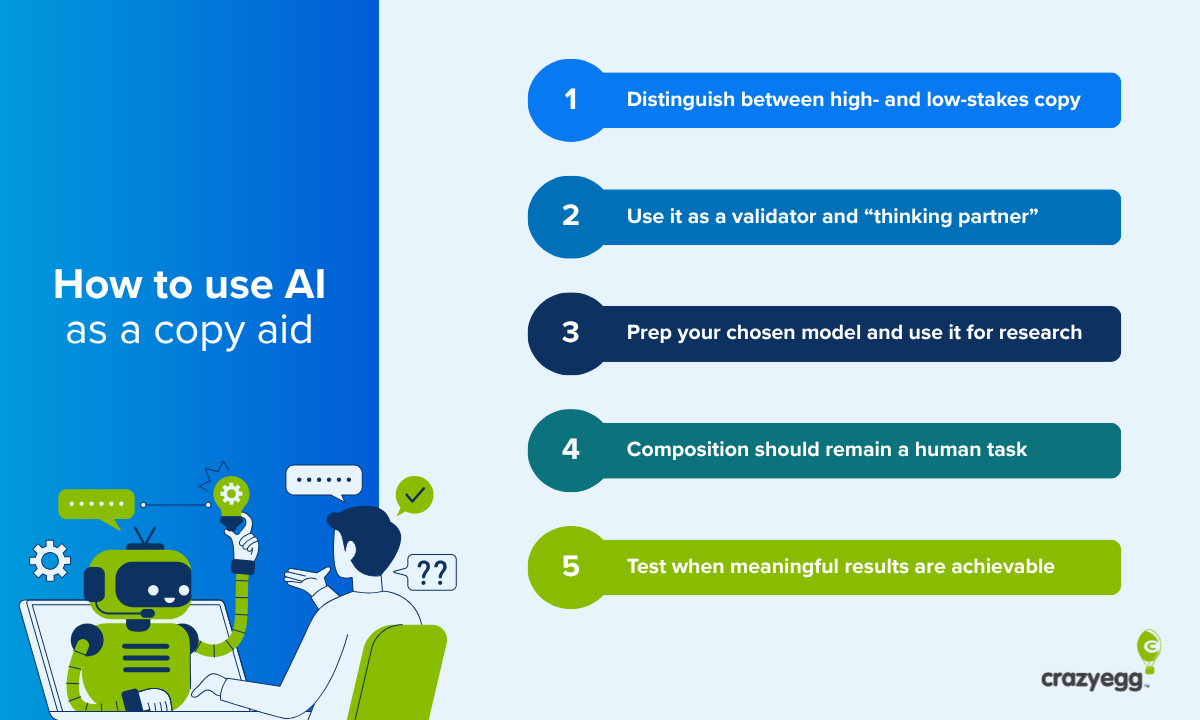
Industry experts have established five critical rules for maintaining copy quality in an AI-saturated environment. First is the distinction between high-stakes and low-stakes copy. High-stakes materials, such as direct-mail brochures or Video Sales Letters (VSLs) tied directly to revenue, require deep human intervention. Low-stakes materials, like internal flyers or minor social media updates, are increasingly delegated to AI.
Second, AI is being repositioned as a “validator” and “thinking partner.” This involves using the model to identify logical gaps in an argument or to brainstorm angles that a human writer might have overlooked. Third, the “prep and research” phase has become a primary use case. By feeding models specific customer data or proven copywriting frameworks, writers can accelerate the research phase without sacrificing the strategic foundation of the work.
Fourth, the industry remains unanimous that the actual composition—the “voice” of the piece—must remain a human task to avoid “algorithm aversion.” This psychological phenomenon occurs when consumers lose interest or trust in a message upon realizing it was generated by an AI. Finally, the ability to run high-volume testing has emerged as a major benefit. For digital campaigns where variations can be tested in real-time, AI allows for the generation of dozens of headlines and lead-ins to see which resonates most effectively with a live audience.
Bob Bly: The Revenue-Criticality Principle
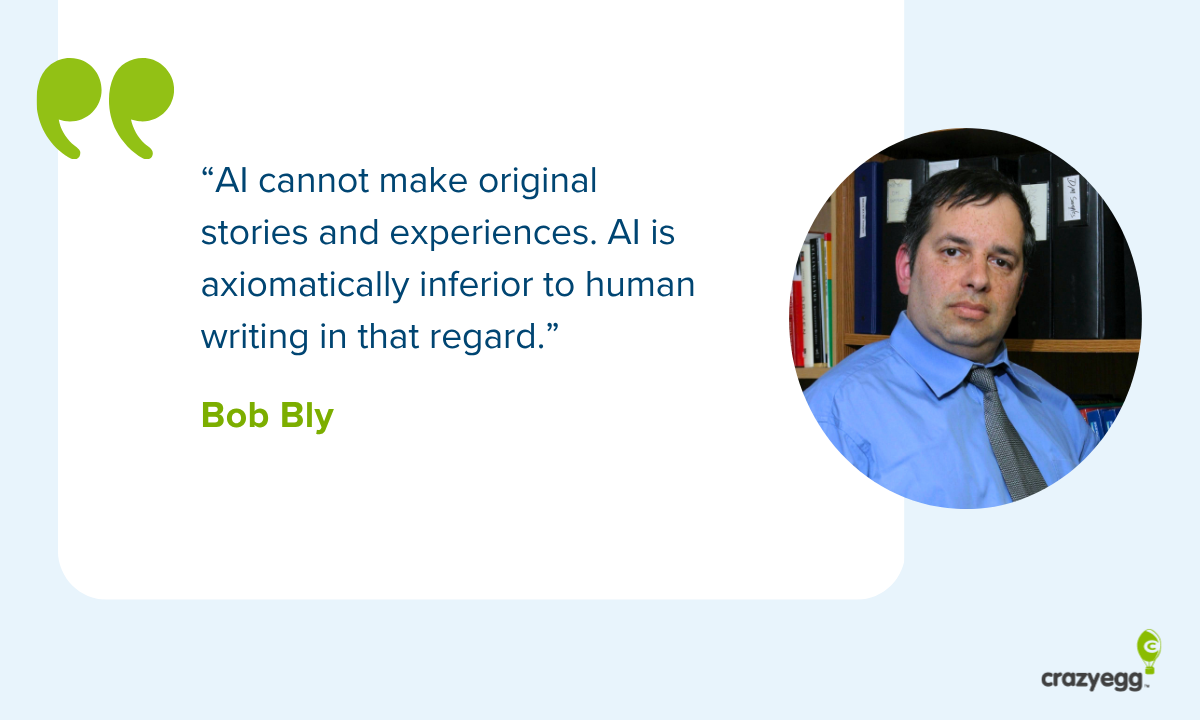
Bob Bly, a legendary figure in direct-response marketing and author of The Copywriting Handbook, maintains a cautious stance on AI as a writing tool. Bly argues that AI is “axiomatically inferior” to human writing at this stage, primarily due to its inability to generate original stories and lived experiences. Storytelling is the bedrock of persuasion, and because AI can only “regurgitate” existing narratives, it fails to forge the deep emotional connection required for high-level direct response.
However, Bly utilizes AI for vetting “big ideas.” In long-form promotions for the health and finance sectors, a single premise must carry a 30-page document or a 30-minute video. Bly cites an example of using ChatGPT to explore the economic implications of the Strait of Hormuz closing. The AI provided specific data points on oil field equipment and stock categories that served as the “meat” for a human-written financial package. For Bly, AI is a powerful research assistant that can confirm whether a conceptual idea has enough depth to sustain a major campaign.
Kim Krause Schwalm: Enhancing Research and Efficiency
Kim Krause Schwalm, renowned for her ability to beat long-standing “control” ads in competitive markets, views AI as a tool for automating the “grunt work” of copywriting. Schwalm utilizes AI to generate summaries from long transcripts of courses or interviews, which can then be distilled into sales copy.
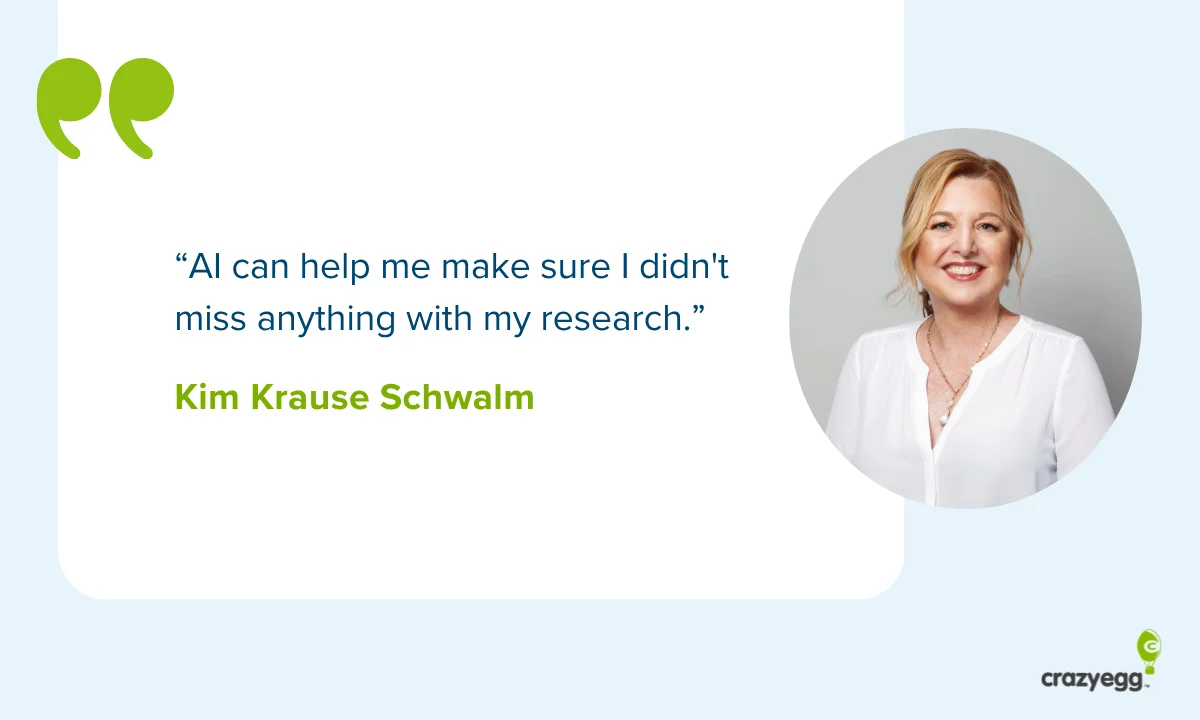
One of her most effective applications is the “Prism exercise,” a proprietary framework used to create target prospect profiles. While Schwalm continues to conduct manual research through forums and surveys to capture the “raw language” of consumers, she uses AI as a secondary check. By prompting the AI with her research questions, she ensures that no obvious pain points or desires have been overlooked. To Schwalm, AI is an insurance policy against research gaps, though she notes that the outputs are often “dry and almost clinical,” requiring a human touch to inject emotion.
David Deutsch: The Thinking Partner and High-Volume Testing
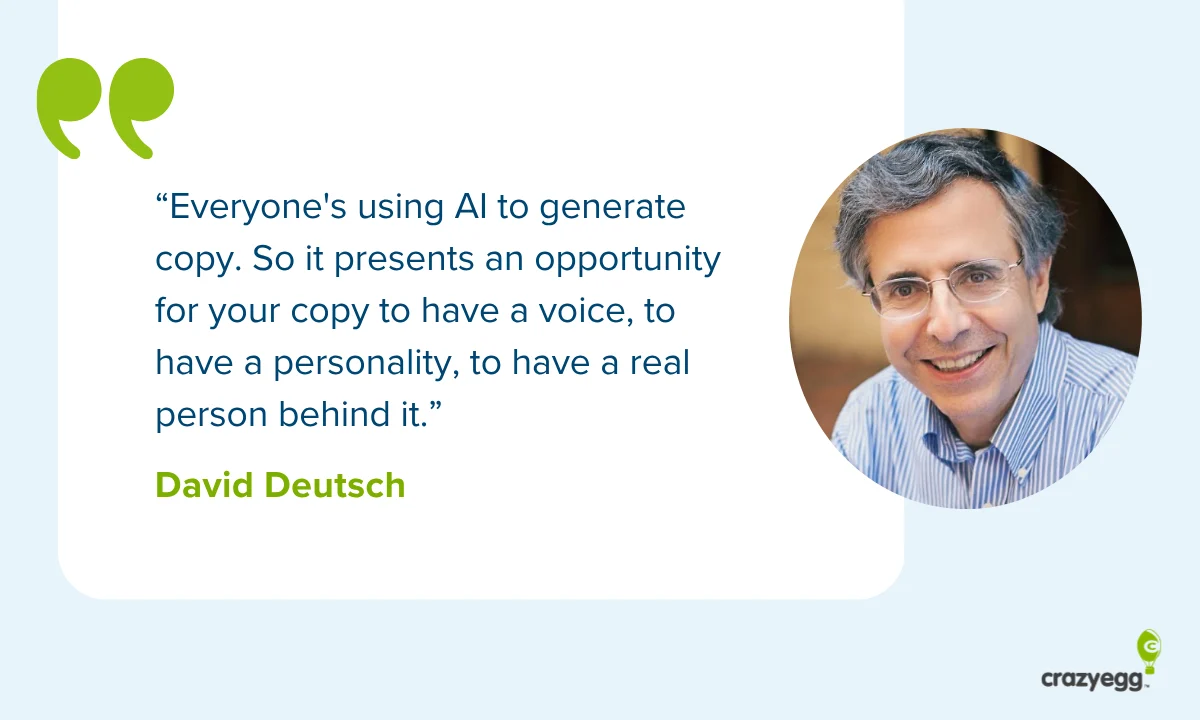
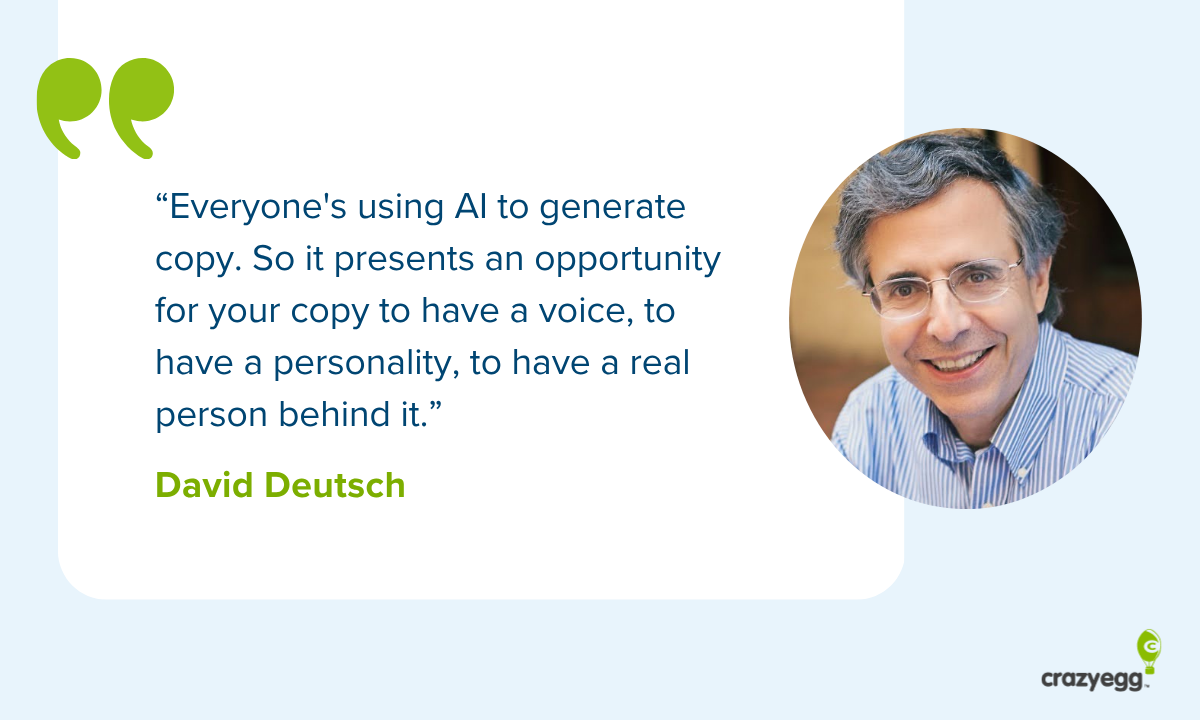
David Deutsch, whose copy has generated over $1 billion in sales, advocates for using AI as a “foil” to bounce ideas off of. Deutsch warns against the “downward trend in cognition” that occurs when writers over-rely on AI. He suggests that writers should always lead with their own ideas and ask the AI to critique them, rather than asking the AI to provide ideas from scratch. This preserves the “thinking muscles” of the writer.
Despite this, Deutsch acknowledges a significant use case for AI in high-volume environments. For clients who require a massive output of emails or social ads, he builds repeatable systems. This involves training the AI on specific frameworks—such as Eugene Schwartz’s “Stages of Awareness” or the AIDA (Attention, Interest, Desire, Action) formula. By feeding the AI a comprehensive brief distilled from Reddit posts and competitor analysis, he can generate 100 variations for testing. In this context, the sheer volume of data-driven tests outweighs the need for every single variant to sound uniquely human.
Lorrie Morgan: Protecting the Human Voice
Lorrie Morgan, mentored by industry titans like Gary Halbert, emphasizes the danger of “homogenized” AI content. Morgan notes that while early models could be trained to mimic a specific style, current iterations often revert to a “safe,” frictionless, and relentlessly positive tone. This “frictionless optimism” is a hallmark of AI that often signals a lack of authenticity to the reader.
Morgan uses AI primarily for shaping outlines and cleaning up drafts but insists on a “Rescue Kit” approach to editing. She argues that readers trust writers who have “actually been through something.” Because AI never has a “bad day,” it cannot replicate the vulnerability or frustration that makes human copy relatable. Her advice to the industry is clear: if a business insists on using AI for speed, it must have a human “clean up the crap” to ensure the brand’s voice is not hijacked by the machine.
Anita Siek: Behavioral Psychology and Systematization
Anita Siek, founder of Wordfetti, integrates AI with behavioral psychology to create a “human-centered” hybrid model. Siek views AI as an amplifier that is “only as good as the input.” If the input lacks clarity, strategic depth, or unique IP, the output will inevitably be subpar.
Siek’s firm has developed “FETTIBot,” a custom AI tool trained on nine years of the agency’s internal frameworks and marketing strategies. This represents the next frontier of copywriting: proprietary AI. By teaching the machine a repeatable system based on proven success, Siek can scale the agency’s output without losing the psychological triggers that drive conversions. For Siek, the winners in the AI era are those who remain deeply connected to human psychology and use AI to scale that understanding faster.
Broader Implications and the Future of the Craft
The collective experience of these experts suggests that while the “barrier to entry” for basic copywriting has lowered, the “ceiling for excellence” has likely moved higher. As the market becomes flooded with AI-generated “slop,” high-quality, human-centric copy is becoming a premium commodity.
There is also the emerging issue of “Algorithm Aversion.” A study published in the Journal of Consumer Research suggests that consumers often penalize brands when they perceive a lack of human effort in creative tasks. This creates a strategic imperative for businesses to maintain a “Human-in-the-Loop” (HITL) workflow.
In conclusion, the future of copywriting is not a binary choice between human and machine. It is a sophisticated integration where AI handles data synthesis, initial outlining, and high-volume variant generation, while the human copywriter provides the strategic “Big Idea,” the emotional resonance, and the final stylistic polish. The “A-list” copywriters of tomorrow will be those who can command AI tools as an expert “intern,” ensuring that the final message remains rooted in the complex, often messy, and deeply emotional reality of the human experience. As the technology continues to evolve, the most valuable skill in a copywriter’s arsenal will remain the ability to think critically and strategically—a domain that, for now, remains uniquely human.







