

The discourse surrounding Artificial Intelligence (AI) has reached a fever pitch, driven largely by venture capitalists, prominent media outlets, cutting-edge AI laboratories, and influential figures predicting a future where AI replaces human labor, dismantles existing software infrastructure, and prioritizes “token-maxxing” as an end in itself. However, a significant chasm is widening between this speculative market narrative and the practical realities faced by business leaders grappling with AI implementation. Executives running real-world enterprises are increasingly posing pragmatic questions: How can AI genuinely enhance my workforce? Which AI systems offer reliable performance and security? Crucially, how can the return on investment (ROI) of AI expenditures be tangibly measured? These questions, often overlooked in the hype cycle, are central to the operational challenges of modern businesses.
HubSpot, a leading customer relationship management (CRM) platform, asserts that after more than three years of intensive development, deployment, and observation of its growing customer base leveraging AI, its most profound AI perspectives are precisely those that are seldom voiced by the broader industry. The company has articulated six core tenets that aim to reframe the conversation around AI, shifting the focus from speculative capabilities to demonstrable business value, particularly for the vast and vital segment of small and medium-sized businesses (SMBs) that constitute the “Future 5000.”
The Chasm Between Hype and Reality: A Deeper Look into the AI Landscape
The current AI landscape is characterized by a rapid acceleration of technological advancements, particularly in large language models (LLMs) and generative AI. This surge has attracted unprecedented levels of investment, sparking a modern-day gold rush reminiscent of early internet booms. Tech giants are pouring billions into research and development, while startups emerge almost daily, promising revolutionary applications across various sectors. This environment has fostered an expectation of radical disruption, where AI is often portrayed as a panacea for all business challenges or, conversely, as an existential threat to employment and societal structures.
However, for many businesses, especially those without the deep pockets and extensive technical teams of Fortune 500 companies, the practical application of AI remains elusive. The initial enthusiasm generated by impressive AI demonstrations, such as generating code or crafting marketing copy, often gives way to the complex realities of integration, data quality, workflow adaptation, and the sheer total cost of ownership involved in scaling these technologies. HubSpot’s stance directly addresses this disconnect, arguing that the industry has mistakenly conflated mere AI activity with concrete business outcomes. The company’s three-and-a-half-year journey in building and deploying AI solutions has provided a ground-level view of what truly drives value for its diverse customer base, leading to a set of principles that diverge significantly from the prevailing market rhetoric.
HubSpot’s Six Pillars for Pragmatic and Impactful AI Adoption
HubSpot’s critical assessment of the AI industry is distilled into six fundamental principles designed to guide businesses toward effective and sustainable AI adoption. These principles underscore a commitment to human empowerment, measurable results, and ethical deployment, presenting a counter-narrative to the often sensationalized discussions surrounding AI.
1. AI Activity Is Not AI Outcomes: Measuring True Business Progress
A prevalent misconception in the AI space is the conflation of “motion for progress.” The industry frequently highlights AI’s ability to automate mundane tasks such as drafting emails, generating content summaries, or conducting preliminary research. While these capabilities, which HubSpot also offers as part of its platform, are undeniably useful and make specific activities easier, they represent inputs rather than true outputs. Engaging in AI-powered activity without a clear link to tangible business outcomes is, as HubSpot asserts, “theater.” It creates an illusion of productivity without necessarily contributing to strategic goals.
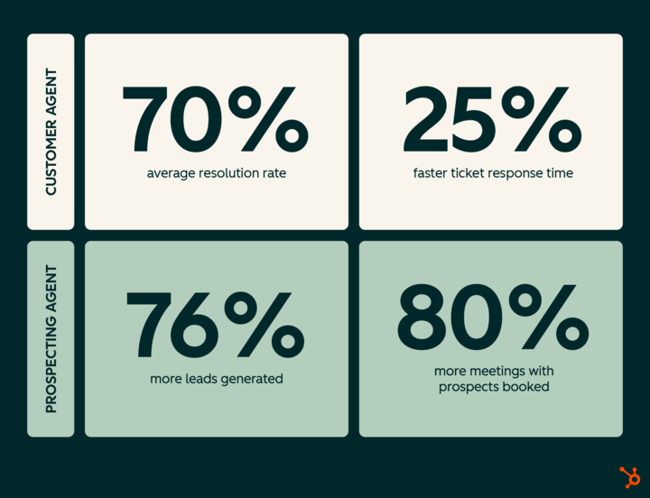
The real winners in the AI race, according to HubSpot, are not those demonstrating the most sophisticated models, but those strategically applying AI to solve specific, well-defined business problems, working backward from desired results. HubSpot provides compelling internal data to support this claim, showcasing concrete benefits derived from its AI tools. For instance, customers utilizing its “Customer Agent” AI tool have reported a 25% faster ticket response time, significantly enhancing customer satisfaction, reducing operational bottlenecks, and improving overall service efficiency. Similarly, businesses leveraging the “Prospecting Agent” have experienced a remarkable 76% increase in lead generation, directly impacting sales pipelines, accelerating conversion rates, and driving measurable revenue growth. These are not just activities; they are measurable improvements in critical business functions that directly contribute to the bottom line.
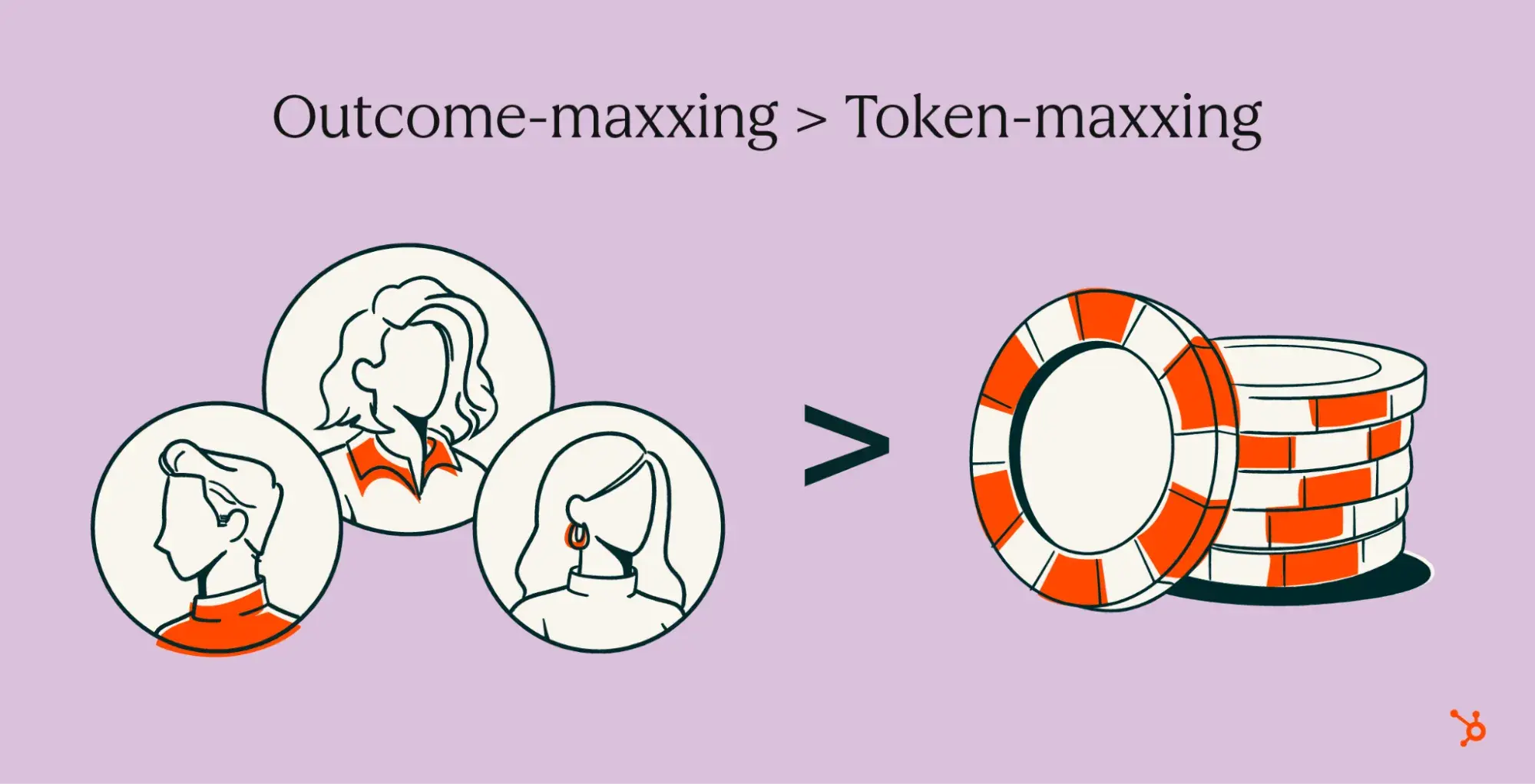
This outcome-driven philosophy is so central to HubSpot’s approach that it led to a significant shift in their pricing model. In April, HubSpot transitioned its Customer Agent and Prospecting Agent to outcome-based pricing. This move signals a profound alignment with customer success: businesses pay for the results AI delivers, not merely for its usage or the number of tokens consumed. This model directly contrasts with the prevalent “token-maxxing” approach favored by many AI vendors, where usage-based billing incentivizes greater consumption rather than greater efficiency or demonstrable value. The implication for the broader market is a potential shift towards greater accountability from AI providers, forcing a focus on measurable value and tangible ROI.
2. AI is Necessary, But Not Sufficient: Building Integrated, Coherent Systems
While AI, particularly generative AI, has dramatically lowered the barrier to entry for tasks like code generation, allowing rapid prototyping and accelerated development, HubSpot cautions that this ease of creation does not automatically translate into scalable, reliable business value. Building a robust, production-ready system for a growing business requires far more than just generating code. The foundational elements of enterprise software — clean and integrated data, seamless application interoperability across diverse platforms, and a unified customer view across marketing, sales, and service functions — remain paramount. Without these, AI agents risk operating in silos, exacerbating data fragmentation rather than resolving it.
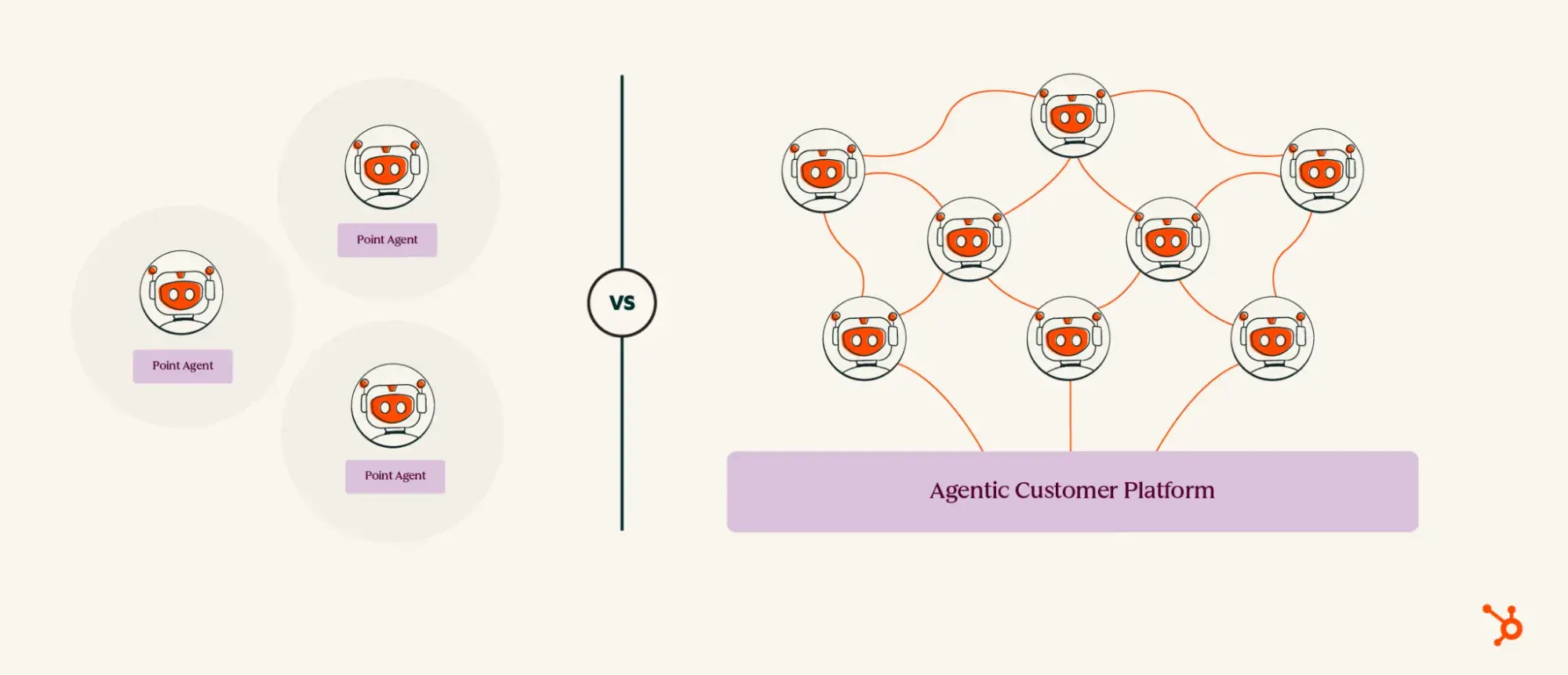
The industry, HubSpot argues, often sells models or single-purpose AI agents in isolation, promoting them as standalone solutions. What it frequently neglects to provide, or to adequately account for, is the critical “system in between”: the arduous tasks of data hygiene, intricate workflow design, and comprehensive change management within an organization. Businesses are left to bridge these complex gaps themselves, incurring unforeseen costs and operational hurdles. This fragmented approach leads to the proliferation of disconnected “point agents,” which, rather than simplifying operations, exacerbate complexity, create new data silos, and introduce integration nightmares.
HubSpot envisions a future where AI is not a standalone layer but an integral component of a coherent, unified system. In this model, data, workflows, AI agents, and human operators share context seamlessly, leveraging a single source of truth. AI, in this view, is a powerful new layer that enhances the existing foundation, rather than replacing it entirely. This holistic approach emphasizes the importance of a robust underlying platform capable of managing customer data, orchestrating complex workflows, and integrating diverse business functions, thereby ensuring AI’s true potential is realized within an organized, efficient, and scalable framework. This integrated approach minimizes friction and maximizes the value derived from AI investments.
3. AI for the Future 5000, Not Just the Fortune 500: Democratizing Accessible AI
A critical point of contention for HubSpot is the current trajectory of AI development, which appears overwhelmingly geared towards large enterprises. Frontier AI labs, by their own admission, are investing billions in “forward-deployed engineers” to customize and integrate AI solutions within Fortune 500 companies. This model, while effective for organizations with vast resources and specialized technical teams, is fundamentally inaccessible to the millions of small and medium-sized businesses (SMBs) globally that represent the backbone of many economies and are projected to drive significant growth in the coming decade. SMBs contribute substantially to GDP and job creation worldwide, yet they often operate with limited IT budgets and lean workforces.
An SMB cannot afford a dedicated team of forward-deployed engineers, nor can it undertake a complete overhaul of its data pipeline or build a bespoke context platform to make disparate AI tools function cohesively. Therefore, when the prevailing industry consensus declares “AI is for everyone,” HubSpot challenges the practical reality: who truly benefits today? The answer, in practice, is primarily those who already possess the financial and technical wherewithal to implement these complex solutions. This selective accessibility undermines the very notion of AI democratization, creating a two-tiered system where advanced capabilities remain largely out of reach for the majority.
HubSpot’s philosophy centers on building AI solutions that are inherently accessible, affordable, and actionable for these growing businesses. This means designing AI that is intuitive to use, integrates seamlessly into existing workflows without requiring extensive customization, and delivers measurable value without demanding colossal upfront investments or ongoing technical overhead. The “Future 5000” — the next generation of successful, growing businesses — depends on AI solutions tailored to their unique constraints and opportunities, not merely scaled-down versions of enterprise-grade tools that still require significant in-house expertise to deploy and maintain.
4. Optimizing for Outcomes Per Token, Not Tokens Per Task: Redefining AI Economics for Customer Value
HubSpot identifies a fundamental business-model conflict within the AI industry that customers are only beginning to recognize. Many AI vendors, particularly those operating on usage-based or “token-maxxing” models, are inherently incentivized to maximize AI activity. Their revenue scales with the number of tokens processed, API calls made, or tasks performed, rather than the efficiency or efficacy of the outcome delivered. Customers, in this paradigm, are effectively “paying for activity and told they are buying transformation,” a misrepresentation of true value that can lead to inflated costs without commensurate business benefits.
HubSpot advocates for an inverse economic model: clearly define the desired customer outcome, then identify the most cost-efficient pathway to achieve it. This should be a shared responsibility between the customer and the vendor, a principle HubSpot believes is currently lacking across much of the industry. Token-maxxing, where vendors profit from increased computational usage regardless of the actual business benefit, serves the vendor’s interests. Outcome-maxxing, conversely, aligns with the customer’s goal of achieving tangible results with minimal resource expenditure and maximum efficiency.
This divergence in incentives has significant implications for AI adoption and customer trust. Businesses are increasingly scrutinizing the total cost of ownership (TCO) for AI solutions, moving beyond initial licensing fees to consider ongoing operational expenses, which can quickly escalate under usage-based models. Vendors that align their business models with customer outcomes, prioritizing efficiency and measurable value, are poised to gain a significant competitive advantage by fostering long-term partnerships built on shared success. HubSpot’s move to outcome-based pricing for its agents is a direct manifestation of this philosophy, demonstrating a commitment to aligning its financial success with its customers’ success, rather than merely monetizing usage.
5. AI Should Make People More Powerful, Not More Replaceable: A Human-Centric Vision
One of the most pervasive and often alarming narratives surrounding AI is its potential to foster complete autonomy, leading to agents replacing human workers, a reduction in headcount, and a future with fewer people in the workforce. HubSpot unequivocally rejects this framing, labeling it a narrative crafted for Wall Street — focused on cost-cutting and efficiency at any human price — rather than Main Street, where employment and community well-being are paramount.
Instead, HubSpot champions an AI philosophy centered on augmenting human capabilities. Their AI tools are designed to empower the individual performing the work: the sales representative closing more deals with intelligent assistance, the marketer launching more impactful campaigns with creative support, the service professional resolving more complex customer issues with AI-driven insights, or the business owner managing more aspects of their enterprise with greater efficiency. The core purpose of AI, in this view, is to elevate human potential, amplify skills, and reduce drudgery, not to render human intelligence obsolete.
While HubSpot develops and ships autonomous agents, it emphasizes that “autonomy is a capability, not a mandate.” The critical distinction lies in customer control: businesses decide where AI can operate independently, where human oversight is required, and where AI functions as an intelligent assistant offering suggestions. HubSpot’s default settings are meticulously crafted to serve the human operator, ensuring that AI enhances, rather than diminishes, the human element in workflows. This approach is vital for ensuring ethical deployment and fostering user acceptance.
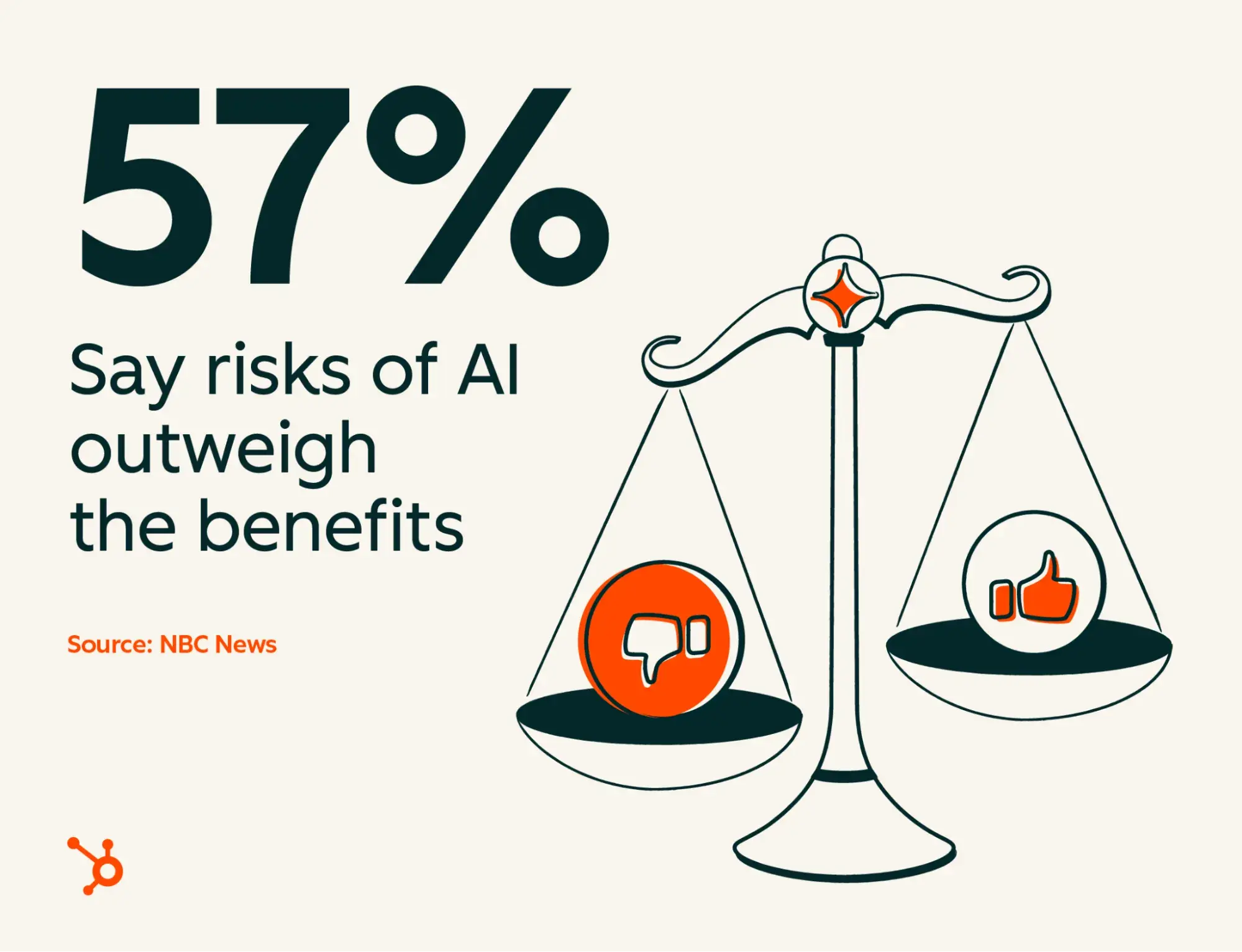
This perspective aligns with growing public sentiment. A 2022 NBC News poll indicated that a significant 57% of voters believe the risks associated with AI outweigh its benefits, highlighting widespread apprehension about job displacement and ethical concerns. HubSpot believes that qualities uniquely human—trust, judgment, taste, empathy, and authentic relationships—will become increasingly valuable as AI automates routine tasks. Companies that prioritize human authenticity and build AI to complement, rather than compete with, human intelligence are likely to cultivate stronger customer loyalty, attract and retain top talent, and ultimately gain public trust. Those betting against the human element risk losing on multiple fronts, including customer engagement, employee morale, and broader societal acceptance.
6. Trust Is More Than a Privacy Policy: A Holistic Business Posture for AI
In the current AI landscape, virtually every vendor asserts that their solutions are trustworthy. However, HubSpot observes that this claim is often narrowly defined, primarily focusing on security posture: assurances that customer data will not be used for model training, adherence to SOC 2 compliance, and the provision of enterprise Single Sign-On (SSO). While these security measures are undeniably crucial and represent foundational “table stakes” for any reputable software provider, they are not differentiating factors; they are simply baseline promises that customers expect.
True trust, according to HubSpot, extends far beyond a privacy policy or security certifications. It encompasses a comprehensive business posture that addresses how a vendor makes critical decisions regarding AI models, manages associated costs, ensures reliability, and implements robust governance frameworks for its AI agents. Customers are increasingly asking deeper questions that delve into the operational aspects of AI: Can I trust the vendor’s choice of AI model for my specific needs, ensuring it’s appropriate and effective? Can I trust the transparency and fairness of the cost structure, avoiding hidden fees or unexpected escalations? Can I rely on the consistent performance and uptime of the AI solution, knowing it won’t introduce new points of failure? And crucially, can I trust the ethical and operational governance of the AI agents deployed, ensuring they align with my business values and regulatory requirements?
Privacy policies primarily articulate “what we won’t do” with customer data, establishing boundaries. Real trust, however, requires a clear articulation of “what we will do” — a proactive stance on responsible AI development and deployment that goes beyond mere compliance. Most of the industry is still focused on answering the first question, while customers are demanding comprehensive answers to the second. HubSpot’s emphasis on transparency in model selection, equitable cost management, demonstrable reliability metrics, and robust governance protocols aims to build a deeper, more comprehensive form of trust with its clientele, moving beyond mere compliance to genuine partnership and shared responsibility in the AI journey.
What This All Adds Up To: Redefining AI for the Real World
The prevailing AI consensus has largely operated without robust accountability, often driven by speculative valuations and technological prowess rather than demonstrable business impact. The calls to cut headcount, rip out legacy systems, keep usage meters running, and simply “trust us” have often gone unchallenged in the absence of tangible, measurable business results. However, this unchecked narrative is unsustainable for the vast majority of businesses.
Growing businesses, particularly SMBs, lack the luxury of sifting through AI hype to discern reality from fiction. They do not possess dedicated teams of forward-deployed engineers to manage complex implementations and customizations. They cannot absorb pricing models that charge for activity while promising transformative outcomes that never materialize, leading to budget overruns and disillusionment. And they cannot build sustainable operations on a technology stack that views human employees as an exception to be engineered out, rather than a core asset to be empowered and leveraged.
HubSpot’s vision is clear: these businesses require AI that is built on a solid, integrated foundation specifically designed for their needs, rather than retrofitted enterprise solutions. They need AI that empowers and elevates their human workforce, enhancing productivity and creativity, rather than seeking to eliminate it. Crucially, they need AI delivered by vendors whose business models are inherently aligned with their customers’ success, not pitted against it through opaque pricing or misaligned incentives.
By challenging the prevailing narratives and offering a distinctly pragmatic, human-centric, and outcome-driven approach, HubSpot aims to redefine how AI is perceived, developed, and adopted by the global community of growing businesses. This commitment to delivering measurable value, fostering human potential, and building transparent trust positions HubSpot as a significant voice advocating for a more responsible and impactful future for artificial intelligence. Its strategy implies a broader shift in the AI industry, where the focus moves








