In an era defined by unprecedented digital complexity and the pervasive influence of artificial intelligence, B2B marketers are facing a critical inflection point. The traditional approaches to content creation and distribution are no longer sufficient to capture the attention, build trust, and ultimately secure the business of today’s discerning buyers. This evolving environment necessitates a strategic shift towards becoming the “Best Answer” – a framework that emphasizes visibility, belief, and ultimately, selection. This comprehensive analysis delves into the intricacies of this paradigm, exploring how B2B brands can transcend the noise and establish enduring connections with their target audiences.
The current B2B marketing landscape is characterized by a confluence of transformative forces. Data from 6Sense reveals that a staggering 94% of B2B buyers now leverage AI tools throughout their purchasing journeys. Simultaneously, McKinsey research highlights the fragmentation of information sources, with buyers engaging with an average of over ten distinct channels. Further complicating matters, Forrester data indicates that purchasing decisions are increasingly collaborative, involving buying committees that can comprise an average of thirteen internal stakeholders and nine external advisors. This intricate web of digital touchpoints and multi-faceted decision-making processes presents a formidable challenge for B2B marketers seeking to establish meaningful connections.
In response to this escalating complexity, some B2B brands are resorting to a “more content” strategy, often heavily reliant on AI for creation or significant augmentation. While AI offers undeniable efficiencies in content generation, an uncritical embrace risks inundating the market with homogenous, indistinguishable output. This approach can inadvertently lead to a “sea of sameness,” making it even more challenging for genuine value to surface.
The critical question then becomes: how can B2B brands truly distinguish themselves, cultivate authentic trust, and foster the confidence required to drive purchasing decisions in an AI-saturated and fragmented digital ecosystem? Research from Adobe offers a compelling insight: 82% of B2B marketers are focused on content that directly answers buyer questions. However, the mere act of providing an answer is insufficient. The efficacy of this strategy hinges on the quality, context, placement, authorship, and underlying purpose of the answers provided. While AI offers tools for optimizing content for search and adhering to guidelines like Google’s EEAT (Experience, Expertise, Authoritativeness, Trustworthiness), the human element of understanding and empathy remains paramount.

A potent strategy emerging from this challenge involves a strong emphasis on thought leadership, underpinned by original research, amplified through influencer collaborations, and disseminated across content formats designed to resonate with the omnichannel expectations of modern buying groups. This approach moves beyond mere information dissemination to the creation of immersive experiences. For instance, a recent collaboration between TopRank Marketing and Ascend2, titled “The State of B2B Thought Leadership in 2026,” meticulously examined the intersection of original research, influence, and content. Complementary resources, such as the “Best Answer Marketing Playbook” series, provide a practical model for implementation. These initiatives have garnered significant traction, underscoring the growing demand for strategic guidance in this evolving marketing domain.
To effectively navigate the escalating complexities of B2B marketing in 2026 and beyond, a strategic recalibration is essential. This involves shifting focus from thinly spread efforts aimed at optimizing for efficiency to a dedicated concentration on delivering the answers that buyers genuinely need. As the promise of AI in content creation matures from a purely mechanical application to a more nuanced, human-centric tool, B2B brands have a significant opportunity to move beyond blending in and to actively cultivate their identity as “Best Answer Brands.” This transformation is achievable through a systematic approach that addresses three core pillars: being visible, being believed, and being chosen.
Being Visible: Establishing a Compelling Presence
The foundational element of any successful marketing strategy is visibility. As the adage goes, “You can’t win the game if you don’t show up.” However, in the current B2B environment, simply increasing content output is a counterproductive strategy, leading to a cacophony of indistinguishable messages that buyers quickly scroll past. The fleeting attention span of modern audiences demands that content not only appear but also capture attention within mere seconds. To achieve meaningful visibility in Large Language Models (LLMs), search engines, social platforms like LinkedIn, and other influential channels, a Best Answer Marketing strategy must consider four critical factors: relevance, reach, creativity, and integration.
Relevance: Understanding the Buyer’s Query
The cornerstone of relevance is a profound understanding of the questions your target audience is asking. This necessitates rigorous question research, drawing from a variety of sources. While the original article mentions various methods for question research, a comprehensive approach would encompass analyzing search engine data for query patterns, monitoring social media conversations and forums, reviewing customer support inquiries, and conducting direct interviews with sales teams and customer success professionals. Understanding the specific pain points, challenges, and aspirations of potential buyers is crucial for crafting content that directly addresses their needs.
Reach: Meeting Buyers Where They Are
Visibility is intrinsically linked to presence on the channels where buyers are actively seeking information. Research from SparkToro indicates that “search happens everywhere,” underscoring the need for a multi-channel distribution strategy. Audience intelligence tools can be invaluable in identifying the specific platforms and communities where your target audience congregates and validates information. This is particularly important given that 61% of B2B buyers now prefer a self-serve sales approach and wish to avoid direct interaction with sales representatives, as reported by Gartner.
While Google remains a dominant force in B2B discovery, the accelerated adoption of AI-powered search tools like ChatGPT, Gemini, and Perplexity demands marketers’ attention. A survey of 797 senior B2B marketers conducted by TopRank Marketing in conjunction with Ascend2 identified key distribution channels for B2B thought leadership. These consistently include:
- Website/Blog: The owned hub for in-depth content and brand authority.
- LinkedIn: A vital platform for professional networking, content sharing, and industry discussion.
- Email Marketing: Direct communication for nurturing leads and delivering personalized content.
- Industry Publications/News Outlets: Leveraging third-party credibility and reaching established audiences.
- Webinars/Virtual Events: Engaging formats for in-depth knowledge sharing and audience interaction.
- Search Engines (Organic): Ensuring content is discoverable through relevant search queries.
- Third-Party Research Platforms: Appearing on platforms where buyers seek validated insights.
Beyond these, channels such as word-of-mouth, influencer collaborations, earned media, paid media, broader social media engagement, vendor websites, and in-person events (conferences) also play significant roles. Prioritization should be guided by an understanding of where your specific audience discovers content and which channels are most effective at each stage of the buyer journey.
Creativity: Breaking Through the Noise
In a crowded digital landscape, creative execution is a powerful differentiator. Visual ingenuity, compelling copywriting, originality, authentic human narratives, and emotionally resonant storytelling are often underdeveloped in B2B marketing. This deficit presents a significant opportunity for brands willing to invest in creative approaches. The principle that “facts tell, stories sell” remains profoundly relevant. Buyers are increasingly seeking nuanced messaging that genuinely connects with their perspectives, empathizes with their constraints, and fosters meaningful connections. The imperative to “break free of boring B2B” has been a long-standing call to action, and many B2B brands are now experimenting with innovative ways to express their stories and capture buyer attention.
Integration: Weaving a Coherent Narrative
Creativity, while essential, must be strategically integrated across all relevant channels. Isolated creative bursts, while potentially entertaining, are often ephemeral and quickly forgotten. Effective creative expression must be coordinated and integrated across the channels of reach most important to your customers. As buying groups grow and engage with a wider array of information sources, a cohesive and consistent messaging strategy across all touchpoints is crucial for building the mental availability necessary for consideration. This integrated approach ensures that a brand’s message is not only seen but also consistently reinforced, contributing to its overall impact.
Being Believed: Cultivating Trust and Credibility
Capturing a buyer’s attention is only the first step; the subsequent challenge is to ensure they trust the information provided. Research from LinkedIn underscores this critical point, with 94% of marketers agreeing that trust is paramount to B2B success. In the fragmented discovery environment, B2B brands must transcend mere trust-building to actively inspire belief.

The foundation of belief lies in trust, and within the Best Answer Marketing framework, a dedicated “Trust System” is integral. This system involves an integrated approach to messaging and creative execution, applied in several key ways:
- Original Research and Proprietary Data: Presenting unique insights derived from your own studies or proprietary data establishes a brand as a credible source of information. This can take the form of white papers, research reports, and data-driven articles.
- Expert Voices and Third-Party Validation: Featuring insights from internal subject matter experts, industry thought leaders, and credible third-party sources lends significant weight to a brand’s claims. This includes testimonials, case studies, and endorsements from respected individuals or organizations.
- Consistent and Transparent Messaging: Maintaining a unified and honest communication strategy across all channels builds predictability and reliability. Inconsistencies can quickly erode trust.
- Demonstrating Empathy and Understanding: Content that acknowledges and validates buyer challenges, constraints, and aspirations fosters a deeper emotional connection and demonstrates a genuine understanding of their needs.
Ultimately, in B2B marketing, it is no longer sufficient to simply inform customers; brands must also evoke an emotional response. The distinction between informing and inspiring feeling is the difference between mere recognition and genuine belief. Architecting trust through consistent messaging and achieving consensus among influential sources that your brand represents the best answer is the bedrock upon which belief is built. Integrating these tactics creates a robust foundation of trust, enabling B2B brands to inspire the confidence that they are, indeed, the most suitable solution for their customers’ needs.
Being Chosen: Driving Decision Confidence and Preference
The culmination of being visible and being believed is the ultimate goal: being chosen. This requires a consistent demonstration of visibility and trustworthiness. However, being chosen extends beyond possessing the right facts, delivering exceptional content experiences, and establishing credibility. It also necessitates ensuring that your brand is genuinely the superior solution within its category or industry. Crucially, being chosen hinges on fostering “decision confidence” – empowering the buying group to confidently defend their selection of your solution over all others.
For a brand to be the “best answer,” it must be visible in the most relevant ways, on the channels where buyers are actively searching. It must be validated through consensus among trusted sources and deliver answers through content experiences that resonate with the entire buyer group. This confluence of factors leads to selection not only by search engines and LLMs but also by influential voices within the buyer’s ecosystem, whether it’s a respected industry publication, a prominent thought leader on LinkedIn, or a peer on platforms like Reddit offering recommendations.
Determining when a brand has achieved this “chosen” status is increasingly complex, especially with the rise of zero-click searches and LLMs that may not always cite sources explicitly. The focus shifts from tracking clicks to understanding the impact on buyer knowledge, trust, and subsequent actions. Several indicators can signal this transition:
Brand Propagation: Influencing the Narrative
A key indicator of being chosen is when a brand’s unique ideas, narratives, or research are cited, summarized, or modeled by LLMs and search engines. This signifies that the content is actively being used to generate answers, influencing discovery even without a direct click. Indicators to monitor include:
- LLM/AI Citations and Summaries: Observing instances where AI models reference or synthesize your brand’s content in their responses.
- Search Engine Snippet Inclusion: Having your content featured in prominent “featured snippets” or answer boxes on search engine results pages.
- Content Repurposing by Others: Noticing when other reputable sources adapt or build upon your original research or insights.
- Brand Mentions in AI-Generated Content: Tracking when your brand name or specific content pieces are mentioned in AI-generated summaries or analyses.
Brand Consistency: Dominating Relevant Channels
Earning disproportionate visibility across the channels that matter most to your audience is another strong indicator. This demonstrates that your answers are consistently discovered and are relevant throughout the buyer’s journey. If your content is indistinguishable from that of competitors, it will likely remain invisible. Key metrics to track include:
- Consistent Top Rankings for Key Queries: Maintaining high search engine rankings for terms relevant to buyer needs.
- High Engagement Across Multiple Platforms: Achieving strong engagement rates on social media, industry forums, and other relevant channels.
- Repeated Mentions by Influencers and Media: Observing consistent endorsements and references from credible industry voices and publications.
- Dominance in Niche Communities: Establishing a strong presence and reputation within specific online communities where your target buyers congregate.
Brand Persuasion: Pre-Sold Buyers
When high-intent buyers arrive already well-informed and confident about your solutions, it signifies that your “best answer” content has effectively reduced uncertainty and built decision confidence. This indicates that your brand has achieved mental availability among the 95% of buyers not actively in-market and has secured a place on the shortlist for the 5% who are. Metrics to monitor include:
- Reduced Sales Cycle Length: Observing a decrease in the time it takes for leads to progress through the sales funnel.
- Higher Conversion Rates from Engaged Leads: Noticing a greater propensity for informed leads to convert into customers.
- Increased Deal Size and Value: Identifying if buyers who engage with your content tend to invest more significantly.
- “Pre-Qualified” Leads: Sales teams reporting that incoming leads are already knowledgeable about your offerings and value proposition.
Brand-Driven Pipeline: Correlating Content with Revenue
Ultimately, the impact of “best answer” content can be measured by its correlation with pipeline quality and revenue generation. By building confidence in decision-making and the rationale behind those decisions, this content directly influences pipeline metrics such as:
- Increased Number of Qualified Leads: Generating a higher volume of leads that align with ideal customer profiles.
- Improved Lead-to-Opportunity Conversion Rates: Experiencing a greater success rate in moving qualified leads into the sales pipeline.
- Higher Win Rates for Engaged Opportunities: Observing a more favorable outcome in sales opportunities where the prospect has engaged with your content.
- Increased Customer Lifetime Value: Recognizing that customers acquired through a “best answer” approach may exhibit greater loyalty and long-term value.
Being chosen is not a singular event but rather a continuous process. It is the result of sustained presence where and when buyers are looking, coupled with the compounding value of familiarity, trust, and belief. Achieving mental availability through consistent cross-channel messaging and fostering confidence through demonstrable proof and building consensus that your brand is the best answer all contribute to ultimate selection. To gain a deeper understanding of how to track these nuanced metrics, exploring frameworks like BAM Unified Analytics is essential.
Conclusion: Embracing the “Best Answer” Imperative
In the dynamic and increasingly complex B2B marketing environment, the “Best Answer Marketing” framework offers a strategic roadmap for success. By focusing on being visible, being believed, and ultimately being chosen, B2B brands can transcend the limitations of generic content strategies and cultivate deep, lasting relationships with their customers. This approach emphasizes genuine understanding of buyer needs, authentic trust-building, and the creation of decision confidence.
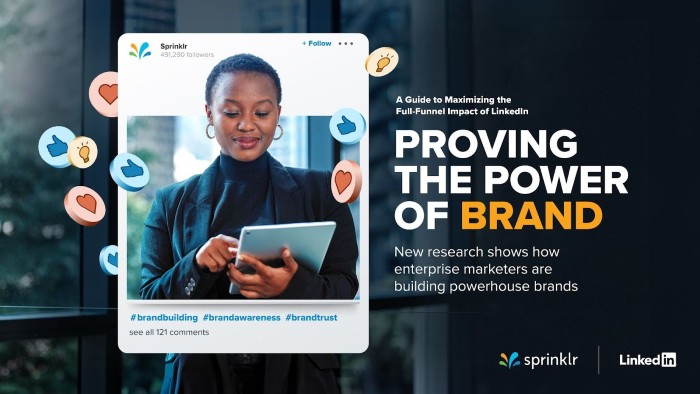
As an example of Best Answer Marketing content in action, the case study featuring Sprinklr and LinkedIn demonstrated remarkable success, delivering 4.6 million targeted impressions, a 370% higher engagement rate, and 1,100 qualified leads. This highlights the tangible outcomes achievable through a strategic, buyer-centric approach.
For brands seeking to embody the principles of Best Answer Marketing, resources like the BAM Action Plan are available. For those looking to explore specific applications and gain insights into successful implementations, examining case studies of B2B influencer marketing in action, such as those featuring Adobe, Smartsheet, Microsoft Teams, LinkedIn, Dell, Demandbase, and Monday.com, can provide valuable lessons and inspiration. The future of B2B marketing hinges on a brand’s ability to consistently provide the most relevant, trustworthy, and compelling answers to its customers’ most pressing questions, thereby securing its position as the indispensable choice.