B2B revenue teams are drowning in data yet still making decisions based on intuition because the journey from raw information to actionable insight is too slow. Agentic artificial intelligence is emerging as a potential solution, promising to revolutionize how key metrics are surfaced and analyzed. However, its true value and potential pitfalls remain poorly understood by many revenue leaders. This guide offers an honest assessment for B2B revenue leaders looking to leverage agentic AI for their metrics and decision-making processes right now.
By Karla Sanders, Engagement Manager at Heinz Marketing
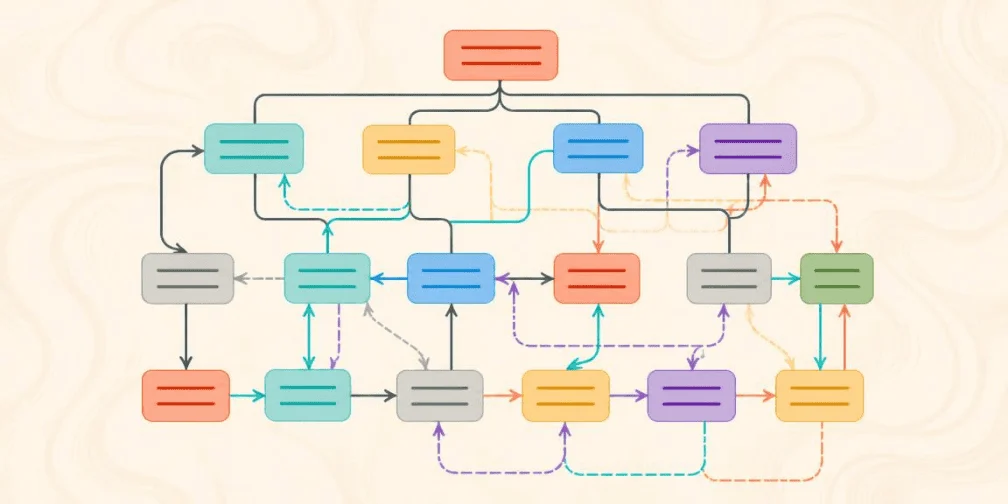
A common scene unfolds in nearly every B2B pipeline review: a room full of professionals, each possessing access to vast datasets from their Customer Relationship Management (CRM) systems, Marketing Automation Platforms (MAPs), and various intent data providers. Despite this data abundance, the meetings often devolve into protracted debates over conflicting numbers rather than productive discussions about strategic next steps. This is not a failure of technology; the tools are present. The critical missing element is the intelligent layer that connects these disparate data sources, synthesizes their meaning, and surfaces actionable insights before the opportune moment for intervention passes.
Agentic AI is beginning to address this crucial gap for B2B revenue and marketing organizations. While the technology is in its nascent stages, imperfect, and carries risks that are often understated, understanding its capabilities and limitations now is paramount for any B2B revenue leader seeking to extract greater value from their existing tech stack and performance metrics.
The Core Challenge: Data Overload, Insight Deficit
The modern B2B revenue engine operates on a foundation of unprecedented data generation. Every interaction, every digital touchpoint, and every engagement leaves a digital footprint. CRMs meticulously track sales activities, MAPs monitor marketing campaign performance and lead engagement, and specialized intent platforms identify potential buyers actively researching solutions. Yet, the sheer volume and fragmentation of this data create a significant bottleneck. Teams often spend more time wrestling with data integration, cleaning, and reconciliation than they do interpreting its implications.
This data paralysis is not merely an operational inconvenience; it directly impacts revenue performance. Decisions that should be data-driven are frequently relegated to gut feelings or anecdotal evidence simply because the necessary insights are not readily available. This can lead to misallocated resources, missed opportunities, and a failure to adapt quickly to market dynamics. For instance, a sales team might continue to pursue leads that are unlikely to convert based on historical data patterns that are too complex or time-consuming to uncover, while simultaneously overlooking emerging segments exhibiting strong buying signals.
What Agentic AI Actually Is and Why It Matters for B2B Metrics
The current landscape of AI in business operations is often characterized by tools that perform specific, predefined tasks. You provide an input, and the AI delivers a predetermined output. These are tools designed to answer the questions you already know to ask. Agentic AI, however, represents a paradigm shift. Instead of merely executing commands, an agent is designed to understand a broader goal, autonomously devise a plan of action, gather and process information from multiple sources, and then deliver a structured, usable outcome.
Consider the difference between asking an AI to “pull the number of MQLs from last quarter” and tasking an agent with “identifying the top three factors contributing to MQL-to-SQL conversion rates in the West region over the past six months.” The former is a simple data retrieval. The latter involves the agent accessing CRM data, MAP engagement metrics, potentially even firmographic data from third-party sources, applying analytical logic, identifying correlations, and synthesizing findings into a coherent report. This is the essence of agentic AI: tackling complex business problems that require multi-step analysis and cross-platform data synthesis.
For B2B revenue teams, this is a game-changer. Metrics and pipeline challenges are rarely singular-question issues. They necessitate the aggregation of data from systems that were not inherently designed for interoperability, the application of consistent analytical frameworks, and the extraction of meaningful signals from a cacophony of noise. This is precisely the domain where agentic AI excels. It automates the laborious data integration and analysis that currently consumes a significant portion of operational and analytics teams’ weekly capacity.
The B2B Metrics Problem Nobody Wants to Say Out Loud
A pervasive issue within B2B revenue operations is the tendency to measure activity rather than actual performance or outcomes. Metrics such as the volume of Marketing Qualified Leads (MQLs), email open rates, or the number of outbound calls made are easily quantifiable and appear favorably on reports. However, these metrics often bear little direct correlation to the ultimate goal: generating revenue.
The questions that truly drive strategic decisions are often more complex and challenging to answer with existing tools and processes. For example:
- Which lead sources are generating the highest quality opportunities that convert to closed-won deals?
- What specific engagement patterns correlate with a higher likelihood of a prospect moving from evaluation to purchase?
- How does the average sales cycle length vary across different customer segments, and what factors are influencing these differences?
- What is the predicted churn risk for key accounts based on their recent engagement and service data?
These are not esoteric queries. Every B2B revenue leader seeks to answer them. The obstacle lies in the manual effort required: exporting data from multiple systems, reconciling disparate definitions of terms across platforms (e.g., what constitutes an “opportunity” in CRM versus an “engaged prospect” in MAP), and cross-referencing information manually. By the time this complex analysis is completed, the window of opportunity to act on the findings has often closed.

Agentic AI has the potential to dramatically compress this time lag. By enabling an agent to traverse and analyze data across CRM, MAP, and intent platforms with consistent logic, it delivers insights much faster than current manual processes allow. While not instantaneous and requiring initial setup and configuration, the speed advantage over traditional methods can be substantial.
Where Agentic AI Earns Its Keep in B2B Metrics and KPIs
The most impactful applications of agentic AI for B2B revenue teams typically revolve around solving persistent analytical challenges. These include:
- Predictive Lead Scoring and Prioritization: Moving beyond simple demographic or firmographic scoring, agentic AI can analyze a wider array of signals, including website engagement, content consumption, intent data, and social media activity, to predict the likelihood of a lead converting. It can also identify accounts that exhibit characteristics of high-value customers, even if they haven’t actively engaged with outbound marketing efforts yet.
- Pipeline Health and Forecasting Accuracy: Agentic AI can analyze historical deal progression, identify bottlenecks in the sales cycle, and flag deals at risk of stalling or closing late. This allows for proactive interventions and more reliable revenue forecasting. For instance, an agent could identify that deals with a specific type of competitor mention in their notes are 30% more likely to be lost, prompting sales managers to coach reps on how to address those competitive concerns.
- Customer Segmentation and Personalization: By analyzing vast datasets of customer behavior, purchase history, and engagement patterns, agentic AI can identify nuanced customer segments that might be missed by traditional methods. This enables highly personalized marketing and sales outreach, leading to improved conversion rates and customer loyalty. For example, it might reveal a segment of customers who primarily engage with video content and respond best to proactive upsell offers, a segment that would be invisible in a purely email-based engagement analysis.
- Attribution Modeling: Understanding the true impact of various marketing and sales touchpoints on revenue can be a complex endeavor. Agentic AI can process multi-touch attribution models more efficiently, providing a clearer picture of which channels and campaigns are most effective in driving desired outcomes, thereby optimizing marketing spend.
What B2B Revenue Leaders Should Watch Out For
The promise of agentic AI is compelling, but it’s crucial for leaders to approach its adoption with a clear understanding of its limitations and potential drawbacks. These are often downplayed in vendor pitches:
- Data Quality is Paramount: Agentic AI, like any AI, is only as good as the data it’s fed. If the underlying CRM or MAP data is incomplete, inaccurate, or inconsistently formatted, the AI’s outputs will be flawed. Addressing data hygiene issues is a prerequisite, not an afterthought. A 2023 report by McKinsey found that poor data quality costs companies an average of 15-30% of their revenue, a figure that agentic AI can exacerbate if not managed.
- The “Black Box” Problem: While agents can provide sophisticated analysis, understanding how they arrive at their conclusions can sometimes be opaque. This lack of transparency can undermine trust and make it difficult to validate their findings or troubleshoot errors. Revenue leaders need to ensure they have visibility into the reasoning process where possible, or at least understand the data inputs and the models being used.
- Integration Complexity and Cost: Implementing agentic AI often requires significant integration effort with existing systems. This can involve substantial IT resources, time, and financial investment. The return on investment needs to be carefully evaluated against the implementation hurdles.
- Over-Reliance and Skill Degradation: There’s a risk that teams may become overly reliant on AI-generated insights, potentially diminishing their own analytical skills and critical thinking. The human element remains vital for interpreting context, understanding nuances, and making judgment calls that AI cannot replicate.
- Security and Privacy Concerns: As agentic AI tools access and process sensitive customer data, robust security protocols and adherence to privacy regulations (like GDPR or CCPA) are non-negotiable. A data breach could have severe legal and reputational consequences.
Heinz Marketing’s Point of View
At Heinz Marketing, our perspective is grounded in the practical application of technology to drive tangible business results. Agentic AI is most valuable when it’s integrated into a robust analytical framework, connected to clean and reliable data, and ultimately serves to augment, not replace, human judgment. Our approach focuses on helping B2B sales and marketing leaders honestly assess their measurement frameworks, data readiness, and identify specific decision-making processes where faster, more reliable insights would genuinely alter their actions and improve outcomes. We prioritize enhancing strategy and business performance over the superficial allure of more complex reporting.
What Humans Still Own in an Agentic AI World
The advent of agentic AI should not be viewed as a threat by skilled revenue marketers and analysts; rather, it should be seen as an opportunity for liberation. By automating the laborious tasks of data extraction, reconciliation, and basic report generation – work that often consumes days leading up to critical reviews – agents free up valuable human capacity. This liberated time allows professionals to engage in higher-order thinking: interpreting the meaning behind the data, understanding the context of market shifts, and applying nuanced judgment to strategic decisions.
Agents excel at identifying patterns and anomalies. It is the human analyst who understands the business implications, the competitive landscape, and the specific nuances of a customer relationship to determine what those patterns truly mean and what actions should be taken. The assessment of a stalled deal’s true probability of closing, crafting a narrative that reshapes a team’s understanding of a market segment, or making the critical call on which accounts deserve intensified focus in the coming quarter – these are judgment-heavy, context-dependent tasks that dashboards alone cannot accomplish. Agentic AI amplifies these human capabilities by removing the data-wrangling burden.
How to Get Started with Agentic AI and B2B Metrics
Embarking on the journey with agentic AI requires a strategic and grounded approach. Before even considering specific technologies, leaders must first conduct a thorough audit of their existing analytical processes. The critical questions to ask are:
- Where does our team lose the most time in the data analysis and reporting cycle?
- At what points do we lose confidence in the accuracy or completeness of our metrics?
- Which recurring decisions are made with insufficient or delayed data, leading to suboptimal outcomes?
The starting point should be the desire to improve a specific, impactful decision, not merely to track a new metric. For example, if a team consistently struggles to accurately forecast quarterly revenue due to unreliable pipeline data, that becomes the focus.
Crucially, an honest assessment of data readiness is paramount. Engage with your revenue operations or marketing operations teams to understand the true state of your CRM and MAP data. Any known quality issues, such as inconsistent field usage, duplicate records, or missing historical data, must be addressed proactively. Layering agentic workflows onto flawed data will only amplify existing problems.
When engaging with potential vendors, probe beyond the demo. Inquire about the practicalities of integration: what is the actual technical effort required? What does data normalization entail in practice, and who is responsible for it? Critically, understand what happens when the AI’s output is incorrect or misleading. The clarity and honesty of these answers will provide far more insight into the vendor’s capabilities and support than a polished presentation.
The Bottom Line on Agentic AI and B2B Metrics
Agentic AI is not a panacea that will, on its own, fix a misaligned Ideal Customer Profile or magically bridge the perennial gap between marketing and sales. However, when deployed with clean data and a vigilant human oversight loop, it can significantly accelerate the delivery of superior metrics analysis. More importantly, it can liberate valuable capacity currently consumed by manual data manipulation. This increased efficiency and enhanced insight are substantial benefits, but they are the product of strategic implementation, not an inherent magical property of the technology.
The B2B revenue teams that will truly capitalize on agentic AI will not be those that rush into adoption. They will be the organizations that proceed with caution, maintain a clear-eyed understanding of its limitations, and steadfastly focus on improving real-world decision-making rather than simply accumulating more data. This deliberate and honest approach remains a potent competitive advantage in today’s dynamic market.
Thinking through what this looks like for your team?
At Heinz Marketing, we partner with B2B sales and marketing leaders to develop and implement the strategies, frameworks, and execution plans that drive pipeline growth and revenue. If you are navigating the complexities of integrating agentic AI into your metrics and measurement approach, or seeking to diagnose and rectify shortcomings in your current analytics infrastructure, we invite you to join the conversation. Reach out to us at [email protected].