
 rifanmuazin
The landscape of digital marketing is undergoing a fundamental shift as brands move away from static, one-off experiments toward a model of continuous, evidence-based improvement known as iterative testing. While traditional A/B testing has long been the industry standard for determining the efficacy of landing pages and advertisements, experts now argue that these isolated events are insufficient for capturing the complexities of modern consumer behavior. According to recent industry analysis and data from the 2024 Conversion Benchmark Report, the transition to iterative cycles—where each experiment builds directly upon the insights of the previous one—is becoming the primary driver of return on investment (ROI) for software-as-a-service (SaaS) and e-commerce enterprises.
Josh Gallant, founder of Backstage SEO and a prominent voice in organic growth strategies, suggests that the primary failure of modern marketing is not the “massive flop,” but rather the “slow leak.” These leaks represent incremental budget drains caused by unoptimized copy, mismatched user intent, and static design elements that fail to adapt to changing market conditions. Iterative testing serves as a systematic plug for these leaks, transforming marketing from a series of high-stakes guesses into a disciplined scientific process.
The Shift from Static to Dynamic Testing Frameworks
Historically, the evolution of marketing measurement has moved through three distinct phases. In the pre-digital era, testing was largely restricted to direct mail, where long lead times made iteration nearly impossible. The second phase, characterized by the rise of digital tools in the 2010s, introduced the A/B test, allowing marketers to compare two versions of a webpage. However, these tests were often treated as terminal events; once a winner was declared, the losing variant was discarded, and the team moved on to unrelated projects.
The third and current phase is defined by the iterative testing model. Borrowing heavily from agile product development and “Lean Startup” methodologies, this approach views every campaign as a work in progress. Instead of seeking a “perfect” final version, marketers seek a “better” next version. This methodology focuses on small, data-driven changes—such as adjusting the reading level of copy or refining a call-to-action (CTA)—rather than radical overhauls that risk alienating existing user bases.
Data-Backed Insights: The Impact of Simplicity and Device Behavior
The push toward iteration is supported by significant empirical data. The 2024 Conversion Benchmark Report reveals a startling correlation between linguistic simplicity and consumer action. Analysis of thousands of landing pages indicates that content written at a 5th-to-7th-grade reading level converts at an average rate of 11.1%. This is more than double the conversion rate of pages utilizing professional or academic-level writing.

This data point illustrates the necessity of iterative testing. A marketing team might initially launch a page with sophisticated, technical language, believing it conveys authority. Through an iterative cycle, they might test a slightly simplified version, see a marginal lift, and then continue to simplify the language in subsequent rounds until they reach the optimal 11.1% conversion threshold.
Furthermore, device-specific data highlights the need for continuous adaptation. Current metrics show that 83% of landing page visits now occur on mobile devices. Despite this dominance in traffic, desktop visits continue to convert 8% better on average. This discrepancy suggests a friction point in the mobile user experience that traditional one-time testing may fail to solve. Iterative testing allows teams to isolate variables—such as form length, button placement, or load speeds—specifically for mobile users, narrowing the conversion gap over time.
The Six-Step Iterative Methodology for Marketing Teams
To successfully implement an iterative framework, organizations are adopting a structured six-step process designed to maximize learning and minimize wasted spend.
1. Hypothesis Formulation
The process begins with a focused hypothesis. Unlike traditional tests that might change five variables at once, an iterative hypothesis isolates a single element. For example, a team might hypothesize that “Changing the CTA from ‘Submit’ to ‘Get My Free Quote’ will increase click-through rates by 10% because it emphasizes the value proposition.”
2. Impact-Effort Prioritization
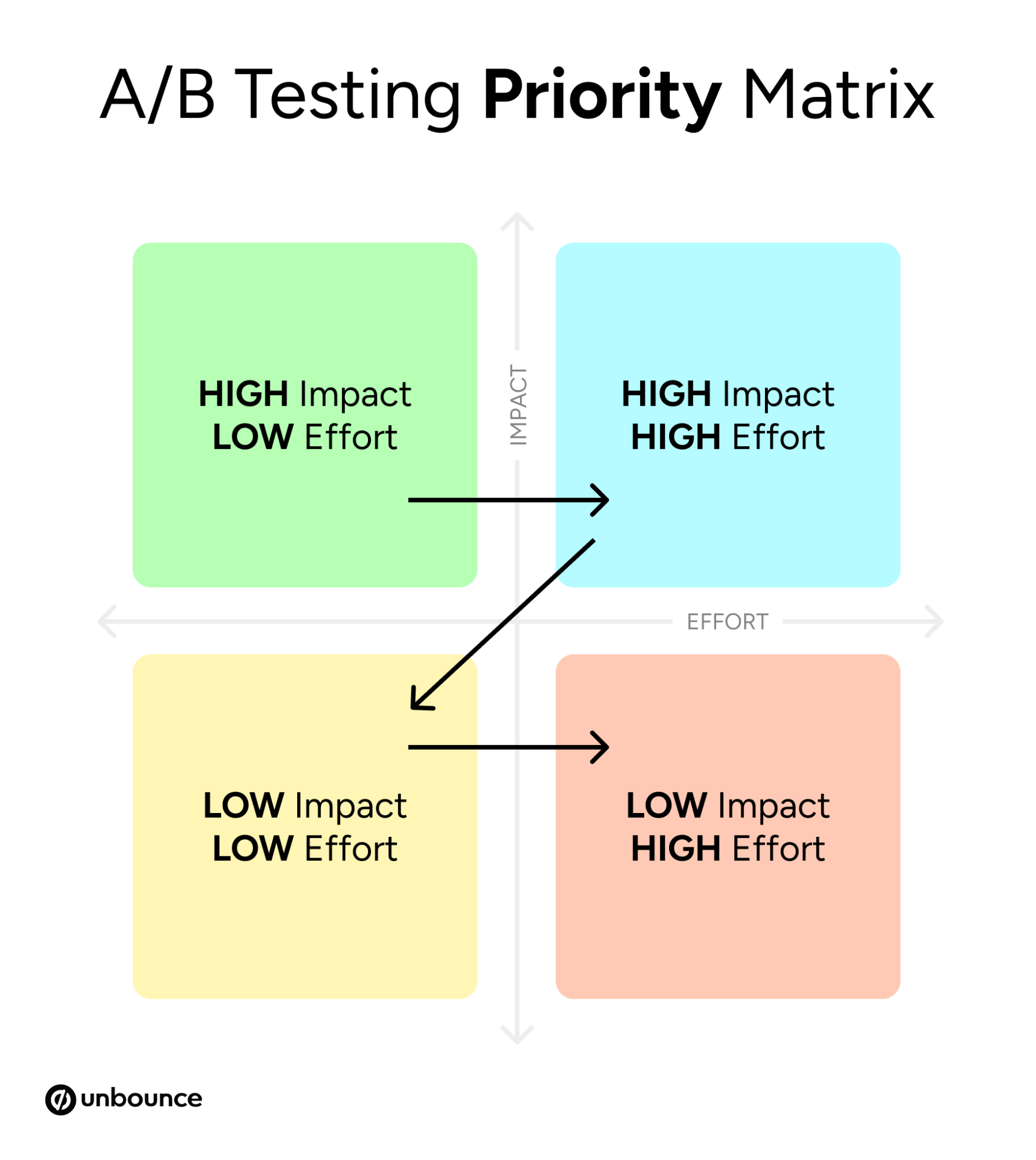
With limited resources, marketing teams use a 2×2 matrix to prioritize experiments. High-impact, low-effort changes (often referred to as “quick wins”) are prioritized first to build momentum. This might include changing a headline or simplifying a lead-capture form. High-effort, low-impact tasks are discarded, while “big bets” (high-impact, high-effort) are scheduled for later cycles.
3. Minimal Testable Variation
Iterative design emphasizes the creation of “minimal but testable” variants. This prevents teams from getting bogged down in design perfectionism. By utilizing platforms that allow for rapid duplication and modification of landing pages, marketers can launch variants in hours rather than weeks.

4. Data Collection and Statistical Significance
A critical component of the process is the adherence to statistical significance. Experts warn against “early peeking,” where teams stop a test because one variant shows an early lead. Reliable results typically require a 95% confidence interval. However, new AI-driven tools, such as Smart Traffic, are beginning to shorten these windows by beginning the optimization process after as few as 50 visits, allowing for faster iterations in low-traffic environments.
5. Insight Extraction
Analysis in the iterative model goes beyond identifying a winner. Marketers ask why a specific variant performed better. If a simpler headline wins, the insight isn’t just about that specific page; it is a broader realization that the target audience values clarity over cleverness. This insight is then documented and applied to other channels, including email marketing and paid social ads.
6. Scaling and Evolution
The final step is the integration of successful learnings into the broader brand strategy. A successful test on a single landing page can lead to a global update of brand voice guidelines or a redesign of the company’s primary conversion funnel.
Institutional Implications and Cross-Departmental Collaboration
The adoption of iterative testing is also breaking down traditional corporate silos. Because the process relies on a constant stream of new hypotheses, marketing teams are increasingly looking to other departments for insights.
Customer Support teams, for instance, often possess first-hand knowledge of the “pain points” that prevent conversions. If support logs show that customers are confused about pricing, the marketing team can immediately launch an iterative test to address pricing transparency on the landing page. Similarly, Sales teams can provide feedback on the quality of leads generated by different messaging variants, ensuring that the testing process optimizes for revenue rather than just “clicks.”
Industry observers note that this collaborative approach fosters a “culture of experimentation.” When employees across the organization see their observations turned into data-backed experiments, engagement with the optimization process increases, leading to a more agile and responsive business model.
Broader Impact: The Future of AI in Optimization
Looking ahead, the role of artificial intelligence and machine learning is expected to further accelerate the iterative testing cycle. Automated tools can now analyze user behavior in real-time, serving different versions of a page to different segments based on their browsing history or device type. This “automated iteration” reduces the manual workload for marketing teams while maintaining the core principle of continuous improvement.
However, despite the rise of automation, the human element remains vital. The ability to craft a compelling narrative and understand the emotional drivers of a target audience is something that data alone cannot replace. The most successful firms in 2025 and beyond will be those that combine human creativity with the rigorous, disciplined framework of iterative testing.
In conclusion, the era of “set it and forget it” marketing is over. As consumer preferences continue to evolve at an unprecedented pace, the ability to test, learn, and adapt in rapid cycles is no longer a luxury—it is a requirement for survival in the digital economy. By focusing on small, incremental wins that compound over time, brands can build more resilient marketing engines that deliver predictable, scalable growth.








