
 rifanmuazin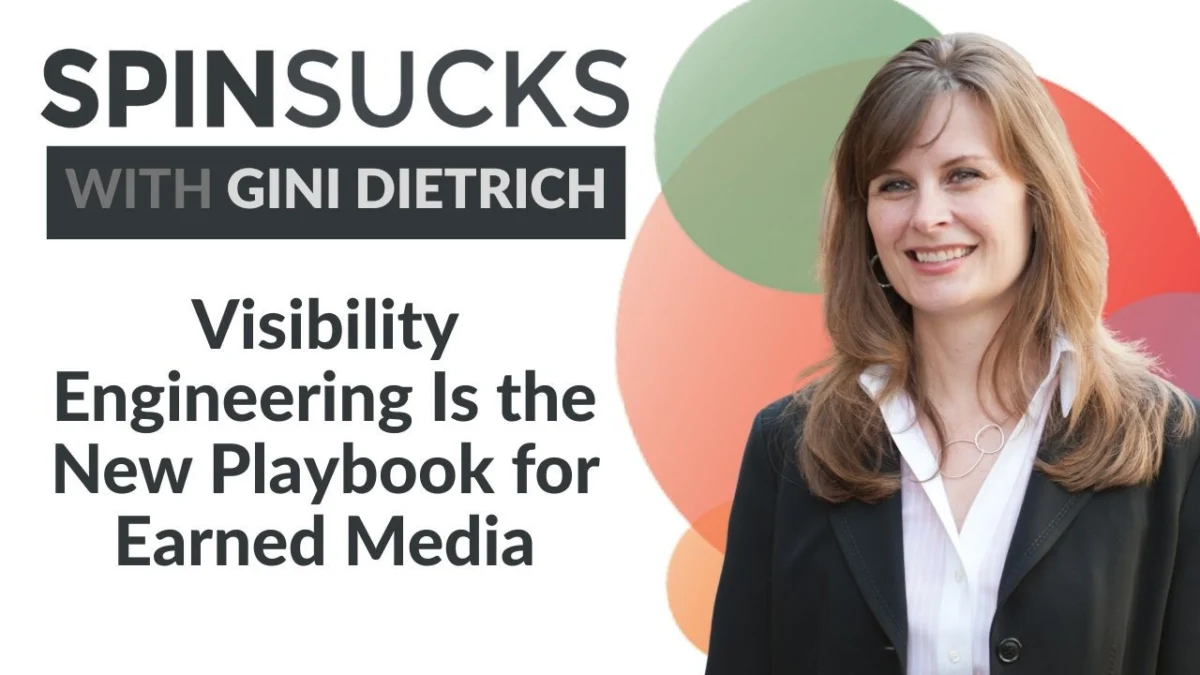
The traditional landscape of public relations and brand building is undergoing a fundamental transformation as artificial intelligence redefines how information is discovered and validated. For decades, a high-profile media placement served as the ultimate dual-purpose tool for brands, acting as both the primary mechanism for discovery and the definitive proof of credibility. However, the emergence of generative AI systems, such as ChatGPT, Claude, and Gemini, has disrupted this linear path to authority. In this new market environment, isolated media “hits” are no longer sufficient to sustain a brand’s reputation. Instead, industry experts are advocating for a disciplined practice known as “visibility engineering”—a strategic framework designed to connect owned and earned media into a cohesive system that reinforces expertise across both human and machine-driven platforms.
The core challenge facing modern communications teams is not the obsolescence of earned media, but rather the limitations of “disconnected” earned media. When a company secures a feature in a trade publication or a quote in a major news outlet without a supporting infrastructure, the result is often a temporary spike in attention—a “trophy” for the corporate archives—rather than a compounding asset. Visibility engineering seeks to rectify this by treating every media mention as a signal that must point back to a central, defensible “anchor hub” of owned content. By synchronizing these efforts, organizations can move beyond the “trophy case” mentality and build a “credibility loop” that ensures they remain the trusted answer when stakeholders ask AI systems or search engines for recommendations.
The Evolution of the Discovery Mechanism: From Google to Generative AI
To understand the necessity of visibility engineering, one must examine the chronological shift in consumer and B2B behavior over the last two decades. In the early 2000s, the discovery process was largely driven by traditional search engine optimization (SEO) and legacy media. A prospect would search for a solution on Google, find a reputable news article or a high-ranking website, and form an opinion based on those limited touchpoints.
By 2022, the launch of sophisticated Large Language Models (LLMs) fundamentally altered this trajectory. Today, the “Zero-Click” search phenomenon—where users obtain answers directly from search engine result pages or AI chatbots without ever visiting a third-party website—has become the new standard. According to data from SparkToro, nearly 60% of mobile and desktop searches now end without a click to a website. Consequently, if a brand’s expertise is not synthesized and recognized by the AI models powering these answers, that brand effectively ceases to exist in the discovery phase.
The modern buyer’s journey often concludes before a company even realizes it was being considered. Potential clients now use AI to generate shortlists, summarize industry trends, and compare competitors. If a brand’s media presence consists of scattered, unrelated mentions, AI systems may struggle to identify a consistent pattern of authority. Visibility engineering addresses this by creating a “signal-rich” environment where the same core expertise is reflected across multiple trusted sources, making it easier for AI to validate and surface the brand as a credible leader.
The PESO Model and the Rise of the Anchor Hub
Central to the concept of visibility engineering is the PESO Model®—a strategic framework encompassing Paid, Earned, Shared, and Owned media. While many organizations treat these as separate silos, visibility engineering requires them to function as an integrated operating system. The most critical component of this system in the AI era is the “anchor hub.”
An anchor hub is a deep, defensible piece of owned content hosted on a brand’s website. Unlike a standard blog post or a generic services page, an anchor hub serves as a definitive reference entry for a specific topic or buyer question. It is designed to be the “source of truth” that provides context, definitions, and evidence.
From a technical perspective, an anchor hub provides several advantages:
- Contextual Authority: It gives AI models a structured repository of information to crawl and cite.
- Consistency: It ensures that every spokesperson and every piece of earned media uses the same terminology and framework.
- Longevity: While a news cycle may last 24 hours, an anchor hub remains a permanent asset that continues to build SEO and AI relevance over time.
Industry data suggests that brands focusing on “topic authority” rather than “keyword volume” see a significant increase in high-quality lead generation. By establishing one or two primary anchor hubs, a company can ensure that when they do secure a media interview or a bylined article, that “earned” win has a “home base” to reinforce.
Shifting from a Trophy Case to a Credibility Loop
The difference between traditional PR and engineered visibility is best illustrated by the transition from a “trophy case” to a “credibility loop.” In the traditional model, a media placement is celebrated as an isolated win. The PR team reports the hit, the executive shares it on LinkedIn, and the organization moves on to the next objective. This creates “noise” but fails to build a lasting pattern of expertise.
In contrast, a credibility loop uses each earned media opportunity to strengthen the anchor hub. For example, if a company wants to be known as the leader in “Sustainable Supply Chain Logistics,” they first build a comprehensive anchor hub on that topic. Every subsequent podcast appearance, guest column, and journalist quote is then intentionally focused on that specific theme.
As these signals accumulate, both humans and AI systems begin to recognize a pattern. The LLMs see the brand mentioned in a trade journal, cited in a newsletter, and providing deep analysis on its own site—all regarding the same topic. This cross-platform validation is what builds “engineered visibility.” It is the difference between being “seen” and being “believed.”
Supporting Data: The Value of Earned Media in a High-Distrust Market
The importance of this integrated approach is further underscored by the current state of consumer trust. The 2024 Edelman Trust Barometer highlights a growing “trust gap,” where individuals are increasingly skeptical of corporate advertising (Paid media) and unverified social media claims (Shared media). However, “Earned” media—third-party validation from journalists and industry experts—remains one of the most trusted sources of information.
Supporting statistics indicate that:
- 92% of consumers trust earned media over traditional advertising.
- B2B buyers typically consume 13 pieces of content before making a purchasing decision, with third-party articles carrying the highest weight in the “consideration” phase.
- AI-generated answers are more likely to cite sources that have both high-quality owned content and frequent mentions in reputable external publications.
These figures suggest that while earned media is more difficult to obtain than ever due to shrinking newsrooms and increased competition, its value has actually increased. However, its value is only fully realized when it is used to validate a brand’s owned “source of truth.”
Implementation: Building Authority in the Next Seven Days
For organizations looking to adopt a visibility engineering strategy, the process does not require an immediate overhaul of existing departments. Experts suggest a three-step approach to begin building a credibility loop:
1. The AI Baseline Audit:
Communications teams should begin by querying various AI models (ChatGPT, Claude, Gemini) to see how the brand is currently perceived. By asking questions such as “Who are the leaders in [Industry]?” or “How does [Company] solve [Problem]?”, teams can identify whether their current signals are thin, inconsistent, or non-existent.
2. Identifying the Anchor Topic:
Instead of trying to be an authority on everything, brands should identify one specific buyer question or industry challenge they want to “own.” This topic should be framed in the language that real customers use, rather than internal corporate jargon. The goal is to build the most useful, citable, and complete page on the internet for that specific topic.
3. Aligning the Earned Media Pipeline:
Once the anchor hub is established, every future media pitch should be evaluated based on whether it reinforces that hub. If a media opportunity does not align with the brand’s primary authority goals, it may still be a “win,” but it will not contribute to the compounding credibility loop required in an AI-shaped market.
Broader Impact and Future Implications for the PR Industry
The shift toward visibility engineering represents a maturation of the public relations industry. It moves the profession away from the “volume-based” metrics of the past—such as Ad Value Equivalency (AVE) or simple mention counts—and toward “impact-based” metrics like topic ownership and AI sentiment.
As generative search continues to evolve, the “cost of silence” or “cost of inconsistency” will grow. Brands that continue to rely on sporadic, disconnected media hits will likely find themselves excluded from AI-generated recommendations and shortlists. Conversely, those who treat visibility as an engineering discipline—connecting the “proof you can’t buy” (earned) with the “truth you define” (owned)—will establish a defensible competitive advantage.
Ultimately, the goal of visibility engineering is to ensure that a brand does not just show up once, but becomes the “obvious answer” that keeps showing up. In a world where machines are increasingly the gatekeepers of information, consistency and reinforcement are the new currencies of trust. Organizations that prioritize the construction of these credibility loops today will be the ones that define authority in the AI-driven marketplace of tomorrow.










