rifanmuazin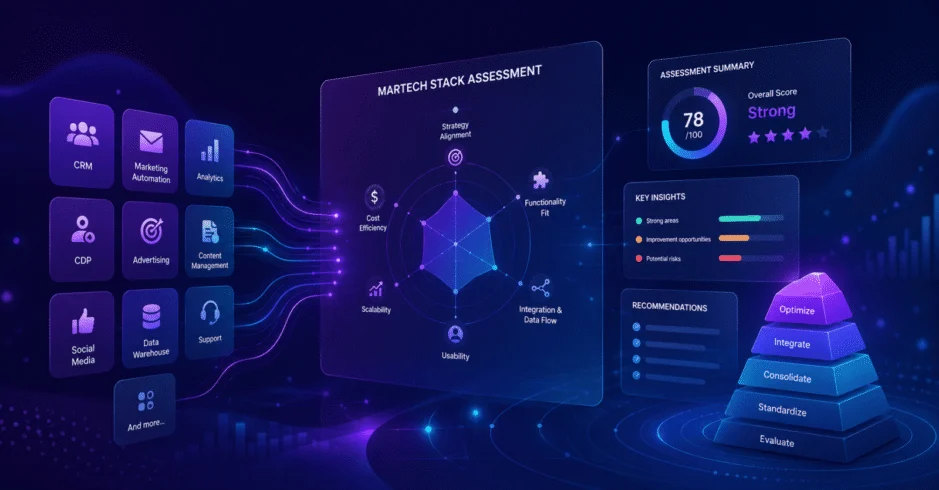
The B2B marketing landscape is undergoing a profound transformation, driven by the increasing complexity and cost of technology stacks. Heinz Marketing, a prominent firm in the B2B marketing consultancy space, is at the forefront of this evolution, pioneering the use of agentic Artificial Intelligence (AI) to tackle one of the industry’s most persistent challenges: optimizing marketing technology ecosystems. Their newly developed “Resources & Tech Agent” promises to streamline the arduous process of assessing martech stacks, identifying redundancies, and pinpointing critical capability gaps with unprecedented speed and efficiency. This innovation marks a significant step forward in demonstrating the practical, real-world applications of agentic AI within actual B2B marketing engagements.
Sarah Threet, a Marketing Consultant at Heinz Marketing, articulated the long-standing pain point that her firm aims to address. “The average B2B marketing tech stack is a museum of decisions that made sense at the time… a platform someone signed up for two CMOs ago; a point solution that overlaps 80% with a tool you already pay for; an integration that was supposed to unlock attribution and never quite did… and every six months, somebody asks the inevitable question: ‘What are we actually using, and what is it costing us?'” This sentiment is echoed across the industry, where a lack of clear oversight often leads to bloated, underutilized, and costly technology investments.
Supporting this observation, the Gartner 2025 Marketing Technology Survey revealed a concerning trend: the average organization is utilizing only 49% of its martech stack’s capabilities, a notable decline from 56% the previous year. This data suggests that more than half of the expenditure on marketing technology is not translating into active output or tangible business value. Historically, auditing, mapping, and evaluating these complex systems has been a time-consuming endeavor, often stretching into multiple weeks and frequently postponed due to its perceived overwhelming scope. Heinz Marketing’s initiative to deploy AI agents directly addresses this bottleneck, offering a tangible solution.
This development follows Heinz Marketing’s prior exploration into AI’s potential for market analysis. In an earlier publication, Payal, VP of Client Services at Heinz Marketing, detailed the firm’s “Target Market Agent,” which significantly compressed initial market discovery phases from weeks to mere days. The current focus on the tech stack represents a strategic expansion of this agentic AI application, directing the same sophisticated analytical power towards the intricate web of marketing technologies that underpin B2B operations.
The Tangible Impact of Agentic AI on Tech Stack Management
While the broader narrative around AI’s impact on martech often remains abstract or overly sensationalized, Heinz Marketing’s approach offers a concrete vision of what agentic AI can achieve. Unlike generative AI tools that might assist in drafting communications related to vendor evaluations, an AI agent is designed to perform the evaluation itself. This agent is engineered to meticulously examine an organization’s existing tools, assess their intended versus actual functionality, identify areas of overlap and integration failures, and pinpoint missing capabilities. The ultimate output is a structured, actionable assessment report, providing a clear roadmap for strategic decision-making.
The significance of this advancement for B2B marketers cannot be overstated. Tech stack decisions represent one of the most impactful strategic levers available to marketing leaders. A well-aligned and efficiently utilized stack empowers teams to operate with agility and clarity, driving campaign effectiveness and fostering innovation. Conversely, a fragmented, bloated, or underutilized stack can impede progress, leading to operational inefficiencies and diminished returns on investment. Prior to the advent of agentic AI, conducting a rigorous tech stack evaluation typically necessitated either engaging external consultants or diverting valuable internal resources from core revenue-generating activities. Agentic AI fundamentally alters this calculus, offering a more accessible and efficient pathway to optimization. As Heinz Marketing has previously emphasized, B2B CMOs are increasingly recognizing the imperative to embrace agentic AI, and applying it to the tech stack is emerging as one of the most immediate and impactful starting points.
Architecting an Effective Agentic AI Tech Stack Assessment
The conceptualization of an AI agent specifically designed for martech stack assessment involves defining a robust set of capabilities that would render it genuinely transformative. Such an agent would ideally possess the following attributes:
- Comprehensive Inventory Management: The ability to automatically discover, catalog, and classify all active marketing technologies within an organization, including SaaS platforms, point solutions, and integrated systems.
- Functional Mapping and Analysis: A deep understanding of the core functions and intended use cases of each identified tool, along with the capacity to analyze their actual performance and output.
- Redundancy Detection: Sophisticated algorithms to identify overlapping functionalities between different tools, flagging potential cost savings and simplification opportunities.
- Integration Capability Assessment: Evaluation of how effectively different tools communicate and share data, highlighting integration bottlenecks and risks that hinder data flow and attribution.
- Capability Gap Identification: The power to compare the current stack against industry best practices and the organization’s strategic objectives, revealing critical missing functionalities required for optimal performance.
- Cost-Benefit Analysis: The ability to correlate tool utilization and functionality with associated costs, providing a clear financial perspective on the stack’s efficiency.
- Risk Assessment: Identification of potential risks associated with specific tools, such as data security vulnerabilities, vendor lock-in, or lack of ongoing support.
- Prioritized Recommendation Generation: The output of a structured document, such as a “Resources & Tech Assessment Brief,” which would include a detailed inventory, function-by-function coverage analysis, identification of redundancies and gaps, assessment of integration risks, and a prioritized list of actionable recommendations ready for strategic review.
The Unseen Costs of a Bloated Marketing Stack
The financial implications of an unmanaged marketing technology stack extend far beyond the recurring software subscription fees. The most significant, yet often overlooked, cost is the cumulative drag on organizational efficiency. Teams frequently find themselves expending valuable cycles navigating workarounds necessitated by disparate or poorly integrated tools, rather than focusing on core strategic initiatives. Reporting processes become protracted and complex as data is siloed across multiple platforms. Onboarding new team members is hampered by the steep learning curve associated with mastering an intricate and often inconsistent toolchain, delaying their ability to contribute meaningfully.
Manual stack assessments, when undertaken, can consume weeks of intensive effort. The strategic advantage of an agentic AI approach lies in its ability to compress this timeframe to a matter of days, while simultaneously ensuring a consistent and rigorous analytical framework is applied every time. This uniformity is crucial, particularly when presenting findings to executive leadership or boards. A well-structured, agent-generated brief can anticipate a wider range of inquiries, providing a defensible and comprehensive overview of the technology landscape. Furthermore, this approach establishes a vital baseline, enabling organizations to track progress and adapt their stacks over time. Stack rationalization is not a one-off project but an ongoing process of refinement that should be revisited quarterly as business strategies, team structures, and budgetary constraints evolve. By automating the heavy lifting of data collection and initial analysis, agentic AI makes this continuous optimization feasible rather than an aspirational goal.
Prerequisites for a Powerful Agentic AI Tech Stack Agent
To ensure that an AI agent tasked with tech stack analysis delivers genuinely useful insights rather than superficial gloss, several critical components are necessary:
- Robust Data Ingestion and Normalization: The agent must be capable of ingesting data from a wide variety of sources, including CRM systems, marketing automation platforms, project management tools, and financial records. This data needs to be accurately normalized and standardized to enable meaningful cross-platform analysis.
- Deep Understanding of Martech Landscape: The AI model needs to be trained on an extensive dataset that encompasses the functionalities, typical use cases, and integration patterns of a vast array of B2B marketing technologies. This includes understanding the nuances of different categories, such as customer data platforms (CDPs), marketing automation, sales enablement, analytics, and content management systems.
- Contextual Awareness: The agent must be able to understand the specific business context of the organization it is analyzing. This includes its industry, target audience, go-to-market strategy, and current business objectives. Without this context, the analysis might be technically accurate but strategically irrelevant.
- Algorithmic Sophistication for Pattern Recognition: Advanced algorithms are required to detect subtle overlaps in functionality, identify indirect redundancies, and predict potential integration conflicts. This goes beyond simple keyword matching to a deeper understanding of how different tools contribute to overall marketing objectives.
- Scalability and Adaptability: The agent needs to be able to scale to accommodate the complexity of large enterprise tech stacks and adapt to the constant evolution of marketing technologies and vendor offerings.
The Strategic Imperative for CMOs and Marketing Leaders
For Chief Marketing Officers (CMOs) and Vice Presidents of Marketing, the escalating pressure to justify technology expenditures is a defining challenge of the current era. Questions regarding the return on investment of current spending, the strategic integration of AI technologies, and the need for consolidation are becoming increasingly frequent and insistent. An agentic AI-driven approach to tech stack assessment provides a tangible and data-backed response to these critical inquiries. It empowers leaders to conduct thorough stack evaluations within a week, re-run these assessments quarterly to track progress, and equip new team members with a clear understanding of the technology landscape from day one. During budget cycles, this capability allows for the confident defense of investments that demonstrably contribute to business goals while identifying and rationalizing underperforming or redundant assets.
From a revenue and operations perspective, this initiative also clarifies the underlying infrastructure issues that often manifest as attribution and reporting challenges. By explicitly surfacing these tech stack-related pain points, organizations can move towards more effective solutions. For agencies and consultancies managing multiple clients, adopting this agentic AI approach can transform tech stack assessment from a standalone, resource-intensive project into an integral component of broader client engagements. This allows for increased analytical capacity and consistency without a proportional increase in headcount.
The Indispensable Role of Human Expertise
Crucially, the narrative surrounding agentic AI must acknowledge its limitations and emphasize the enduring value of human intelligence and judgment. While an AI agent can excel at mapping the intricacies of a technology stack, identifying redundancies, and flagging gaps, the ultimate strategic decisions regarding what to do with this information remain firmly within the human domain.
The decision to sunset a tool that, while beloved by the sales team, has been outgrown by marketing’s evolving needs, is a human call. Executing effective change management, navigating complex vendor negotiations, and sequencing a critical stack migration to avoid disrupting ongoing campaign cycles are all inherently human responsibilities. Moreover, understanding the political landscape within an organization and recognizing when leadership has a strong attachment to a particular platform requires a nuanced human assessment.
What an agentic AI tech stack approach truly offers strategists is a robust, defensible starting point—a foundation of facts, structure, and clear framing for critical conversations. The indispensable elements of judgment, political astuteness, and the creative insight into organizational realities remain the purview of human professionals. The most effective strategists do not aspire to spend their days cataloging software or poring over vendor comparison sites. Instead, they seek to dedicate their time to strategic thinking, advising, and innovating. Agentic AI liberates them to do precisely that, creating the necessary space for high-level strategic work.
Heinz Marketing’s Commitment to Agentic AI Advancement
Heinz Marketing is not merely advocating for agentic AI from the sidelines; the firm is actively engaged in its development, testing, and refinement across its client engagements. The assessment of technology stacks has emerged as one of the most promising areas where this technology can deliver significant leverage and tangible business value. The company is proceeding with deliberate caution, recognizing the substantial stakes involved. An agent that delivers inaccurate analysis can be more detrimental than having no agent at all.
The company firmly believes that marketing organizations poised for success in the coming three to five years will be those that integrate agentic AI for tech stack management as core operational infrastructure, rather than treating it as a peripheral experiment. These forward-thinking organizations will be those capable of transitioning swiftly from posing questions to deriving grounded, data-driven answers, repeatedly. Agentic AI is the catalyst that enables this sustainable pace of innovation, and a clear-eyed, comprehensive understanding of an organization’s resources and technology is the essential prerequisite for achieving it.
For organizations seeking to navigate the complexities of modern marketing technology and unlock the transformative potential of AI, Heinz Marketing invites dialogue. CMOs, growth leaders, and agencies contemplating the integration of agentic AI into their marketing operations or technology stacks are encouraged to reach out to Heinz Marketing at [email protected] to share insights and explore collaborative opportunities.