rifanmuazin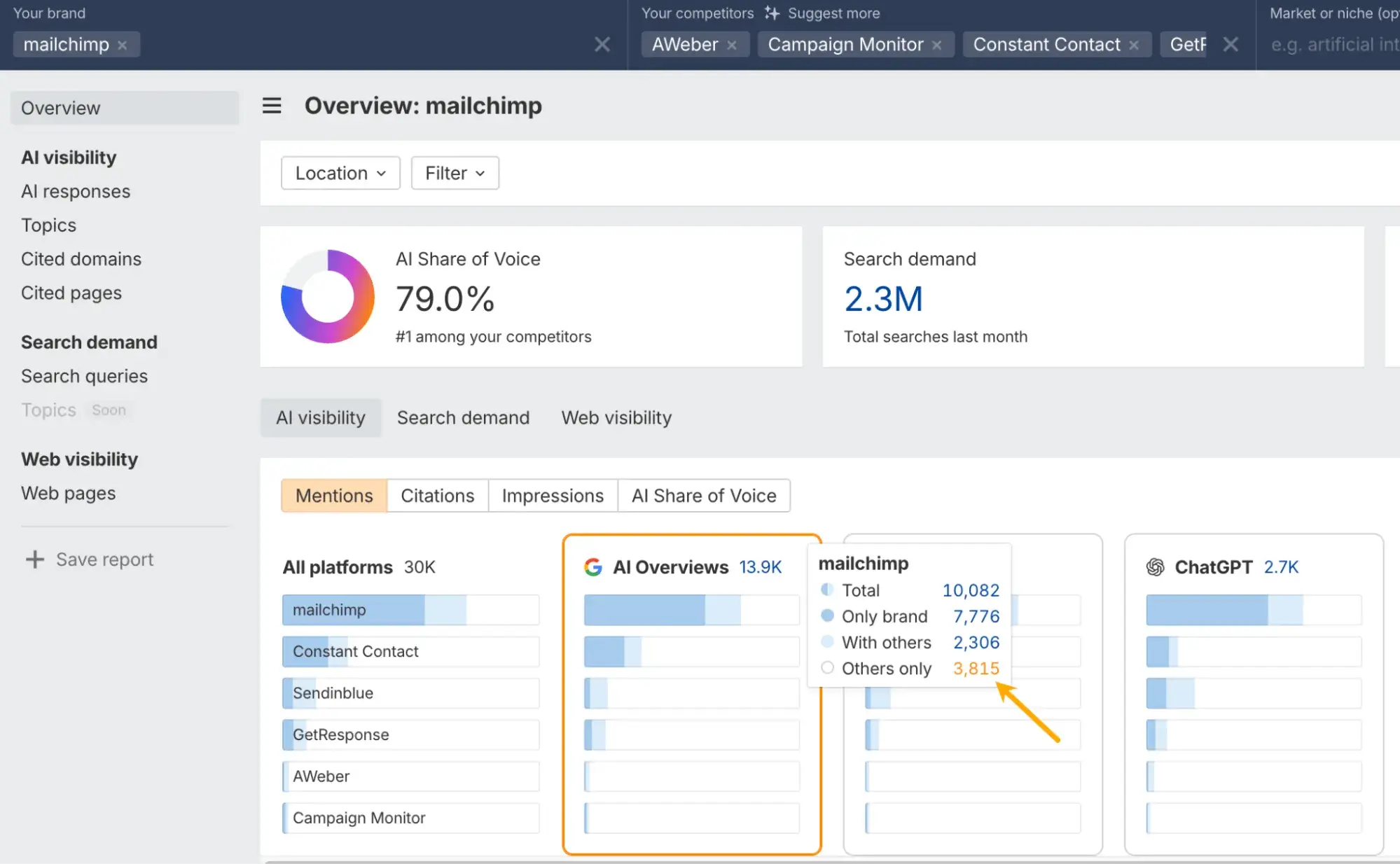
In an increasingly fragmented digital landscape, the concept of brand mentions – any online reference to a brand, product, spokesperson, or company name – has taken on unprecedented significance. Traditionally confined to social media posts, news articles, and review sites, brand mentions now proliferate across a vast array of platforms, including niche forums like Reddit, podcast transcripts, and, crucially, the rapidly evolving domain of AI-generated answers from platforms like ChatGPT, Perplexity, and Gemini. This proliferation, coupled with the emergence of Answer Engine Optimization (AEO), demands a re-evaluation of how brands track, measure, and leverage their online presence. Ignoring this evolving ecosystem leaves brands “flying blind” on critical metrics such as reputation, SEO value, and revenue attribution, making comprehensive monitoring a strategic imperative for modern businesses.
The Evolving Landscape of Brand Mentions
Brand mentions are no longer merely passive observations; they are dynamic signals that influence perception, drive organic discovery, and build trust. The sheer volume and diversity of these mentions mean that traditional tracking methods are often insufficient. Beyond conventional web pages, brand names are now woven into the fabric of daily digital conversations, appearing in user-generated content, specialized industry forums, and the burgeoning realm of conversational AI. This expansion necessitates a robust, multi-channel monitoring strategy.

Historically, brand mentions were primarily valued for their contribution to brand awareness and public relations. A positive mention in a prominent news outlet or a trending social media discussion could significantly boost visibility. However, with the integration of advanced algorithms and machine learning, the role of brand mentions has expanded dramatically. They now serve as critical inputs for search engine algorithms, influencing organic rankings, and are increasingly central to how AI models summarize and recommend information.
The Rise of Answer Engine Optimization (AEO)
The advent of large language models (LLMs) and conversational AI has ushered in the era of Answer Engine Optimization (AEO). Unlike traditional Search Engine Optimization (SEO), which primarily focuses on ranking for keywords in a list of web links, AEO is concerned with how a brand is presented and recommended within a direct, synthesized answer provided by an AI. When a user asks an AI, “What’s the best CRM for small businesses?” or “How do I set up email automation?”, the brands that appear in those answers are receiving AI mentions, representing a new frontier for brand visibility.
The fundamental difference lies in the consumption model: users are shifting from sifting through search results to receiving concise, authoritative answers. This means brands must strive not just for presence, but for prominence and accurate representation within these AI-generated summaries. A strong AEO strategy ensures that a brand’s most relevant and positive attributes are easily discoverable and accurately integrated into AI knowledge bases. This shift requires a proactive approach to content creation, structured data implementation, and vigilant monitoring of AI-generated responses.
Categorizing Brand Mentions in the Digital Age
To effectively navigate this complex environment, it’s crucial to understand the distinct types of brand mentions and their unique implications:
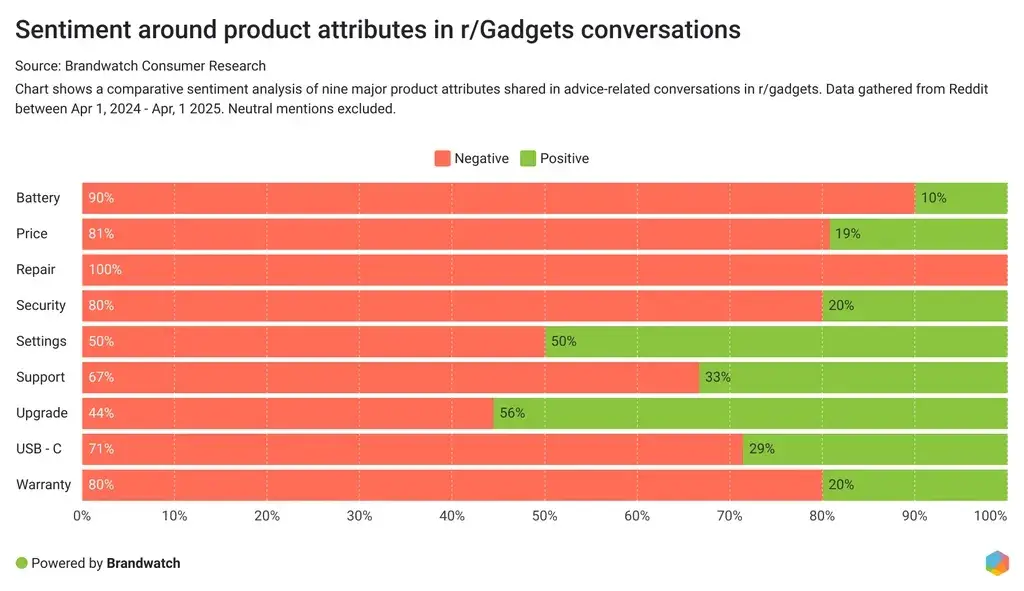
-
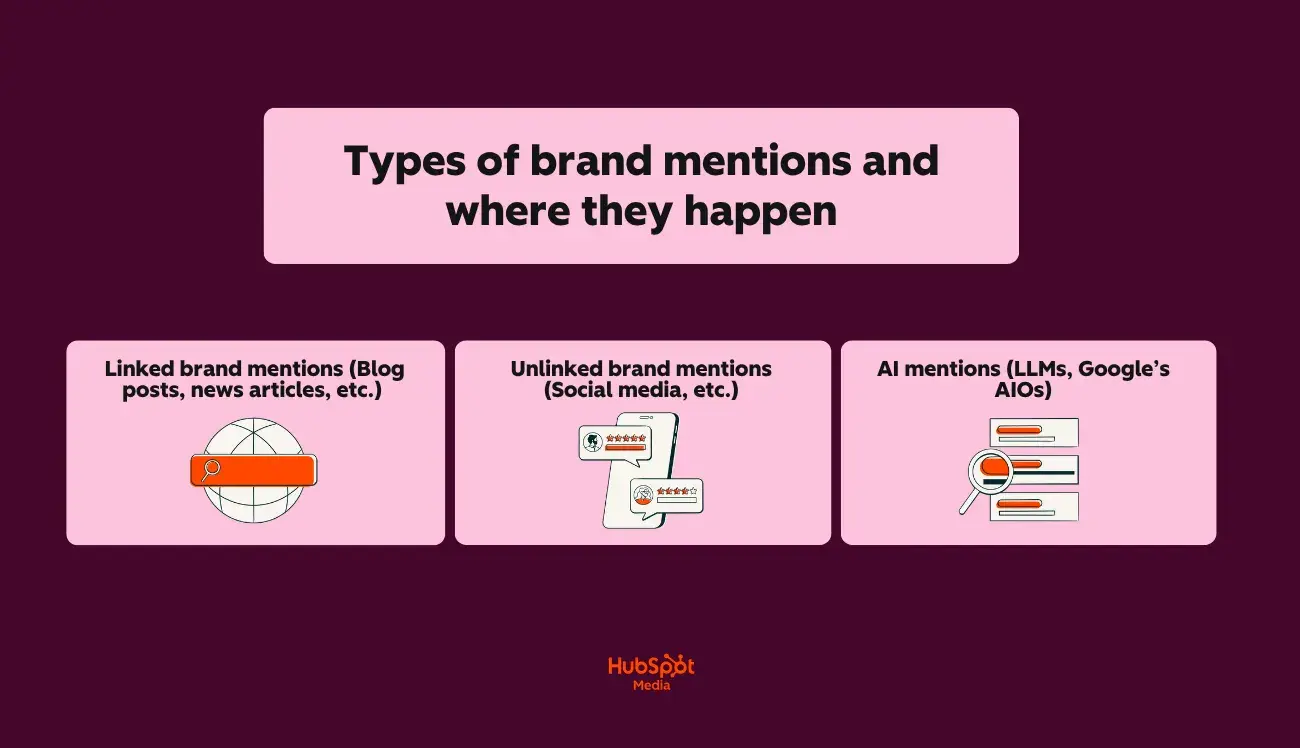
Linked Brand Mentions: These are online references that include a direct hyperlink back to the brand’s website. They are the most straightforward to track using traditional SEO tools and provide direct SEO value through backlinks, which signal authority and relevance to search engines.
- Occurrence: Predominantly found in news articles, blog posts, academic papers, industry reports, and official partner websites.
- Value: Directly contributes to a website’s domain authority, drives referral traffic, and enhances organic search rankings.
-
Unlinked Brand Mentions: These refer to instances where a brand, product, or company name is mentioned online without a corresponding hyperlink. While seemingly less impactful than linked mentions, they represent a significant, often overlooked, opportunity.
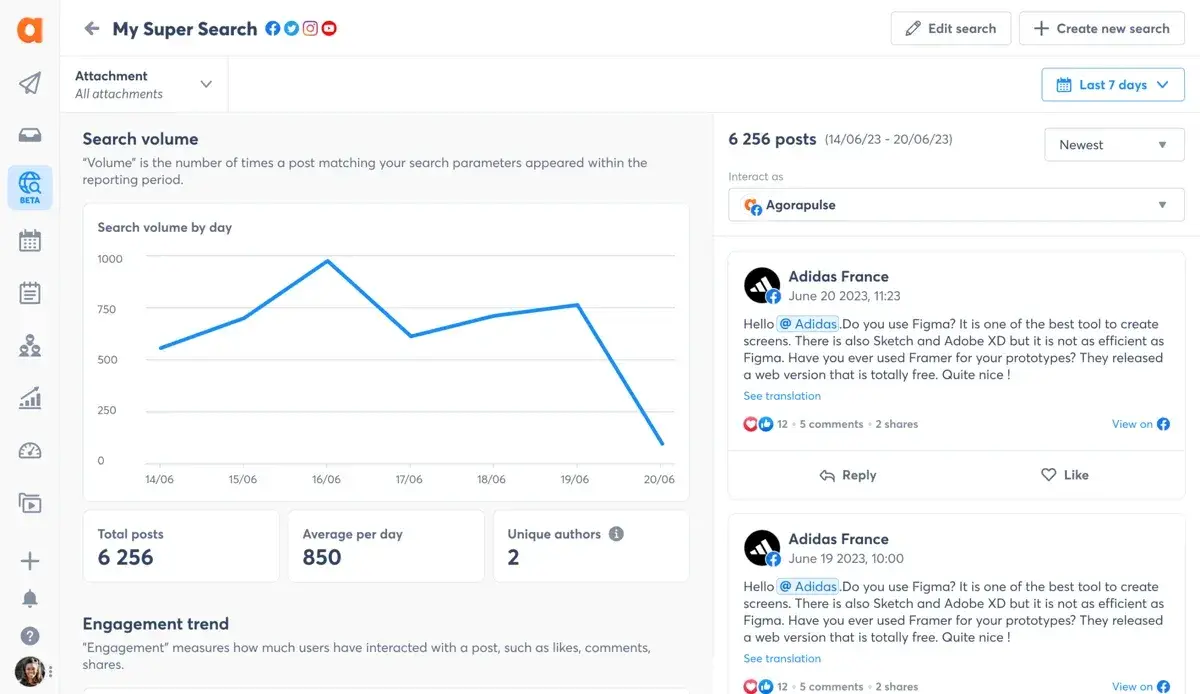
- Occurrence: Common across forums, social media discussions, unlinked references in blogs or news, podcast transcripts, and sometimes even within AI-generated text where the model cites a brand but doesn’t provide a clickable link.
- Value:
- Backlink Opportunity: Positively mentioned unlinked references can be converted into high-value backlinks with strategic outreach, as the author has already acknowledged the brand’s relevance.
- Brand Awareness & Authority: Even without a link, these mentions contribute to overall brand visibility and reinforce brand recognition.
- AI Training Data: Frequent, positive unlinked mentions across credible sources can influence how AI models learn about and characterize a brand, indirectly boosting AEO.
-
AI Mentions: This newest category refers to a brand’s appearance within AI-generated answers or summaries. These mentions are distinct because they are dynamically generated, do not reside on a static URL, and their presence can fluctuate based on the AI model’s training data, real-time search integration, and user query context.
- Occurrence: Found in responses from conversational AI platforms like ChatGPT, Google Gemini, Microsoft Copilot, and specialized answer engines like Perplexity AI, as well as Google’s AI Overviews (SGE).
- Value: Directly influences brand discovery in an AI-first search paradigm, shaping user perception and recommendations in a highly impactful, often succinct, format. Securing positive AI mentions is becoming as critical as ranking organically in traditional search results.
- Distinguishing Features:
- Dynamic Nature: Not tied to static URLs.
- Source Citation: AI models may or may not cite their sources, making attribution complex.
- Synthesized Information: AI often summarizes information from multiple sources, requiring a consistent, authoritative brand narrative across the web.
- Sentiment & Context: The AI’s portrayal of a brand (positive, neutral, negative, or as a recommended solution) is paramount.
Measuring Impact: Key Performance Indicators and Analytical Approaches
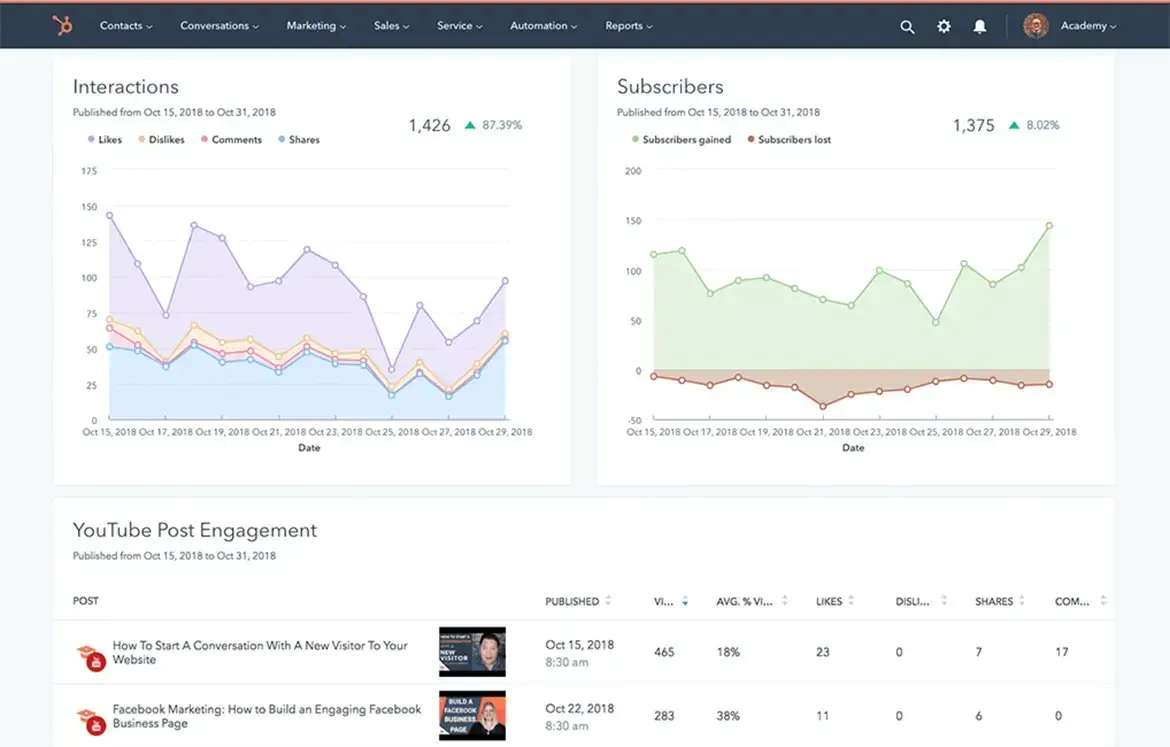
Effective brand monitoring transcends simple mention counting; it requires a sophisticated approach to data analysis, correlating mentions with broader business objectives. The challenge lies in unifying fragmented data from diverse channels into actionable insights. Key Performance Indicators (KPIs) are crucial for this:
- Total Mentions: The raw volume of brand mentions over a specific period. This offers a baseline understanding of visibility.
- Reach & Impressions: The potential audience size exposed to a brand mention, indicating the breadth of its dissemination.
- Sentiment: The emotional tone of mentions (positive, neutral, negative), critical for reputation management and understanding public perception.
- Share of Voice (SOV): A brand’s proportion of total mentions within its industry or competitive landscape, providing insight into market presence. In an AEO context, this extends to how often a brand is mentioned in AI-generated answers for relevant queries.
- Conversions: The ultimate metric, linking brand mentions (especially those with calls to action or embedded links) to website visits, leads, and ultimately, revenue.
Turning KPIs into Actionable Insights:
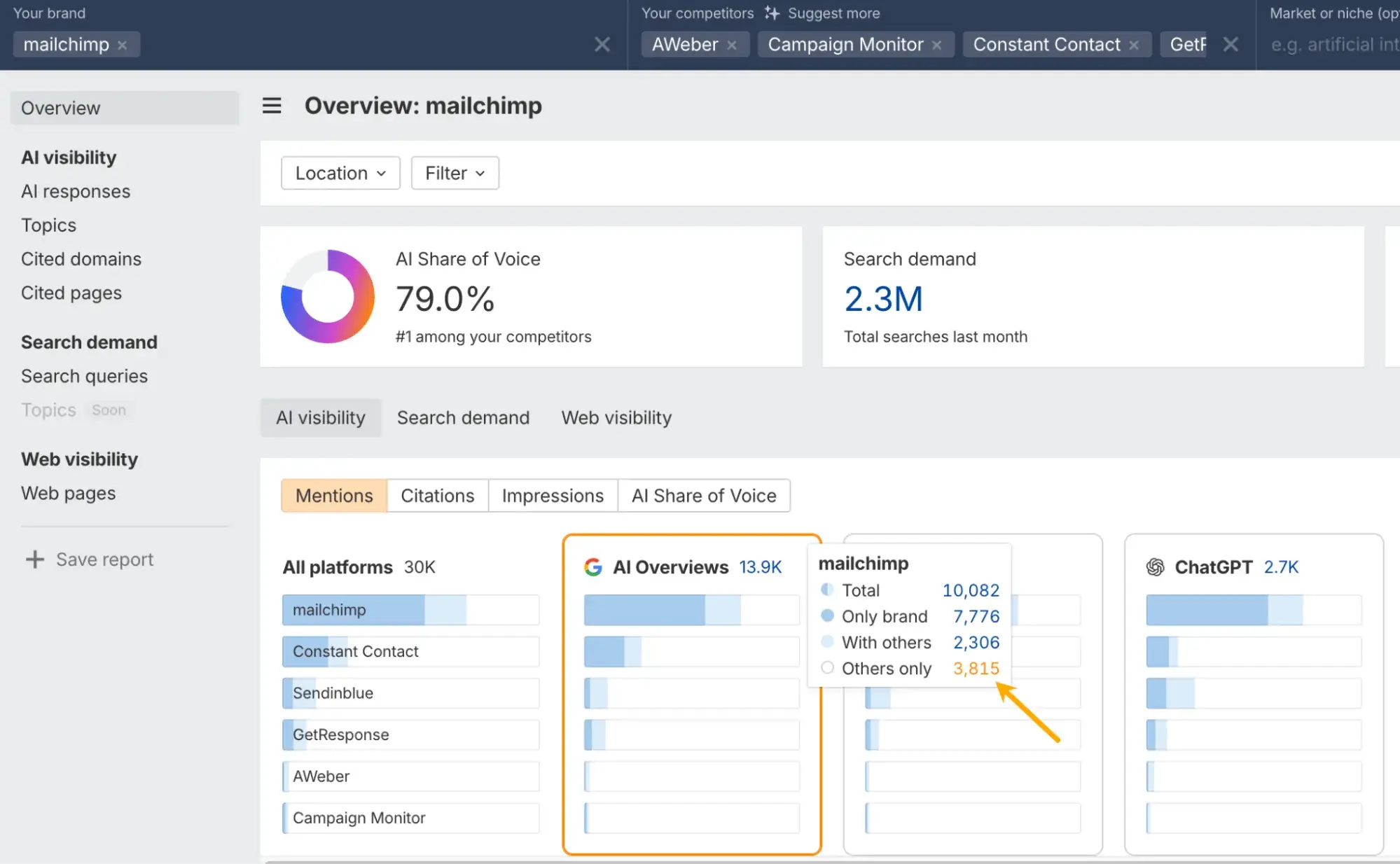
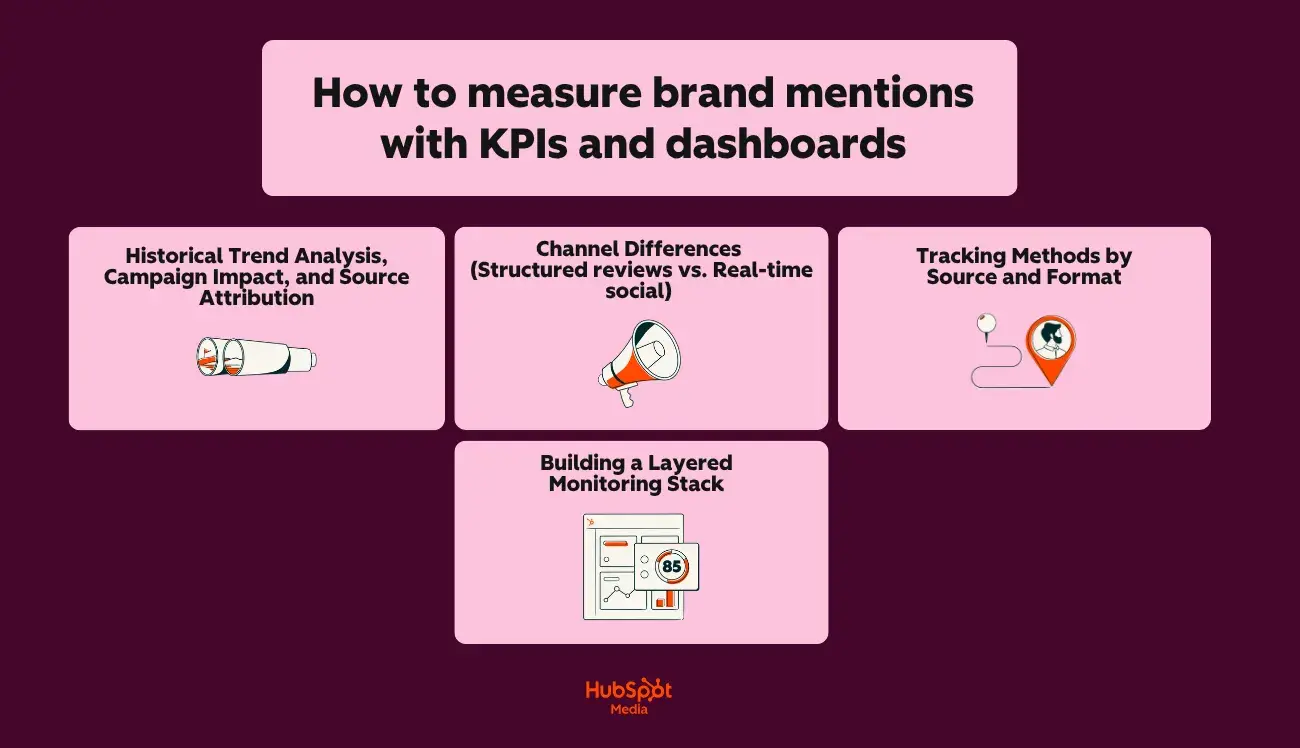
- Historical Trend Analysis: Tracking mention volume, sentiment, and reach over time reveals the impact of marketing campaigns, product launches, or external events. Overlaying this data with campaign timelines helps attribute spikes or dips to specific initiatives. For AI mentions, this means tracking how often and in what context a brand appears in AI answers for key queries over weeks or months.
- Channel-Specific Measurement: Different channels require tailored monitoring. Structured review sites (G2, Capterra, Trustpilot) provide metadata like star ratings and categories, offering clean, quantifiable data that changes slowly. Real-time social channels (X, Reddit) generate high-volume, unstructured data that requires rapid response and sophisticated sentiment analysis to navigate sarcasm and informal language. AI platforms, being dynamic, need specialized tools to query and log responses systematically.
- Layered Monitoring Stack: No single tool can cover the entire spectrum of brand mentions. A comprehensive strategy involves a layered approach:
- Social Listening Platforms: For real-time social media conversations.
- Web Crawlers/SEO Tools: For identifying linked and unlinked mentions across blogs, news, and forums.
- Review Management Software: For structured review sites.
- Dedicated AEO Tools: For tracking AI-generated answers.
- CRM Integration: To connect all mention data to customer records and sales pipelines, enabling a holistic view of customer journey and attribution.
- Manual Checks & Blind Spot Reduction: Automated tools, while powerful, can miss nuances in closed communities or emerging platforms. Regular manual audits of key forums, niche social groups, and direct querying of AI models for priority terms can identify blind spots. Centralized dashboards, integrated with a CRM, then filter and prioritize this data, ensuring timely action and preventing information overload.
Strategic Tools for Comprehensive Brand Monitoring
Building an effective brand monitoring infrastructure requires a blend of specialized tools. Here’s a look at some leading platforms and their roles:
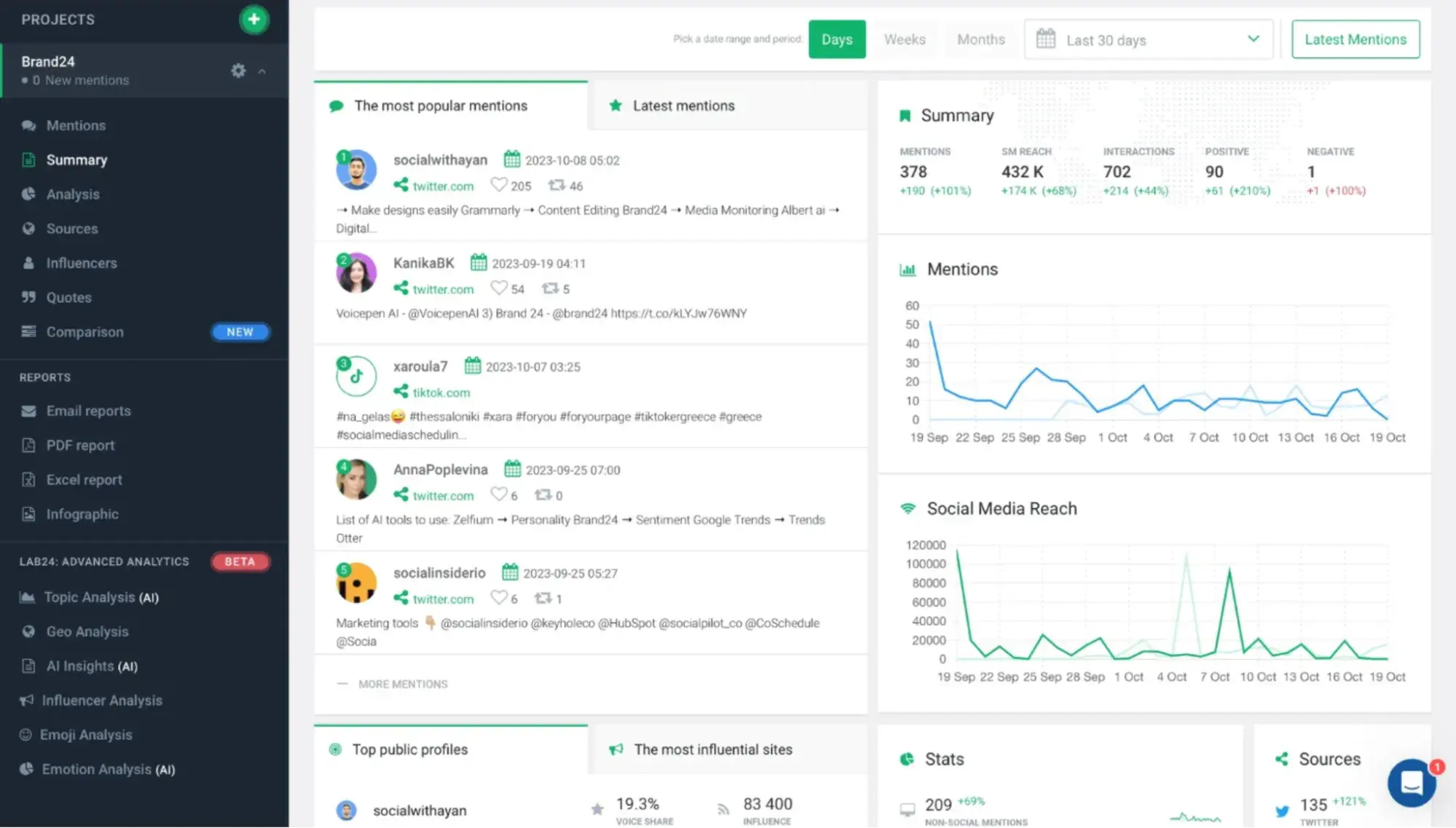
- Brandwatch: An enterprise-level consumer intelligence platform offering deep social listening, trend analysis, and comprehensive web monitoring. Its extensive historical data archive is invaluable for longitudinal studies.
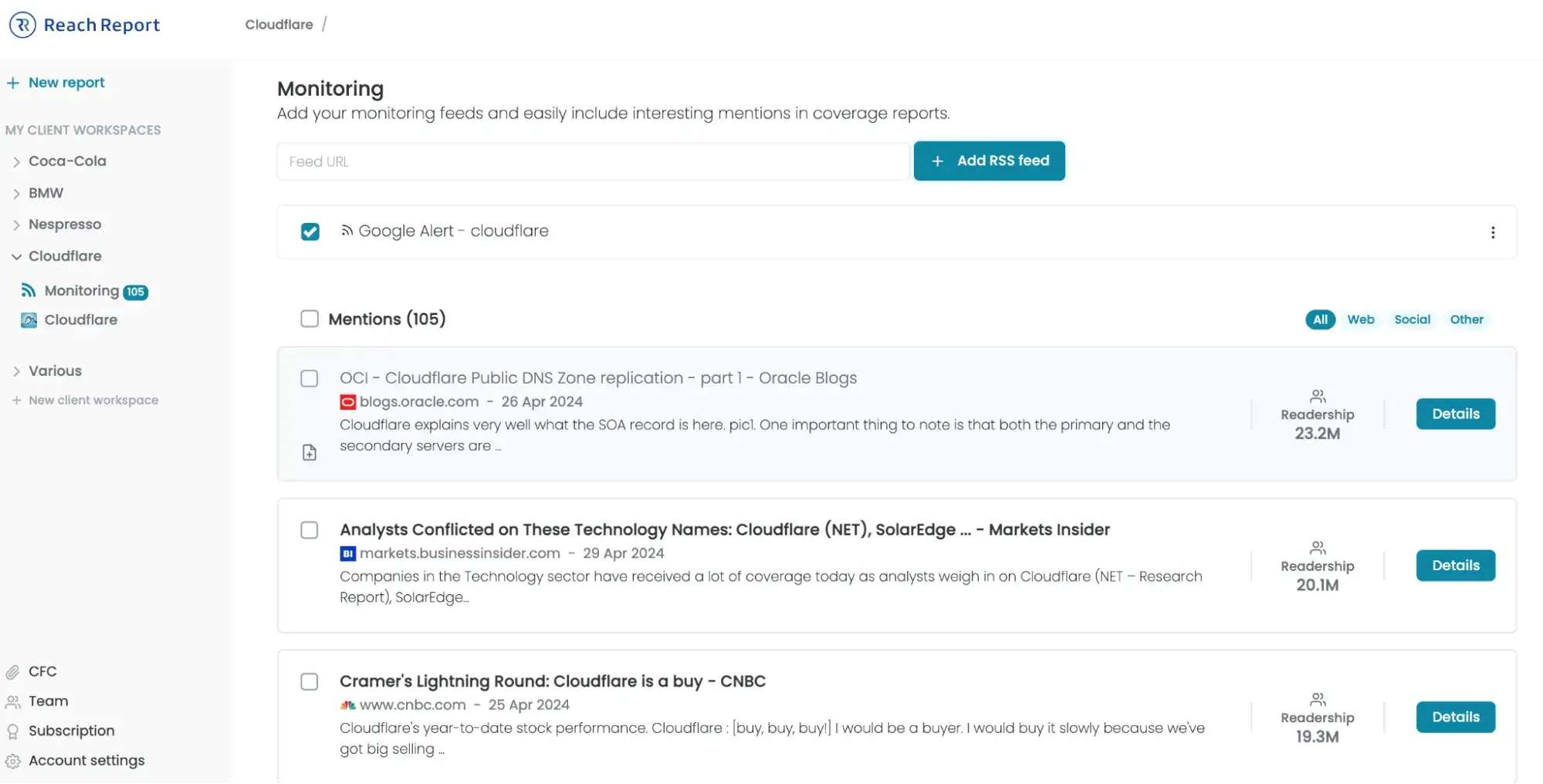
- Mention: A versatile social and web monitoring tool, ideal for real-time alerts and competitive intelligence, particularly for mid-market businesses and agencies.
- HubSpot’s Social Media Management Tools: Integrated within HubSpot’s CRM, these tools connect social brand mentions directly to contact records, campaigns, and revenue attribution, offering a unified view for marketing teams.
- Ahrefs: Primarily an SEO and backlink analysis tool, Ahrefs excels at identifying unlinked brand mentions across the web, making it indispensable for link-building strategies. Its Content Explorer can filter for pages mentioning a brand without linking, streamlining outreach efforts.
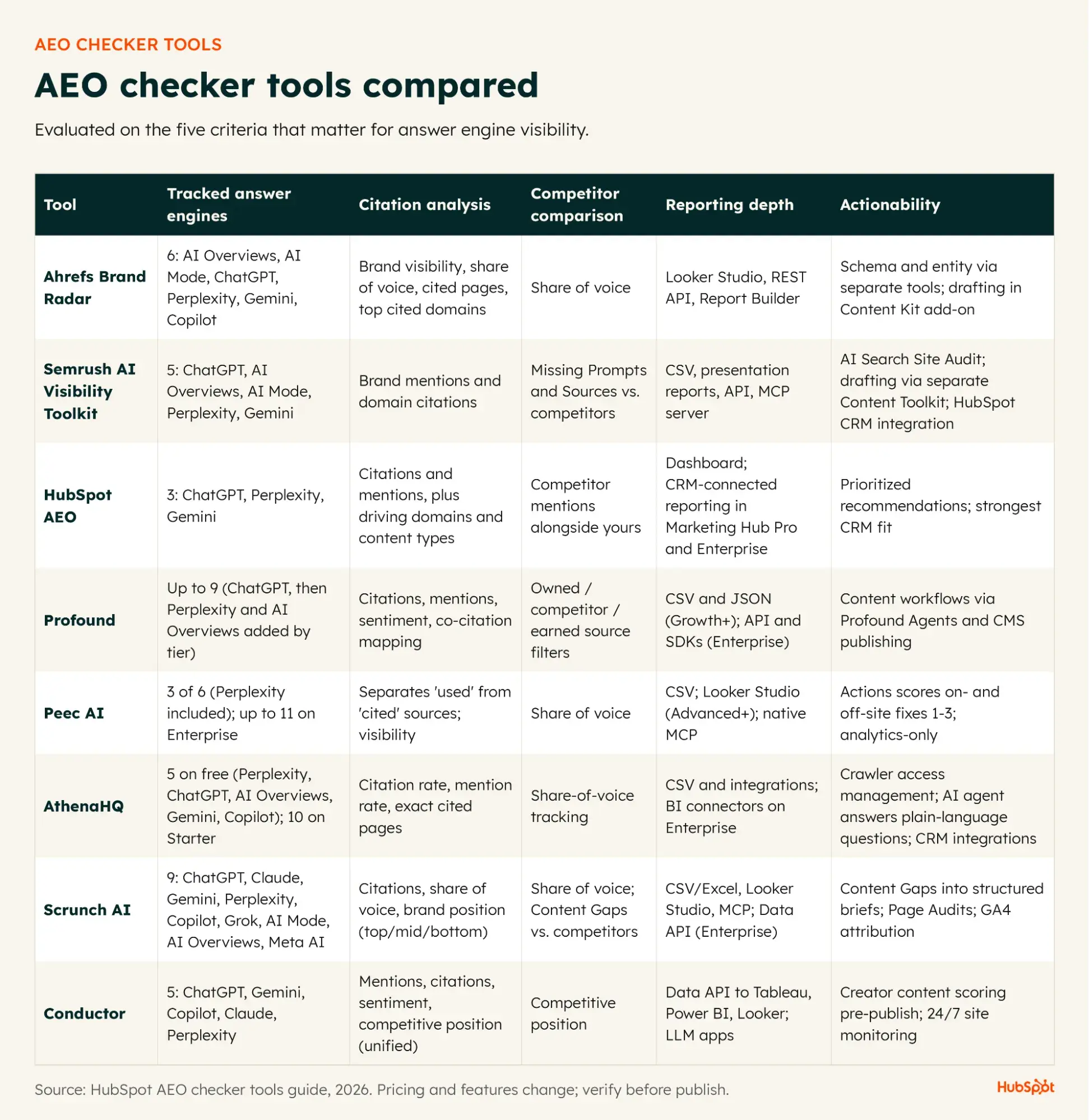
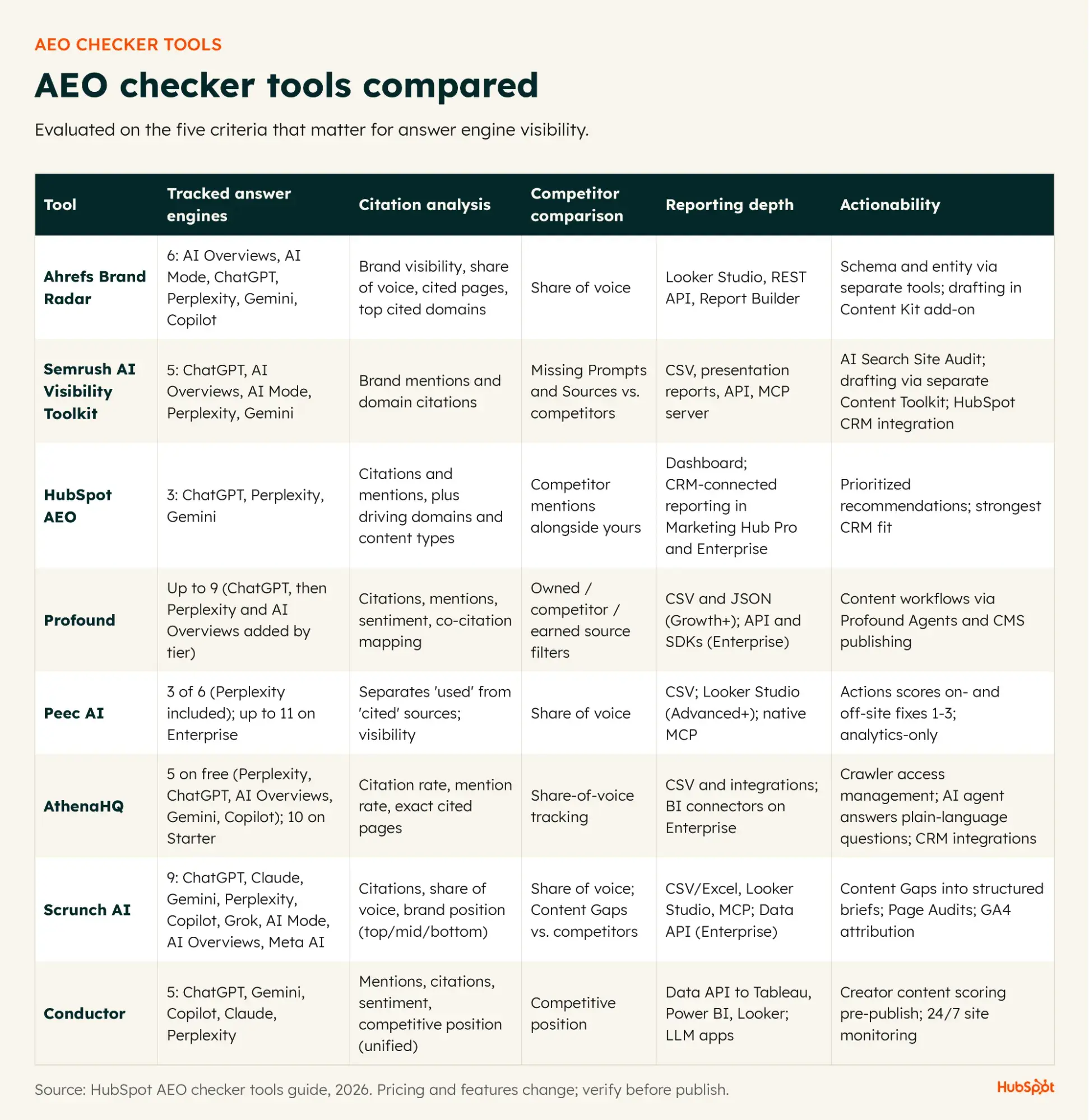
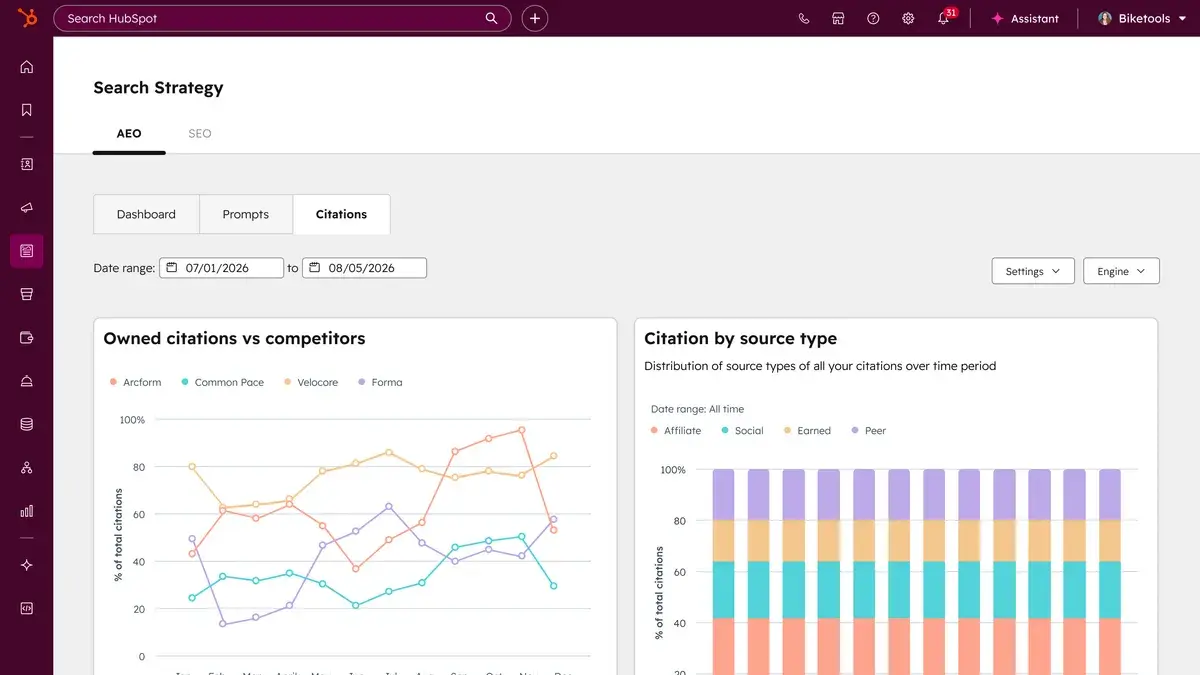
- HubSpot AEO: A specialized tool designed to track how brands appear in AI-generated answers across major platforms like ChatGPT, Perplexity, and Gemini. It provides visibility scoring, sentiment analysis in AI responses, and actionable recommendations linked to CRM data. Its AEO Grader offers a baseline analysis of AI brand perception.
- Brand24: A robust social media monitoring and analytics tool known for real-time tracking across diverse sources, AI-powered analytics, and user-friendly interface, suitable for SMBs and PR professionals.
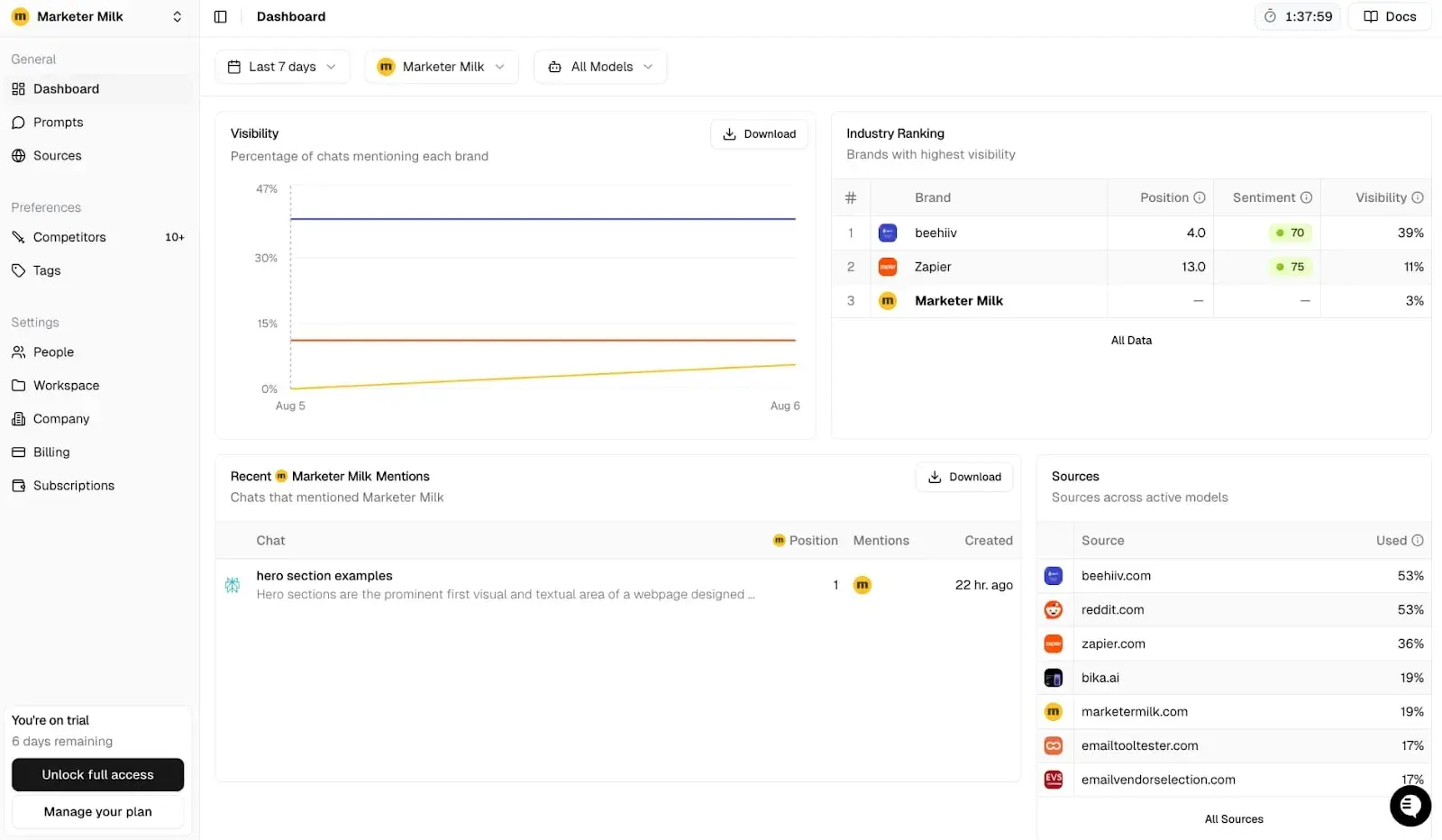
- Peec.ai: A pure-play AEO analytics platform, focusing exclusively on AI visibility across various answer engines. Its clean interface and Looker Studio integration cater to teams needing focused AI insights.
- Google Alerts: A free, foundational tool for basic web monitoring. While limited in scope compared to paid solutions, it serves as an excellent starting point for tracking general brand mentions and news coverage.
Transforming Mentions into Tangible Value
The ultimate goal of brand monitoring is not just observation but strategic action that generates compounding value.
- Convert Unlinked Brand Mentions to Backlinks: Every unlinked mention is a pre-qualified lead for a backlink. Prioritize outreach based on the mentioning site’s domain authority, relevance, and positive sentiment. A polite, value-driven email requesting the addition of a link can significantly boost SEO and referral traffic. This tactic consistently yields higher conversion rates than cold link-building efforts.
- Repurpose User-Generated Content (UGC): Positive brand mentions are authentic endorsements. Systematically repurpose glowing reviews, testimonials, and social posts across various marketing channels.
- Website: Feature customer quotes on landing pages.
- Social Media: Share positive tweets or Instagram stories.
- Email Marketing: Include testimonials in newsletters.
- Sales Enablement: Provide sales teams with success stories and positive feedback.
- Advertising: Use customer quotes in ad creative for enhanced credibility.
This creates a virtuous cycle: UGC builds trust, which encourages more mentions, which can then be repurposed.
- Nurture Journalist and Creator Relationships: Consistent positive coverage stems from strong relationships with journalists, industry analysts, influential creators, and subject matter experts. A CRM-driven workflow can track interactions, coverage history, and potential collaboration opportunities. AI systems increasingly factor in the frequency and consistency of citations from authoritative sources when forming their knowledge base. By nurturing these relationships, brands can enhance their expert positioning, leading to more frequent and positive mentions, both traditionally and within AI answers.
Addressing Common Challenges and Future Outlook
Effective brand monitoring also involves anticipating and mitigating risks. The speed of digital communication means that negative mentions can escalate rapidly. Differentiating between customer service issues and potential brand crises is critical. A predefined escalation matrix, routing specific types of negative mentions to PR or legal teams based on severity (factual inaccuracy, rapid traction, legal risk), ensures timely and appropriate responses.
The distinction between brand monitoring and social listening is also crucial. While brand monitoring tracks direct mentions of a brand, social listening is broader, analyzing industry trends, competitor activities, and general sentiment around a category. Both are vital: monitoring for operational responses, and listening for strategic market insights. Many tools integrate both functionalities, but their KPIs and workflows should remain distinct.
The future of brand mentions is inextricably linked to the advancement of AI. Monitoring brand mentions in ChatGPT and other AI tools is the fastest-evolving area. As AI models become more sophisticated and integrated into daily information consumption, specialized AEO tools, manual prompt tracking, and strategic content optimization for AI comprehension will become non-negotiable. The goal is to ensure brand information is consistent, authoritative, and easily digestible by AI systems, allowing them to accurately and positively represent the brand.
Conclusion
Brand mentions are no longer a peripheral concern; they are at the heart of digital presence, reputation, and growth. With the transformative impact of Answer Engine Optimization, the ability to track, analyze, and strategically leverage these mentions across the web, social media, reviews, and AI platforms is paramount. This demands a layered monitoring stack, robust KPIs, and integrated workflows that connect mentions to tangible business outcomes like backlink acquisition, user-generated content repurposing, and strategic relationship building. By adopting a proactive and integrated approach, brands can move beyond passive observation to actively shape their narrative, enhance their visibility, and drive compounding value in the dynamic digital age. The brands that master this intricate ecosystem today will be the leaders of tomorrow.