rifanmuazin
The digital realm of search engine optimization has undergone a profound transformation, moving far beyond the rudimentary keyword matching that once defined its core. For content creators and publishers, understanding this evolution, particularly Google’s emphasis on E-E-A-T (Experience, Expertise, Authoritativeness, and Trustworthiness), is no longer optional but imperative for achieving visibility and impact.
The Paradigm Shift: From Keywords to Semantic Understanding
In its nascent years, Google’s search algorithm primarily functioned by indexing web pages and matching user queries to keywords found within those documents. This mechanical process gave birth to the concept of “keyword research and optimization,” a methodology that, surprisingly, continues to be the dominant content strategy for many publishers hoping to rank. However, Google’s sophistication has advanced exponentially. The search giant no longer merely scans for keywords; it endeavors to comprehend the deeper meaning behind a user’s query, discerning their true intent and the contextual nuances of their search. Simultaneously, Google has developed an increasingly refined understanding of “content quality,” a concept that is inherently complex due to its subjective nature, varying significantly based on the individual needs and expectations of each searcher.
This journey towards a more intelligent search engine has been long and arduous, marked by significant algorithmic milestones. Initially, PageRank, Google’s foundational algorithm introduced in 1998, prioritized links as a measure of a page’s importance. While groundbreaking, it still largely relied on explicit, quantifiable signals. The introduction of algorithms like Hummingbird in 2013 signaled a significant shift towards understanding conversational search and the relationships between words, moving beyond mere keyword presence. This was further augmented by RankBrain in 2015, Google’s first major artificial intelligence integration into its core search algorithm, which processed ambiguous queries and learned to interpret user intent more effectively. Subsequent advancements like BERT (Bidirectional Encoder Representations from Transformers) in 2019 and MUM (Multitask Unified Model) in 2021 have propelled Google’s ability to understand language and context to unprecedented levels. These models can process information across various modalities (text, images, video) and answer complex queries that previously required multiple searches, even when there isn’t an exact keyword match. These continuous innovations have collectively underscored the diminishing relevance of simple keyword stuffing and the paramount importance of creating genuinely valuable, high-quality content.
The Genesis and Evolution of E-E-A-T: Google’s Benchmark for Quality
To systematically teach its algorithms what constitutes “high-quality” content, Google initiated a comprehensive program involving human evaluation. This led to the creation of the Search Quality Rater Guidelines, an extensive, publicly available document that outlines how human raters assess the pages they encounter through Google search. These raters, a global contingent numbering over 10,000 individuals, play a critical role in providing feedback that continually refines Google’s algorithms, essentially acting as the ‘eyes and ears’ for content quality. It was within these guidelines that the concept of E-A-T (Expertise, Authoritativeness, Trustworthiness) was formally introduced many years ago, serving as a guiding principle for evaluating content quality. The addition of a second “E” for “Experience” to form E-E-A-T came later, in late 2022, reflecting Google’s increasing recognition of the value of first-hand engagement and practical application. This update was particularly relevant in an era of burgeoning user-generated content, personal reviews, and niche expertise, emphasizing that demonstrating direct, personal experience with a topic can be a powerful signal of quality, even in the absence of traditional academic or professional credentials.
Deconstructing E-E-A-T: The Four Pillars of Content Credibility
E-E-A-T represents a comprehensive framework for evaluating the credibility and value of both the content itself and its creator. It’s a dynamic concept, assessed contextually, meaning its requirements can fluctuate based on the specific topic and purpose of the content.
- Experience: This component assesses whether the content creator possesses direct, first-hand experience with the topic. For instance, a product review written by someone who has genuinely used the product, a travel guide authored by someone who has visited the destination, or a troubleshooting guide from someone who has personally solved the problem, demonstrates valuable experience. This signal is particularly potent for topics where practical, personal insight offers unique value to the user.
- Expertise: Expertise refers to the knowledge and skill of the content creator in a particular field. This can manifest through formal education, professional qualifications, industry certifications, or extensive practical knowledge gained over time. A medical article written by a certified doctor, or financial advice from a licensed accountant, exemplifies high expertise. For less formal topics, a hobbyist with years of practical experience can also be deemed an expert.
- Authoritativeness: Authoritativeness reflects the reputation of the creator and the website as a recognized, go-to source for a given topic. This is often built through widespread recognition, citations from other authoritative sources, mentions in reputable media, and consistent production of high-quality, accurate content that is respected within its industry or community. It’s about being seen as a trusted voice by others in the field.
- Trustworthiness: Trustworthiness is perhaps the most fundamental element, encompassing the honesty, accuracy, and reliability of the content and its creator. It involves transparent sourcing, factual correctness, a demonstrable commitment to providing unbiased information, and clear communication regarding the purpose of the site. Websites with strong security measures (like HTTPS), clear privacy policies, accessible contact information, and transparent editorial processes also contribute significantly to a perception of trustworthiness.
It is crucial to note that E-E-A-T is not a universal constant; a website or content creator may exhibit high E-E-A-T for one subject area but not another. The bar for E-E-A-T also significantly escalates for “Your Money Your Life” (YMYL) topics, where inaccurate or misleading information could directly impact a user’s health, financial stability, or safety.
The YMYL Imperative: Where E-E-A-T is Non-Negotiable
Google identifies YMYL topics as those that, if presented inaccurately, deceptively, or poorly, could potentially harm a user’s well-being, financial state, or safety. For these critical areas, the standards for E-E-A-T are exceptionally high, as misinformation carries substantial real-world risks. The need for robust E-E-A-T in YMYL categories gained particular prominence following various public health crises and the proliferation of misinformation online, prompting Google to continuously refine its quality assessment mechanisms. Examples include:
- Medical and Health Information: Content on symptoms, treatments, medications, or health conditions must originate from and be vetted by qualified medical professionals or reputable scientific institutions.
- Financial and Legal Advice: Articles offering guidance on investments, taxes, loans, legal rights, or estate planning demand the expertise of certified financial advisors, lawyers, or official regulatory bodies.
- News and Current Events: Reporting on local, national, or international affairs requires experienced journalists committed to factual accuracy, investigative rigor, and balanced perspectives, often backed by established news organizations with clear editorial policies.
- Civic and Governmental Information: Content pertaining to voting procedures, legislation, public policy, or government services should be sourced directly from official government entities or highly credible civic organizations, ensuring accuracy and impartiality.
- Child-Related Topics: Any advice or information concerning children’s health, education, or safety must come from demonstrably reliable and qualified sources to ensure the well-being and protection of minors.
- Product Reviews and E-commerce: While seemingly less critical than health advice, reviews that guide purchasing decisions still require authentic first-hand experience, transparent methodologies for evaluation, and an unbiased approach to be considered trustworthy, especially for high-value items.
For YMYL content, Google’s quality raters are instructed to scrutinize the credentials of authors, the reputation of the website, and the factual accuracy of the information with extreme diligence. A lack of established reputation, while not automatically indicative of low E-E-A-T for all topics, can be a significant hurdle in YMYL categories unless robust evidence of direct experience and verifiable accuracy is presented.
Strategic Pillars for Elevating Content E-E-A-T
To align with Google’s sophisticated understanding of quality and intent, content strategies must fundamentally shift from outdated keyword-centric approaches to a holistic, user-first methodology. This involves a proactive and continuous effort to demonstrate and build each component of E-E-A-T.
1. Deep Dive into Content Excellence through Data-Driven Analysis
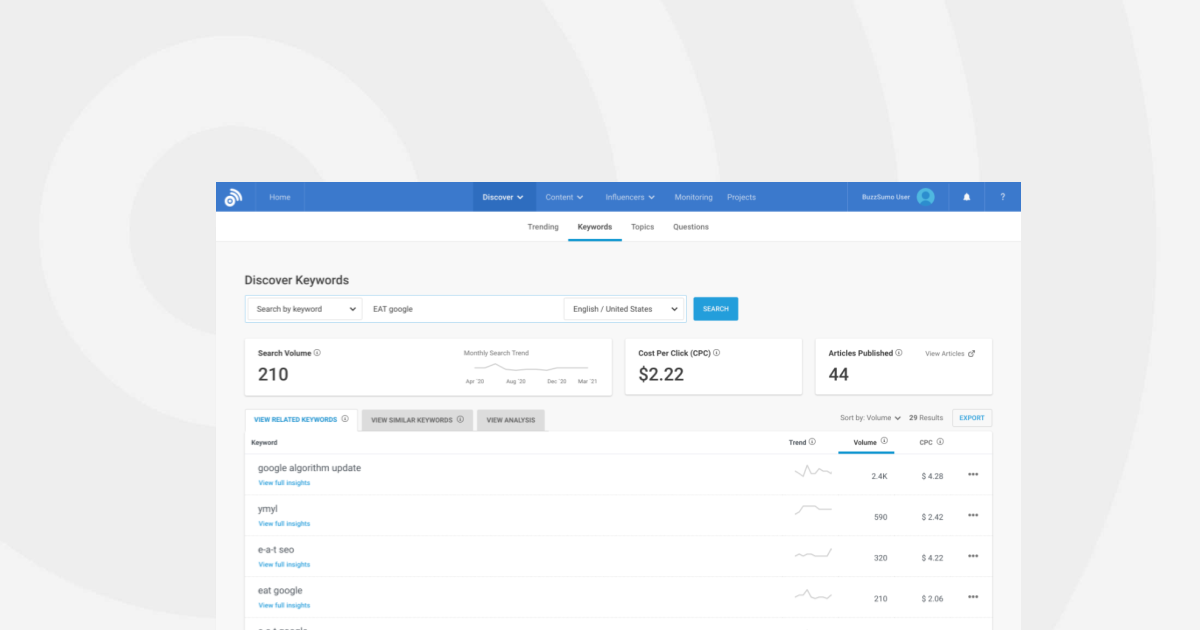
Instead of guessing what resonates, leverage data to understand quality. Publishers should regularly analyze high-performing content within their niche to identify common traits. Tools like BuzzSumo’s Content Analyzer can be instrumental in this process by allowing analysis based on:
- Engagement Metrics: Examining shares, comments, and other social interactions across platforms reveals the content themes and formats that genuinely capture audience attention. Successful headlines, compelling narratives, and effective calls to action can be reverse-engineered.
- Backlink Profiles: Identifying top-linked articles highlights content that is frequently referenced by other credible sources, indicating high value and authority within a niche. Analyzing who links to these articles can also reveal potential collaborators.
- Evergreen Performance: Pinpointing content that maintains high engagement and visibility over extended periods provides insights into topics with lasting relevance and sustainable interest, crucial for long-term SEO gains and reducing reliance on constant new content creation.
- Search Rankings: Observing content that consistently ranks high in Search Engine Results Pages (SERPs) for specific topics offers a direct view into what Google already deems authoritative and relevant.
By dissecting these elements, creators can extract actionable insights to inform their own content planning, ensuring it is engineered for maximum impact and audience satisfaction.
2. Cultivating and Showcasing Authority and Expertise
Google’s quality raters actively seek to identify the author and assess their topical authority. Building a strong niche authority is a long-term investment that yields significant benefits, including enhanced rankings and brand recognition. This involves a multi-faceted approach:
- Active Participation and Thought Leadership: Seek opportunities for interviews, podcasts, webinars, speaking engagements, and guest contributions on reputable industry platforms. Actively contributing to industry discussions positions creators as experts.
- Monitoring Industry Leaders: Keep abreast of what established authorities and competitors in your niche are creating and sharing. This not only provides inspiration but also helps in identifying gaps, emerging trends, or unique angles for your own content.
- Leveraging Structured Data (Schema Markup): Implement Organization and Author schema markup on your website. This provides Google with explicit, machine-readable information about your brand and the individuals behind your content, linking your expertise and credentials across the web. Using readily available schema generators or WordPress plugins can facilitate this technical implementation.
- Consolidating Digital Presence: Create a unified online presence that clearly links all your professional channels, publications, certifications, and social media profiles. Platforms like Beacons.ai can serve as a central hub, making it easier for Google to connect your diverse contributions to a single authoritative entity.
- Transparent Bylines and Bios: Ensure all content features clear author bylines with comprehensive bios that highlight