rifanmuazin
While many entrepreneurs launching online businesses immediately consider platforms like Shopify or WooCommerce, a significant segment of the e-commerce landscape is increasingly recognizing the robust capabilities of HubSpot CRM, not just for customer management post-launch, but as a foundational element for building and scaling an online store from its inception. This realization often dawns on businesses after they’ve grappled with fragmented systems, prompting a search for a more integrated solution. However, HubSpot’s potential extends far beyond its well-known CRM functionalities, offering a suite of tools that can streamline website creation, facilitate transactions, and cultivate lasting customer relationships, even before a single product is sold.
The perception of HubSpot as solely a customer relationship management tool often overshadows its comprehensive offerings for e-commerce. Many businesses discover HubSpot’s value when seeking a CRM that effectively manages customer interactions. What is frequently overlooked is its capacity to foster business growth throughout the entire e-commerce lifecycle, from initial setup to ongoing customer engagement. HubSpot provides free Content Management System (CMS) tools, empowering businesses to construct their own websites, and integrates seamlessly with a range of commerce-specific features, including its own HubSpot Payments. Critically, it excels in interoperability, working harmoniously with major e-commerce platforms like Shopify, enabling a cohesive connection between a business’s customer data and its broader online retail operations. This article delves into why HubSpot should be a serious consideration for any aspiring or established online retailer and outlines the practical steps to leverage its platform for e-commerce success.
The Unseen Powerhouse: Why HubSpot Excels for E-commerce
HubSpot CRM is widely acknowledged as a leading customer relationship management system, but its intricate connection to the holistic e-commerce process is often less understood. For online stores, HubSpot CRM functions as the central nervous system for every customer interaction outside of the immediate checkout process. It meticulously logs browsing behavior, tracks sales opportunities, monitors order statuses, links email communications to specific individuals, and connects chat conversations directly to revenue generation. This creates a comprehensive, chronological record of each buyer’s journey—a level of insight that is remarkably rare in the typical e-commerce software ecosystem.
The prevailing model for many online stores involves a patchwork of disparate applications, each serving a specific function: one tool captures abandoned carts, another manages email campaigns, and a third attempts to predict which leads warrant follow-up. HubSpot disrupts this fragmented approach by consolidating all customer data into a single, unified view. This integration is pivotal; it means an abandoned cart event within an e-commerce platform can directly trigger automated sales sequences within HubSpot CRM, a capability that few other CRMs offer with such fluidity.
A compelling case in point is the performance of CODE41, a watch brand that, by integrating HubSpot’s suite of tools, achieved a remarkable 257% surge in sales, a 223% increase in revenue, and a 279% boost in leads. This demonstrates the tangible impact of a unified strategy. Furthermore, HubSpot’s inherent inbound marketing capabilities allow businesses to nurture evolving customer relationships, moving beyond the confines of a basic storefront. This is why e-commerce teams often rely on HubSpot for customer management, even when their storefront operations are handled by platforms like Shopify or BigCommerce. While these platforms manage the point of sale, HubSpot takes ownership of the customer experience.
Unpacking the Benefits: HubSpot’s Integrated Platform for E-commerce
HubSpot possesses a unique characteristic: its interface appears straightforward initially, but its true depth and power reveal themselves as businesses engage with its full spectrum of features for real-world store operations. The most significant advantages often stem from seemingly minor, yet strategically vital, functionalities that businesses might not initially prioritize.
Centralized Customer Data: A Unified Customer Timeline
A common challenge in e-commerce is the scattering of customer information across various tools. A product click might be logged in one application, an email open in another, an order in a third, and customer inquiries can become lost in the ensuing disarray. HubSpot CRM meticulously stitches these disparate data points into a single, coherent timeline. When a customer views a product, abandons a cart, opens a marketing email, returns days later, and then engages with customer support via chat, all these interactions are visible in one place. This holistic view provides an unprecedented understanding of customer behavior and engagement.
Automation Tailored for Real-World Teams
HubSpot’s automation capabilities are designed to accommodate the dynamic and often complex nature of business operations, rather than forcing users into rigid, pre-defined workflows. Its sales and marketing automation tools empower teams to construct practical, real-world sequences that can effectively recover lost revenue. For instance, an online store can establish a workflow where a cart abandonment event triggers a personalized email, which in turn updates a sales pipeline stage, leading to a follow-up action by a sales representative. This process is designed to be intuitive and pain-free, even for those not deeply versed in automation intricacies.
Inbound Marketing That Drives Tangible Revenue
The purchasing journey for many consumers is rarely a single-step process. Customers typically engage in extensive research, comparison, and consideration before committing to a purchase. They may discover a product through a search engine, read blog posts, compare options across different sites, get distracted, forget, return, and eventually make a purchase. HubSpot meticulously tracks this entire path. Many e-commerce businesses find that a significant portion of their repeat purchases originates from informative content, such as a blog post detailing how to select the right product, which they discovered through HubSpot’s inbound marketing efforts.
Seamless Integration of Payments and Quoting
HubSpot Payments offers a more robust and integrated checkout experience compared to traditional methods that often involve sending PDF invoices and hoping for the best. This feature is particularly beneficial for B2B e-commerce operations. A sales representative can send a quote directly through HubSpot, and the buyer can click to purchase, automatically initiating a subscription or order. HubSpot then logs the transaction, updates the sales pipeline, generates necessary onboarding tasks, and enrolls the customer into a relevant welcome sequence, all within a single platform.
AI as an Assistant, Not a Replacement
HubSpot’s artificial intelligence tools, particularly those embedded within its CMS and campaign builders, effectively address the common challenge of the “blank page syndrome.” They serve as valuable assistants for generating initial drafts of content, creating alt text for images, writing meta descriptions, and handling repetitive copywriting tasks, thereby reducing the burden on marketing teams. Moreover, the AI-driven workflow suggestions significantly cut down setup time for users who may not be automation experts, democratizing access to powerful efficiency tools.
Scalable Growth Through Foundational Structure
HubSpot does not promise to magically generate website traffic or invent revenue, a common marketing claim for many SaaS tools. Instead, its core strength lies in its ability to unify and organize customer understanding, sales processes, marketing activities, and customer support experiences within a single, cohesive framework. This structural integrity is what enables a one-person operation to function with the efficiency of a five-person team, or a five-person team to achieve the output of fifteen. It provides the scaffolding upon which sustainable growth can be built.
A Practical Guide: Building Your Online Store with HubSpot
There are several strategic approaches to establishing an online store utilizing HubSpot, tailored to varying business needs and operational scales. The following step-by-step guide outlines the typical progression for most businesses.
Step 1: Establish Your Foundation with a HubSpot CRM Account
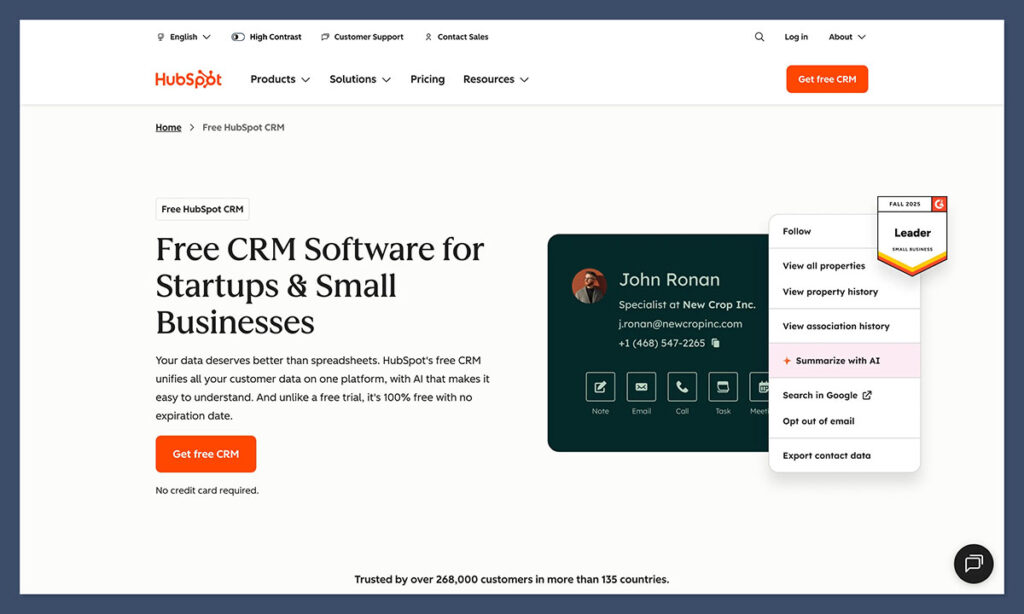
The bedrock of any HubSpot-powered e-commerce venture is the CRM. The free HubSpot CRM tier is sufficient to establish the fundamental components of the system, including contact management, list segmentation, sales pipelines, email capabilities, basic automation, and website activity tracking. Once these core elements are operational, the entire ecosystem begins to coalesce. The CMS, commerce tools, quoting features, and chat widgets all revolve around these central contact records. Businesses often find themselves upgrading to Sales Hub or Marketing Hub as their needs evolve, typically when they realize the potential for automating more complex follow-up sequences.
Step 2: Select Your E-commerce Integration Strategy
As previously mentioned, businesses have several primary options for integrating their e-commerce operations with HubSpot:
- A. Direct Integration with Shopify or BigCommerce: This approach leverages the robust storefront capabilities of these dedicated e-commerce platforms while connecting them to HubSpot for customer management, marketing, and sales automation. It is ideal for businesses with extensive product catalogs or those prioritizing a feature-rich storefront experience.
- B. Building a Storefront within HubSpot CMS: For businesses with a more curated product selection or those offering higher-touch products and services, building directly within HubSpot’s CMS can provide a more integrated and customized user experience. This option allows for tighter control over the customer journey and brand presentation.
- C. Utilizing HubSpot for Lead Generation and Quoting, with Separate Checkout: In this model, HubSpot is employed to capture leads, nurture them through personalized content and communication, and generate quotes. The actual transaction may occur through a separate payment gateway or platform. This is often suitable for B2B sales or complex product configurations.
The choice between these strategies often depends on the scale of the product catalog and the desired level of integration. For businesses with vast inventories, option A is generally preferred. For those selling more niche or high-value items, options B or C often provide a more tailored customer experience.
Step 3: Construct Your Storefront with HubSpot CMS
HubSpot’s CMS is designed for simplicity and ease of use, making it accessible even for users with limited web development experience. Businesses can select from a range of pre-designed themes and then utilize the drag-and-drop editor to arrange modules and build pages that are both visually appealing and optimized for customer engagement, minimizing bounce rates.
A significant advantage of this approach is the seamless communication between the CMS and the CRM. When a customer repeatedly views a product, adds an item to their cart only to abandon it, or consults an FAQ page, HubSpot captures this data. This information creates a valuable, albeit sometimes uncanny, picture of a prospect’s genuine interest versus potential confusion or distraction.
Step 4: Integrate Products into Your System
The process of adding products to your e-commerce system has long-term implications for data management and operational efficiency. Whether using HubSpot’s native product catalog or integrating with an external platform, establishing clear naming conventions and avoiding redundant entries are crucial. Standardizing product names and attributes from the outset prevents future confusion and streamlines inventory management, marketing efforts, and customer service inquiries.
Step 5: Configure Payments and the Checkout Flow
For businesses operating within the United States, HubSpot Payments offers a streamlined integration into quotes, product pages, forms, and even chat functionalities. This allows for the easy distribution of payment links via email, direct messages, or landing pages. For international operations, a combination of Stripe and a compatible e-commerce integration like CommercePro is a common and effective solution. The key is to select the payment gateway that best aligns with the business’s geographical reach and operational requirements.
Step 6: Synchronize Carts, Orders, and Sales Pipelines
This is an area where HubSpot often surprises users with its integrated capabilities. By linking e-commerce events directly to the CRM pipeline, businesses can automate critical post-purchase processes. For instance, an abandoned cart can trigger a follow-up email sequence, and once a purchase is completed, the order can automatically update the sales pipeline, create tasks for customer onboarding, and enroll the customer into a welcome series. This level of automation ensures that no customer touchpoint is missed and that follow-up actions are executed consistently and efficiently. One illustrative example involved a pipeline stage labeled “Considering Churn.” When a customer visited the cancellation page multiple times within a week, HubSpot automatically generated a task, sent a targeted email, and flagged the account for retention efforts, leading to an improvement in customer retention.
Step 7: Develop Automation Aligned with Real-World Processes
HubSpot empowers businesses to build automated workflows that mirror their actual operational procedures and team dynamics. Starting with basic automations is often advisable. For example, an automated welcome email can be sent to new contacts, a task can be created for a sales representative when a lead reaches a certain score, or an email can be sent to a customer who has viewed a specific product page multiple times. As more data is gathered on customer behavior and store interactions, more sophisticated automation flows can be implemented. Crucially, all automated processes should be rigorously tested to ensure they deliver the desired outcomes over time.
Step 8: Leverage Inbound Marketing for Conversions
HubSpot’s core philosophy is rooted in inbound marketing, and its platform is designed to capitalize on this approach. When blog posts, landing pages, emails, and the CRM operate within the same integrated environment, businesses gain the ability to identify patterns that might otherwise remain hidden. By tracking page views, email clicks, completed orders, and repeat purchases, HubSpot makes it clear which content strategies are most effective in driving conversions.
Step 9: Monitor Key Performance Indicators with Precision
HubSpot’s analytics tools offer more than just visual representations of data; they are directly linked to individual customer records, providing invaluable context. Businesses can track metrics such as conversion rates for specific marketing campaigns, the average customer lifetime value, the effectiveness of different sales follow-up strategies, and the engagement levels of various customer segments. This fusion of detailed data and contextual understanding allows for more informed decision-making and sharper strategic adjustments.
Why E-commerce Brands Embrace HubSpot
While not always the first platform that comes to mind for e-commerce, HubSpot has become an indispensable tool for many online businesses. Companies often begin with a fragmented collection of tools, only to discover that HubSpot can effectively manage the strategic “thinking” aspects of their business—nurturing relationships, executing follow-ups, managing quotes, handling renewals, creating content, and implementing automation that prevents critical customer interactions from falling through the cracks.
Many platforms are adept at running a storefront, and numerous do so exceptionally well. However, HubSpot’s unique strength lies in its deep understanding of the buyer’s journey. It can discern precisely what a customer clicked on, what they ignored, when they returned to a product page late at night, and which email ultimately persuaded them to overcome hesitation. This level of context fundamentally transforms how an e-commerce store operates, shifting the paradigm from simply broadcasting promotions to strangers to actively guiding actual customers through their decision-making process.
For entrepreneurs and businesses curious to explore this powerful synergy, creating a free HubSpot CRM account, experimenting with the CMS, sending a payment link, and building a simple workflow can quickly illuminate how these integrated pieces contribute to a more cohesive and effective e-commerce strategy.
Frequently Asked Questions About HubSpot for E-commerce
How does HubSpot compare to Shopify for e-commerce?
Shopify is primarily a storefront engine, designed for the creation and management of online shops. HubSpot, conversely, functions as a customer engine, focusing on relationship management, marketing, and sales automation. When used in conjunction, they can form a highly effective partnership. However, for businesses that rely heavily on lead nurturing, intricate quoting processes, or subscription management, HubSpot often provides a more robust and integrated solution for these specific areas.
Can HubSpot operate a complete online store independently?
Yes, HubSpot can manage a complete online store, particularly for businesses with a focused product catalog and a less complex buying path than that of large-scale retail operations. The combination of HubSpot CMS, Commerce Hub, and HubSpot Payments is capable of handling digital products, subscriptions, coaching services, curated kits, and a significant portion of B2B e-commerce transactions. For businesses with extensive and diverse product catalogs, integrating HubSpot with platforms like Shopify or BigCommerce may be a more practical approach.
Is HubSpot’s pricing prohibitive for small businesses?
Generally, no. Many small businesses commence their journey with the free HubSpot CRM and free CMS tools. Costs typically escalate only when a business requires advanced automation features, more sophisticated sales tools, or intensive marketing capabilities. For businesses that actively utilize these advanced features, the return on investment is often realized quickly.
Does HubSpot support subscription-based models and renewals?
Absolutely. Commerce Hub is specifically designed to manage recurring payments, maintain subscription records, track renewals, and automate workflows tied directly to billing cycles. It effectively transforms a potentially complex and labor-intensive aspect of e-commerce into a more seamless and manageable process.
Do HubSpot’s AI tools offer tangible benefits for e-commerce operations?
Yes, HubSpot’s AI tools significantly assist with the more routine and time-consuming tasks inherent in e-commerce. This includes drafting marketing emails, constructing automated workflows, generating website content, and suggesting customer segmentation patterns. While they do not replace strategic planning, they effectively reduce operational noise, allowing teams to concentrate on high-impact activities that drive revenue.