rifanmuazin
The advertising industry is experiencing a recurring phenomenon: the rapid emergence of a new platform triggers an urgent reallocation of marketing budgets, often bypassing the usual lengthy approval processes. This pattern, previously observed with the ascendance of TikTok, the rise of influencer marketing, and the growth of connected TV, is now playing out with OpenAI’s advertising initiatives. Brands that typically require months to greenlight a creative brief are finding themselves compelled to act swiftly, investing in a nascent advertising environment that, by many objective measures, presents more uncertainties than its predecessors. This urgency is understandable, particularly as search demand has shown signs of softening, and OpenAI, with its conversational AI capabilities, appears to be a new nexus for user intent. However, the instinct to treat this new frontier as a direct substitute for established search advertising paradigms warrants careful examination before substantial financial commitments are made.
The Genesis of Urgency: Navigating Search Anxiety in the AI Era
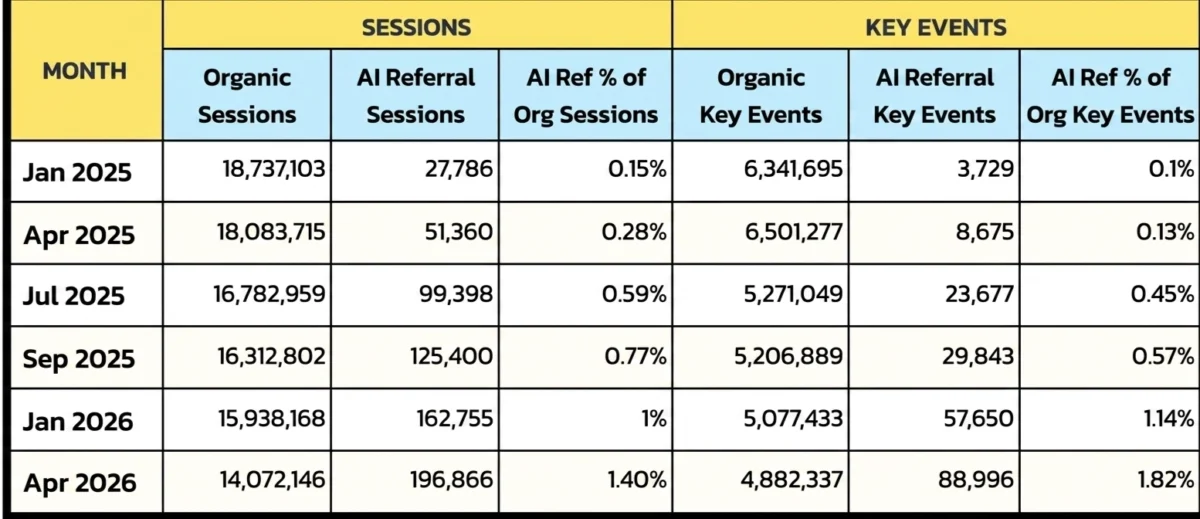
A significant driver behind the current client haste stems from what can be termed “search anxiety.” Advertisers have witnessed a plateau or even a decline in their organic and paid search volumes. The proliferation of AI-generated overviews in search results has contributed to a perceived erosion of click-through rates, prompting a search for alternative avenues to connect with consumers. The emergence of platforms like OpenAI’s ChatGPT, where users are demonstrably posing questions and seeking information that can lead to purchase decisions, presents a seemingly logical destination for capturing this user intent. The narrative that readily forms is one of replication: “If users are asking questions here, we need to be present.”
However, this framing, while intuitive, risks oversimplifying the opportunity and setting unrealistic expectations. It assumes that the primary objective is to merely transpose search advertising onto a new surface. While intent within a chat environment is undoubtedly present and valuable, it is fundamentally different from the intent expressed through a traditional search query. The context in which users interact with AI, the format of their engagement, and the very nature of their relationship with the platform diverge significantly from established search behaviors. These distinctions have profound implications for how advertising within these new paradigms will perform and how it should be strategized.
A Fundamentally Different Advertising Surface: The Personal and the Unpredictable
What distinguishes platforms like ChatGPT from established giants like Meta or Google, at least on an emotional and experiential level, is the deeply personal nature of the interaction. Users engage with these AI tools to explore ideas, work through complex problems, and conduct conversations that might feel too sensitive or nuanced for public forums or even direct search queries. This one-to-one, almost intimate, relationship between the user and the AI is not a superficial characteristic; it is the core of the product’s value proposition. For brands considering advertising on these platforms, this dynamic necessitates a careful rethinking of their approach.
Beyond the user experience, the practical realities of the AI advertising environment present unique challenges. The non-deterministic nature of AI responses is a critical factor. The same question posed to a large language model (LLM) can yield different answers based on a multitude of variables, including the specific model version, recent training data, and even subtle variations in the prompt. This inherent variability creates a landscape where precise control over the context in which an advertisement appears is significantly limited. For advertisers who prioritize brand safety and meticulously set parameters to avoid association with undesirable content, this poses a considerable hurdle. An advertisement might be contextually relevant in terms of topic, but the chatbot’s generated response could be tonally misaligned or even inappropriate. The AI’s own “personality” and tone in that moment can profoundly influence how an advertisement is perceived, introducing a layer of uncertainty largely absent in the more controlled environments of display or traditional search advertising. This lack of predictability demands a shift in how brands approach creative development and placement.
Pre-Commitment Considerations: Three Pillars for Strategic Investment
Before committing significant advertising budgets to OpenAI’s emerging ad offerings, several critical factors warrant thorough examination.
The CPM Conundrum: Justifying the Premium
At its fundamental level, advertising within a conversational AI interface can be categorized as a contextually targeted native format. This is not an entirely new media type, and the advertising industry has a long history of procuring similar placements, often at considerably lower costs than what is currently being proposed by OpenAI. When comparable inventory is available at a fraction of the price, the crucial question for any performance-driven advertiser becomes: what additional value is being derived from this premium? Currently, providing a definitive answer to this question is exceptionally challenging. The perceived value must extend beyond mere placement to demonstrable returns that justify the inflated cost.
Measurement and Attribution: The Unseen Barriers
The absence of robust measurement and attribution tools represents another significant impediment. Without the necessary infrastructure to accurately track and attribute campaign performance, validating the return on investment becomes an arduous task. The most basic, yet essential, approach to this challenge involves incrementality testing with holdout groups. This methodology entails randomly splitting audiences, designating a control group that does not receive the advertising, and running the test for a sufficient duration to gather statistically significant data. By comparing the performance metrics between the test and control groups, advertisers can glean a defensible understanding of the ads’ actual impact. While this is not the sophisticated attribution model that many clients expect before scaling their spending, it is currently the most reliable indicator of performance available in this nascent environment. The development of more sophisticated attribution models tailored to conversational AI interactions is a critical next step for the industry.
Audience Clarity: Decoding Intent in a Fragmented Landscape
The pitch of reaching “high-intent users” is compelling, but the utility of this intent is diminished if the identity of those users remains unclear. OpenAI’s user base is not a monolithic entity, nor does it represent the entirety of internet users engaging with AI. The landscape of large language models is already experiencing significant fragmentation, with platforms like Google’s Gemini and Anthropic’s Claude carving out their own user bases. Demographics and user behaviors are likely to vary considerably across these different LLMs. Therefore, assuming that advertising on a single platform like ChatGPT guarantees access to a broad, high-value audience without granular data is a significant leap of faith. Understanding the specific audience segments that are most active and engaged on each platform is crucial for effective targeting and budget allocation.
Strategic Testing: A Hypothesis-Driven Approach
For brands that are committed to exploring this new frontier, the most sensible approach is to frame these initiatives as experiments with clearly defined hypotheses, rather than as standard activations with predictable returns. This necessitates a rigorous process of asking specific questions: which industry verticals are most likely to see success? At what stage of the marketing funnel can this format be most effective? What is the justifiable CPM against comparable advertising placements? Furthermore, it requires overcoming internal organizational silos. Whether an OpenAI advertising test is housed within a search budget or a programmatic budget is less important than ensuring that the right cross-functional teams are involved and that the test is meticulously designed to yield actionable learnings.
The Broader Implications of LLM Fragmentation
As OpenAI continues to develop and refine its advertising products, it is crucial to recognize its market position. Unlike Google or Meta when they launched their advertising platforms, OpenAI does not currently possess a dominant market share. It faces robust competition from well-resourced rivals with rapidly expanding user bases. Consequently, the audience for AI-driven interactions is already being distributed across multiple platforms. The total addressable audience on any single LLM represents a subset of the perceived collective. This fragmentation is not a temporary phase; it is likely to persist and potentially intensify.
This evolving competitive landscape makes the advertising strategies employed by these LLM platforms to attract and retain users increasingly important to observe. The distinct positioning and value propositions that OpenAI, Google, and Anthropic adopt for different user segments will offer advertisers invaluable insights into where specific audiences are gravitating. This competitive dynamic will shape the future of AI-powered advertising and the opportunities available to brands.
The Prudent Posture: Balancing Opportunity with Realistic Expectations
The optimal stance for brands navigating the current AI advertising landscape is one of clear hypotheses, realistic measurement expectations, and a genuine commitment to learning from the data. This approach eschews the impulse to wholesale redirect search budgets in the hope of recapturing lost volume or to commit to a platform without a thorough understanding of its user base. The opportunity presented by conversational AI advertising is undoubtedly real, but the timeline for it to mature into a proven, scalable channel is likely longer than the current surge of momentum might suggest. Adopting an expectation aligned with this reality, rather than the more ambitious projections often being marketed, represents a more prudent and ultimately more effective strategy for long-term success. The evolution of AI advertising is a marathon, not a sprint, and brands that approach it with patience, strategic rigor, and a focus on genuine learning will be best positioned to capitalize on its future potential.