rifanmuazin
The competitive landscape for businesses has undergone a seismic shift, moving far beyond the predictable rivalries of yesteryear. For decades, a local dentist primarily vied for patients against other dental practices in the vicinity, and an HVAC company’s primary competitors were other service providers within the same niche. This was a world where a business’s competitive set was clearly defined by direct replication of services and targeting of identical customer bases. However, the advent and rapid integration of Artificial Intelligence (AI) into search engines have fundamentally altered this paradigm, creating a far more complex and often invisible battlefield for market share and customer attention.
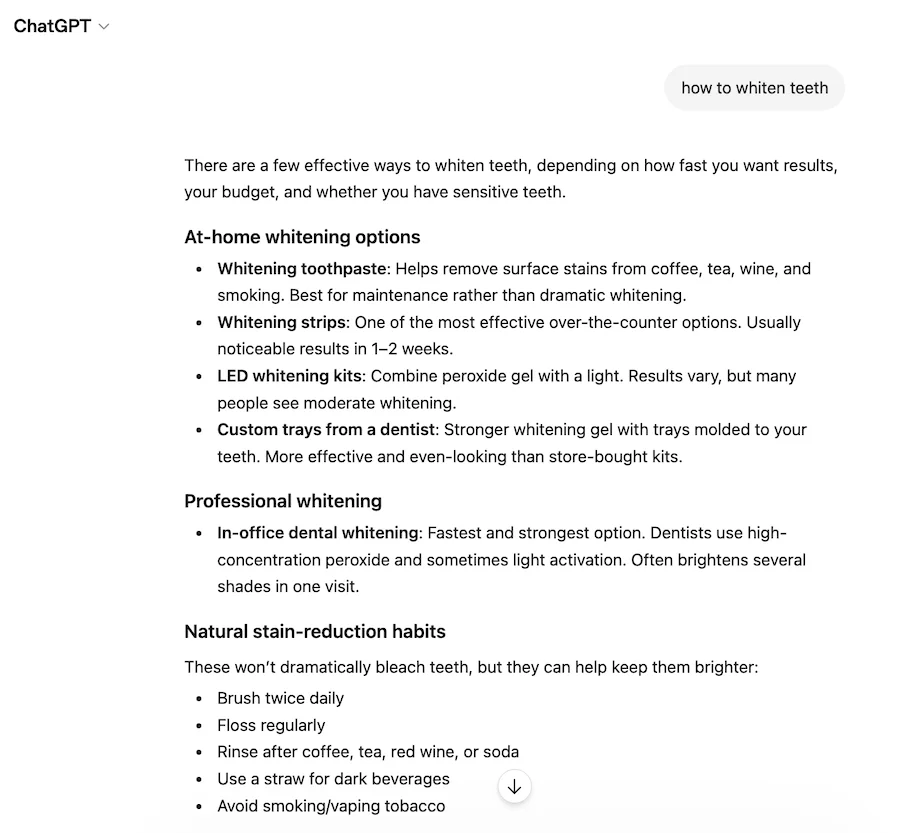
AI-powered search engines no longer operate by categorizing businesses into neat, predefined boxes and presenting users with curated lists of direct competitors. Instead, they synthesize information, weaving together comprehensive answers that often encompass solutions users may not have even considered. For instance, a query about teeth whitening might yield a response that seamlessly blends professional dental treatments, over-the-counter whitening kits, readily available whitening strips, and even trending charcoal toothpaste. This means a local dental practice is no longer solely competing with the clinic down the street; it is now in implicit contention with every drugstore aisle, countless online tutorials, and a plethora of self-directed solutions that all promise a similar end result. This article will delve into the profound implications of this AI-driven expansion of the competitive set and explore actionable strategies for businesses to navigate this new reality.
The Broadening Arena: AI Search and the Evolving Competitor Set
The era preceding AI-driven search offered a relatively straightforward approach to competitive analysis. Businesses could readily identify their rivals by conducting thorough market research, pinpointing dominant local enterprises within their industry and larger national chains operating in their service areas. Positioning strategies were then meticulously crafted in direct response to these known competitors. The narrative was largely controlled through a business’s own website, advertising, and marketing collateral, with comparisons primarily drawn against direct, local rivals.

However, AI search fundamentally disrupts this control. By synthesizing information and sourcing solutions from beyond a business’s traditional scope, AI-generated answers can introduce competitors that were previously outside the realm of consideration. This evolution necessitates a re-evaluation of how businesses understand and respond to competitive pressures.
1. AI Search: Expanding the Definition of Competition
Traditional search engines, by their very nature, tended to keep comparisons within established categories. A search for “best HVAC company near me” would predominantly return listings for local HVAC businesses, facilitating a familiar competitive positioning framework. Businesses could focus on differentiating themselves based on service quality, pricing, customer reviews, and local reputation.
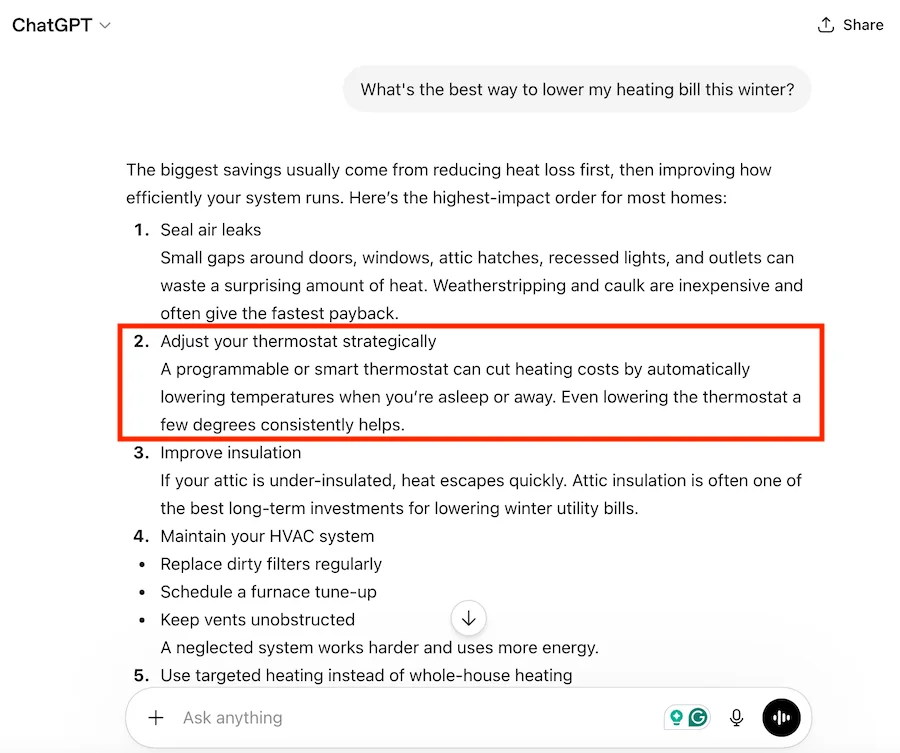
AI tools, conversely, operate on a problem-solving level rather than a categorical one. Consider a query such as, “What’s the best way to lower my heating bill this winter?” An AI search engine is not limited to presenting HVAC companies; it will likely surface a range of solutions, including smart thermostats, insulation upgrades, and energy-efficient appliance recommendations. For example, Google, through its AI-powered features, might highlight products like the Nest thermostat, which promises energy savings over time. From a consumer’s perspective, this smart thermostat becomes a direct competitor to a professional HVAC service call, as both aim to address the overarching problem of high heating costs.
This dynamic forces HVAC companies to reframe their value proposition. A website that simply states, “We do furnace repair and maintenance,” offers AI little incentive to include it in a broader conversation about energy savings. However, content that articulates the underlying causes of high heating bills—such as duct leakage, airflow imbalance, equipment neglect, or short cycling—positions the HVAC company as a knowledgeable authority. In this new context, they are not merely vendors within a service category but trusted advisors who can explain when a device-based solution is appropriate, when it falls short, and when a systemic issue requires professional diagnosis. This detailed, problem-focused approach is crucial for achieving visibility within AI-driven search results.
2. Substitute Solutions: The Unseen Rivals
A substitute solution addresses the same user need through a fundamentally different product, service, or methodology. While the concept of substitutes is not new to economic theory, its prominence within AI-generated search results is a recent and significant development.
When a user searches for ways to whiten their teeth, AI may present not only dental professionals but also a range of consumer products marketed as viable alternatives. Brands offering at-home whitening kits, which promise rapid results depending on the product and application, can inadvertently place a local dental practice in an implicit head-to-head comparison with a comparatively inexpensive drugstore purchase.
A dental practice’s website stating only, “We offer professional whitening treatments,” presents a message that is too thin to effectively compete in this expanded landscape. A more robust approach would involve content that explains the nuances of teeth whitening, such as:
- The underlying causes of tooth discoloration: Detailing factors like diet, genetics, and age.
- The different types of whitening agents: Explaining the active ingredients and their mechanisms of action.
- The comparative effectiveness and longevity of various methods: Providing insights into how professional treatments differ from at-home options in terms of results and duration.
- The safety and potential side effects of each approach: Educating consumers on risks and benefits.
Such content serves a dual purpose: it educates potential patients, allowing them to make informed decisions, and it provides AI models with the comprehensive information needed to include the dental practice in a wider array of relevant search results. This signifies a broader shift where businesses are no longer solely competing with direct replicas but with any entity that presents a plausible solution to a user’s query.
3. The DIY Advantage: AI’s Inclination Towards Self-Help
AI systems are trained on the vast expanse of the internet, which is replete with how-to guides, tutorials, explainer videos, and step-by-step instructions. This abundance of readily available do-it-yourself (DIY) content naturally gives these solutions a significant advantage in AI-generated responses. A homeowner seeking to fix patchy grass might receive a comprehensive DIY guide before ever encountering results from a professional lawn care service.
This does not necessarily mean DIY solutions always win, but they often appear first in the AI’s synthesized answer. Many businesses make the mistake of creating website content as if the buyer has already committed to professional services or a purchase. However, consumers are often still in the evaluation phase, weighing their options.
A more effective positioning strategy directly addresses this indecision by:
- Explaining the limitations of DIY approaches: Clearly outlining when a do-it-yourself fix might be insufficient or even counterproductive.
- Detailing the benefits of professional intervention: Highlighting the expertise, specialized tools, and guaranteed outcomes that professionals provide.
- Providing clear decision-making criteria: Helping consumers understand when to opt for professional services over a DIY attempt.
By answering these questions on their websites, businesses can move from being invisible to becoming integral parts of a buyer’s decision-making process.

4. Industry Boundaries Blurred: AI and Cross-Industry Competition
One of the less obvious, yet profoundly impactful, consequences of AI search is its ability to dissolve traditional industry boundaries when the end goal is the same. Personal training serves as a prime example. Historically, personal trainers primarily competed with other trainers or local gyms. Today, they also contend with fitness apps, digital coaching platforms, and online fitness content creators.
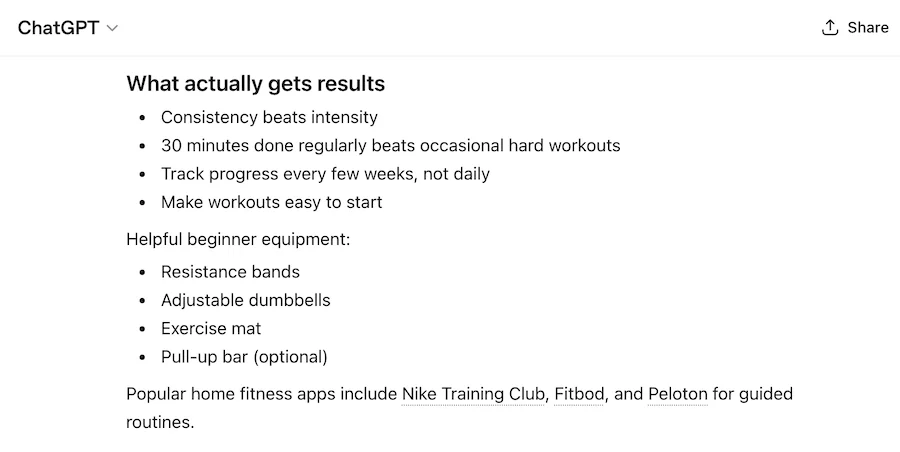
Platforms like Freeletics, which describe themselves as personalized training apps powered by AI coaches, can build plans around user goals, feedback, and fitness levels. If an individual searches for “how to get fit at home,” both a personal trainer and an app like Freeletics can be considered legitimate answers by an AI engine.
This implies that a personal trainer’s website needs to offer more than generic claims about customized workouts, as nearly every competitor in the AI’s potential answer set will make similar assertions. A more compelling positioning strategy would emphasize aspects that digital platforms struggle to replicate, such as:
- In-person accountability and motivation: The direct, human connection and encouragement provided by a physical trainer.
- Personalized form correction and injury prevention: The ability to observe and correct technique in real-time to avoid harm.
- Tailored program adjustments based on immediate feedback and physical cues: A trainer’s capacity to adapt workouts on the fly based on a client’s exertion and response.
- Holistic wellness integration: Incorporating nutrition, lifestyle, and recovery strategies beyond just exercise routines.
These are not mere marketing embellishments; they are critical decision criteria for consumers. AI systems are more likely to feature businesses that clearly articulate these unique strengths and map them to real-world scenarios.
The Visibility Challenge: Why SMBs Are Losing Ground in AI Search
A significant portion of Small and Medium-sized Business (SMB) websites were architected for a previous generation of search engine optimization (SEO). They typically focus on describing services, mentioning geographical service areas, and showcasing customer reviews and trust signals. While these elements remain important for local pack results and branded searches, they often fall short in AI-mediated discovery because they presume the competitive comparison begins within the established category.
In reality, the consumer’s comparative evaluation often starts earlier and extends much wider than before. Many SMB websites fail to address the fundamental questions underlying a user’s query, instead merely listing the services they aim to sell.
Consider the difference between a website page that simply lists “Furnace Repair Services” and one that delves into “Why Your Heating Bill Is Suddenly Higher.” The former describes an offer, while the latter enters the customer’s actual decision-making space—the very space AI is attempting to illuminate. This explains why many businesses feel overlooked by AI search. It’s not always a matter of domain authority or advertising expenditure; often, the content simply doesn’t provide AI models with the substantive information they need to extract and synthesize.
AI requires content that offers depth and actionable insights, such as:
- Detailed explanations of common problems: Going beyond surface-level descriptions.
- Comparisons of different solutions: Evaluating the pros and cons of various approaches.
- Guidance on diagnosing issues: Empowering users to understand the root cause of their problems.
- Contextual advice based on specific scenarios: Offering tailored recommendations for different situations.
If a business’s website consistently fails to address these underlying questions, AI has little basis for recommending that business when users pose such queries.
Strategic Positioning in an AI-Augmented Competitive Landscape
AI’s expansion of the competitive sphere necessitates a strategic recalibration. Businesses must directly confront and engage with substitute solutions rather than ignoring their existence. Here are four key strategies to achieve this:
1. Openly Acknowledge Alternatives
Many businesses hesitate to mention competing alternatives, fearing they might inadvertently amplify those rivals. However, silence often breeds ambiguity, which AI then fills with whatever information it finds most readily available. A more effective approach involves:
- Creating comparison content: Developing blog posts or dedicated pages that directly compare your services to common alternatives, such as DIY kits, other types of providers, or digital solutions. For example, a lawn care company might publish an article titled “DIY Lawn Care vs. Professional Services: Which is Right for You?”
- Highlighting the unique value proposition: Clearly articulating what distinguishes your offering from the alternatives, focusing on benefits that substitutes cannot easily replicate.
- Providing clear decision-making frameworks: Guiding customers on how to choose the best solution for their specific needs.
This type of content not only aids buyers in their decision-making process but also provides AI with a structured and reusable format for generating answers.

2. Articulate the Limitations of DIY Solutions
DIY-focused content gains traction due to its perceived affordability, immediacy, and empowering nature, making it attractive to AI search algorithms. The role of businesses is to clearly define the failure points of these self-help options. This translates to content that:
- Identifies scenarios where DIY is insufficient: For example, explaining that while a smart thermostat can manage temperature, it cannot diagnose underlying HVAC system inefficiencies.
- Details the risks of improper DIY execution: Highlighting potential safety hazards, property damage, or ineffective outcomes.
- Emphasizes the long-term value of professional services: Demonstrating how expert intervention can lead to greater cost savings, improved performance, and enhanced durability.
Effective comparison content does not denigrate DIY options but rather educates consumers on their inherent limitations and the circumstances under which professional expertise becomes indispensable.
3. Prioritize Outcomes Over Service Labels
Customers are primarily concerned with the outcomes they seek, not merely the labels of the services offered. Whether it’s reduced utility bills, brighter teeth, healthier lawns, pain relief, improved sleep, increased leads, enhanced security, or faster recovery, the desired end result is paramount. A business’s website should reflect this focus. While service pages remain essential, outcome-oriented pages often make it easier for both AI and buyers to understand the core value proposition. For instance, a dental practice might create content around “Achieving a Brighter, More Confident Smile” rather than solely focusing on “Teeth Whitening Procedures.”
4. Develop Extractable Comparison Content
AI systems are optimized for content that is easily parsed and summarized. Utilizing clear headings, structured comparisons, and concise explanations significantly increases the likelihood of a business’s content appearing in AI-generated answers. This includes:

- Using bullet points and numbered lists: To break down complex information into digestible segments.
- Employing Q&A formats: Directly addressing common customer questions and concerns.
- Creating comparison tables: Visually contrasting different solutions based on key criteria.
- Ensuring clear and logical flow: Making it easy for AI to identify and extract relevant information.
These formatting patterns are similar to those that perform well in featured snippets and AI Overviews, underscoring the importance of creating structured, informative content.
A Framework for AI-Optimized Competitive Positioning
To implement this thinking consistently across content strategy, businesses should adopt a three-question framework for every new piece of content:
1. What problem does the customer actually have?
Move beyond identifying the service a customer might be looking for and delve into the underlying problem they are trying to solve. Is it high energy bills, a desire for aesthetic improvement, maintaining a property, achieving a fitness goal, or something else entirely? Framing content from the problem’s perspective aligns with how both customers and AI engines approach information seeking, leading to more effective positioning.
2. What substitute solutions exist?
Compile a realistic list of all potential solutions, encompassing products, apps, DIY guides, online tutorials, and adjacent services that address the same problem through different means. If unsure about the landscape of substitutes, engaging with an AI search engine can provide immediate insight into what it is already recommending to potential customers.

3. Why is your solution better for certain situations?
This is where a business earns its place in an AI-generated answer. Be specific about the circumstances where your approach excels. This might include handling complex issues, performing safety-sensitive work, achieving long-term results, or delivering guaranteed outcomes that justify a premium price. This is not about defensiveness but about providing genuine utility to individuals making informed decisions.
Positioning around the problem rather than the service category helps AI understand when to recommend a particular business. Once AI grasps this, businesses will begin to appear in conversations they were previously unaware of.
Navigating the AI-Expanded Competitive Arena with Confidence
AI search has fundamentally redefined the concept of competition. A dentist now contends with at-home whitening kits, an HVAC company with smart thermostats, a lawn care business with YouTube tutorials, and a personal trainer with subscription-based apps. The businesses that are gaining visibility in these AI-generated answers are not necessarily those with the strongest traditional SEO or the largest advertising budgets. Instead, they are the entities that have most clearly positioned themselves against the full spectrum of solutions a customer might consider.
Success in AI search is no longer solely about keyword optimization or ranking high in traditional search results. It is about recognizing that when a user queries an AI for assistance, the real competition encompasses every plausible answer to that question, not just the immediate local rivals. The most effective strategy for winning this broadened competition is direct engagement: acknowledge alternatives, articulate trade-offs, and make a clear, honest case for when a particular solution is the most appropriate choice. Businesses that internalize this shift and adapt their strategies accordingly will gain a significant advantage, while those that continue to optimize for an obsolete competitive landscape risk falling behind.