rifanmuazin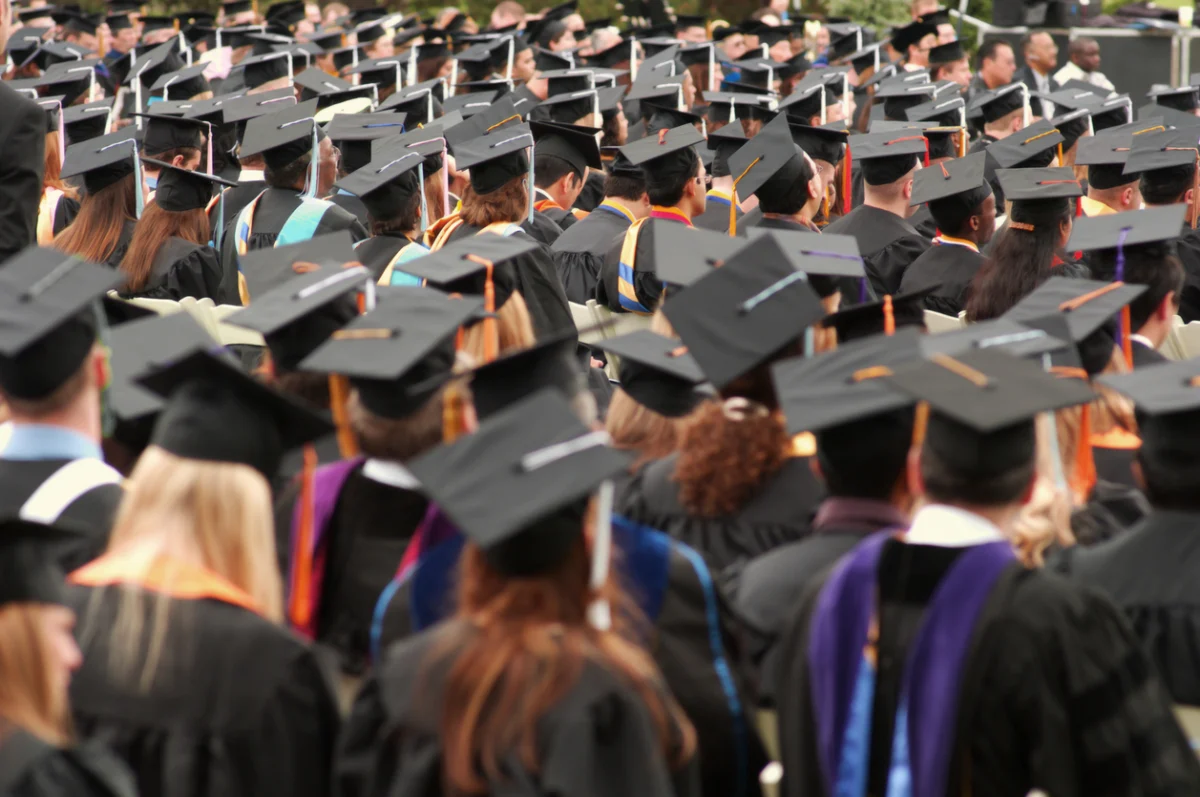
The traditional atmosphere of university commencement ceremonies, typically characterized by celebration and hopeful anticipation, has recently been punctured by a rising tide of vocal dissent directed at the technology sector. In a series of high-profile incidents, graduating students have openly booed speakers who attempted to champion the virtues of artificial intelligence (AI). These reactions, occurring at major institutions such as the University of Central Florida (UCF) and the University of Arizona, signal a significant shift in how the next generation of the workforce perceives the rapid integration of automated technologies into the global economy. What was once hailed as a tool for unprecedented productivity is now being met with skepticism, fear, and a demand for greater ethical accountability.
The first notable incident occurred during a commencement ceremony at the University of Central Florida, where Gloria Caulfield, a prominent real estate executive, addressed the graduating class. During her remarks, Caulfield described the current advancements in AI as the "next industrial revolution," a common refrain among business leaders seeking to highlight the transformative potential of the technology. However, rather than the expected applause, her comments were met with a chorus of boos from the audience. The reaction appeared to catch Caulfield off guard, highlighting a disconnect between corporate enthusiasm for AI and the lived anxieties of students preparing to enter an increasingly uncertain job market.
This sentiment was echoed and amplified just weeks later at the University of Arizona. The commencement speaker, former Google CEO Eric Schmidt, faced a sustained "storm of boos" as he took the stage to discuss the future of technology. Schmidt, a veteran of the tech industry who oversaw Google’s ascent to global dominance, compared the rise of generative AI to the advent of the personal computer. While he acknowledged the trepidation in the room, his attempts to frame AI as a tool for positive change were repeatedly interrupted by vocal disapproval from the graduates.
The reaction to Schmidt was particularly telling because of his stature in the industry and his attempt to directly address the students’ concerns. "I know what many of you are feeling about that. I can hear you," Schmidt said, attempting to pivot his speech toward a more empathetic tone. He listed a litany of modern anxieties: the fear that the future is already written by machines, the evaporation of entry-level jobs, the breaking of the global climate, and a fractured political landscape. Schmidt’s acknowledgment that the Class of 2024 is "inheriting a mess" they did not create was a rare moment of candor for a tech executive, yet even his plea for graduates to "shape the future of AI" failed to quell the discontent.
To understand why these incidents are occurring now, it is necessary to look at the timeline of AI’s public emergence. Since the release of ChatGPT in late 2022, the narrative surrounding AI has moved through several distinct phases. The initial "wonder" phase, where users experimented with the novelty of large language models, quickly gave way to a "corporate integration" phase throughout 2023. During this time, companies across every sector began announcing "AI-first" strategies, often accompanied by layoffs in departments deemed redundant by automation. By the spring of 2024, as the latest cohort of university students prepared to graduate, the reality of these shifts began to crystallize.
Data from recent studies suggests a complex relationship between young professionals and AI. According to a 2025 survey conducted by Inside Higher Ed, approximately 85% of college students reported using AI tools in their academic work. This indicates that the graduates booing these speakers are not "Luddites" or individuals who reject technology on principle. On the contrary, they are "AI natives" who understand the technology’s capabilities intimately. Their dissent stems not from a lack of knowledge, but from a deep-seated concern regarding the systemic implications of the technology.
The economic data justifies much of this anxiety. A report from Goldman Sachs recently estimated that generative AI could automate the equivalent of 300 million full-time jobs globally. For graduating seniors, many of whom have taken on significant student debt, the prospect of entering a job market where entry-level roles in coding, writing, legal research, and administrative analysis are being replaced by algorithms is daunting. The "boos" heard at commencement ceremonies serve as a raw, unfiltered public opinion poll—a vocal rejection of the "inevitability" narrative often pushed by Silicon Valley.
Beyond the economic concerns, the environmental and ethical impacts of AI are increasingly under scrutiny. The massive computational power required to train and run large language models has led to a surge in energy consumption and water usage for cooling data centers. In a generation that views climate change as an existential threat, the high environmental cost of AI is a significant point of friction. Furthermore, the ethical questions surrounding intellectual property—specifically how AI models are trained on the creative work of humans without compensation or consent—have alienated many in the arts and humanities.
The failure of Eric Schmidt’s rhetorical strategy at the University of Arizona provides a lesson in modern communication. When Schmidt attempted to pivot from AI to the importance of a "diversity of perspectives" and the role of immigrants in making America better, the boos continued. This suggests that the audience viewed his remarks as a deflection. For a generation that values authenticity and transparency, the standard "corporate platitude" no longer carries weight. When a leader who has profited immensely from the data-driven economy speaks about the "fear" of the future, it can come across as hollow if not accompanied by a commitment to tangible protections for workers and the environment.
This shift in sentiment has significant implications for corporate communications and public relations. For the past two years, many companies have operated under the assumption that adding "AI-powered" to their branding would automatically increase value and appeal. The recent backlash suggests that this "halo effect" is fading. Moving forward, organizations must approach the topic of AI with a level of nuance that acknowledges the potential for harm. Communication strategies that ignore the displacement of workers or the erosion of human-centric creative processes risk alienating both their future workforce and their customer base.
The commencement incidents also highlight a broader societal reckoning with the pace of technological change. Historically, industrial revolutions have taken decades to reshape society, allowing for the gradual development of labor laws, safety nets, and educational pivots. The AI revolution, by contrast, is moving at a speed that exceeds the capacity of regulatory bodies to respond. This "policy gap" leaves individuals feeling vulnerable, and that vulnerability often manifests as public protest.
In addition to the AI-centric backlash, other recent communication challenges illustrate the complexities of the current media landscape. For instance, the ongoing labor tensions and communication strategies surrounding the Long Island Rail Road (LIRR) strike threats serve as a reminder that traditional labor issues remain at the forefront of the public consciousness. Simultaneously, legal and branding cautions regarding the use of the term "World Cup" highlight the aggressive protection of intellectual property by global organizations. These disparate issues—AI anxiety, labor rights, and corporate gatekeeping—all point to a world where the balance of power between institutions and individuals is being fiercely contested.
The lessons for business leaders and public speakers are clear: the "boos" are a signal that the era of blind tech-optimism is over. To engage effectively with the next generation, leaders must move beyond describing AI as an unstoppable force of nature. Instead, they must address the "fear" Schmidt mentioned not just as an emotion to be managed, but as a rational response to a system that often prioritizes efficiency over human well-being.
The graduating classes of 2024 and 2025 are entering a world where the line between human and machine intelligence is blurring. They are not asking for the technology to disappear, as their high adoption rates show they recognize its utility. Rather, they are demanding a seat at the table to ensure that the "next industrial revolution" does not leave them behind. Whether through social media, internal employee forums, or the hallowed grounds of a commencement ceremony, the skeptical and the fearful are finding their voices. For those in positions of power, the challenge is no longer just to innovate, but to listen and to lead with a sense of shared responsibility for the mess—and the potential—of the future.