rifanmuazin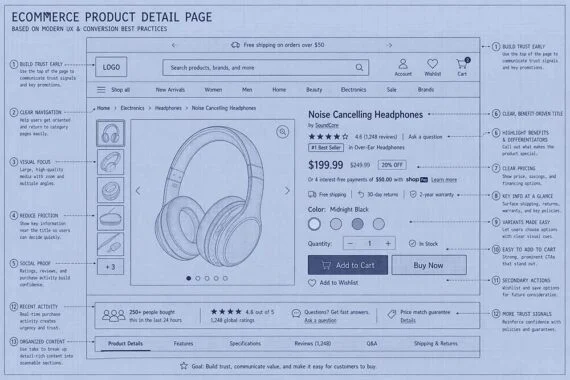
Conversion has long been the undisputed king of the ecommerce product page. For years, the primary objective of these digital storefronts was to transform a visitor into a buyer. However, the landscape of online retail is undergoing a seismic shift, driven by the rapid evolution of artificial intelligence and its integration into search and product discovery. In 2026, a product page’s ability to rank in traditional search engines, once a close second to conversion, is now facing a new, equally critical challenge: its capacity to be understood and utilized by AI. This necessitates a fundamental re-evaluation of how product pages are designed and the content they house.
The past few years have witnessed a dramatic acceleration in AI’s role in how consumers interact with the digital world. Features like AI Overviews, AI Mode, and various generative AI-powered answer solutions are fundamentally altering the path to purchase. Consumers are no longer solely relying on keyword searches to find products. Instead, they are increasingly engaging with conversational AI interfaces and emerging shopping agents that can synthesize information, provide direct answers, and even curate shopping experiences. This paradigm shift means that a product page must now excel in three distinct, yet interconnected, areas: driving direct conversions, achieving visibility through traditional search engine optimization (SEO), and being readily consumable by AI for informational extraction and understanding.
The Evolving Role of the Product Page: From Conversion Hub to AI Consumable Asset
The traditional ecommerce product page, a meticulously crafted blend of compelling copy, high-quality imagery, and clear calls to action, was designed with the human shopper in mind. Its purpose was to present a product in the most persuasive light, address potential concerns, and guide the user seamlessly through the purchase funnel. Search engine visibility was a critical, albeit secondary, consideration, ensuring that these pages could be discovered by users actively searching for specific items.
However, the advent of sophisticated AI models has introduced a new layer of complexity and opportunity. These AI systems, whether powering search engine results or acting as independent shopping assistants, require product information to be presented in a manner that is not only human-readable but also machine-interpretable. This means that product pages must be "AI consumable," meaning they can provide direct answers to user queries and represent products as structured entities with defined attributes.
To navigate this new environment effectively, product pages in 2026 must be optimized for three distinct, yet complementary, objectives:
- Ranking (SEO): This refers to the traditional optimization of product pages to appear prominently in organic search engine results. It involves keyword research, on-page optimization, and building authority.
- Extraction (Answer Engine Optimization – AEO): This focuses on making product information easily extractable by AI systems. This means presenting key details in a clear, concise, and distinct manner, allowing AI to pull specific facts and answer direct questions.
- Understanding (Generative Engine Optimization – GEO): This pertains to how AI systems comprehend and utilize product data as structured entities. It involves defining attributes, variants, and relationships in a consistent and normalized way, enabling AI to integrate products into broader datasets and generate more sophisticated recommendations and insights.
A single product page must now successfully address all three of these crucial areas to remain competitive and effective in the evolving digital marketplace.
Content Analysis: How Retailers Stack Up in the AI Era
A recent analysis, utilizing AI to review product detail pages across a diverse range of online retailers, shed light on how effectively different segments are adapting to this new tripartite optimization strategy. The study focused on the inherent content of these pages, rather than relying on structured data markup alone, to assess their performance in ranking, extraction, and understanding.
The findings revealed a significant disparity in how various retail segments are addressing these new demands. Marketplaces and large enterprise retailers, such as Amazon, Walmart, and Target, generally demonstrate a stronger performance across all three dimensions. This is largely attributed to their extensive resources and established practices in managing vast product catalogs.
Table 1: AI-Driven Product Page Content Analysis by Retail Segment
| Segment | Example Sources | Rankable (SEO) | Extractable (AEO) | Understandable as Entity (GEO) |
|---|---|---|---|---|
| Marketplaces | Amazon | Very High | Medium | Very High |
| Large Retailers | Walmart, Target | High | Medium–High | High |
| Specialty Retail | L.L.Bean | Medium | High | Medium–High |
| D2C (Structured) | AG1, Beekman 1802 | Low–Medium | High | Medium |
| D2C (Hybrid) | Casper, Allbirds | Medium | Medium | Medium |
| D2C (Aesthetic) | Vuori, Glossier | Low | Low | Low–Medium |
| Small Merchants | Mixed Shopify stores | Low | Low–Medium | Low–Medium |
Note: Scores are subjective assessments based on AI analysis of content quality and structure.
Rankable: The Enduring Power of Traditional SEO
Traditional search engine optimization continues to be a vital driver of visibility. Almost universally, product detail pages submitted to the analysis passed a basic content audit for SEO. However, the depth and breadth of optimization varied significantly.
Marketplaces and large retailers like Amazon, Walmart, and Target consistently excelled in this area. Their product pages are characterized by expansive and keyword-rich titles, dense attribute lists, and robust internal linking strategies. This approach allows their pages to rank for a wide array of search queries, capturing a broader audience. For instance, an Amazon product page might include:

- Detailed Product Titles: Often incorporating multiple relevant keywords and variations.
- Bullet Points of Key Features: Concise summaries highlighting benefits and functionalities.
- Comprehensive Product Descriptions: Elaborate narratives detailing usage, materials, and specifications.
- Customer Reviews: A significant source of user-generated content that can include valuable keywords and natural language descriptions.
- Q&A Sections: Addressing common customer inquiries, further enriching the content with relevant search terms.
In some cases, the cumulative content on these pages, heavily influenced by extensive customer reviews, can reach upwards of 10,000 words, although an average of around 2,000 words is more common. This sheer volume of relevant text provides ample signals for search engines to understand and rank the product effectively.
In contrast, many Direct-to-Consumer (D2C) brands, particularly those focused on an aesthetic or minimalist approach, often opt for cleaner, more brand-consistent language in their product titles and descriptions. While this enhances readability and brand perception, it can inadvertently limit their organic search reach. Smaller merchants, often operating on platforms like Shopify, tend to exhibit similar characteristics to D2C brands. These smaller entities could significantly benefit from adopting strategies employed by larger retailers, such as incorporating more detailed product information and utilizing a wider range of descriptive keywords.
Extractable: The Rise of Answer Engine Optimization (AEO)
The ability for a product page to be easily "extracted" by AI is becoming increasingly crucial. This means that the core information about a product – what it is, what it does, and who it’s for – must be presented in a direct, concise, and easily isolatable manner. Discreetly labeled sections, clear feature lists, and well-organized Q&A formats are essential for facilitating this extraction.
Many of the product pages reviewed in the analysis underperformed in this specific area. The lack of structured and easily digestible information makes it challenging for AI systems to pull out precise answers. The exception, once again, were large retail marketplaces, which often contain a wealth of information presented in a way that is amenable to AI extraction.
For example, a product page might have a "Features" section with bullet points that clearly articulate benefits. A "Specifications" tab could list technical details in a standardized format. An FAQ section can directly address common questions with concise answers. This clarity allows AI models to quickly identify and relay this information to users seeking specific answers.
Even small retailers can significantly improve their extractability by incorporating an FAQ section or clearly labeling key product benefits. This proactive approach ensures that their products can be readily understood and utilized by AI-powered discovery tools.
Understandable: Navigating the World of Product Entities
The concept of treating products as "entities" or "objects" with distinct attributes is fundamental to how modern search engines and AI systems operate. They increasingly categorize and understand products based on attributes such as brand, category, price, technical specifications, and their relationships to other products.
While structured data markup (like Schema.org) plays a vital role in defining these entities for machines, the content of the product page itself is equally important. To be "understandable as an entity," a product page’s content must consistently and clearly define these attributes. This includes a normalized naming convention for the product itself, clear designation of variants (e.g., color, size), and precise specification details.
Product pages from large retailers, particularly marketplaces, consistently demonstrate strength in this area. They typically describe products with clear attributes, employ normalized naming conventions, and handle variants in a consistent manner. This structured approach allows their products to be accurately represented in a wide range of AI-driven applications, including shopping results, comparison features, and structured data listings. This consistency is key for AI to accurately categorize and compare products across different sellers.
The Synergy of Three Layers: A New Blueprint for Ecommerce Success
The future of the ecommerce product page lies in the successful integration of these three critical optimization layers: SEO, AEO, and GEO. By addressing all three, retailers can unlock a powerful synergy that drives traffic not only from traditional search engines but also from the rapidly expanding universe of generative AI channels.
The AI-driven site review highlighted a significant gap: while marketplaces excel at providing comprehensive product information, many other retailers are lagging. This disparity underscores a critical imperative for all merchants, regardless of size. They must proactively ensure that their product content is optimized for ranking, extraction, and understanding.
The implications of this shift are profound. As AI continues to evolve, its influence on consumer decision-making will only grow. Shoppers will increasingly rely on AI assistants to research, compare, and even purchase products. Retailers who fail to adapt their product pages to meet these new demands risk becoming invisible in this evolving digital ecosystem.
In 2026 and beyond, a successful ecommerce product page is not merely a digital brochure designed to convert. It is a dynamic, intelligent asset that must be meticulously crafted to be discoverable through traditional means, readily understandable by AI for direct answers, and clearly defined as a structured entity within the vast digital knowledge graph. Mastering all three layers is no longer an option; it is a fundamental requirement for sustained success in the age of AI-driven commerce. The blueprint for product page optimization has been redrawn, demanding a holistic approach that balances the timeless art of conversion with the cutting-edge science of artificial intelligence.