rifanmuazin
For an extended period, the measure of SEO success was largely confined to metrics like search rankings and website traffic. The prevailing philosophy dictated that if a business appeared at the top of search results and attracted visitors, its SEO objectives were met. This linear model thrived in an era where discovery was straightforward, and traditional search engines served as the primary gatekeepers of information. However, contemporary digital behavior has profoundly reshaped this paradigm. Users today demand more than mere discovery; they seek clarity, reassurance, and unwavering confidence before committing to any decision. Confronted with an overwhelming array of choices, consumers meticulously evaluate products, scrutinizing their functionalities, comparing them against alternatives, and assessing their alignment with specific needs.
This fundamental shift heralds a new era for SEO, one that increasingly converges with product thinking and the creation of enduring value. Search engines are progressively prioritizing content and user experiences that genuinely empower informed decision-making, moving beyond a simplistic match of keywords to pages. Consequently, SEO can no longer operate in isolation as merely an acquisition channel. Its mandate now extends to supporting the entirety of the customer journey, from the initial brand touchpoint through to the post-purchase experience. This strategic realignment is not merely an incremental adjustment but a foundational redefinition driven by evolving user expectations and, significantly, the burgeoning influence of artificial intelligence.
The Historical Context: SEO’s Evolution and the AI Catalyst
To fully appreciate the current trajectory, it is crucial to understand the historical arc of SEO. In its nascent stages during the late 1990s and early 2000s, SEO was often characterized by rudimentary tactics such as keyword stuffing and simplistic link building. Search engines were less sophisticated, acting primarily as indexes where visibility was gained through brute force and technical manipulation. The mid-2000s saw a pivotal shift with the introduction of more advanced algorithms like Google’s Panda and Penguin updates, which began to penalize low-quality content and manipulative link schemes. This era emphasized content quality, user experience, and the growing importance of a website’s overall authority and trustworthiness. Search engines evolved from simple gatekeepers to curators of information, striving to deliver more relevant and valuable results.
The late 2010s further refined this trajectory with semantic search capabilities, the prominence of E-A-T (Expertise, Authoritativeness, Trustworthiness) guidelines, and mobile-first indexing. The user journey extended beyond the immediate search engine results page (SERP), recognizing that users often engaged with multiple touchpoints before making a decision. However, the most profound catalyst for the current transformation is the rapid advancement and widespread adoption of artificial intelligence. The emergence of large language models (LLMs) like OpenAI’s ChatGPT and Google’s generative AI in search (SGE) capabilities has introduced entirely new modalities for information discovery and product evaluation. These AI tools are not just processing queries; they are interpreting intent, synthesizing information, and, increasingly, facilitating direct transactions, fundamentally altering the landscape for businesses and SEO professionals alike.
Technical SEO: The Unsung Hero of Product Quality
While often perceived as a separate, purely technical discipline, technical SEO has always been intrinsically linked to product quality, or at the very least, the quality of a product’s online representation. Foundational elements such as site speed, intuitive internal linking structures, effective structured content implementation, and clear navigation are not mere optimizations; they are integral components that collectively shape how users perceive and interact with a product online. A website that loads swiftly, is logically structured, and provides seamless navigation significantly enhances the user experience. This, in turn, facilitates better comprehension not only for human visitors but also for sophisticated AI platforms that crawl and interpret web content.
The benefits are multifold: enhanced visibility in traditional search engine results, improved eligibility for AI-driven recommendations, and a superior overall digital experience. Good SEO practice mirrors the principles of sound product development: it examines the entire system holistically, prioritizes changes based on their potential impact, and relentlessly focuses on mitigating friction points for the user. A recent industry report by Digital Insights Group indicated that websites with a page load speed under 2 seconds experienced a 15% lower bounce rate and a 12% higher conversion rate compared to those loading over 4 seconds, underscoring the direct business impact of technical SEO. In essence, technical SEO acts as the engineering backbone, ensuring that the product’s digital presence is robust, efficient, and user-centric.
Adopting a Product Marketing Mindset for SEO
The traditional focus of SEO on ranking for specific keywords is no longer sufficient to guarantee reaching the appropriate audience or effectively communicating a product’s true value. This is where the strategic insights of product marketing become indispensable. Product marketers dedicate considerable effort to understanding their target demographic, identifying the core problem their product solves, and articulating compelling reasons why a customer should choose it over competitors. SEO stands to gain enormously from adopting this same deep, user-centric approach.
Keyword research, traditionally seen as a tactical targeting exercise, transforms into a powerful tool for revealing user psychology. It uncovers the precise language people use to articulate their problems, their underlying concerns, and the critical information they require before making a purchasing decision. By applying these profound insights to product descriptions, category pages, and supplementary content, SEO moves beyond superficial optimization and aligns itself with genuine user intent. This strategic integration is how SEO transcends mere traffic generation and begins to contribute meaningfully across the entire customer journey: fostering awareness, guiding consideration, driving conversion, and, crucially, nurturing long-term retention. Industry experts, like Sarah Chen, a lead SEO strategist at NexGen Marketing, emphasize, "The modern SEO professional must evolve into a product advocate, deeply understanding the user’s needs and how the product uniquely addresses them. Without this empathy, keyword rankings become hollow victories."
Products Are Content: A Fundamental Re-evaluation

Many legacy SEO strategies still erroneously treat content as a distinct entity, often siloed in blog sections while product pages are left to focus almost exclusively on conversion optimization. This perspective fundamentally misunderstands the modern digital landscape. In reality, products are content. Every detail associated with a product—its name, comprehensive descriptions, technical specifications, frequently asked questions (FAQs), customer reviews, and even post-purchase support information—constitutes invaluable content that users actively seek. This rich, product-specific content frequently possesses far greater SEO value than generic blog posts, yet many brands fail to optimize it with the same level of meticulous care.
When product pages are designed for clarity, structured logically, and written in the authentic language of the customer, they transcend their transactional role and become potent discovery assets. For example, detailed specifications not only aid in user comparison but also provide crawlable data for search engines. Comprehensive FAQs address common queries proactively, improving user experience and signaling authority. Furthermore, user-generated content, particularly reviews, serves as a powerful testament to product quality and trustworthiness, influencing both human perception and algorithmic evaluation. A study by BrightLocal indicated that 93% of consumers read online reviews before making a purchase, highlighting their critical role in the consideration phase and their indirect SEO benefits through increased engagement and trust signals.
The Dawn of AI-Mediated Commerce
The emergence of advanced AI platforms is fundamentally altering how products are discovered, evaluated, and purchased. A rapidly growing number of consumers, estimated by eCommerceNews.eu to be 58%, are now actively utilizing AI tools to research products, solicit recommendations, compare options, and understand nuanced differences between offerings. This trend signifies a monumental shift in the purchasing funnel.
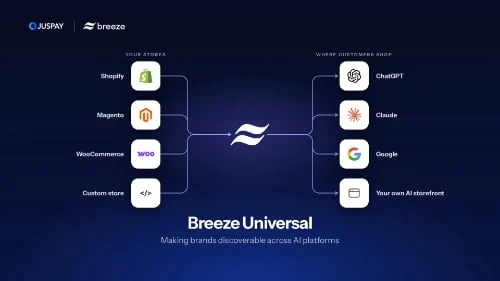
Platforms like ChatGPT are evolving beyond conversational interfaces, now supporting direct purchases through sophisticated integrations such as OpenAI’s Agentic Commerce Protocol (ACP). This means users can seamlessly discover and acquire products directly within an AI conversation, circumventing the traditional necessity of navigating to a brand’s website. For businesses, this redefines the very concept of visibility. SEO is no longer exclusively about achieving high rankings in conventional search results; it is increasingly about ensuring that products are transparent, trustworthy, and readily accessible to AI systems that function as intelligent intermediaries.
The scope of this transformation is even broader when considering initiatives like Google’s Universal Commerce Protocol (UCP). UCP extends AI-mediated commerce well beyond the simple checkout process, encompassing the entire product lifecycle—from initial discovery and order management to post-purchase support and fostering customer loyalty. This significantly expands the scope of the customer journey that SEO must now support. The goal is no longer just to be found and purchased, but to cultivate a brand reputation so robust that an AI agent would confidently recommend it, facilitate ongoing engagement, and encourage repeat interactions. This profound shift necessitates a strategic pivot for SEO professionals, urging them to understand the intricacies of ACP and UCP to maintain relevance and competitive advantage.
Schema and Structured Data: The Universal Language of AI
The efficacy of AI systems in recommending and selling products hinges entirely on their ability to access and interpret structured, machine-readable information. This is where Schema Markup becomes paramount. Schema provides a standardized vocabulary that explicitly communicates to search engines and AI platforms what a product is, its cost, current availability, customer reviews, and how it integrates into a broader product catalog.
Without robust structured data implementation, products become challenging for machines to accurately interpret and effectively surface. Conversely, with comprehensive Schema Markup, products become eligible for enriched visibility across a multitude of digital touchpoints, including traditional search engines, large language models, and emerging AI-driven shopping experiences. The requirement extends far beyond basic product schema. Detailed information regarding pricing, stock availability, customer reviews, FAQs, shipping specifics, and even compatibility data all contribute to an AI agent’s ability to thoroughly evaluate and recommend products. Furthermore, AI agents often leverage third-party review platforms, such as Trustpilot, as external signals to validate brand credibility before making a recommendation. The critical implication is clear: if structured data is incomplete, inaccurate, or inconsistent, products risk becoming entirely invisible within the rapidly expanding realm of agent-mediated discovery. A study by Schema.org reported that websites implementing rich product schema experienced a 26% increase in click-through rates for relevant product queries, underscoring its tangible impact.
Navigating the New Landscape: Implications for Businesses and SEO Professionals
The fundamental rules of SEO have not been discarded but rather profoundly extended. Core principles like product thinking, the meticulous application of structured data, the creation of clear and compelling content, and rigorous technical optimization have always been crucial. What has dramatically changed is the audience for whom businesses are optimizing. Alongside the human visitor, there is now a parallel audience of AI agents – sophisticated digital entities capable of evaluating, recommending, and, in many instances, autonomously completing purchases on a user’s behalf.
For businesses, this transformation necessitates an unprecedented level of cross-functional collaboration. SEO teams must work hand-in-hand with product development, marketing, engineering, and customer support departments to ensure a cohesive and optimized digital presence. Significant investment in robust structured data strategies and a holistic approach to product content is no longer optional but essential. Furthermore, cultivating undeniable brand credibility and unwavering transparency becomes a critical competitive differentiator in an AI-driven landscape where trust signals are paramount. The traditional notion of the "website" as the sole sales channel must be re-evaluated, acknowledging the emergence of distributed commerce facilitated by AI.
For SEO professionals, this shift demands a significant evolution of skill sets. Upskilling in product management principles, understanding complex data architecture, and developing a deep comprehension of AI capabilities are becoming non-negotiable. The role is transitioning from tactical keyword optimization to strategic product advocacy, where success is measured not merely by website traffic, but by higher-level metrics such as conversion rates, customer lifetime value (CLTV), and positive brand sentiment expressed through AI agent recommendations. The businesses poised to thrive in this evolving ecosystem are those that proactively make their products inherently easy to understand, easy to trust, and effortlessly discoverable, irrespective of whether a human or a machine is initiating the search. The future of SEO is undeniably intertwined with the future of product, customer experience, and artificial intelligence.