
 rifanmuazin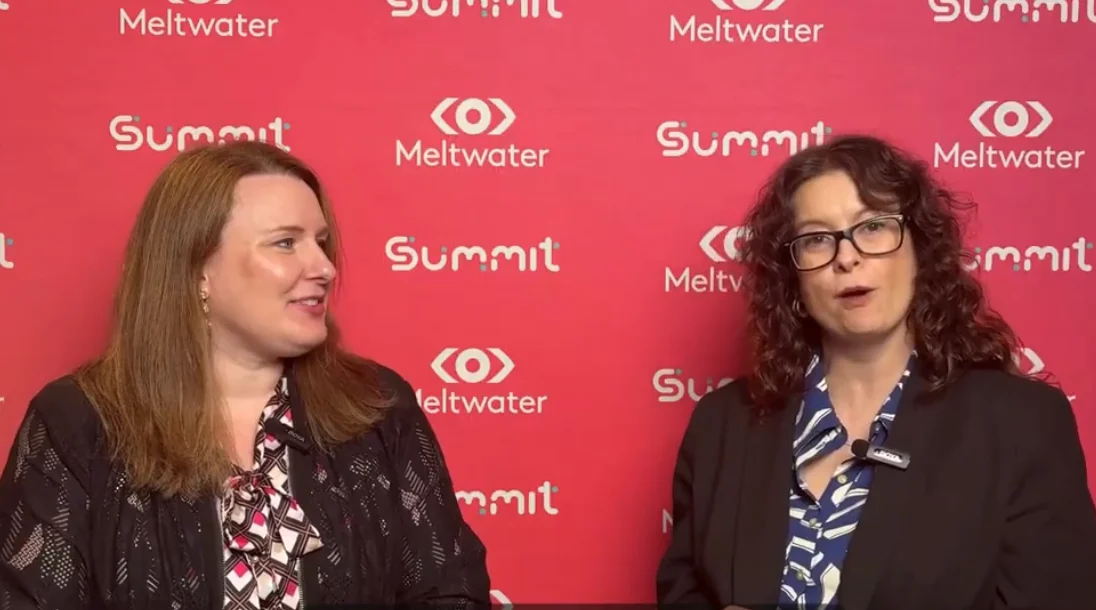
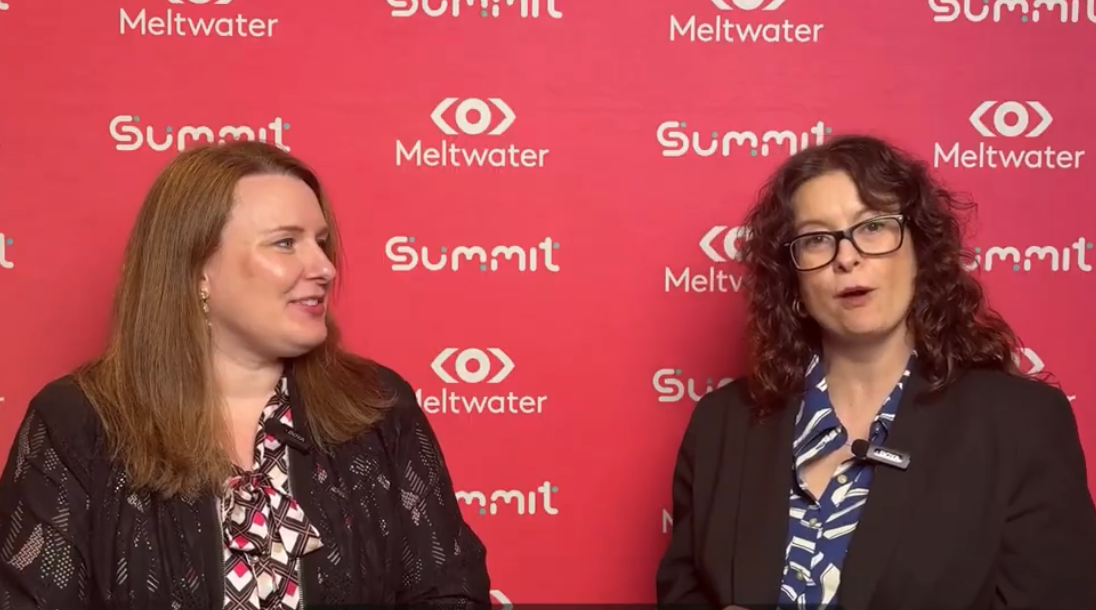
The 2026 Meltwater Summit in New York City has emerged as a pivotal battleground for the future of digital communication, as industry leaders grapple with the seismic shift from traditional search engines to generative artificial intelligence. Among the most significant contributions to this dialogue was a featured session with Christina Bennett, Head of Communications at Priceline, who detailed how the travel giant is overhauling its approach to public relations. In an era where Large Language Models (LLMs) provide direct answers to consumer queries—often bypassing the need for a user to ever click through to a website—Priceline is pioneering a new metric-driven framework known as Generative Engine Optimization (GEO).
For decades, the efficacy of a PR campaign was measured through a "click-based" lens: impressions, click-through rates (CTR), and direct referral traffic. However, as AI assistants like OpenAI’s ChatGPT, Google’s Gemini, and Priceline’s own AI travel advisor, Penny, become the primary interfaces for consumer discovery, these legacy metrics are becoming increasingly obsolete. Bennett argues that the industry is entering a "reputation engine" era, where the goal of communications is no longer just visibility, but ensuring brand authority within the synthetic logic of AI models.
The Evolution of Metrics: From Clicks to Citations
The core challenge facing modern communicators is the "zero-click" phenomenon. When a user asks an AI for the best travel deals for a summer vacation, the AI synthesizes information from across the web to provide a concise answer. If the brand is mentioned but not linked, or if the user receives all the information they need within the AI interface, traditional tracking methods fail to capture the value of that earned media.
To combat this, Priceline has shifted its focus toward "editorial citation share." During her discussion at the Meltwater Summit, Bennett revealed that Priceline is collaborating with specialized analytics firms, such as Profound, to benchmark how often the brand is cited by LLMs compared to its competitors. This involves a rigorous month-over-month analysis of editorial citations, allowing the communications team to prove their value with hard data. By tracking specific prompts tied to marketing campaigns, Bennett’s team can determine if their PR efforts are moving the needle in terms of "share of model"—a new frontier that replaces the traditional "share of voice."
This data-driven approach allows Priceline to treat PR as a performance marketing engine. By identifying which high-authority editorial outlets are most frequently crawled and cited by LLMs, the comms team can refine their pitching strategy. The focus has moved away from broad-reach headlines toward "synthesis-ready" content—information structured in a way that AI can easily ingest, summarize, and attribute to the brand.
A Chronology of Innovation: Priceline’s AI Journey
Priceline’s current leadership in GEO is the result of a multi-year strategic pivot toward artificial intelligence. While many companies began experimenting with generative AI in late 2023, Priceline was already positioning itself as an early adopter.
In June 2023, Bennett and the Priceline executive team traveled to Silicon Valley to announce the launch of "Penny" at a major Google Cloud event. Penny, a generative AI travel advisor, was designed to handle complex, conversational queries that traditional search filters could not accommodate. Since that initial launch, Priceline has expanded its partnerships with all major LLM providers to power both consumer-facing tools and internal productivity engines.
Internally, the company has deployed AI for a variety of high-level tasks, including coding, testing, and the creation of executive briefing books—a move that has significantly reduced the administrative burden on the communications staff. This internal familiarity with AI technology has provided the PR team with a unique advantage: they understand the "black box" of AI well enough to influence how the brand appears in external models.
Auditing the AI Perception: The "Traffic Hack" and Reputation Management
One of the most provocative insights shared by Bennett at the summit was the necessity of auditing brand perception within AI environments. She recounted a recent experiment conducted while stuck in traffic returning from LaGuardia Airport, where she prompted an LLM to assess Priceline’s current PR strategy based on its earned media coverage.
The results were illuminating. While the AI’s assessment largely aligned with the company’s goals, it also revealed unexpected perceptions derived from the nuances of editorial coverage. Bennett emphasized that this type of "AI audit" should be a standard practice for brand managers. By asking the same questions a consumer might ask—and observing what the AI "debunks" or highlights—comms teams can identify gaps in their narrative and proactively work to correct the record through targeted media outreach.
This strategy treats the LLM as a living entity that must be managed and "educated" through high-authority content. Because LLMs prioritize authoritative, frequently updated, and factually dense sources, the role of earned media has actually become more critical, not less. Editorial mentions in Tier-1 publications serve as the "ground truth" for AI models, making the PR professional the primary architect of the data sets that train the future of consumer search.
Supporting Data: Consumer Trends and the "Pandemic Puppy" Effect
The shift toward AI-driven search is also revealing granular shifts in consumer behavior. Bennett noted that by analyzing the FAQs and queries processed by Penny, Priceline can identify emerging travel trends in real-time. One notable data point is the surge in pet-related travel queries. As "pandemic puppies" have grown into full-time travel companions, consumers are increasingly asking AI assistants about pet-friendly accommodations and airline policies.
This type of data allows the PR team to create "synthesis-ready" content that addresses specific consumer pain points. By feeding the internet ecosystem with authoritative articles about pet travel, Priceline ensures that when an LLM is asked for pet-friendly advice, the brand is surfaced as the primary expert. This creates a virtuous cycle where consumer data informs PR strategy, which in turn influences the AI models that consumers use to make decisions.
The Looming Challenge: The Zero-Citation Future
Despite the opportunities presented by GEO, Bennett issued a stark warning regarding the future of AI search: the move toward synthesis without citation. While current models often provide footnotes or links to sources, there is a growing trend toward "pure synthesis," where the AI provides an answer based on its training data without directing the user to the original source.
"The one that stresses me out is the move toward LLMs not using citations at all," Bennett admitted. "That gets to the synthesis layer—your reputation and your content need to be strong enough and omnipresent enough that the LLMs include you regardless."
In a zero-citation environment, the "click" is completely removed from the equation. For a brand to survive in this landscape, it must achieve a level of "internet ecosystem authority" that makes it inseparable from the topic at hand. This requires a shift from tactical PR to strategic brand-building. If an AI is asked to "find a great hotel deal," the goal for Priceline is to have its name so synonymous with "deals" within the model’s neural network that the AI recommends the service by default, even without a supporting link.
Broader Impact and Industry Implications
The strategies outlined by Priceline at the 2026 Meltwater Summit serve as a blueprint for the broader communications industry. The transition from SEO (Search Engine Optimization) to GEO represents a fundamental change in how information is indexed and consumed.
Industry analysts suggest that the "Priceline Model" of PR—focusing on citation share, AI audits, and synthesis-ready content—will likely become the standard for Fortune 500 companies within the next 24 months. As Google continues to integrate Search Generative Experience (SGE) and platforms like Perplexity gain market share, the ability to "speak AI" will be the defining skill for the next generation of PR professionals.
Furthermore, the integration of PR and performance marketing is expected to accelerate. As Bennett noted, the travel industry has historically been a performance-driven engine. By bringing hard metrics to earned media through GEO, PR is finally gaining a seat at the table in terms of direct, measurable impact on the bottom line.
Conclusion: Embracing the New Frontier
As the Meltwater Summit concluded, the consensus among attendees was that the era of "traditional" PR is over. The rise of generative AI has not killed the industry, but it has fundamentally changed the rules of engagement. For brands like Priceline, the challenge is no longer just about getting a story into the New York Times; it is about ensuring that the story is told in a way that the AI of the future will remember, synthesize, and repeat.
Christina Bennett’s approach demonstrates that while the technology is complex, the fundamental goal remains the same: reputation management. Whether the audience is a human reader or a large language model, the premium remains on authority, accuracy, and presence. As the digital landscape continues to evolve, those who treat AI as a "reputation engine" rather than a threat will be the ones who define the next decade of brand communication.










