rifanmuazin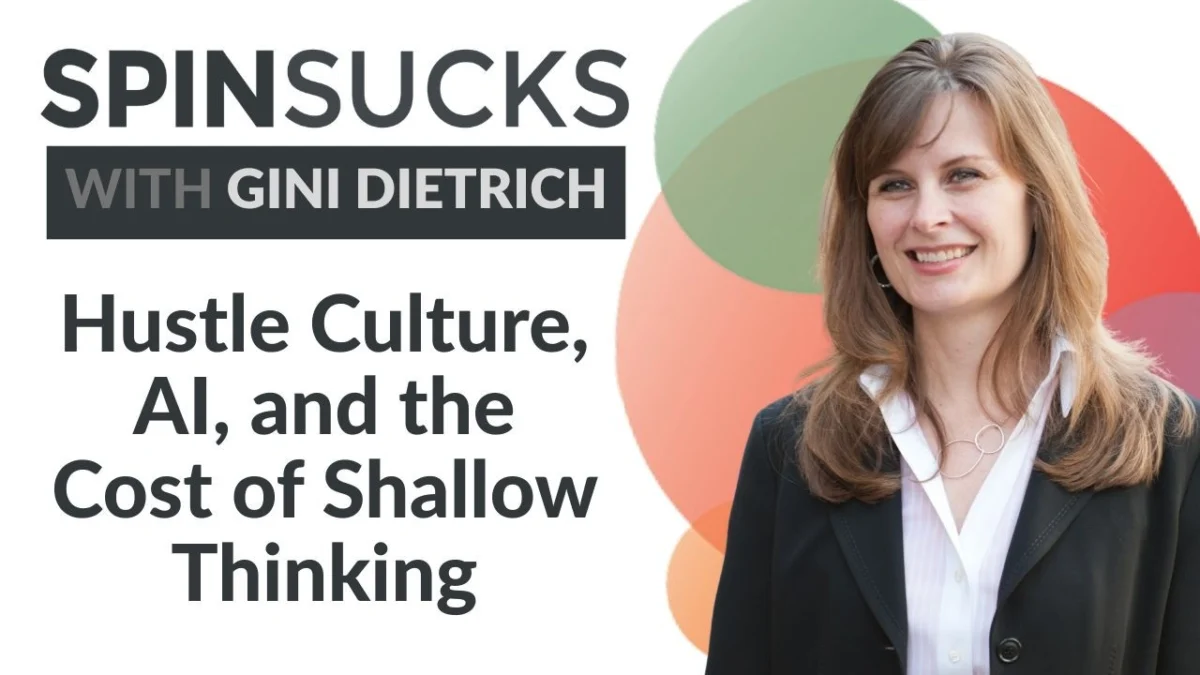
The digital landscape is currently witnessing a profound transformation in how professionals interact with information and each other, as the integration of generative artificial intelligence (AI) intersects with a pre-existing culture of hyper-productivity. While much of the public discourse surrounding AI focuses on the potential for job displacement or technical hallucinations, communication experts and digital anthropologists are increasingly concerned with a more subtle erosion: the decline of deep thinking and the rise of performative engagement. Recent observations within the marketing and communications industry suggest that AI has not created shallow engagement, but has instead provided a high-speed engine for a culture already predisposed toward volume over value and visibility over substance.
The Rise of the Non-Comment and Automated Interaction
A primary symptom of this shift is the emergence of the "non-comment" on professional networking platforms like LinkedIn. These are interactions where AI-generated summaries are posted in response to articles or thought-leadership pieces, often repeating the original content’s main points without adding unique perspective, critique, or personal insight. These comments serve as a technical verification that "words were posted," yet they offer no evidence that the commenter actually read or processed the material.
Communication strategist Gini Dietrich, founder of the PESO Model, recently highlighted this trend, noting that these automated interactions contribute nothing to the discourse while cluttering digital ecosystems with "synthetic noise." The phenomenon has sparked a broader debate about the "watermark" of efficiency—a cultural pressure to move through as much information as possible, regardless of whether that information is actually understood or retained. This "ocean-skimming" behavior is increasingly viewed not as a technological flaw, but as a logical outcome of professional environments that reward responsiveness and throughput above all else.
Historical Context: From Hustle Culture to AI Acceleration
The roots of this behavioral shift predate the public release of ChatGPT in November 2022. For over a decade, "hustle culture" has dominated the professional sphere, particularly within the technology and creative sectors. This cultural movement, characterized by the glorification of overwork and constant availability, redefined ambition as a state of perpetual motion.
The timeline of this evolution suggests a steady progression toward the current state:
- 2010–2015: The rise of "Grind Culture" and the normalization of the 24/7 work cycle, fueled by social media platforms that allowed professionals to broadcast their "busy-ness" as a status symbol.
- 2016–2019: The "Optimization Era," where productivity apps and "life hacks" became a multi-billion dollar industry, focused on squeezing every possible second of utility out of the workday.
- 2020–2021: The COVID-19 pandemic accelerated digital transformation, but also increased "digital exhaustion" as the boundaries between work and home dissolved, leading to a surge in skimming and rapid-fire communication.
- 2022–Present: The "Generative AI Explosion," which provided the tools to automate the very behaviors hustle culture had been demanding for years: instant output, constant presence, and the ability to summarize vast amounts of data without the "friction" of deep reading.
Experts argue that AI did not invent shallow engagement; it simply met a market demand created by years of workaholism. When professional success is measured by the volume of Slack messages sent, the number of LinkedIn posts shared, and the speed of email replies, the human brain naturally seeks tools to maintain that performance.
Supporting Data: The Cost of the Efficiency Trap
The drive for speed is supported by startling statistics regarding modern workplace habits. According to Microsoft’s 2024 Work Trend Index, 75% of knowledge workers globally are now using AI at work to keep up with the pace of their responsibilities. However, the same report indicates that "digital debt"—the volume of emails, pings, and meetings—is outstripping the human capacity to process it.
Further data from Gallup reveals that burnout remains at near-record highs, with approximately 27% of workers reporting they feel burned out "very often" or "always." This environment creates a psychological "scarcity mindset," where employees feel they do not have the luxury of time required for deep reflection. A study published in Nature regarding human attention spans suggests that the collective attention span is narrowing, driven by the rapid turnover of trending topics and the sheer volume of content produced daily.
In this context, the use of AI to summarize a 2,000-word article into three bullet points is not seen as a loss of knowledge, but as a necessary survival tactic. The unintended consequence, however, is a workforce that is "broad but shallow," capable of discussing a thousand topics but perhaps unable to synthesize a complex original argument regarding any of them.
The Performance of Consumption and Metric-Driven Reading
A significant aspect of this trend is what social critics call the "performance of consumption." This is most visible in the annual tradition of sharing "reading lists" or the number of books consumed in a calendar year. On platforms like Goodreads and LinkedIn, the metric of "books read" has, for many, replaced the value of "ideas integrated."
This shift toward metric-driven reading mirrors the broader corporate obsession with Key Performance Indicators (KPIs). When reading becomes a task to be checked off—or a summary to be generated by AI—the transformative power of literature and long-form journalism is lost. Professional development is increasingly treated as an Olympic event where the gold medal goes to the individual who "processed" the most content at the highest speed.
Industry analysts suggest that this creates a "feedback loop of mediocrity." If everyone is using the same AI tools to summarize the same trending articles, the resulting professional discourse becomes homogenized. Originality, which requires the "friction" of disagreement and the slow "cooking" of ideas in the subconscious, is sacrificed for the sake of a polished, immediate, but ultimately empty response.
Expert Analysis: The Implications for Leadership and Innovation
The long-term implications of this trend are particularly concerning for leadership and innovation. Discernment—the ability to judge what is true, what is important, and what is noise—is a fundamental requirement for effective leadership. If leaders outsource their "first contact" with ideas to AI summaries, they risk losing the nuances that drive strategic breakthroughs.
Alan Kercinik, a veteran in the communications space, recently noted that the obsession with "getting through the ocean" prevents professionals from actually "swimming" in the ideas. This sentiment is echoed by productivity experts like Cal Newport, who argues in Deep Work that the ability to perform complex, cognitively demanding tasks is becoming increasingly rare and, therefore, increasingly valuable.
From a journalistic and organizational perspective, the cost of this superficiality includes:
- Loss of Context: AI summaries often strip away the "why" and "how" of an argument, leaving only the "what," which can lead to misinterpretation of complex data.
- Homogenization of Thought: When the "performance of being informed" takes precedence over actual thinking, professionals tend to gravitate toward safe, middle-of-the-road opinions that mirror the AI’s training data.
- Erosion of Trust: As audiences become more adept at spotting AI-generated "non-comments," the perceived authenticity of professional interactions declines, potentially damaging brand and personal reputations.
A Return to Deliberate Engagement
In response to the "efficient panic" of the modern workplace, a counter-movement is beginning to form among educators and high-level strategists. This movement emphasizes "friction" as a tool for better thinking.
Educational case studies, such as the humanities curriculum for middle-school students cited by Dietrich, demonstrate the value of slow-form projects. When students are required to spend months researching a single topic—reading multiple books, watching documentaries, and taking extensive manual notes—they develop a level of mastery and a unique point of view that cannot be replicated by a quick AI prompt.
For the modern professional, this "slow-thinking" approach involves several deliberate shifts:
- Selective Consumption: Moving away from the "keep up with everything" mentality and choosing to go deep on a few high-value sources.
- Active Note-Taking: Engaging with content by manually summarizing and questioning it, rather than relying on automated tools.
- Strategic Silence: Recognizing that if one does not have a substantial contribution to make to a digital conversation, silence is a more professional choice than an automated "non-comment."
Conclusion: The Value of Perspective in a Synthetic World
As the volume of synthetic, AI-generated content continues to grow, the market value of human perspective, taste, and judgment is expected to rise. The irony of the current technological moment is that the more content we produce, the more rare actual insight becomes.
Organizations that continue to reward the performance of speed may find themselves with highly efficient teams that lack the ability to navigate complex, non-linear problems. Conversely, those that protect their employees’ time for reflection and deep reading may gain a significant competitive advantage.
The challenge for the 2026 professional landscape is not to reject AI or the efficiencies it provides, but to become more deliberate about what is worth diving into. In a world where everyone is racing to get through the ocean as quickly as possible, the individuals and organizations that stop to understand the depths will be the ones who possess a truly unique point of view. The fix is not found in the tools, but in a cultural shift away from the "performance of being busy" and toward the actual work of being thoughtful.