admin
admin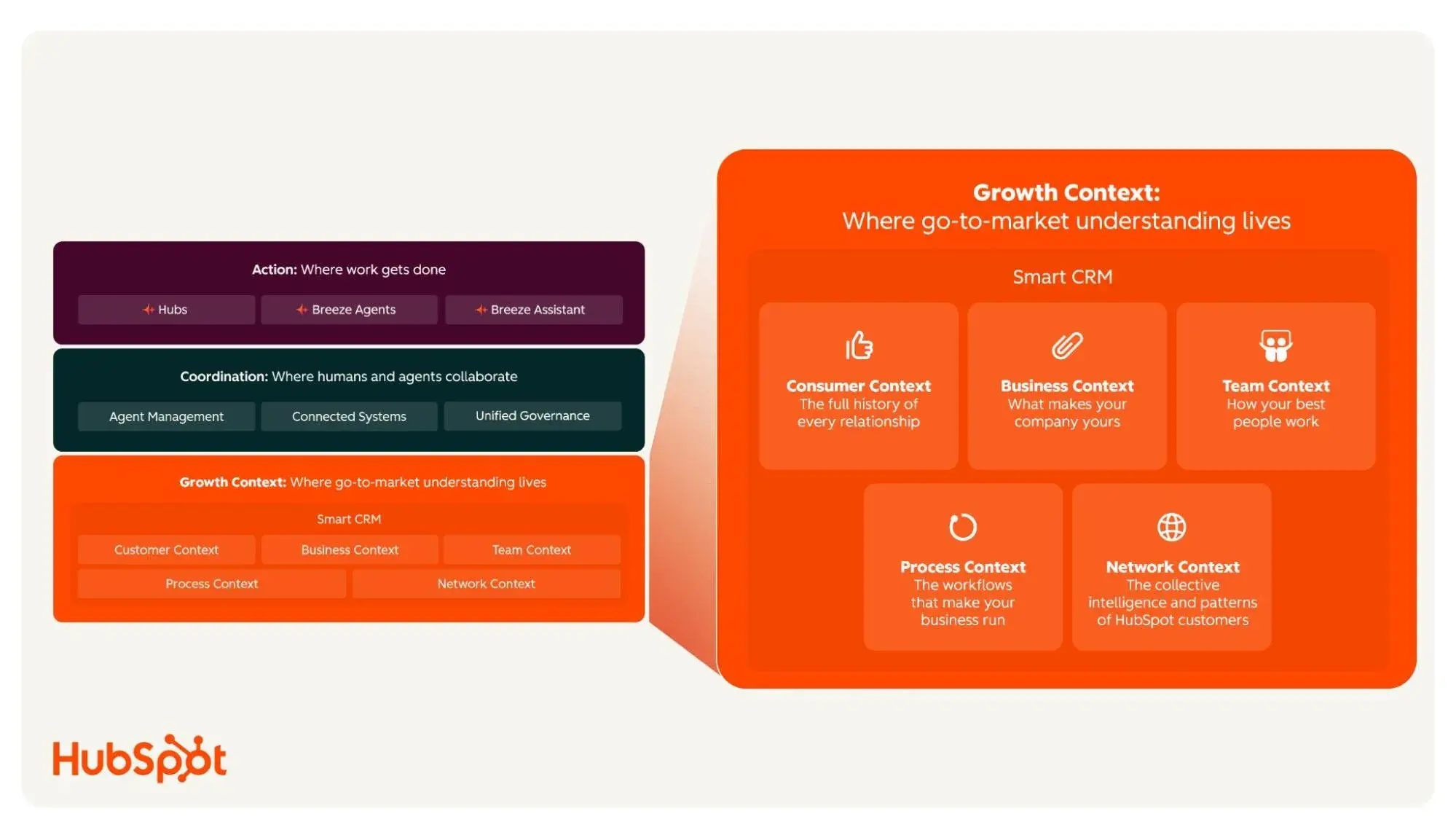
Across industries, companies are grappling with a persistent paradox: despite significant investments in artificial intelligence tools and extensive training, AI initiatives frequently fail to deliver the anticipated transformative impact. This widespread frustration stems from a common set of symptoms: AI-generated emails that elicit no response, sales leads that are six months old, and content that is indistinguishable from competitors’ offerings. Leaders find themselves cycling through new technologies and training programs, yet the fundamental question remains unanswered: why isn’t AI genuinely moving the needle for their businesses?
The emerging consensus among technologists and strategists is that the root of this underperformance is neither the sophistication of AI models nor the sheer volume of data. Instead, the critical missing element is context—the specific, nuanced understanding of a business’s operations, its unique customer base, their immediate needs, and the intricate ways in which teams actually function. This contextual gap, often overlooked, represents the most challenging problem to solve and the area where the AI industry has been slowest to innovate.
The Pervasive AI Paradox: High Investment, Lagging Returns
The current state of enterprise AI adoption paints a mixed picture. While a 2023 McKinsey report indicated that AI adoption continues to grow, with over 70% of companies reporting some use of AI, a significant portion still struggle to demonstrate tangible return on investment. This disconnect highlights a critical flaw in current implementation strategies. Businesses frequently encounter scenarios where AI-powered tools, despite their technical prowess, produce outputs that are either irrelevant, outdated, or generic. For instance, an AI tasked with generating sales outreach might draft emails that fail to resonate because they lack specific insights into a prospect’s recent interactions with the company or their industry-specific pain points. Similarly, lead generation tools might resurface opportunities that have long since been closed or are no longer viable, leading to wasted sales efforts and reduced team morale.
This inefficiency isn’t merely a minor inconvenience; it translates into substantial financial and operational burdens. The constant need for human intervention to correct, refine, or entirely re-brief AI systems diverts valuable resources. Teams spend countless hours manually copying and pasting information between disparate systems, or painstakingly providing background information to AI before it can execute even simple tasks. This "briefing tax," as some industry observers term it, represents a hidden cost that significantly erodes the perceived value of AI investments. It highlights that the problem isn’t a lack of AI capability, but rather a fundamental disconnect between AI’s processing power and the dynamic, lived reality of a business.
Beyond Data: Understanding the Critical Role of Context
To truly understand the "context gap," it’s crucial to distinguish between data and context. Data, in its rawest form, represents a record of events, transactions, or observations. For example, a Customer Relationship Management (CRM) system might contain a record indicating that a deal with "Company X" closed eighteen months ago at a specific price point. This is data—a factual snippet of what occurred.
Context, however, imbues that data with meaning, purpose, and actionable insight. Continuing the CRM example, context would involve knowing why that deal closed: perhaps the primary champion at Company X advocated strongly for the product before switching to another firm, or the pricing structure had to be adjusted multiple times to meet budget constraints. Furthermore, context would reveal that Company X has since become a vocal advocate, referring several new clients annually, and actively dislikes automated communications. This rich, qualitative layer of understanding, often held implicitly by human sales representatives or customer success managers, is precisely what traditional AI systems, built primarily on structured data, fail to capture.
Industry analysts emphasize that while the evolution of large language models (LLMs) has dramatically improved AI’s ability to process and generate human-like text, their effectiveness in specific business applications remains constrained by their reliance on generalized training data. Without the infusion of proprietary, real-time, and deeply nuanced business context, even the most advanced LLMs can produce outputs that are technically correct but practically useless or, worse, confidently incorrect. The challenge, therefore, shifts from acquiring more data or building better models to establishing an infrastructure that seamlessly integrates and maintains dynamic business context.
The "Context Gap": A Fundamental Flaw in AI Integration
The persistent "context gap" isn’t an accidental oversight; it’s a structural limitation of how many enterprise software platforms have historically been designed. These systems, often built as silos for specific functions (e.g., marketing automation, sales enablement, customer service), excel at capturing and managing their domain-specific data. However, they rarely provide a unified, dynamically updated repository for the holistic, interdepartmental context that defines a customer’s journey or a business’s strategic shifts.
This fragmentation means that while individual teams possess vital pieces of the contextual puzzle—a sales team knows the negotiation history, marketing understands brand voice, and customer service tracks post-purchase issues—this knowledge rarely converges into a single, accessible source for AI. When AI tools are then layered onto these disparate systems, they inherit the fragmentation. They might access a specific dataset, but they lack the overarching narrative, the "why" and "how" that truly inform intelligent action.
Furthermore, context is not static; it evolves constantly. Competitive landscapes shift, product roadmaps change, ideal customer profiles are refined, and operational playbooks are updated. A significant flaw in many current AI implementations is their inability to adapt to these ongoing changes. An AI system, having processed information from six months ago, might continue to operate on a version of the business that no longer exists. This leads to outputs that are "confidently wrong"—recommendations or content that might sound plausible but are entirely misaligned with current business objectives or customer realities. Such inaccuracies not only undermine AI’s utility but also erode user trust, pushing teams back to manual processes.
The Economic Burden of Disconnected AI: The "Briefing Tax" and Its Consequences
The hidden cost of the context gap manifests most acutely in what is termed the "briefing tax." This refers to the repetitive, time-consuming effort required by human operators to provide AI with sufficient background information for every meaningful task. Imagine a marketing professional needing to explain their brand voice, target audience, competitive landscape, and specific campaign goals every time they prompt an AI to generate content. Or a sales representative having to paste in an account’s entire interaction history before asking for research on a prospect. This constant re-briefing is not just an inefficiency; it’s a significant drain on productivity and a major inhibitor of AI’s potential.
Estimates from various industry reports suggest that knowledge workers can spend anywhere from 15% to 30% of their workday searching for, consolidating, or re-contextualizing information. When AI tools demand similar levels of manual context provision, they negate much of their promised efficiency. The real cost isn’t just the hours lost to these repetitive tasks, but the enormous opportunity cost: the proactive insights AI could have surfaced, the strategic decisions it could have informed, and the personalized experiences it could have created, had it possessed a comprehensive and dynamic understanding of the business.
Beyond the daily friction, the long-term implications are even more severe. Without an embedded mechanism for continuous contextual learning, AI tools remain mere utilities. They never evolve into trusted teammates capable of anticipating needs, understanding nuances, and independently driving value. This stagnant relationship prevents AI from truly becoming an extension of human intelligence, confining it to a reactive role rather than an agentic one. The result is a workforce that views AI with skepticism, often perceiving it as more of a chore than an accelerator.

Evolution of Enterprise AI: From Automation to Agentic Intelligence
The journey of enterprise AI has seen several significant shifts. Early AI applications focused heavily on Robotic Process Automation (RPA), automating repetitive, rule-based tasks. This was followed by the rise of machine learning (ML) and predictive analytics, allowing businesses to derive insights from historical data and forecast future trends. The recent explosion of generative AI, powered by sophisticated LLMs, has opened new frontiers in content creation, code generation, and conversational interfaces.
However, each phase has brought its own set of challenges. While RPA lacked cognitive understanding, and traditional ML often operated in silos, generative AI, despite its impressive linguistic capabilities, still fundamentally struggles with deep, proprietary business understanding. This realization has catalyzed a shift towards "agentic" AI—a paradigm where AI systems are not just tools that execute commands, but intelligent agents capable of understanding goals, formulating plans, executing actions, and adapting based on ongoing feedback and evolving context.
The concept of an "agentic customer platform" emerges from this evolution. Such a platform aims to move beyond mere data storage or model execution. It seeks to build an intelligent layer that continuously captures, organizes, and updates the complete tapestry of business context. This context, spanning every customer interaction, product detail, market shift, and internal workflow, becomes the foundational infrastructure upon which AI agents can operate autonomously and intelligently. This represents a significant leap from simply using AI to integrating AI as an intelligent, proactive participant in business processes.
HubSpot’s Vision: The Agentic Customer Platform and "Growth Context"
Recognizing this profound need, companies like HubSpot are championing the development of platforms specifically designed to address the context gap. HubSpot’s recently introduced Agentic Customer Platform is built on the premise that true AI value in growth-oriented organizations hinges on a unified repository where all customer data and, critically, business context resides. This singular source of truth is then made accessible to both human teams and AI agents precisely when and where it’s needed.
At the heart of this initiative is the concept of "Growth Context." Unlike personal AI tools (like consumer-grade chatbots) that build personal preferences, or enterprise knowledge tools (like internal search engines) that index organizational documents, Growth Context is specifically tailored for the dynamic needs of marketing, sales, and customer success teams. It represents the rich, high-quality, and precise understanding necessary to drive tangible outcomes across the entire customer lifecycle.
HubSpot envisions Growth Context as having several critical dimensions, each contributing to a holistic understanding of the business ecosystem:
- Customer Journey Context: A comprehensive, real-time understanding of every customer’s interactions, preferences, purchasing history, support tickets, and engagement with marketing campaigns. This goes beyond simple data points to include the emotional tenor of interactions and evolving needs.
- Product & Service Context: Detailed and up-to-date knowledge of all offerings, including features, benefits, pricing structures, common use cases, limitations, and future roadmaps. This allows AI to accurately describe products, suggest relevant solutions, and answer complex queries.
- Competitive Intelligence Context: A dynamic understanding of the competitive landscape, including competitor offerings, pricing, market positioning, strengths, and weaknesses. This enables AI to differentiate products effectively and help teams formulate winning strategies.
- Operational Workflow Context: Insights into internal team processes, standard operating procedures, sales playbooks, marketing guidelines, and customer service protocols. This ensures AI actions align with established business practices and brand voice.
- Historical Interaction Context: Beyond simple data logs, this involves understanding the reasons behind past decisions, the evolution of customer relationships, and the nuanced outcomes of previous strategies. This provides the institutional memory that prevents AI from repeating past mistakes or offering irrelevant suggestions.
By establishing this infrastructure, HubSpot aims to enable AI to continuously learn and adapt as the business evolves, eliminating the "briefing tax" and ensuring AI outputs are always relevant, accurate, and aligned with current objectives. The goal is for this context-aware infrastructure to operate invisibly in the background, constantly updating and maintaining relevance without requiring explicit human intervention.
Redefining AI Evaluation: Asking the Right Questions
For businesses evaluating AI solutions, the focus must shift from merely assessing model capabilities—which are rapidly becoming commoditized—to scrutinizing how effectively a platform handles context. The critical questions are no longer just about accuracy or speed, but about integration and adaptability:
- Does the AI system truly understand the nuances of your business, your specific products or services, and your unique customer segments?
- Can it access and synthesize information from all relevant internal systems (CRM, marketing automation, support, ERP) in real-time?
- Does it continuously learn and update its understanding as your business strategies, customer profiles, and competitive landscape evolve?
- Can it attribute the ‘why’ behind historical data points, not just the ‘what’?
- Does it allow your team to easily inject and manage proprietary, tacit knowledge that isn’t found in structured databases?
Answering "no" to any of these questions indicates that an AI solution will likely operate on an outdated or incomplete understanding of your business, failing to deliver genuine value and perpetuating the cycle of inefficiency.
Broader Implications: The Future of Competitive Advantage and Enterprise Software
The shift towards context-aware AI has profound implications for the future of competitive advantage and the evolution of enterprise software. Companies that successfully implement robust Growth Context infrastructure will not merely "use AI better"; they will fundamentally transform their operational capabilities, gaining a significant edge in speed, personalization, and strategic agility.
This paradigm shift will likely drive a convergence in enterprise software design. The era of siloed applications may give way to integrated, intelligent platforms that prioritize holistic context over isolated functionalities. This could lead to a more seamless flow of information across departments, breaking down traditional organizational barriers and fostering a truly unified customer experience.
Furthermore, the focus on context will necessitate new skill sets within organizations. Data scientists and AI engineers will need to collaborate more closely with domain experts, ensuring that the qualitative, human-centric knowledge is effectively captured and integrated into AI systems. Ethical considerations, such as data privacy and algorithmic bias in context capture, will also become paramount, requiring robust governance frameworks.
In essence, the true "AI race" is not about who has the most advanced models or the largest datasets. It is about who can most effectively imbue AI with the deep, dynamic, and proprietary context of their business. Those who master Growth Context will unlock AI’s full potential, transforming it from a mere tool into an indispensable, trusted teammate that consistently drives innovation, efficiency, and sustained growth.