The familiar pressure on leadership to achieve ambitious targets while simultaneously slashing budgets is a perennial challenge in the corporate world. This year, however, the conversation has been increasingly dominated by a single, seemingly potent solution: artificial intelligence. While AI is undeniably transformative, the prevailing approach of treating "do more with less" as a purely headcount-driven problem solvable by AI is fundamentally flawed, according to operational experts. Instead, a deeper, more nuanced understanding of workflows—specifically, discerning which tasks demand human judgment versus which are repeatable and ripe for automation—is the critical prerequisite before any headcount adjustments or AI integrations can be strategically effective.
This perspective, articulated by Lisa Heay, Vice President of Business Operations at Heinz Marketing, suggests that many organizations are jumping to AI-driven headcount reductions without first conducting a thorough analysis of their operational processes. This oversight can lead to inefficient implementation, team burnout, and ultimately, a failure to achieve the desired efficiency gains. The core issue, as Heay points out, is not simply the number of people but the design and effectiveness of the work itself.
The Illusion of AI as a Panacea for Budget Cuts
The narrative that AI can effortlessly bridge the gap between demanding performance metrics and shrinking budgets is compelling, and for good reason. AI’s capabilities in areas like content generation, lead scoring, and data analysis promise significant productivity boosts. However, the immediate leap from a budget-cutting mandate to "let’s use AI to replace staff" bypasses a crucial foundational step: understanding the intrinsic nature of the work being performed.
Many Chief Marketing Officers (CMOs) frequently report receiving directives from their boards or CFOs to "hit the pipeline number, but cut the budget." This is a long-standing tension, but the advent of advanced AI tools has injected a new urgency and a seemingly straightforward solution into these discussions. The assumption is that if AI can perform a task—like drafting initial content or scoring leads—then the human resources dedicated to those tasks become redundant. This logic, while appealing on the surface, often overlooks the complexities of real-world operations.
"Do More With Less" Without a Strategy is a Recipe for Failure
Heay emphasizes that "do more with less" is not a strategy in itself, but rather a target without a plan. When teams are pressured to operate under this directive without a clear strategy, they often fall into one of two detrimental patterns: widespread burnout as existing staff are overloaded with an unoptimized workload, or the expedient, but ultimately inefficient, hiring of external contractors or agencies. These external resources are frequently brought in to fill gaps created by headcount reductions, but without a clearly defined and integrated workflow, they become a costly patch rather than a sustainable solution.
A true strategy outlines how work will evolve. A "do more with less" directive, conversely, only specifies the resources (people or budget) available. The critical gap lies in the lack of a defined vision for what the work will actually look like after the resource constraints are applied. Without this detailed mapping, the operational impact of headcount changes remains largely unknown, leading to unforeseen consequences.
Prioritizing Workflow Analysis Over Organizational Charts
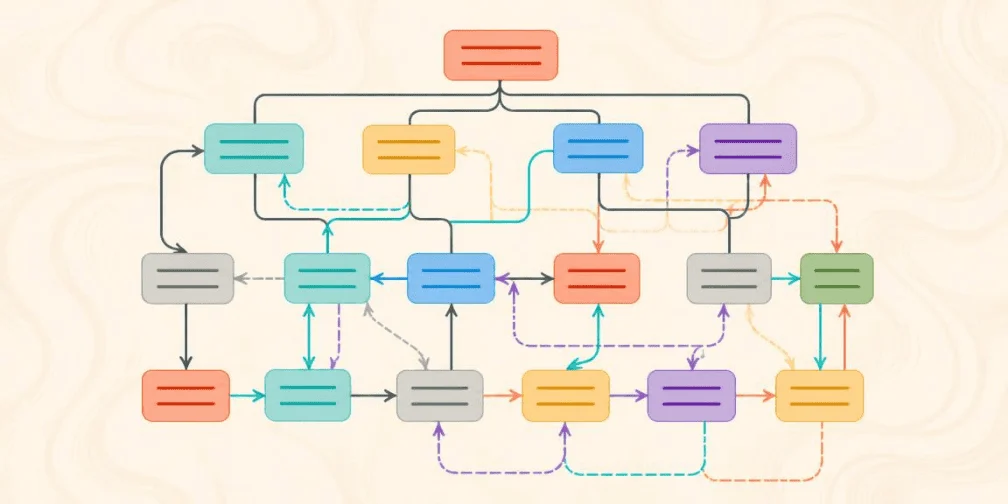
The operational reality, as experienced by those managing day-to-day execution, often diverges from leadership’s directives. Heay’s role in bridging this gap highlights a recurring observation: the instinct when faced with "do more with less" is to focus on personnel. However, the most effective solutions typically begin with a granular examination of how work is currently accomplished, step by step. This process involves identifying inefficiencies and areas for improvement before any consideration of headcount reduction.
The fundamental question that needs to be asked is not "how many people do we need?" but rather "what is the team producing?" and "what objectives does this output serve?" Understanding the desired outcomes and then dissecting which specific parts of the production process genuinely necessitate the current human involvement is paramount. This detailed mapping exercise is frequently absent, leading to cuts based on arbitrary criteria like tenure or cost, rather than functional necessity. When this happens, the workload doesn’t diminish; it simply becomes concentrated on a smaller team, often resulting in a decline in quality and missed deadlines.
Moreover, when employees are let go without a thorough process review, the organization risks losing individuals who were essential, albeit undocumented, cogs in the operational machinery. These could be individuals who managed crucial approval chains, facilitated hand-offs between departments, or ensured the smooth flow of information. Their departure doesn’t eliminate the work; it simply leaves the remaining team scrambling to compensate, often leading to system breakdowns and reactive problem-solving.
The Peril of Speed Without Optimization
The introduction of AI into existing, unoptimized workflows often leads to the illusion of improvement rather than genuine progress. AI can indeed accelerate tasks like drafting content or scoring leads. However, the critical distinction lies between performing a task and ensuring its effective integration into a larger process. For example, AI can generate a first draft of an article, but deciding when that draft is ready for publication requires human judgment regarding tone, accuracy, and strategic alignment. Similarly, AI can score leads, but determining the appropriate follow-up action requires an understanding of sales strategy and customer relationship management.

Without a redesigned workflow that accounts for AI’s capabilities and limitations, unreviewed drafts and poorly routed leads are simply propelled faster through a system that was never built to catch their inherent flaws. This acceleration without optimization can create new bottlenecks and exacerbate existing problems, leading to frustration and a failure to realize AI’s true potential.
The Strategic Imperative: Map Workflows Before Setting Headcount
The path to effective "do more with less" lies in a systematic workflow analysis. This involves meticulously identifying tasks that genuinely demand high-level human judgment—such as strategic decision-making, complex relationship management, or creative direction—areas where AI currently struggles to reliably perform. Concurrently, it requires identifying repetitive, well-defined tasks that can be absorbed by AI or automation without a significant compromise in quality.
Consider a content creation workflow: AI might draft an initial outline and a first pass of the text. However, a human strategist is needed to assess the angle and overall effectiveness of the content. Subsequently, an editor provides the final crucial judgment on tone and polish before publication. In this scenario, two out of three key steps are repeatable and potentially automatable, while one—the strategic and editorial judgment—remains uniquely human and thus, retains its value.
Only after such a granular mapping exercise is completed does any discussion about specific headcount numbers become meaningful. This approach ensures that reductions, if necessary, are aligned with the actual requirements of the work, rather than being arbitrary or reactive.
The Contractor Conundrum: A Symptom of Unaddressed Workflow Gaps
When workflow mapping is neglected, and teams are reduced without re-evaluating processes, leadership often turns to external contractors to fill the void. Contractors are perceived as a more flexible and less costly solution than full-time employees, offering a seemingly quick fix. However, this approach, when implemented as a workaround for unaddressed workflow issues, can become prohibitively expensive and difficult to manage.
Bringing in outside expertise can be beneficial, but when it’s done to patch a broken process rather than to redesign it, the result is often a complex, inefficient system where contractors are layered onto an infrastructure not built for their integration. This can lead to communication breakdowns, inconsistent quality, and a lack of cohesive strategy.
Reimagining Operations: Workflow First, Then Org Chart
The ultimate solution is a thoughtfully designed workflow that provides a clear integration point for whomever or whatever is performing the task—whether it’s a full-time employee, a contractor, or an AI system. This ensures that efficiency gains are sustainable and that the operational framework can adapt to evolving technological capabilities and business needs.
It is important to acknowledge that not all headcount is necessarily justified. Many teams may indeed have more personnel than their current workload requires, and some roles may have been established for a bygone era of marketing that no longer reflects current realities. However, the answer to the "do more with less" imperative cannot solely be about reducing the number of boxes on an organizational chart.
The more challenging, yet ultimately more effective, path involves an honest and in-depth examination of the work itself: understanding what truly requires human intellect and creativity, and what can be reliably automated. This rigorous approach, while demanding, is the only way to ensure that "do more with less" translates into sustainable operational excellence and genuine business value.
Broader Implications and Future Outlook
The strategic imperative to re-evaluate workflows in light of AI capabilities has far-reaching implications. Organizations that successfully implement this approach are likely to gain a significant competitive advantage. They will be better positioned to:
- Optimize Resource Allocation: By understanding the true nature of tasks, companies can allocate human and technological resources more effectively, ensuring that investments in AI yield tangible returns.
- Enhance Employee Engagement: When workflows are optimized, employees are less likely to be bogged down by repetitive, low-value tasks, allowing them to focus on more engaging and strategic work, which can boost morale and reduce burnout.
- Drive Innovation: A clear understanding of operational processes can highlight areas ripe for innovation, whether through new AI applications or novel human-centric approaches.
- Build Resilience: Workflows designed with flexibility and adaptability in mind are more resilient to market fluctuations, technological disruptions, and unforeseen operational challenges.
As AI continues its rapid evolution, the distinction between human judgment and automated execution will become even more critical. Companies that embrace a workflow-centric approach to operational efficiency will not only survive but thrive in the increasingly complex business landscape. Those that continue to rely on superficial headcount reductions or a simplistic view of AI as a mere replacement tool risk falling behind. The future of efficient operations hinges on a deep understanding of the work itself, not just the numbers on a balance sheet or an org chart.