admin
admin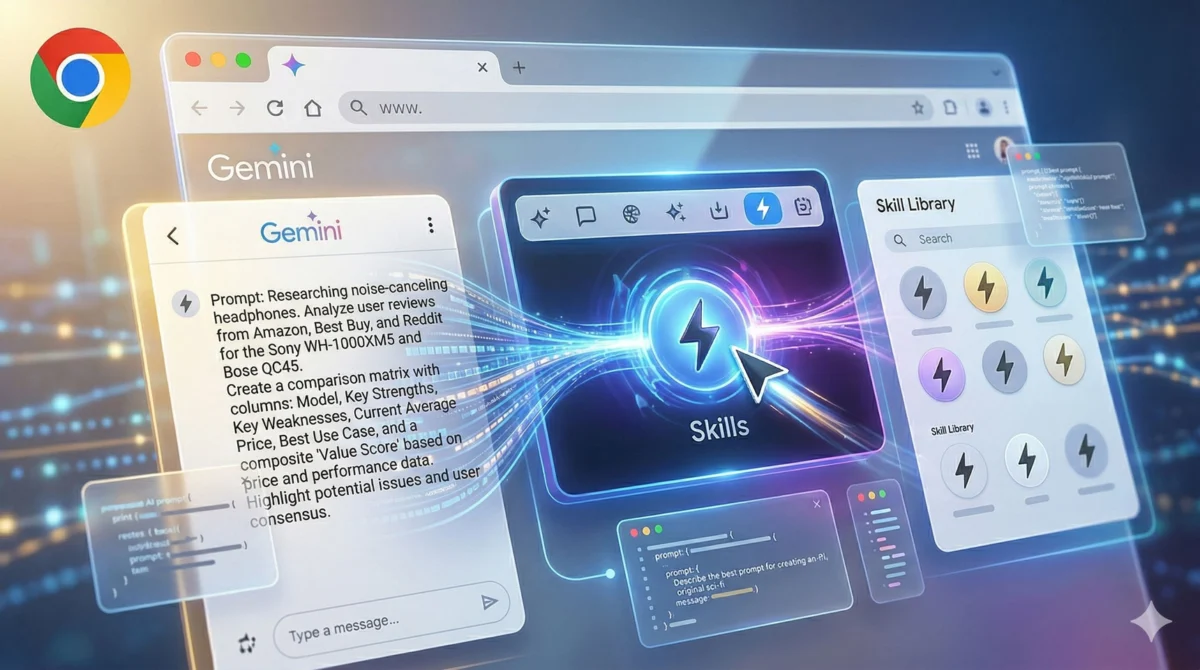
The digital landscape is on the cusp of a significant transformation as Google’s artificial intelligence assistant, Gemini, is set to introduce a groundbreaking "Skills" feature within the Chrome browser. Currently undergoing rigorous testing in Chrome Canary, the experimental version of Google Chrome, this innovative functionality promises to revolutionize user interaction with AI by allowing the saving and reuse of customized prompts. This development marks a pivotal step in Google’s ongoing strategy to seamlessly integrate advanced AI capabilities into its flagship products, offering users an unprecedented level of personalization and efficiency in their daily browsing and productivity workflows.
The Dawn of Reusable AI Prompts: A Deep Dive into "Skills"
At its core, the "Skills" feature empowers users to transform any successful Gemini prompt into a reusable command, effectively creating personalized AI tools tailored to specific needs. Once a user executes a prompt within the Gemini sidebar in Chrome, a new "Skills" button appears, enabling them to save that prompt. This saved prompt can then be named, and, as early reports suggest, potentially refined with Gemini’s assistance, making it a highly customizable "skill." The process is designed for intuitive recall: users can summon these saved skills by simply typing a forward slash (/) within the Gemini interface, which then presents a list of both their custom-created skills and pre-built options provided by Google, such as "Buying advice."
This capability moves beyond the ephemeral nature of one-off prompts, offering a persistent layer of AI intelligence that learns and adapts to individual user patterns. For instance, a researcher frequently summarizing articles could save a prompt like "Summarize this article, highlighting key findings and potential biases, in under 300 words" as a ‘Research Summary’ skill. A content creator might save "Generate five unique headline ideas for a blog post about sustainable urban living, incorporating SEO keywords" as a ‘Headline Generator’ skill. The immediate benefit is the elimination of repetitive typing and the assurance of consistent, high-quality AI output for recurring tasks.
The visual interface, as captured in early screenshots from Chrome Canary, demonstrates a straightforward user experience. After generating a response, a clear "Save as a skill" option becomes visible. Upon selection, a dialogue box prompts the user to name their skill, ensuring easy identification. The summoning mechanism, utilizing the ubiquitous slash command, is reminiscent of shortcuts in other productivity applications, suggesting a deliberate design choice aimed at reducing friction in AI interaction. The inclusion of Google’s pre-built skills, such as "Buying advice," further indicates Google’s intent to guide users towards practical applications of this feature, particularly in areas like e-commerce, where AI can assist in product comparisons, feature analysis, and personalized recommendations.
A Chronology of Discovery and the Chrome Canary Ecosystem
The initial revelation of the "Skills" feature emerged from the vibrant community of tech enthusiasts and developers who closely monitor Chrome Canary. Chrome Canary serves as Google’s bleeding-edge experimental browser, offering daily updates with the latest features and changes, often before they are officially announced or even fully developed. This environment allows Google to gather early feedback and identify bugs, leveraging a decentralized testing approach.

The first public reports of this feature began circulating in early April 2026. Independent technology news outlets and prominent Chrome feature trackers quickly highlighted the discovery. Among the notable figures was Leopeva64, a well-known observer of new Chrome functionalities, who shared detailed insights on platforms like X (formerly Twitter) on April 4, 2026. Leopeva64’s tweet provided a comprehensive overview of the "Save as a skill" button, the dialogue for naming skills, and the potential for Gemini to assist in improving prompt quality within the skill creation process. This was followed by confirmations and further demonstrations from other tech journalists, including Glenn Gabe, who shared his observations and a video demonstrating the feature’s activation and usage on April 7, 2026. These early reports, often accompanied by screenshots and short video clips, have been instrumental in providing the public with a glimpse into this forthcoming AI enhancement.
The typical development trajectory for features introduced in Chrome Canary involves several stages:
- Canary: Raw, untested, and potentially unstable. Intended for developers and early adopters.
- Dev Channel: More stable than Canary, but still for early testing.
- Beta Channel: Feature-complete and relatively stable, used for broader testing before public release.
- Stable Channel: The version used by the general public, having undergone extensive testing.
The appearance of "Skills" in Canary signifies that it is in an early, experimental phase. While its presence in Canary strongly suggests an eventual rollout to the stable version of Chrome, the timeline remains subject to Google’s development cycles, internal testing results, and user feedback gathered from the experimental channels. This iterative process ensures that features are refined and optimized before reaching a global user base.
The Broader Context: AI Integration and Browser Competition
The introduction of "Skills" for Gemini in Chrome is not an isolated event but rather a significant move within a larger trend of intense AI integration across the technology industry, particularly in web browsers. The past year has witnessed a surge in AI assistant adoption, with companies vying to embed sophisticated AI capabilities directly into the tools people use daily. Statista projects that the global artificial intelligence market will continue its rapid expansion, reaching hundreds of billions of dollars in the coming years, underscoring the strategic importance of AI-driven features.
Microsoft, for instance, has aggressively integrated its Copilot AI into the Edge browser, offering features like web page summarization, content generation, and smart search directly within the browser sidebar. Other browser developers are also exploring or implementing similar AI-powered functionalities. This competitive landscape necessitates that Google not only keeps pace but innovates to maintain Chrome’s dominant market share, which consistently hovers around 60-65% globally according to StatCounter. By enhancing Gemini’s utility within Chrome, Google reinforces its commitment to keeping its browser at the forefront of technological advancement.
Gemini itself represents Google’s unified AI strategy, designed to be multimodal and adaptable across various platforms and applications. Its integration into Chrome, followed by features like "Skills," demonstrates a deliberate effort to make AI a seamless, indispensable part of the browsing experience rather than a separate application. This approach aligns with broader industry trends focusing on ambient intelligence, where AI proactively assists users in their digital tasks without requiring explicit, constant interaction with a standalone AI interface. The goal is to move beyond mere information retrieval to intelligent assistance, context-aware suggestions, and automated task completion.
Implications for User Experience, Productivity, and Personalization

The "Skills" feature carries profound implications for user experience and productivity. For the average internet user, it promises to democratize the power of AI by simplifying complex prompt engineering. Instead of crafting intricate queries repeatedly, users can leverage pre-saved "skills" with minimal effort. This translates into:
- Enhanced Efficiency: Repetitive tasks that typically involve similar AI prompts can be executed much faster. For professionals in fields like marketing, data analysis, or software development, this could significantly reduce the time spent on routine content generation, code snippets, or data summarization. A recent survey by Salesforce indicated that companies leveraging AI tools report an average 31% increase in productivity. While specific to enterprise, this highlights the general productivity gains AI can offer.
- Consistent Output Quality: By saving a finely tuned prompt, users can ensure that the AI consistently generates responses adhering to specific parameters, tone, or format. This is particularly beneficial for brand consistency in content creation or adherence to guidelines in technical writing.
- Personalized AI Assistant: The ability to create custom skills transforms Gemini from a generic AI assistant into a highly personalized tool. Each user can curate a library of skills that directly addresses their unique professional and personal needs, making the AI feel more like a bespoke assistant.
- Reduced Cognitive Load: Users no longer need to remember or reconstruct complex prompts. The slash command and skill selection streamline the interaction, freeing up cognitive resources for more critical thinking and decision-making.
- Expanded Accessibility of Advanced AI: For users who might find advanced AI prompting daunting, the pre-built skills and the ability to save simpler, effective prompts make powerful AI capabilities more accessible and less intimidating.
Consider the potential impact across various user segments:
- Students: Can create skills for summarizing research papers, generating study questions, or proofreading essays.
- Professionals: Could utilize skills for drafting email responses, brainstorming project ideas, extracting key data from reports, or generating meeting agendas.
- Content Creators: Benefit from skills for generating social media captions, blog post outlines, video script ideas, or optimizing content for different platforms.
- E-commerce Shoppers: Leverage "Buying advice" and custom skills to compare product features, read summarized reviews, or find the best deals.
The introduction of "Skills" underscores a shift towards making AI an active, integral partner in the browsing journey, rather than just a passive search tool. It represents an evolution from simple query-response models to a more dynamic, user-driven, and task-oriented AI interaction paradigm.
Challenges and the Path Forward
While the "Skills" feature presents a compelling vision for future AI interaction, its ultimate success will hinge on several factors. User adoption remains paramount; Google will need to effectively educate its vast user base on the benefits and functionalities of this new capability. The intuitiveness of the skill creation and summoning process will be crucial for widespread engagement.
Furthermore, the quality of user-created prompts will dictate the effectiveness of the skills. Google might need to provide guidance or enhanced AI assistance within the skill creation flow to help users craft optimal prompts. Discoverability of skills, both user-created and Google-provided, within the Gemini interface will also play a role in their utility.
As a feature currently in Chrome Canary, "Skills" is still subject to changes and refinements. Google’s development teams will be closely monitoring user feedback and telemetry data to iterate on the design and functionality. The transition from Canary to stable Chrome is a methodical process, ensuring stability, security, and a polished user experience.
In conclusion, the "Skills" feature coming to Gemini in Chrome represents a significant leap forward in personalizing and enhancing AI assistance within the browser environment. By enabling users to save and reuse custom prompts, Google is empowering individuals with more efficient, consistent, and tailored AI interactions. This development not only strengthens Chrome’s position in the competitive browser market but also signals a broader industry trend towards deeper, more integrated, and user-centric AI experiences. As the feature progresses through its development stages, its potential to redefine productivity and interaction with digital information promises to be a transformative addition to the daily lives of millions of Chrome users worldwide.