admin
admin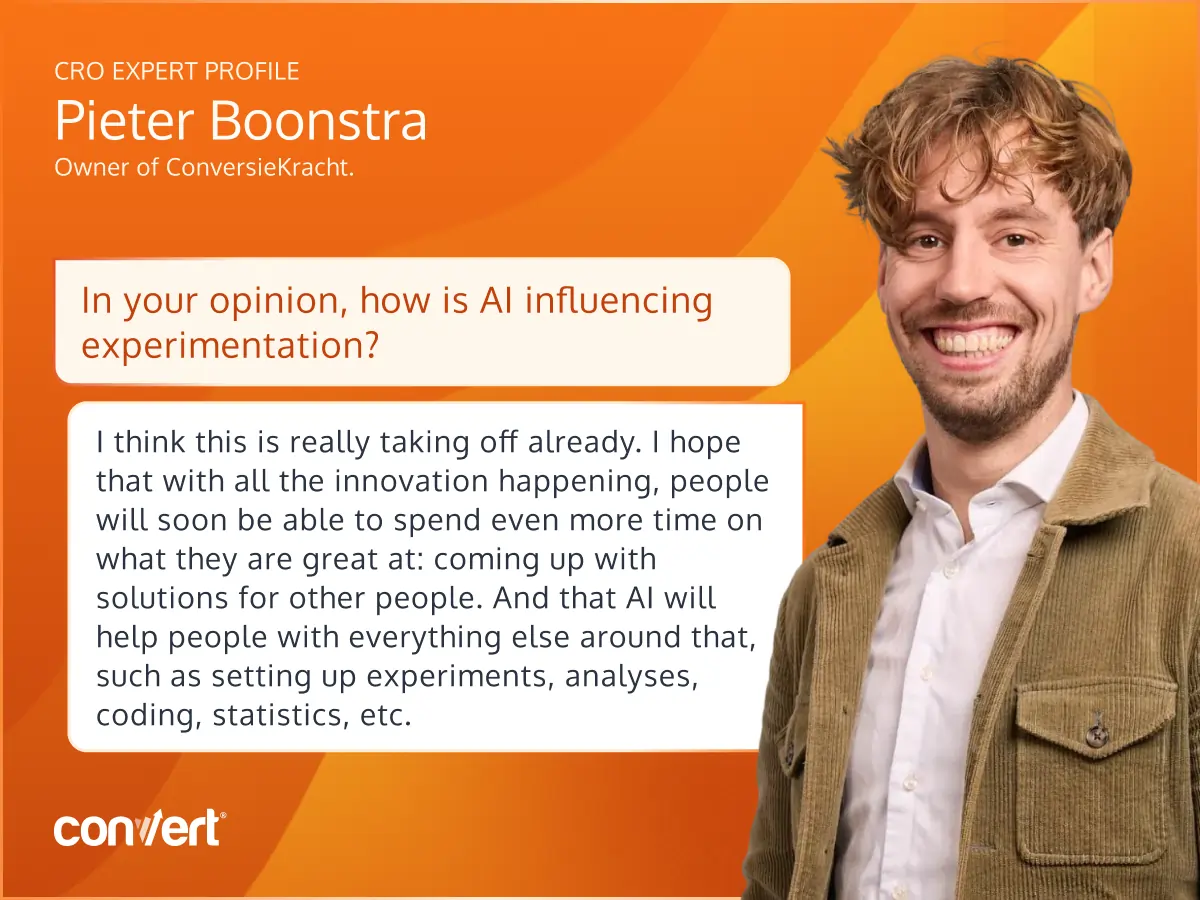
The landscape of digital commerce has shifted from a focus on mere traffic acquisition to a rigorous, data-driven discipline known as Conversion Rate Optimization (CRO). In this evolving sector, Pieter Boonstra has emerged as a prominent figure, leading ConversieKracht, currently recognized as the fastest-growing CRO agency in the Netherlands. Boonstra’s trajectory from a marketing student experimenting with early-stage testing tools to an agency founder reflects a broader industrial trend: the transition of digital marketing from speculative creative work to a scientific methodology centered on "proven business impact."
The Genesis of a Data-Driven Career
Boonstra’s entry into the field was rooted in the intersection of academic theory and practical application. While studying Marketing at the university level, he focused on consumer psychology—the study of why individuals make specific purchasing decisions. Unlike many of his peers who remained in the theoretical realm, Boonstra applied these psychological frameworks to real-world scenarios through freelance marketing for various e-commerce entities.

His early methodology utilized Google Optimize, a tool that, until its retirement in late 2023, served as the entry point for thousands of digital marketers entering the experimentation space. By testing marketing theories in the "live" environment of client webshops, Boonstra moved beyond the traditional "best practice" approach, which often relies on industry tropes that may not apply to specific audiences. This commitment to evidence-based marketing laid the groundwork for ConversieKracht, positioning the agency as a specialist in turning psychological insights into measurable revenue.
The Strategic Definition of Optimization
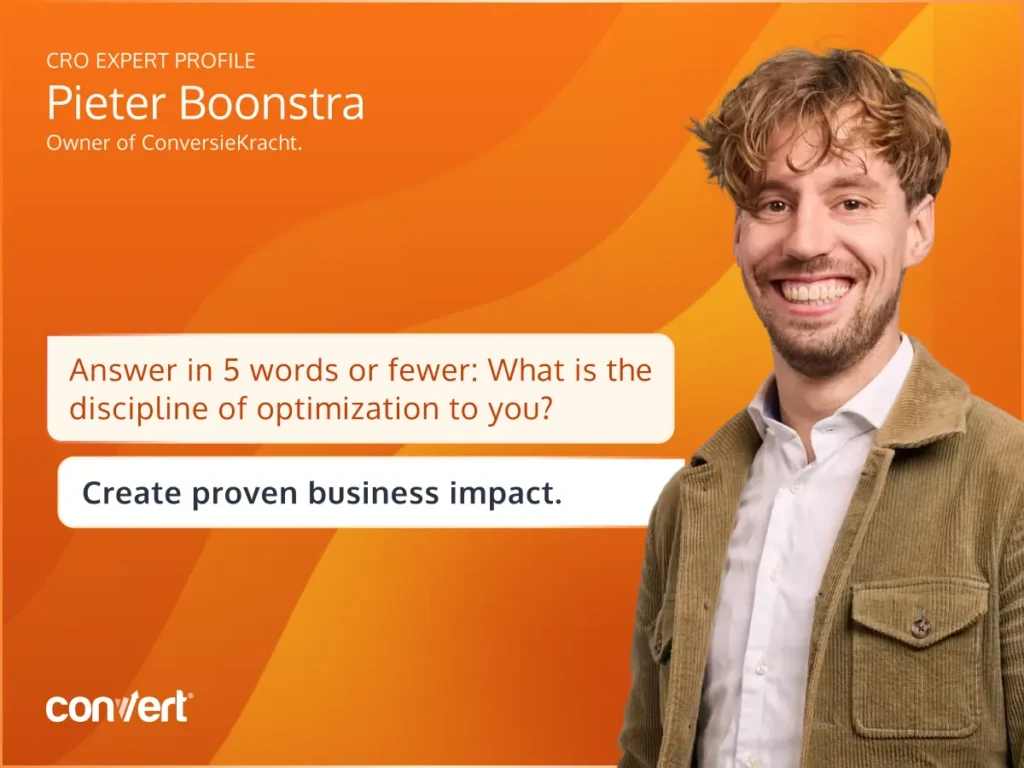
When asked to define the discipline of optimization, Boonstra categorizes it as the ability to "create proven business impact." This definition is significant within the professional journalistic context of the industry. For years, CRO was often mischaracterized as "button color testing" or minor aesthetic adjustments. However, as the digital economy matures, the definition has expanded. Modern optimization involves the entire customer journey, including supply chain efficiency, product development, and long-term customer retention.
In the current economic climate, where the cost of customer acquisition (CAC) is rising across platforms like Meta and Google, the ability to extract more value from existing traffic is no longer a luxury but a fundamental requirement for business solvency. Boonstra’s focus on "proven impact" suggests a shift away from vanity metrics—such as click-through rates—toward bottom-line figures like Average Order Value (AOV) and Customer Lifetime Value (CLV).

Case Study Analysis: Bridging Logistics and Digital Strategy
One of the most compelling examples of Boonstra’s methodology involves an experiment conducted for an organic soup manufacturer. This case highlights a critical aspect of modern CRO: the necessity of looking beyond the website and into the physical operations of a business.
During a site visit to the client’s production facility, Boonstra observed a logistical bottleneck. The soup jars were manufactured and packed into wholesale boxes of six. However, the webshop allowed customers to order any quantity. This discrepancy forced warehouse staff to manually open the pre-packed boxes and repackage them into custom quantities (e.g., two or four jars), a process that was both time-consuming and prone to breakage or errors.
Boonstra’s solution was a strategic alignment of digital incentives and physical reality. He implemented an A/B test on the webshop that offered a small discount if customers ordered in multiples of the factory’s standard packaging (6, 12, or 24 jars). The results were twofold:
- Revenue Growth: The experiment led to a 60% increase in revenue per customer.
- Operational Efficiency: A significant portion of orders could now be shipped directly from the factory line without manual intervention, reducing labor costs and shipping errors.
This case serves as a benchmark for "Full-Stack Optimization," where the digital interface is used to solve physical operational challenges, thereby increasing the overall margin of the business.
Product-Led Growth and the "Aha Moment"
Another significant experiment led by Boonstra involved a producer of high-fiber protein bars. Through qualitative user research, the agency identified a psychological barrier: while the product’s fiber content was a selling point, the primary driver for repeat purchases was the taste. However, the bars were so filling that customers were hesitant to purchase large quantities of a single flavor without knowing if they liked it. Some customers even reported cutting the bars in half to avoid feeling over-satiated.
Boonstra leveraged this insight to design a "tasting box" featuring the brand’s five best-selling flavors in half-size portions. By testing this offering on the homepage against the standard product lineup, the agency saw a 15% uplift in purchases among new visitors. Crucially, subsequent data analysis showed that the repeat purchase rate for those who started with the tasting box was equal to that of regular customers. This experiment demonstrated that lowering the barrier to entry through product-led experimentation can accelerate the acquisition of high-value, long-term customers.
The Role of Artificial Intelligence in Experimentation
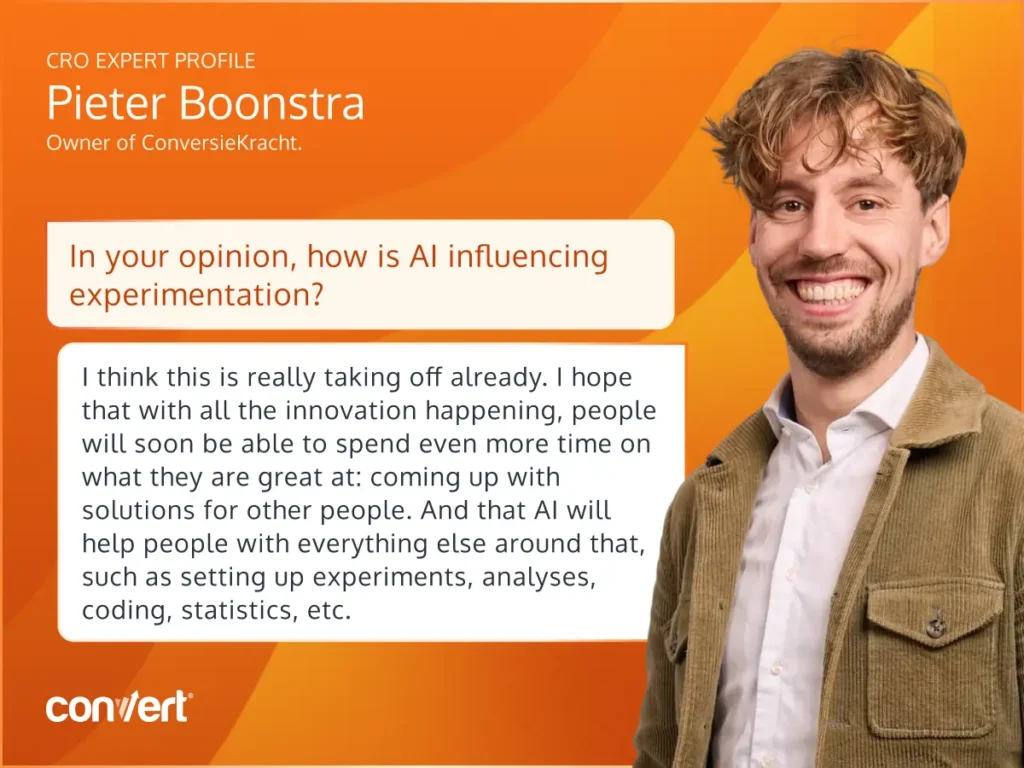
As the digital landscape enters the era of generative AI, Boonstra views the technology as a catalyst for efficiency rather than a replacement for human insight. He anticipates that AI will soon handle the "operational overhead" of experimentation—tasks such as writing code for test variants, performing complex statistical analyses, and automating the setup of experiments.
Industry data supports this outlook. According to recent reports on the state of AI in marketing, nearly 70% of high-performing growth teams are already using AI to assist in data interpretation. Boonstra argues that by delegating these technical tasks to AI, human optimizers can focus on what they are uniquely qualified for: empathy-driven solution finding and the creative application of psychological principles to human problems.
The Future of Growth Teams: Integration over Isolation
A recurring debate in the corporate world is whether optimization should exist as an independent unit or be integrated into broader departments. Boonstra notes a trend toward the "joint responsibility" of marketing and production departments. In his experience, companies that foster collaboration between the people who drive traffic (marketing) and the people who build the product or manage the supply chain (production/product) grow at a significantly faster rate.

This observation aligns with the rise of "Growth Squads" in major tech hubs like Amsterdam and Berlin. These cross-functional teams break down traditional silos, ensuring that the insights gained from web experiments are used to inform product roadmaps and vice versa.
Broader Implications and Industry Analysis
The success of agencies like ConversieKracht highlights the Netherlands’ position as a global leader in the experimentation space. The Dutch market has historically been a testing ground for major international brands due to its high internet penetration and digitally savvy consumer base. Boonstra’s work suggests that the next frontier for the industry is the democratization of these sophisticated testing methods for small and medium-sized enterprises (SMEs).
Furthermore, the transition from Google Optimize to more advanced platforms has forced a professionalization of the field. Agencies are now required to demonstrate a deeper understanding of privacy regulations (such as GDPR), server-side tracking, and sophisticated statistical models (like Bayesian vs. Frequentist approaches). Boonstra’s emphasis on "proven business impact" is a direct response to this need for increased accountability in marketing spend.

Chronology of Optimization Trends
To understand the context of Boonstra’s insights, one must look at the timeline of the CRO industry:
- 2010–2015: The "Gold Rush" of A/B testing, characterized by simple cosmetic changes and the rise of easy-to-use visual editors.
- 2016–2020: The integration of UX research. Testing begins to be informed by heatmaps, session recordings, and user interviews.
- 2021–2023: The "Privacy Pivot." The industry shifts toward first-party data and server-side testing in response to the decline of third-party cookies.
- 2024 and Beyond: The "AI and Operational Alignment" phase. Optimization moves into the supply chain and product development, as seen in Boonstra’s soup and protein bar case studies.
Conclusion: The Strategic Path Forward
Pieter Boonstra’s approach to conversion rate optimization represents a maturation of the digital marketing industry. By moving beyond the screen and into the warehouse, and by prioritizing psychological "aha moments" over simple clicks, he has provided a roadmap for how businesses can thrive in an increasingly competitive and automated world.
The core takeaway for modern business leaders is clear: optimization is not a project, but a continuous process of aligning customer psychology with operational reality. As AI continues to commoditize the technical aspects of testing, the competitive advantage will shift to those who, like Boonstra, can find the "signals in the noise" and translate human behavior into sustainable business growth. For the global e-commerce market, the lessons from the Dutch "fastest-growing" agency provide a blueprint for a future where every business decision is tested, proven, and impactful.