admin
admin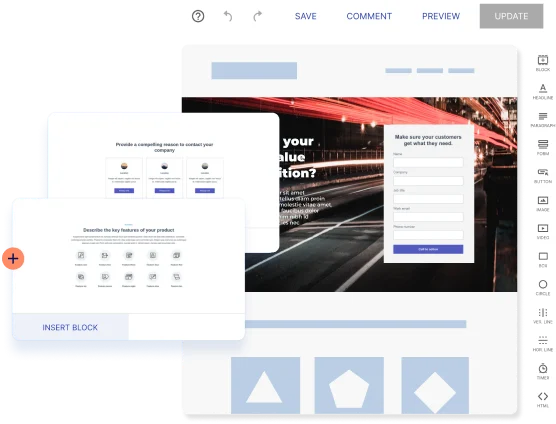
The digital recruitment landscape is currently facing a significant efficiency crisis as companies grapple with rising advertising costs and dwindling candidate attention spans. Industry data suggests that enterprises are frequently paying upward of $5 per click to drive potential candidates to job postings, only to witness a staggering bounce rate when those users arrive at generic, non-optimized career portals. This disconnect between paid traffic and successful applications represents a substantial waste of recruitment budgets, prompting a fundamental shift toward the use of dedicated recruitment landing pages. Unlike traditional career sites, which often serve as exhaustive repositories of every open role within a company, a recruitment landing page is a precision-engineered, standalone destination designed with a singular objective: converting a visitor into a qualified applicant.
The Economic Context of Modern Talent Acquisition
The move toward specialized hiring pages is driven by the tightening labor market and the increasing sophistication of digital advertising platforms like LinkedIn, Indeed, and Google Ads. In the current "war for talent," the cost per hire has escalated significantly. According to data from the Society for Human Resource Management (SHRM), the average cost per hire in the United States is nearly $4,700, though this figure can be significantly higher for specialized technical roles. When a company spends thousands of dollars on "top-of-funnel" awareness—the ads themselves—only to lose the candidate at the "bottom-of-funnel" application stage due to poor user experience, the return on investment (ROI) collapses.
Recruitment experts note that the problem rarely lies with the job offer itself or the creative quality of the advertisement. Instead, the friction occurs in the transition from the ad to the application form. Most corporate career sites are plagued by complex navigation menus, "about us" sections that distract from the role, and exhaustive search filters that force the candidate to find the job they were already promised in the ad. A recruitment landing page eliminates these hurdles by stripping away distractions and focusing exclusively on the specific role, its benefits, and a streamlined path to submission.
A Chronology of Digital Recruitment Evolution
To understand the necessity of modern landing pages, one must look at the evolution of hiring technology over the last three decades. In the late 1990s and early 2000s, recruitment moved from print media to centralized job boards like Monster and CareerBuilder. By the 2010s, companies began investing heavily in their own "Career Portals," which integrated with Applicant Tracking Systems (ATS). While these portals were efficient for HR departments to manage data, they were often hostile to the end-user, requiring long account creation processes and manual data entry.
The current era, beginning around 2020, represents the "Marketing-Led Recruitment" phase. In this stage, HR professionals have adopted the tactics of digital marketers. They recognize that a candidate is essentially a "lead," and the application is a "conversion." This realization has birthed the recruitment landing page, a tool borrowed directly from the world of e-commerce and SaaS (Software as a Service) marketing to ensure that the "candidate journey" is as frictionless as possible.
Core Principles of High-Converting Recruitment Pages
For a recruitment landing page to be effective, it must adhere to several psychological and technical benchmarks. Industry analysts point to "Message Match" as the most critical factor. This is the practice of ensuring the landing page headline perfectly mirrors the text of the advertisement that the user clicked. If an ad promises a "Remote Software Engineer role with flexible hours," and the landing page leads with "Join Our Global Innovation Team," the cognitive dissonance causes many candidates to exit immediately.
Furthermore, the concept of "above the fold" content remains vital in the mobile-first era. Statistics show that candidates decide within three to five seconds whether an opportunity is worth their time. Therefore, the role’s title, the primary compensation or benefit, and a prominent "Apply Now" button must be visible without the user needing to scroll. Trust signals, such as Glassdoor ratings or "Best Places to Work" badges, should also be positioned early to establish immediate credibility.
The most significant point of failure in the recruitment funnel is the application form itself. Data from recruitment marketing platforms indicates that every additional field added to a form can reduce the conversion rate by as much as 10%. High-performance landing pages typically limit initial forms to three to five essential fields: name, email, phone number, and a resume upload. Some organizations have adopted a "two-step" process, capturing the candidate’s contact information first and then requesting more detailed work history in a follow-up email, thereby securing the lead even if the candidate does not finish the full application.
Industry Case Studies: The Gig Economy Leaders
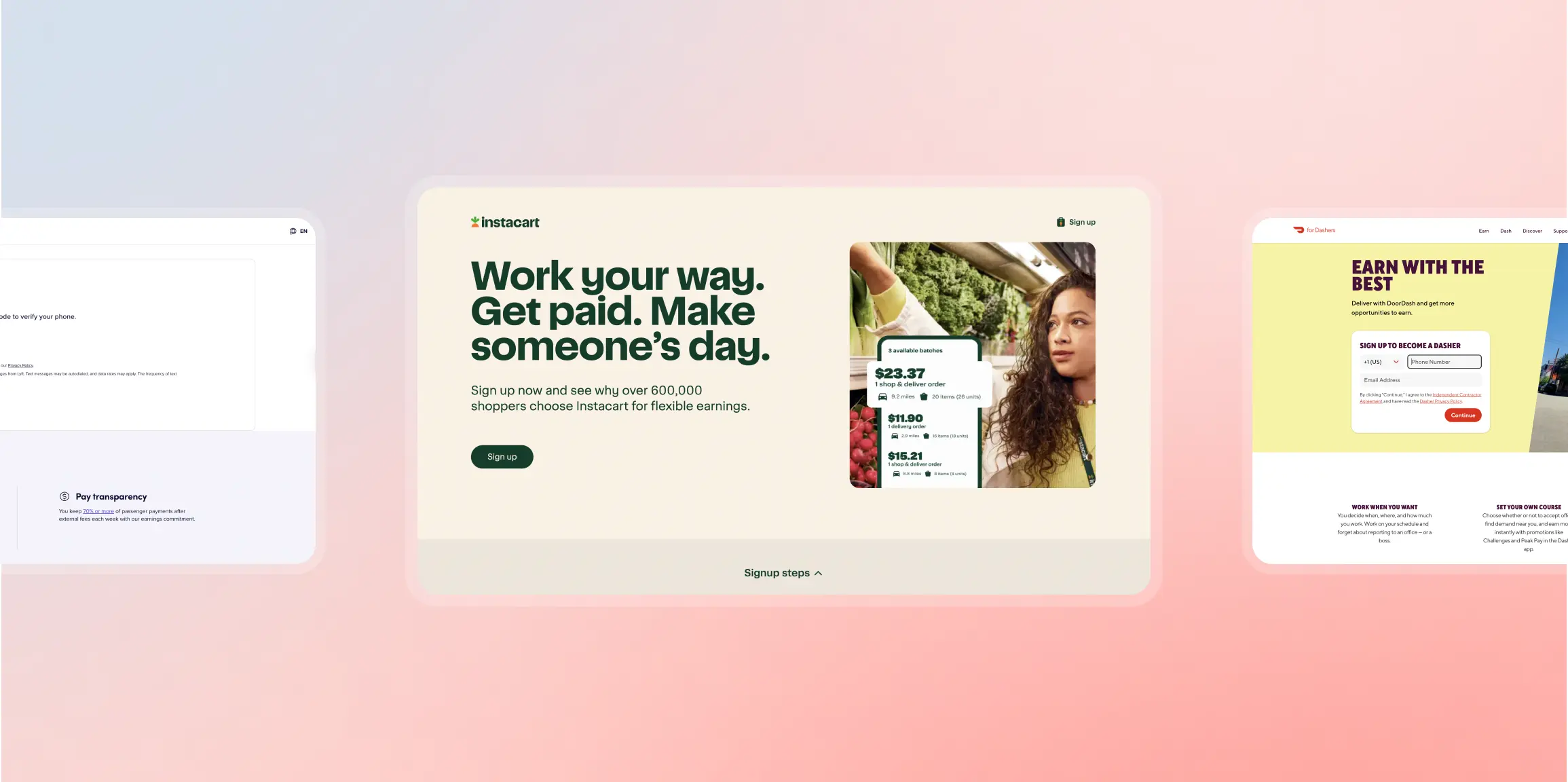
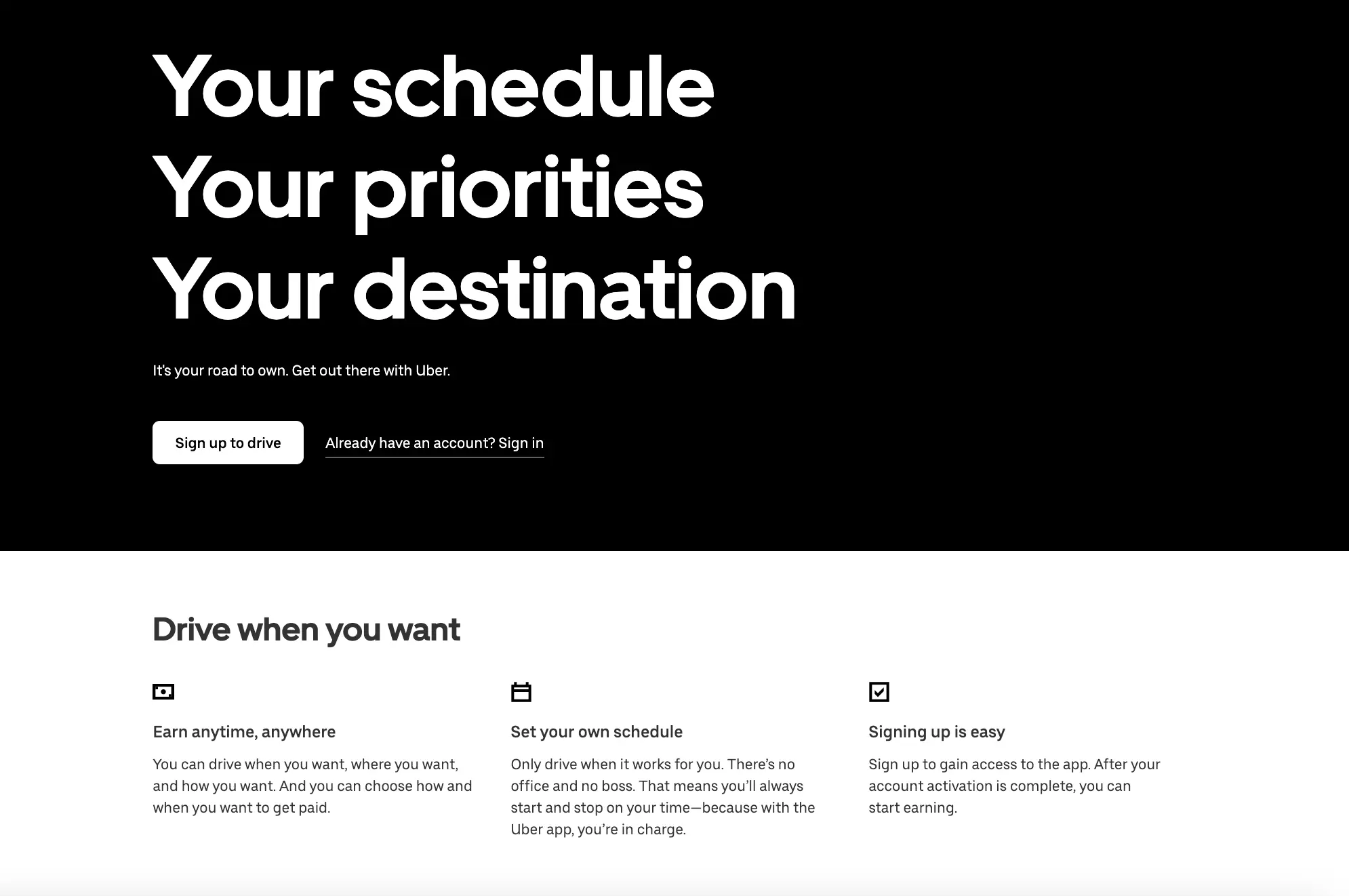
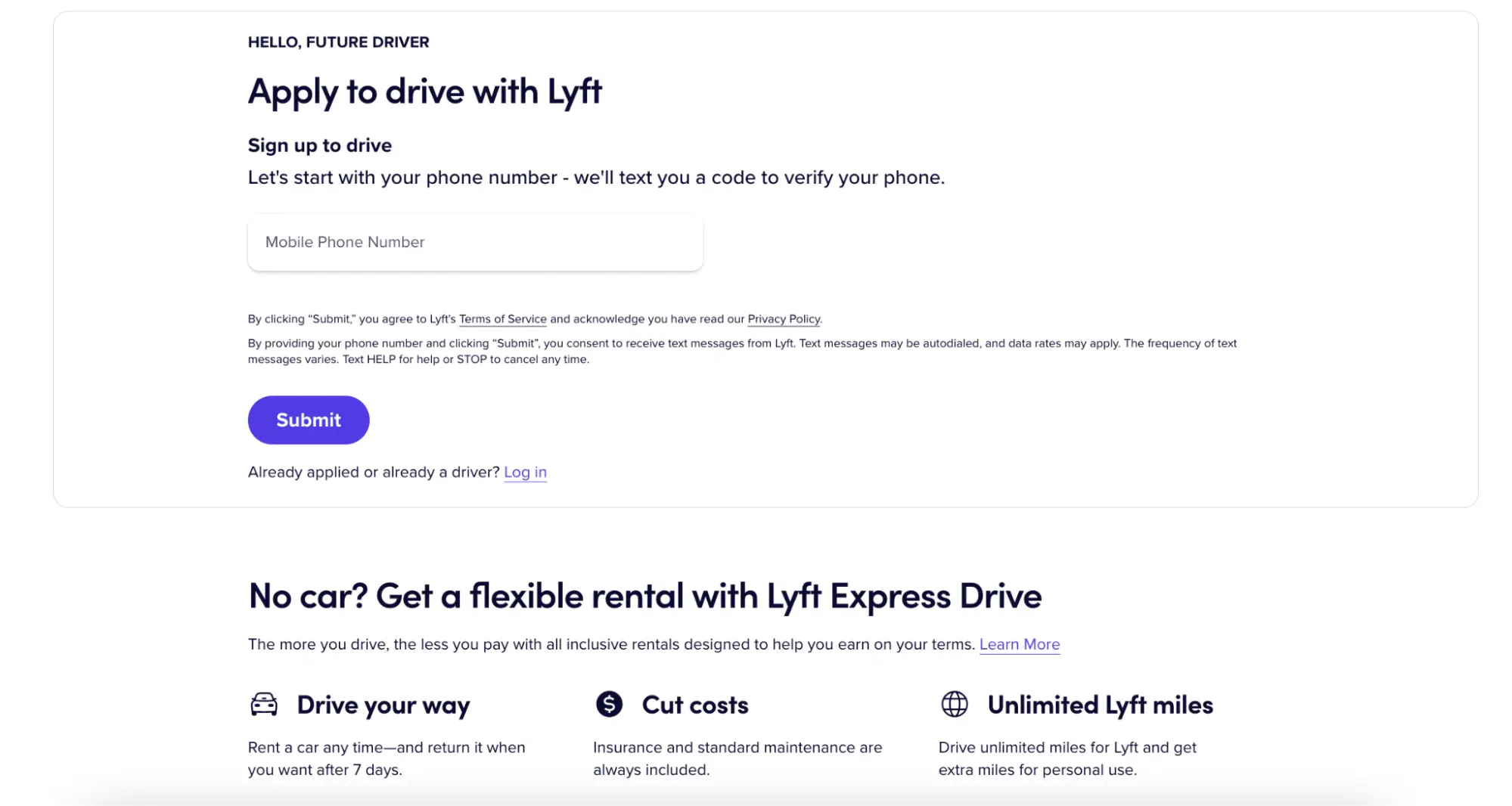
The effectiveness of these strategies is best observed in high-volume hiring sectors, particularly within the gig economy. Companies like Uber, Lyft, and DoorDash have mastered the art of the recruitment landing page to onboard thousands of contractors weekly.
- Uber & Lyft: Both rideshare giants utilize landing pages that emphasize immediate earnings and the "be your own boss" philosophy. Their pages are characterized by a total lack of external navigation. There is no link to "Company History" or "Investor Relations" at the top of the page; there is only a signup form.
- DoorDash: The "Dasher" recruitment page is notable for its use of geographic personalization. By acknowledging the user’s location, the page increases relevance and trust. DoorDash also utilizes "social proof" by featuring testimonials from actual drivers, which addresses the skepticism many prospective gig workers feel.
- Instacart: The grocery delivery service focuses on "low-friction" entry. Their landing pages are optimized for mobile speed, recognizing that many of their prospective "shoppers" are browsing on smartphones between other tasks.
Technical Performance and Mobile Optimization
In the contemporary hiring environment, mobile optimization is no longer optional. Current traffic trends show that over 70% of job seekers start their search on a mobile device. Consequently, page load speed has a direct correlation with application completion rates. A delay of just two seconds in page load time can increase bounce rates by 32%.
Technical experts recommend that recruitment landing pages utilize Content Delivery Networks (CDNs) and compressed imagery to ensure they load in under three seconds on 4G connections. Additionally, the removal of "exit links"—navigation menus that lead back to the main corporate site—is a standard best practice. By creating a "walled garden," the company keeps the candidate focused on the specific goal of applying, rather than wandering into other sections of the website.

The Role of A/B Testing and Artificial Intelligence
The final frontier of recruitment landing page optimization is the shift from static pages to dynamic, tested environments. A/B testing, the process of running two versions of a page to see which performs better, allows HR teams to make data-driven decisions rather than relying on aesthetic preferences. For example, testing a "Submit Application" button against one that says "Start Your Journey" can reveal surprising differences in candidate behavior.
The integration of Artificial Intelligence (AI) has further accelerated this process. Platforms like Instapage and others now offer AI-powered experimentation tools that automatically divert more traffic to the highest-performing version of a page. This "multi-armed bandit" approach ensures that even during the testing phase, the recruitment budget is being utilized as efficiently as possible.
Broader Impact and Future Implications
The professionalization of recruitment landing pages signals a broader trend: the convergence of Human Resources and Digital Marketing. As recruitment becomes increasingly data-centric, the roles within HR are evolving to include "Recruitment Marketers" and "Candidate Experience Designers."

The implications for the labor market are profound. Companies that adopt these high-conversion strategies are seeing a marked decrease in their "Cost Per Applicant" (CPA). By reducing the friction of the application process, these firms are not only saving money but are also gaining access to "passive candidates"—highly qualified individuals who are currently employed but might be willing to apply for a role if the process is quick and easy.
As the technology matures, we can expect to see even more personalization, with landing pages that dynamically change their content based on the candidate’s professional background, seniority level, or even their previous interactions with the brand. In an era where talent is the primary differentiator for business success, the ability to efficiently convert an interested click into a committed applicant is becoming a core competency for the modern enterprise. Organizations that continue to rely on antiquated, cumbersome career sites risk being left behind in an increasingly competitive and fast-moving global talent market.