admin
admin
The digital marketing landscape is currently undergoing a transformative shift as artificial intelligence moves from theoretical application to core operational integration. Instapage, a leading provider of landing page solutions, has officially announced the launch of AI Collections, a feature designed to solve the "personalization paradox"—the industry-wide struggle where marketers recognize the necessity of tailored content but lack the manual bandwidth to execute it at scale. By automating the creation and management of dynamic landing pages, the new tool promises to accelerate the deployment of personalized campaigns by up to three times the speed of traditional manual workflows.
The Evolution of the Personalization Gap
For over a decade, data from firms such as McKinsey & Company and Gartner has consistently highlighted that personalization is no longer a luxury but a baseline consumer expectation. According to McKinsey’s "State of Personalization" report, 71% of consumers expect companies to deliver personalized interactions, and 76% get frustrated when this doesn’t happen. Furthermore, companies that excel at personalization generate 40% more revenue from those activities than average players.
Despite these clear financial incentives, the execution of personalization has remained a significant bottleneck for marketing departments. Until now, creating a truly personalized experience for different audience segments required duplicating pages, manually editing copy for each specific keyword or demographic, and managing a sprawling architecture of individual URLs. This labor-intensive process often led to "campaign fatigue," where teams would revert to generic landing pages to save time, ultimately sacrificing conversion rates and return on ad spend (ROAS).
AI Collections addresses this specific pain point by shifting the workflow from a "one-by-one" page creation model to a "one-to-many" template-driven architecture. This transition allows small teams to behave like enterprise-level agencies, managing hundreds of variations from a single centralized interface.
Technical Architecture: How AI Collections Operates
The core innovation of AI Collections lies in its integration of generative AI with a structured content management system. The workflow is divided into three primary phases: template identification, automated placeholder generation, and bulk content population.
1. The Centralized Content Table
Rather than treating each landing page as a separate file, AI Collections utilizes a centralized content table. In this environment, every row represents a unique page within a collection, and every column represents a specific variable—such as a headline, a call-to-action (CTA), or a hero image description. This structure allows marketers to oversee a massive array of digital assets from a single dashboard, eliminating the need to toggle between dozens of browser tabs or spreadsheets.
2. Automated AI Placeholders
One of the most significant technical hurdles in dynamic page creation is identifying where variable content should reside within a design. Traditionally, this required developers or designers to manually insert code snippets or "tags" into the page layout.
The AI Collections tool automates this through visual analysis. The AI scans the layout of a "master template," identifies logical areas for customization—such as primary headers, sub-headlines, and body paragraphs—and automatically assigns placeholders. Marketers can then review these suggestions, making adjustments or deletions as necessary, before the system locks in the dynamic zones.
3. Generative Content at Scale
Once the framework is established, the platform leverages large language models (LLMs) to generate the actual copy. By providing a "context prompt"—which includes details about the target audience, the specific marketing goal, and the desired tone of voice—the system can populate an entire table of content in seconds. For example, a travel company could generate 50 different landing pages for 50 different cities, each with localized headlines and specific regional benefits, simply by inputting the city names and a base prompt.
Integration with Fluid Grid Technology
The launch of AI Collections is strategically paired with Instapage’s "Fluid Grid" blocks. One of the historical risks of automated content generation is "layout breakage," where a generated headline is longer than the original template, causing text to overlap or buttons to disappear.
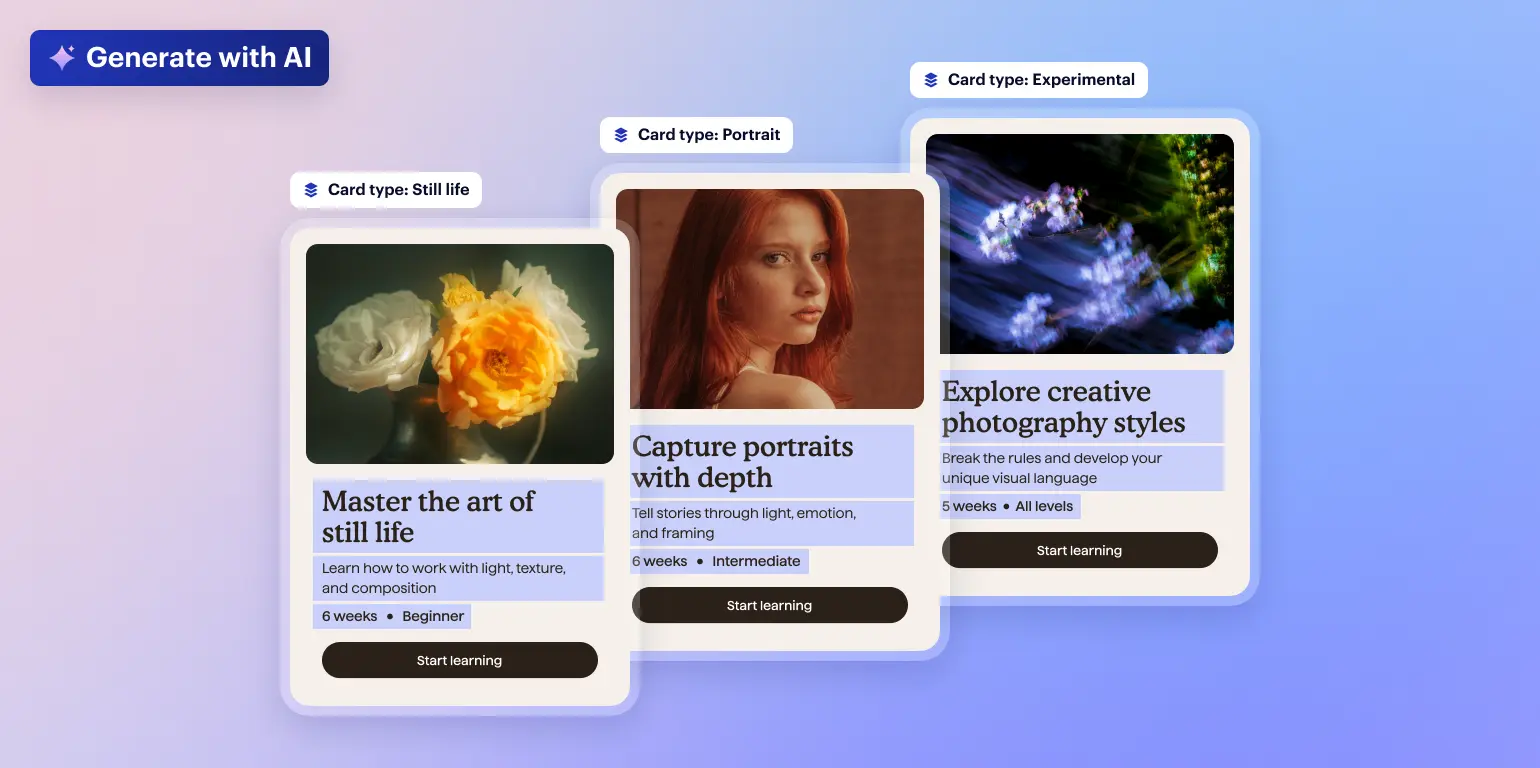
Instapage’s Fluid Grid technology ensures that the layout automatically adjusts its proportions based on the volume of content generated by the AI. This responsive design capability allows marketers to launch pages without the need for manual "pixel-pushing" or visual QA for every single variation. This synergy between generative copy and responsive design is what allows the platform to claim a 3x increase in deployment speed.
Strategic Implications for the MarTech Industry
The introduction of AI-driven collection management signals a broader trend in the Marketing Technology (MarTech) sector: the move toward "Autonomous Marketing Operations." Industry analysts suggest that the role of the digital marketer is shifting from a content creator to a content orchestrator.
"The problem has never been the idea of personalization; it has always been the friction of execution," noted an industry analyst following the announcement. "By removing the manual labor associated with page duplication and copy editing, platforms like Instapage are lowering the barrier to entry for high-performance marketing. This puts immense pressure on competitors to move beyond simple drag-and-drop editors and toward intelligent, data-driven automation."
The implications for search engine marketing (SEM) and social media advertising are particularly profound. When an advertiser can match a landing page perfectly to a specific long-tail keyword or a hyper-targeted Facebook audience, the "Quality Score" of the ad typically increases, leading to lower costs per click (CPC) and higher conversion rates. AI Collections effectively allows for "1:1 Message Match" at a scale that was previously cost-prohibitive for all but the largest global brands.
Timeline and Market Availability
The development of AI Collections follows a series of updates by Instapage aimed at integrating AI across its entire suite.
- Q3 2023: Instapage introduced AI Content Generation for individual headlines and paragraphs.
- Q1 2024: The company rolled out enhanced AI writing assistants with brand-voice memory.
- Current Launch: The release of AI Collections marks the most significant architectural update, moving from element-level AI to system-level AI.
Instapage has confirmed that AI Collections is now available to its customer base, with a 14-day free trial offered to new users to test the impact on their conversion workflows.
Data and Performance Projections
Early testing phases of the AI Collections workflow suggest significant operational savings. In internal benchmarks, the time required to create a set of 20 personalized landing pages was reduced from approximately 15 hours of manual labor to under 45 minutes of AI-assisted configuration.
From a performance standpoint, the ability to maintain high relevance across all traffic sources is expected to drive substantial lifts in conversion. Industry data suggests that personalized landing pages can improve conversion rates by an average of 25% to 50% compared to generic "catch-all" pages. For a mid-market company spending $50,000 per month on digital advertising, even a 10% lift in conversion efficiency can result in thousands of dollars in saved acquisition costs or increased revenue.
Conclusion: The New Standard for Digital Campaigns
As digital advertising costs continue to rise on platforms managed by Alphabet and Meta, the efficiency of the "post-click experience" has become the primary lever for profitability. Instapage’s AI Collections represents a shift toward a more scientific, scalable approach to web design.
By automating the most tedious aspects of the production cycle—duplication, placeholder management, and copy variation—the tool allows marketing teams to focus on high-level strategy and creative direction. In an era where speed and relevance are the primary currency of digital commerce, the ability to deploy personalized ecosystems in minutes rather than days may soon become the standard requirement for any competitive marketing organization.
As the technology matures, the industry can expect further integrations, potentially including real-time AI adjustments based on live user behavior, further blurring the line between static web design and intelligent, evolving digital experiences. For now, AI Collections stands as a significant milestone in the effort to make hyper-personalization an accessible reality for the broader marketing community.