admin
admin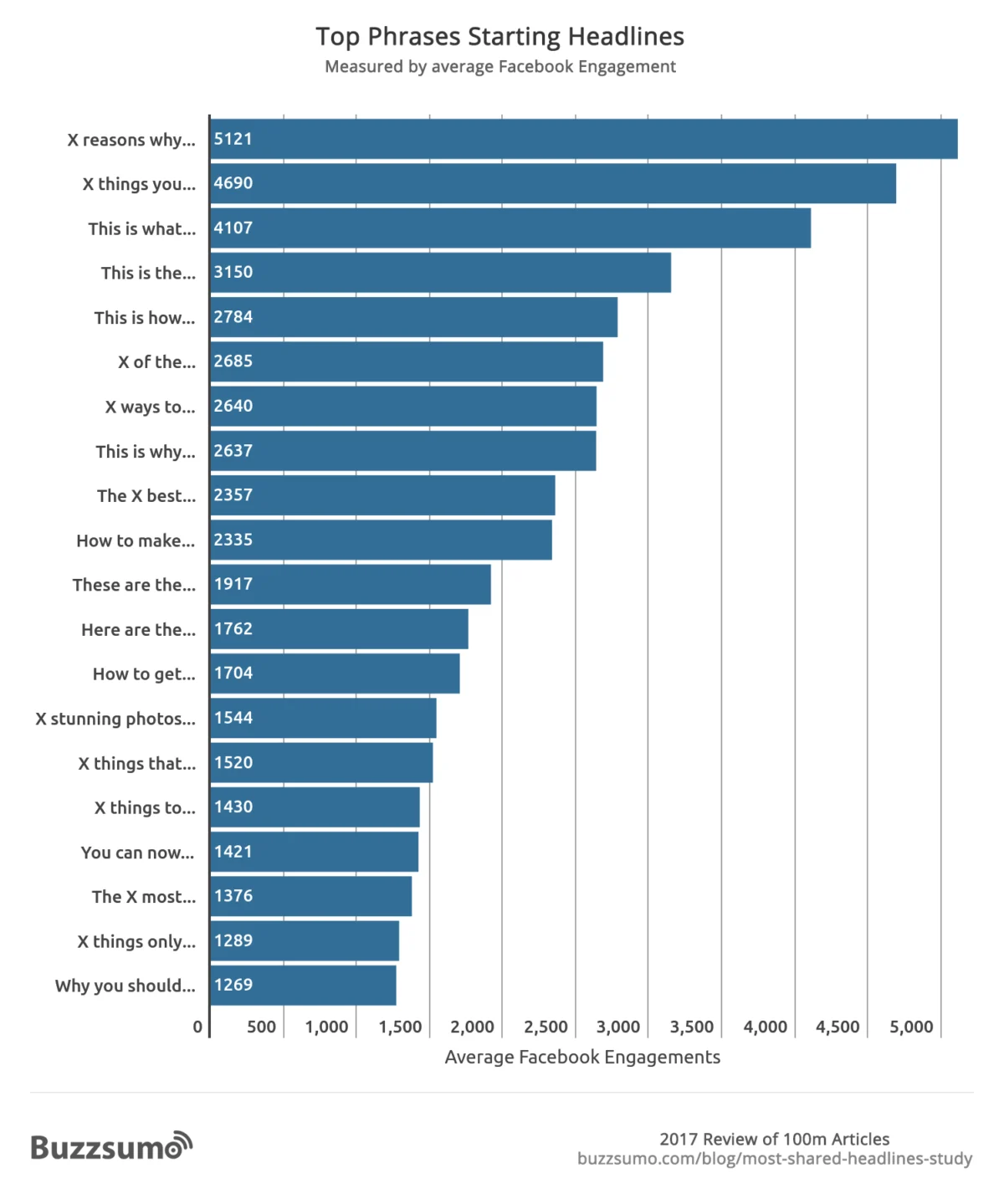
A comprehensive analysis of 100 million headlines by BuzzSumo reveals a dramatic transformation in how content engages audiences across major social media platforms, marking a clear departure from previous strategies. The updated research, building upon a similar study from 2017, highlights significant shifts driven by algorithmic advancements, evolving audience preferences, and a changing digital content landscape. For publishers and content creators, these findings are critical for crafting headlines that resonate and drive engagement in today’s highly competitive online environment.
The Evolving Landscape of Content Engagement
In the digital age, a headline transcends being merely an article title; it serves as a critical gateway for audience connection, functioning as a subject line, tweet, H2 tag, or video title. However, the art of writing an effective headline has become increasingly complex. Content creators face the challenge of navigating sophisticated algorithms that dictate visibility, battling unprecedented levels of competition, and meeting the elevated standards of modern audiences.
To address this complexity, BuzzSumo undertook an extensive analysis of 100 million headlines, drawing inspiration from co-founder Steve Rayson’s influential 2017 study on most-shared headlines. The latest research provides invaluable insights into what constitutes a "good" headline today, incorporating perspectives from leading marketing experts on the findings.
Key Shifts in Headline Effectiveness Since 2017
The most striking revelation from the updated study is the radical change in effective headline strategies over just a few years. What worked in 2017 has largely become obsolete, particularly on Facebook.
1. The Demise of Emotional and Sensational Headlines:
The 2017 study identified emotional words and phrases as significant drivers of engagement on Facebook, with terms like "will make you," "tears of joy," "melt your heart," and "shocked to see" performing exceptionally well. These headlines often promised a strong emotional reaction from the reader.
However, the latest analysis reveals a stark decline in the effectiveness of explicitly emotional or sensational headlines. Phrases once dominant are now rarely seen among top performers. For instance, "will make you," which achieved 1.7 million shares with its top headline in 2017, saw its best headline yield only 143,000 shares in the updated period—a staggering reduction. The current landscape suggests that overly emotional or sensational language has largely "had its day," with only nuanced hyperbole (e.g., "one of the most beautiful") retaining some effectiveness, often when referencing genuinely exceptional content.
2. Quizzes and Tribal Content Fade Out:
Headlines centered on quizzes (e.g., "Can We Guess Your Real Age?") and tribal identity (e.g., "25 Things Only Teachers Will Understand") were highly engaging in 2017. These formats leveraged a sense of inclusivity, self-discovery, and group belonging. The updated research indicates that these types of headlines have also significantly fallen out of favor, appearing rarely in the most shared content. This shift suggests a move away from content that was once perceived as highly shareable due to its personal or communal appeal.
3. Algorithmic Maturity and Audience Refinement:
The dramatic changes in headline performance are largely attributed to the maturation of social media algorithms and a corresponding evolution in audience preferences. Facebook, in particular, has actively demoted "clickbait" style content since May 2017, moving away from headlines that withhold information or exaggerate reality. Subsequent updates in January 2018 and June 2020 further prioritized news content from trustworthy and authoritative sources, boosting original reporting. This algorithmic refinement has reshaped the content landscape, rewarding clarity, value, and credibility over sensationalism.
4. Shorter, Snappier Headlines Prevail:
The ideal headline length has also undergone a notable reduction. In 2017, the optimal formula for engagement was approximately 15 words and 95 characters. The latest study, however, identifies the sweet spot as 11 words and 65 characters. This represents a reduction of approximately four words and 30 characters, reflecting a broader trend towards "speed to insight." In an era of content overload—with online content increasing by 64% since 2016—audiences prefer concise headlines that quickly convey value and get straight to the point.
5. Increased Homogenization Across Platforms:
Interestingly, while headline strategies have changed, there’s a growing convergence between Facebook and Twitter. In 2017, only one phrase overlapped in the top 20 headlines across both platforms (a 2.5% similarity). The updated analysis shows eight of the top 20 headline phrases now crossover, indicating a 20% similarity. This suggests that certain headline structures or themes are becoming universally effective, allowing for more duplication of headlines across networks in content distribution strategies.
6. Diverging Engagement Trends:
Despite increased overlap in phrases, engagement patterns have diverged. Facebook saw a substantial increase in average shares for its top phrases; the leading trigram "of the year" garnered 26,702 average shares in the recent study, roughly three times the average of 8,691 shares for the top phrase ("will make you") in 2017. Conversely, Twitter shares for top phrases decreased by nearly four times, with overall Twitter shares dropping by 14% between 2017 and 2020, even as monthly active users remained largely stable. This suggests that while Facebook has become a more potent platform for content virality for specific headline types, Twitter’s engagement is either more varied or spread across a wider array of topics.
The Magic of Numbers: Still 10
When it comes to incorporating numbers into headlines, the "magic number" remains 10. Excluding 10, single-digit numbers (3 through 9) generally drive the most social media engagement, dominating the top positions for shared headlines on Facebook and Twitter. There is no strong preference for odd or even numbers. However, larger double-digit numbers like 15 and 20, which were previously effective, appear to have fallen out of favor, again reinforcing the "speed to insight" preference for quicker consumption.
Platform-Specific Headline Strategies
Facebook: The Rise of Instruction and Hyperbole
The latest research indicates that instructional and hyperbolic headlines now dominate Facebook engagement.
- Instructional Headlines: These command attention and suggest urgency or obligation. Phrases like "you need to," "you should," and "everything you need to know" perform exceptionally well. They leverage a sense of FOMO (Fear Of Missing Out) and promise concise, critical information. For example, "Everything you need to know about washing your hands to protect against coronavirus (COVID-19)" garnered 2.2 million shares.
- Hyperbolic Headlines: Exaggerated statements and superlatives continue to drive high engagement. Phrases such as "one of the most," "of the most," and "of the best" are powerful. These often follow a pattern of placing a subject on a pedestal, inviting discussion, agreement, or even derision, which fuels shares.
- Ranking & Newness: "Of the year" (e.g., Person of the Year) and phrases indicating "newness" (e.g., "for the first time in X years") also perform strongly, appealing to audiences’ interest in awards, significant milestones, and rare events.
- Starting Phrases: Headlines beginning with numbers (listicles), instructional phrases, and curiosity-driven statements are highly effective. "How to" guides, in particular, indicate a strong desire among Facebook users to learn and gain guidance.
- Ending Phrases: Time-centric phrases, especially those related to current events (e.g., "in 2020," "in 2021"), are most popular, reflecting a focus on immediate and relevant information, often influenced by global events like the pandemic.
Twitter: Curiosity, Research, and Stories Take Center Stage
Twitter audiences exhibit distinct preferences, favoring content that is analytical, informative, and narrative-driven.
- Curiosity-Driven Headlines: Phrases hinting at future developments, explanations, or analyses (e.g., "the future of") are highly engaging. Twitter users appear keen to understand evolving trends and predictions.
- Research & Reports: Headlines starting with "study" or "report" perform well, indicating that Twitter is an ideal platform for sharing data-backed insights and academic findings.
- Storytelling: Phrases like "the story of," "the history of," or "the rise of" resonate strongly, suggesting that Twitter users appreciate narrative content centered around specific people or topics.
- Immediacy: Similar to Facebook, Twitter audiences show a strong appetite for current affairs, with a significant number of top-ending phrases being date-specific or emphasizing present developments (e.g., "in 2020").
Expert Perspectives on the Seismic Shifts
Leading marketing experts have weighed in on these profound changes:
- Heidi Cohen (Actionable Marketing Guide) notes that the findings reflect how customer behavior changed due to the pandemic, emphasizing a need for marketers to focus on core marketing basics and adapt to evolving customer needs.
- Rand Fishkin (SparkToro) highlights that the research myth-busts old assumptions about clickbait, emotional triggers, and listicles, providing nuanced insights into what genuinely works today.
- Ross Simmonds (Foundation) finds the success of instructional copy ("you need to," "you should") particularly fascinating, suggesting it underscores the importance of human psychology and the desire not to miss out on vital information.
- Brian Dean (Backlinko) points out the "huge shift" on Facebook from BuzzFeed-style clickbait to instructional headlines, indicating that Facebook users now seek content that teaches them something new.
- Amanda Milligan (Fractl) links the rise of instructional headlines to a growing desire to learn from experts, suggesting brands can leverage their authority through this type of language.
These expert opinions collectively emphasize a move towards more substantive, value-driven content, reflecting a more mature and discerning online audience.
Strategic Implications for Content Creators
The research underscores that there is no universal "magic formula" for headlines, but rather a dynamic set of principles that require continuous adaptation. Content creators must:
- Prioritize Value and Clarity: Move away from vague or overly sensational language. Headlines should clearly communicate the value proposition, whether it’s an instruction, an insight, a ranking, or a compelling story.
- Embrace Instructional Language: On Facebook, explicitly telling readers what they "need to know" or "should do" is highly effective. This taps into a desire for practical knowledge and a fear of missing out on essential information.
- Leverage Hyperbole Wisely: While overt emotionalism is out, strategic use of superlatives (e.g., "one of the best") can still generate engagement, particularly when backed by credible content.
- Adapt to Platform Nuances: Recognize that Twitter thrives on curiosity, research, and narrative, while Facebook leans towards instruction and mild hyperbole. Tailor headlines for each platform rather than simply duplicating them.
- Utilize Numbers Strategically: The number 10 remains potent for listicles, and single-digit numbers are preferred for conciseness. Avoid excessively long lists that might deter busy readers.
- Focus on Authority and Trust: Align with Facebook’s algorithmic preference for trustworthy news sources by producing high-quality, authoritative content that reflects expertise.
- Test and Learn Continuously: The digital landscape is ever-changing. Regular testing of headline variations and monitoring engagement metrics are crucial for staying ahead.
Methodology in Brief
The updated BuzzSumo study analyzed 100 million article headlines published between 2019 and 2020. The research primarily focused on three-word phrases (trigrams) to identify patterns in engagement. To ensure data accuracy and prevent popular sites from skewing results, only one headline trigram example per domain was included in the trigram analysis. Additionally, the three most shared examples of each trigram were removed to eliminate potential outliers. Engagement was measured by average median shares, providing a robust indicator of content resonance. This rigorous approach, inspired by Steve Rayson’s original work and meticulously executed by Henley Wing Chiu, Co-Founder and CTO of BuzzSumo, provides a reliable foundation for understanding current headline trends.
In conclusion, the era of simple clickbait is over. Today’s most effective headlines are a blend of informative clarity, strategic emotional appeal, and platform-specific tailoring, reflecting a more sophisticated interaction between content, algorithms, and audience psychology. For any content creator, understanding these evolving dynamics is not just an advantage, but a necessity for digital success.