admin
admin
The landscape of Business-to-Business (B2B) marketing is undergoing a seismic shift, driven by the rapid integration of Artificial Intelligence (AI) into the buyer’s journey. As AI tools become increasingly sophisticated in assisting with research and solution evaluation, the ability for a brand’s message to be understood by these intelligent systems is no longer a secondary concern—it is paramount. B2B marketers who fail to ensure their brand and offerings are interpretable by AI risk becoming invisible to potential customers precisely when they are actively seeking solutions. This evolution necessitates a fundamental reevaluation of traditional marketing strategies, moving beyond mere search engine optimization to a more nuanced approach focused on AI comprehension.
For years, the bedrock of B2B digital marketing has been a relentless pursuit of search engine visibility. Keywords, search rankings, website traffic, and conversion paths were the key performance indicators. Marketers meticulously crafted content and optimized their online presence to capture human attention when it was directed towards search queries. However, this paradigm is rapidly becoming obsolete. Buyers are no longer solely relying on traditional search engines. Instead, they are increasingly turning to AI-powered tools to conduct their research. These intelligent systems are being tasked with a range of functions, from summarizing complex information and identifying potential solutions to answering specific questions and even generating comparative analyses of products and services.
This transition means that the fundamental mechanics of discovery have changed. The competitive arena has shifted from a battle for a top spot on a search engine results page to a competition for inclusion within an AI’s synthesized answer. As Sarah Threet, a Marketing Consultant at Heinz Marketing, articulates, "It’s not enough for your content to rank. It has to be understood." This highlights a critical new requirement: B2B organizations must ensure that their brand’s value proposition, product details, and competitive differentiators are not only discoverable but also comprehensible to AI algorithms. The challenge for most B2B companies today is that their marketing efforts have been historically geared towards human readers, not machine interpretation.
From Search Engines to Answer Engines: A Paradigm Shift
The transition from a search-centric model to an "answer engine" model is a defining characteristic of the current B2B marketing evolution. Traditional Search Engine Optimization (SEO) was designed to help humans find information. In contrast, AI-driven discovery is about enabling machines to interpret that information accurately. A seminal report, "The 2026 State of B2B AI Visibility," indicates a significant trend: buyers are increasingly delegating their research tasks to AI systems. These systems are adept at synthesizing information from multiple sources and providing direct answers, rather than simply returning a list of links for the user to sift through.
This shift has profound implications. A brand’s visibility is no longer determined by its ranking in a list of search results, but rather by its inclusion—or exclusion—from an AI-generated answer. This means that a company’s brand might be inadvertently omitted from a buyer’s consideration set if the AI cannot understand or access its core offerings and value propositions. The report further suggests that approximately 90% of B2B websites are optimized for human conversion, focusing on elements like "Contact Sales" buttons. However, these same sites may inadvertently create "agent blockades" that hinder AI systems from progressing through the customer journey, leading to a new form of funnel leakage—not at the point of conversion or engagement, but at the critical stage of interpretation.
The Content Conundrum: Built for Readers, Not Machines
A significant challenge for B2B marketers lies in the fundamental nature of their existing content. Much of it is crafted for persuasion, narrative building, and emotional connection—qualities that resonate with human buyers. While these aspects remain important, AI systems process information differently. They prioritize structured data, factual accuracy, and logical relationships. AI looks for key entities, their attributes, and the connections between them. It seeks to extract specific data points that can be used to build comprehensive answers.
This discrepancy creates what the AI Visibility report terms a "narrative disconnect." Companies are writing for human readers who appreciate storytelling and context, while AI systems are attempting to extract discrete facts and verifiable information. This disconnect can lead to several detrimental outcomes:
- Misinterpretation of Value: AI may fail to grasp the unique selling propositions or core benefits of a product or service if they are embedded within a complex narrative.
- Inaccurate Summaries: AI-generated summaries of a company’s offerings might be incomplete or misleading if the underlying content is not structured for easy extraction.
- Exclusion from Recommendations: If an AI cannot accurately identify a company’s expertise or solutions, it may simply omit them from its recommendations, effectively rendering the brand invisible to potential customers.
- Inability to Answer Specific Queries: Buyers often use AI to ask very specific questions. If a company’s content is not structured to provide clear, direct answers to these queries, it will not be surfaced.
Crucially, these issues often go unnoticed by marketing teams because they do not manifest in traditional analytics. Website traffic, bounce rates, and conversion metrics may appear normal, masking the underlying problem of AI inaccessibility.
The "Authority Trap" and the Erosion of Legacy Advantage
The "AI Visibility" research also sheds light on an "authority trap." Well-established brands, due to their extensive presence in training data for AI models, may continue to appear in AI-generated answers. This can create a false sense of security, as it might appear as though these brands have achieved AI visibility. However, this is not necessarily a result of intentional AI optimization but rather a byproduct of historical data inclusion. This form of visibility lacks control and can be fleeting.
As AI systems evolve to incorporate real-time data retrieval and employ more sophisticated agent-based workflows, this legacy advantage will diminish. The future of AI-driven discovery will hinge on a brand’s ability to provide content that is not only accurate and relevant but also structured and accessible for machine consumption. This includes:
- Structured Data: Information presented in a way that AI can easily parse, such as clearly defined product attributes, service descriptions, and use cases.
- Contextual Relevance: The ability to clearly articulate how a solution addresses specific problems or needs within a given industry or scenario.
- Data Integrity: Ensuring that the information presented is accurate, up-to-date, and free from ambiguity.
- Machine-Readable Formats: Utilizing schema markup and other technical elements that help AI understand the content’s meaning and purpose.
The implication is that organizations relying solely on their established brand reputation without adapting their content strategy for AI will find their visibility eroding over time.
The Strategic Imperative: External Visibility Over Internal Efficiency
While much of the current discourse around AI in business focuses on internal applications—such as content generation, workflow automation, and productivity enhancements—the "AI Visibility" report argues that the most significant opportunity, and indeed the greatest risk, lies in external visibility. Investing in internal AI efficiencies is valuable, but it does not address the fundamental challenge of being discovered by buyers.
The report posits that the highest ROI opportunity in AI for B2B organizations currently lies in ensuring their external visibility, not solely in enhancing internal operations. As marketing teams focused on optimizing internal workflows, buyers have fundamentally altered how they discover and evaluate solutions. If a brand is not accurately represented and discoverable within this evolving AI-driven discovery process, it risks losing consideration before its sales pipeline even begins to form. This represents a significant strategic risk, impacting market share and revenue potential.
Website Architecture: An Unseen Barrier to AI
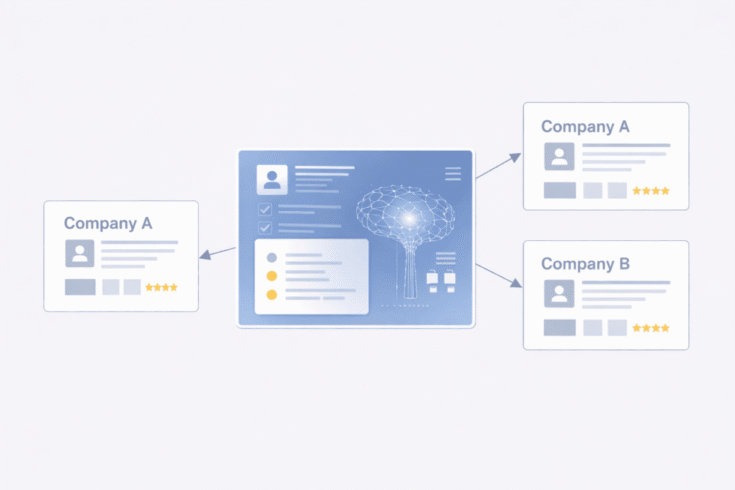
Beyond content itself, many B2B websites are unintentionally creating barriers that prevent AI systems from accessing and understanding their information. This can manifest in several ways:
- Robots.txt Restrictions: Overly restrictive
robots.txtfiles can prevent AI crawlers from accessing important sections of a website, limiting the data available for interpretation. - JavaScript-Heavy Rendering: Content that relies heavily on dynamic JavaScript rendering can be challenging for AI systems to parse and understand compared to server-side rendered content.
- Proprietary Data Formats: Using non-standard or proprietary data formats can make it difficult for AI to extract relevant information.
- Paywalls and Login Requirements: While necessary for some content, strict paywalls or login requirements can obstruct AI’s ability to access and evaluate a company’s offerings.
- Lack of Clear Navigation and Site Structure: A disorganized website structure can confuse AI agents attempting to navigate and understand the relationships between different pieces of content.
These technical hurdles, often overlooked in traditional SEO audits, can significantly impede AI’s ability to index, interpret, and ultimately recommend a company’s solutions. The AI Visibility study found that even when websites are optimized for human conversion, they can still present "agent blockades," leading to a critical breakdown in the interpretation phase of the buyer’s journey.
Context as the New Differentiator in an AI-Dominated Market
In the rapidly evolving Martech landscape, the insight that "AI is a commodity; context is differentiation" is becoming increasingly relevant. As AI tools become more accessible and widely adopted by competitors, buyers, and partners, the question shifts from "Do you have AI?" to "What does your AI actually know, and how well can it act on that knowledge?" The true competitive advantage lies in the quality and depth of context that a company can provide to AI systems.
This means that what separates successful organizations is their ability to provide:
- High-Quality, Structured Data: Clean, accurate, and well-organized data is the foundation upon which AI systems build understanding.
- Deep Domain Expertise: Content that clearly articulates specialized knowledge and industry insights allows AI to position a company as an authority.
- Clear Value Proposition: The ability to concisely explain the benefits and unique selling points of products and services in a way that AI can readily comprehend.
- Comprehensive Use Cases and Solutions: Detailed explanations of how offerings address specific customer problems and needs are crucial for AI-driven evaluation.
A report on "The New Martech Stack for the AI Age" underscores the necessity of a unified data foundation and a composable architecture to support AI-driven experiences. Currently, a significant portion of organizations are still in the experimental phase with AI agents, with poor data quality cited as a major impediment to AI success. This reality extends directly to external visibility; if a company’s systems and content do not provide clean, usable context, AI will struggle to represent that company accurately.
Actionable Steps for B2B Teams in the AI Era
Navigating this evolving landscape requires a proactive and strategic approach. B2B teams should consider the following actionable steps to ensure their brand remains visible and understood in an AI-driven world:
1. Audit How AI Describes Your Brand:
Begin by directly querying AI tools such as ChatGPT, Bard, or Claude about your company. Ask them to:
- Describe your company in one sentence.
- List your core products and services.
- Explain your unique selling proposition.
- Identify your target market.
- Summarize your company’s mission.
Analyze the responses for accuracy, completeness, and nuance. Look for any misinterpretations, omissions, or generic descriptions that fail to capture your brand’s essence.
2. Make Your Content More Extractable:
Shift from a purely narrative approach to one that prioritizes machine readability and data extraction. This involves:
- Structured Content: Employing clear headings, subheadings, bullet points, and tables to organize information logically.
- Keyword Integration: Strategically using keywords that AI models are likely to associate with your industry and offerings, but ensuring they are used contextually and naturally.
- Defined Entities and Attributes: Clearly labeling key terms, product features, benefits, and specifications.
- Concise Language: Using clear and direct language, avoiding jargon or overly complex sentence structures where possible.
- Data-Rich Content: Incorporating statistics, case studies, and quantitative data that AI can easily parse and verify.
3. Reduce Friction for Machine Access:
Ensure that AI agents can easily access and navigate your website. This involves:
- Reviewing Robots.txt: Verify that your
robots.txtfile is not inadvertently blocking important AI crawlers. - Optimizing Site Structure: Ensure a logical and intuitive website navigation that allows AI to understand the relationships between different pages and content sections.
- Leveraging Schema Markup: Implement schema markup to provide explicit context about your content, products, and services to search engines and AI.
- Ensuring Mobile Responsiveness and Speed: While a standard SEO practice, a fast and responsive website is crucial for AI agents that may crawl content rapidly.
- Evaluating Content Delivery: Consider how content is delivered; server-side rendering or pre-rendered content is often more accessible to AI than purely client-side rendered content.
4. Align Messaging Across Channels:
AI systems synthesize information from various sources. If your messaging is inconsistent across different platforms—your website, social media, press releases, and marketing collateral—the AI will reflect that inconsistency in its understanding of your brand. Ensure a unified and coherent message is presented everywhere your brand has a presence.
5. Treat AI Visibility as a Strategic Function:
Recognize that AI visibility is not solely an SEO or content marketing task. It is a strategic function that sits at the intersection of:
- Marketing: Ensuring brand messaging is understood.
- Product: Defining clear product attributes and use cases.
- Data: Maintaining clean, structured, and accessible data.
- Technology: Optimizing website architecture and content delivery for machine access.
This requires orchestration and collaboration across different departments, not just isolated optimization efforts.
The Future of B2B Marketing: Influencing Systems, Not Just People
The fundamental shift in B2B marketing is that organizations are no longer just marketing to human buyers; they are also marketing to the intelligent systems that those buyers rely on. These AI systems, by their very nature, do not prioritize compelling narratives or emotional appeals in the same way humans do. If an AI cannot understand a company’s core offerings, value proposition, or solutions, the narrative, however brilliant, becomes irrelevant.
The ultimate test for any B2B organization in this new era is a simple yet powerful question: "If an AI had to explain your company in one sentence, would it get it right?" Increasingly, that AI-generated summary will be the first impression a potential buyer has of your brand. For B2B teams grappling with the realization that this is not merely a content challenge but a complex problem involving coordination, data management, and go-to-market strategy, seeking expert guidance may be essential. Companies like Heinz Marketing are offering GTM orchestration assessments to help B2B teams align their messaging, data, and execution, ensuring their strategy is clearly communicated to both human buyers and the AI systems that guide their decisions. The future of B2B marketing depends on mastering this dual-audience approach, ensuring relevance and comprehension in an increasingly AI-mediated world.