admin
admin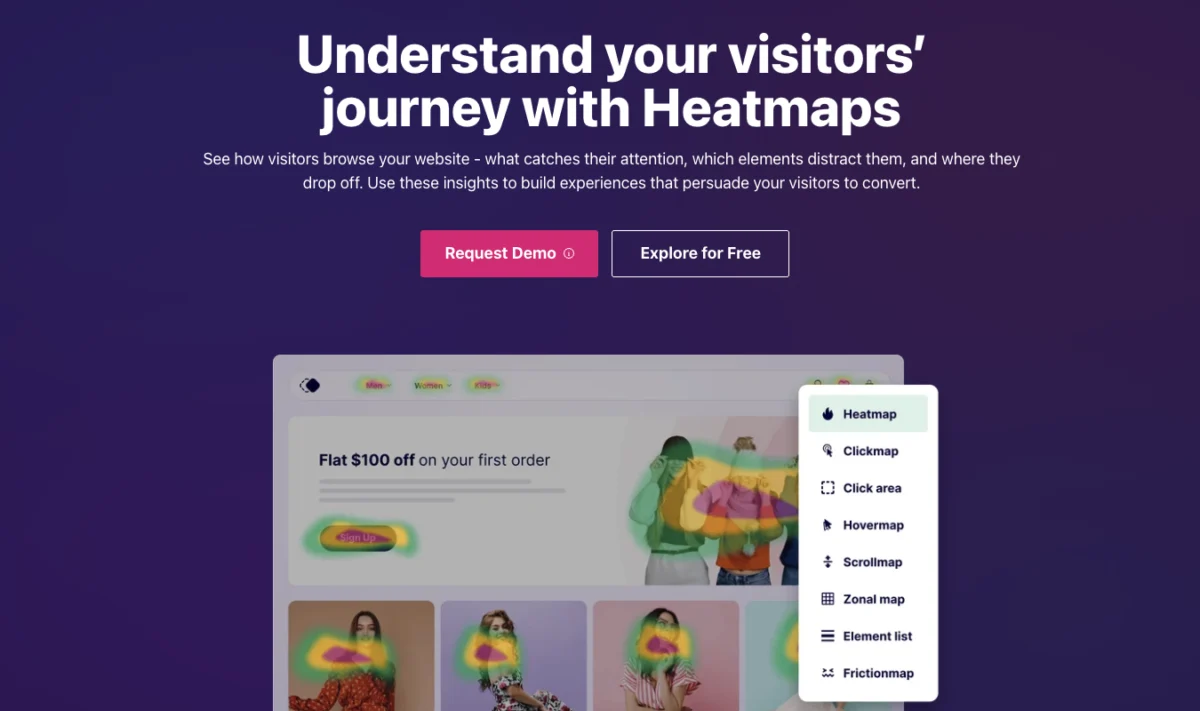
The global digital landscape is currently witnessing a significant consolidation within the marketing technology (MarTech) sector, highlighted most prominently by the recent merger between two of the industry’s most influential entities: AB Tasty and VWO. For over a decade, these two platforms have competed for dominance in the conversion rate optimization (CRO) and experimentation market. While the merger signals a future of unified capabilities, the current market reality remains one of distinct product experiences, workflows, and technical strengths. Organizations seeking to optimize their digital touchpoints must navigate the specific nuances of each platform to determine which currently aligns best with their technical requirements and marketing objectives.
AB Tasty, headquartered in Paris, has traditionally positioned itself as a robust solution for both marketing and product teams, emphasizing seamless feature rollouts and server-side experimentation. Conversely, VWO, founded in Delhi, built its reputation on a holistic "all-in-one" approach, integrating behavior analytics—such as heatmaps and session recordings—directly into the experimentation workflow. As these two giants begin the complex process of platform integration, businesses are faced with a critical choice between AB Tasty’s engineering-centric sophistication and VWO’s insight-driven, user-centric ecosystem.
The Evolution of Experimentation: A Brief Chronology
To understand the current positioning of AB Tasty and VWO, it is essential to trace the development of the CRO industry. The sector emerged in the late 2000s as businesses moved beyond basic web analytics toward active hypothesis testing.
In 2010, Paras Chopra launched VWO (Visual Website Optimizer), which revolutionized the market by introducing the first visual editor for A/B testing. This allowed marketers to modify website elements without deep coding knowledge, democratizing the testing process. Shortly thereafter, in 2011, Alix de Sagazan and Rémi Aubert founded AB Tasty in France. While VWO focused on the visual and analytical side, AB Tasty began carving out a niche in the European market by focusing on personalization and sophisticated segmentation.
The following decade saw both companies expand their horizons. VWO introduced "VWO Insights" to compete with behavior analytics tools like Hotjar, while AB Tasty acquired Flagship to bolster its feature management and server-side testing capabilities. The culmination of this rivalry occurred in June 2024, when the two companies announced a definitive merger agreement. This move was strategically designed to create a "global powerhouse" capable of challenging enterprise incumbents like Adobe Target and Optimizely.
Technical Architectures: Client-Side vs. Server-Side Testing
A primary differentiator between the two platforms lies in their architectural approach to experimentation. AB Tasty has long championed a dual-layer system. The first layer is client-side experimentation, which operates within the user’s browser. This is ideal for marketing teams looking to test headlines, layouts, and call-to-action (CTA) buttons with minimal IT intervention. The second layer is server-side experimentation, designed for product and engineering teams. This allows for the testing of core product features, such as search algorithms or checkout logic, which are executed on the backend to ensure performance and security.
VWO also provides both client-side and server-side capabilities, but its integration is more tightly woven into the user interface (UX) research phase. VWO’s server-side testing is highly regarded for its flexibility, yet it is often perceived as being more accessible to users who prioritize the "why" behind the data. VWO utilizes a Bayesian statistical engine, branded as "SmartStats," which provides marketers with a probability-based view of which variation will perform better, often leading to faster decision-making compared to traditional frequentist models.
Behavior Analytics and User Insight Integration
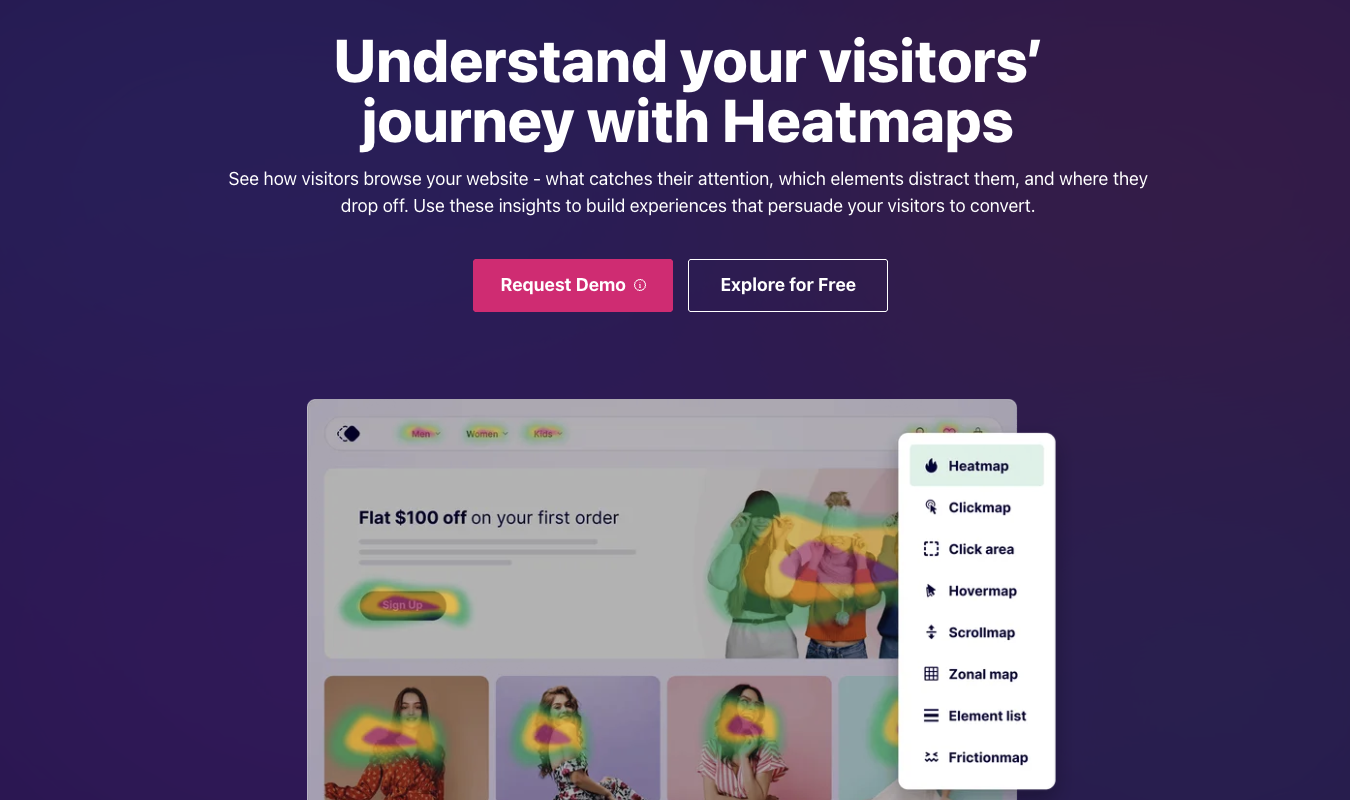
The most stark contrast between the two platforms involves native behavior analytics. VWO has built a comprehensive suite of qualitative tools that exist within the same dashboard as its testing tools. This includes:
- Dynamic Heatmaps: Visual representations of where users click, move, and scroll.
- Session Recordings: Anonymous video playbacks of actual user journeys to identify friction points.
- Conversion Funnels: Detailed tracking of where users drop off in a multi-step process.
- Form Analytics: Insights into which specific fields in a signup or checkout form cause user hesitation.
For VWO users, these tools are not merely add-ons but are foundational to the experimentation cycle. A marketer can identify a drop-off in a funnel, watch a session recording to see the struggle, and immediately launch an A/B test to fix the issue.
AB Tasty, in contrast, does not offer native heatmaps or session recordings. The platform operates on the philosophy that experimentation and personalization are its primary mandates. To gain behavioral insights, AB Tasty users must integrate with third-party tools such as ContentSquare, Hotjar, or Microsoft Clarity. While this allows for a "best-of-breed" stack, it introduces a level of fragmentation that VWO avoids.
Personalization and Advanced Audience Targeting
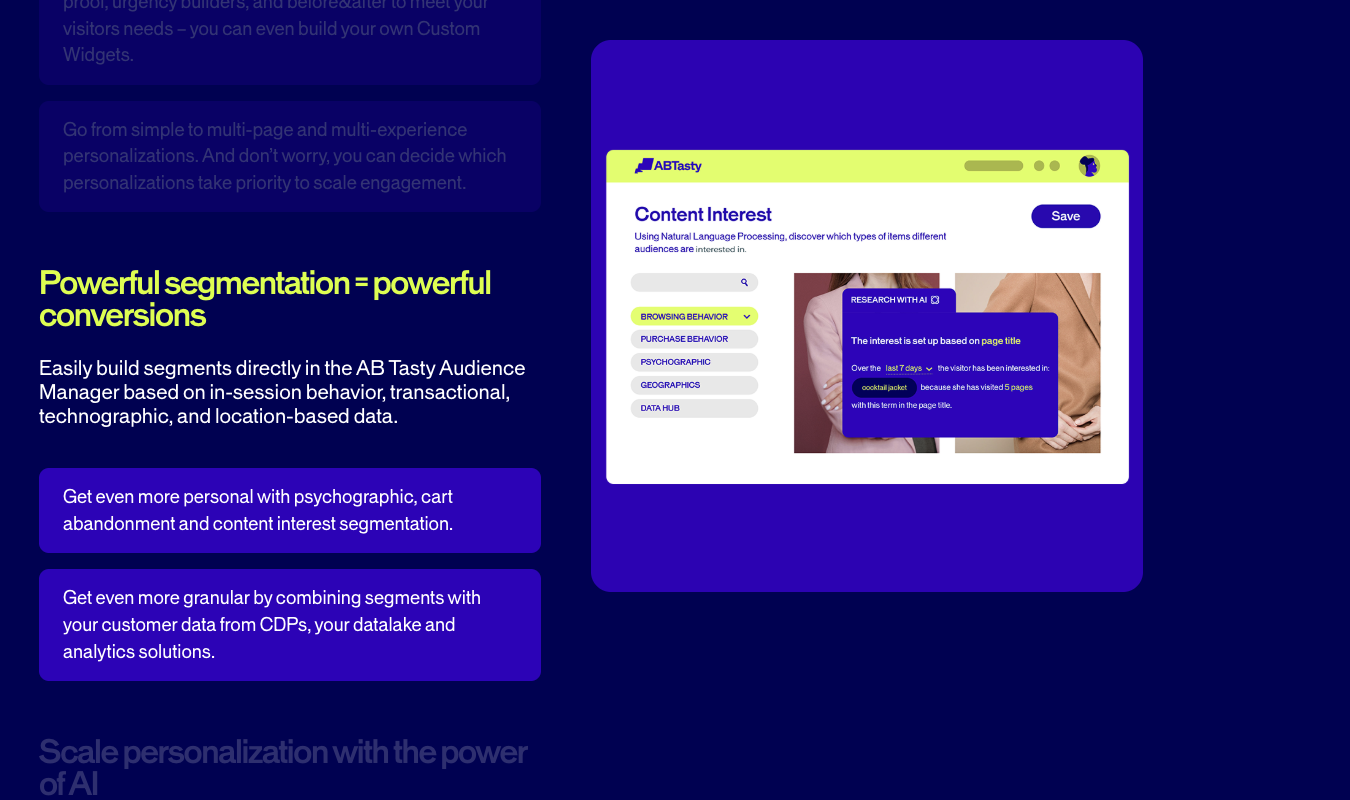
Personalization has moved from a "nice-to-have" feature to a core requirement for enterprise digital strategy. AB Tasty has historically held an edge in this category due to its highly structured personalization engine. The platform allows for intricate segmentation based on real-time behavior, geolocation, weather data, and purchase history.
A standout feature in AB Tasty’s personalization suite is its campaign prioritization control. Large organizations often face the "collision" problem, where a single user is inadvertently targeted by multiple, conflicting experiments or personalizations. AB Tasty provides a sophisticated "Priority" setting, allowing teams to define which campaign takes precedence. This ensures a consistent user experience and prevents data contamination.
VWO’s personalization features are robust and effective, particularly for tailoring content based on visitor segments. However, within the VWO ecosystem, personalization is treated as one module among many. For organizations whose primary goal is high-frequency, complex personalization across various stages of the customer journey, AB Tasty’s dedicated focus provides a more granular level of control.
Feature Management and Progressive Delivery
As DevOps and Agile methodologies have become standard, the need for "Feature Flags" and "Rollouts" has grown. This is an area where AB Tasty significantly outperforms VWO’s current standalone offering. AB Tasty’s Feature Experimentation and Rollout product allows engineering teams to:
- Progressively Release Features: Pushing a new update to 5% of users initially to monitor for bugs before a full launch.
- Implement Kill Switches: Instantly disabling a feature if it causes a spike in error rates or a drop in conversions.
- Target Rollouts: Releasing specific features only to internal employees or "beta" segments.
VWO does support feature management through its server-side capabilities, but it is generally viewed as less mature than AB Tasty’s dedicated rollout system. VWO’s strength remains in front-end UX optimization, whereas AB Tasty has successfully bridged the gap into the "Product-Led Growth" (PLG) space by catering to developers.
Market Data and Strategic Implications of the Merger
The merger of AB Tasty and VWO comes at a time when the global CRO software market is projected to grow at a CAGR of over 10% through 2030. Industry analysts suggest that the move is a defensive and offensive response to the "platformization" of marketing. Large enterprises are increasingly moving away from fragmented point solutions in favor of integrated suites that handle the entire "Experience Optimization" lifecycle.
Supporting data suggests that companies using integrated experimentation and analytics platforms see a 20-30% higher efficiency in their testing velocity compared to those using disconnected tools. By combining VWO’s top-of-funnel analytical strengths with AB Tasty’s bottom-of-funnel engineering and personalization strengths, the newly merged entity is positioned to capture a significant share of the mid-market and enterprise segments.
Official Responses and Future Outlook
While specific integration timelines have not been made public, leadership from both companies has emphasized a commitment to maintaining existing service levels for current customers. In a joint statement following the merger announcement, the companies noted that the goal is to provide a "unified platform that addresses the needs of every stakeholder in the optimization process—from the data analyst and the marketer to the product manager and the developer."
For current users, the immediate impact is minimal, as both platforms continue to operate independently. However, the long-term implication is the eventual sunsetting of redundant features in favor of a "best-of-both" architecture.
Conclusion: Choosing the Right Path
The decision between AB Tasty and VWO ultimately depends on an organization’s internal structure and primary pain points.
- Choose AB Tasty if your organization has a strong synergy between marketing and engineering teams, requires sophisticated feature flag management, and prioritizes complex, multi-layered personalization. It is the preferred choice for those who already have a preferred behavioral analytics tool and want a "powerhouse" for execution.
- Choose VWO if your team values an all-in-one workflow where qualitative insights (heatmaps, surveys) and quantitative testing live in the same space. It is ideal for organizations that want to move quickly from identifying a problem to testing a solution without the friction of multiple platform logins.
As the two companies merge their roadmaps, the distinction between them will likely blur. For now, they remain the two most compelling options in a market that is increasingly defined not just by the ability to test, but by the ability to understand and personalize the entire digital experience.